Tag Archives: homeless people

D.A. Hosek, ‘Chicago Sonnet 26’

 Ain’t no one gon’ choose to live in no tent
Inna park with the trash and the dirt and the cold,
But you fresh outta jail ain’t got one damn cent
And every single place you go you told,
 
“This ain’t no place for you we got children here,
Folks with jobs, responsibility and you—and you—
Some broke, broke-down ex-con. You wanna be near
These straight folk with your criminal life? Who

Would ever stand for such a thing?” So I got
Myself a tent, don’t ask how or where,
Claimed me a patch of grass with this whole lot.
Now I gotta leave cause the straight folk get scared.
 
Spent all day looking for a place, started at dawn,
The city came by and took my shit while I was gone.

*****

D.A. Hosek writes: “The Chicago Sonnets sequence is a planned sequence of fifty sonnets, one for each Aldermanic Ward of the city. This is a rare bit of reported poetry in that I went out and talked briefly to one of the people in a homeless encampment (not the one that’s in the poem though) wondering how he ended up living in a tent on the streets. Then, after discovering that I’d already written a sonnet for the ward that his encampment was in, I had to find a different encampment in a different ward and learned about the city destroying a camp in Humboldt Park and that provided the last pieces of the poem.”

D. A. Hosek’s poetry has appeared or is forthcoming in Hanging LooseBig Score Lit, Dodging the RainAfter HoursRat’s Ass Review (including this sonnet) and elsewhere. He earned his MFA from the University of Tampa. He lives and writes in Oak Park, IL and spends his days as an insignificant cog in the machinery of corporate America.  https://dahosek.com @dahosek.bsky.social 

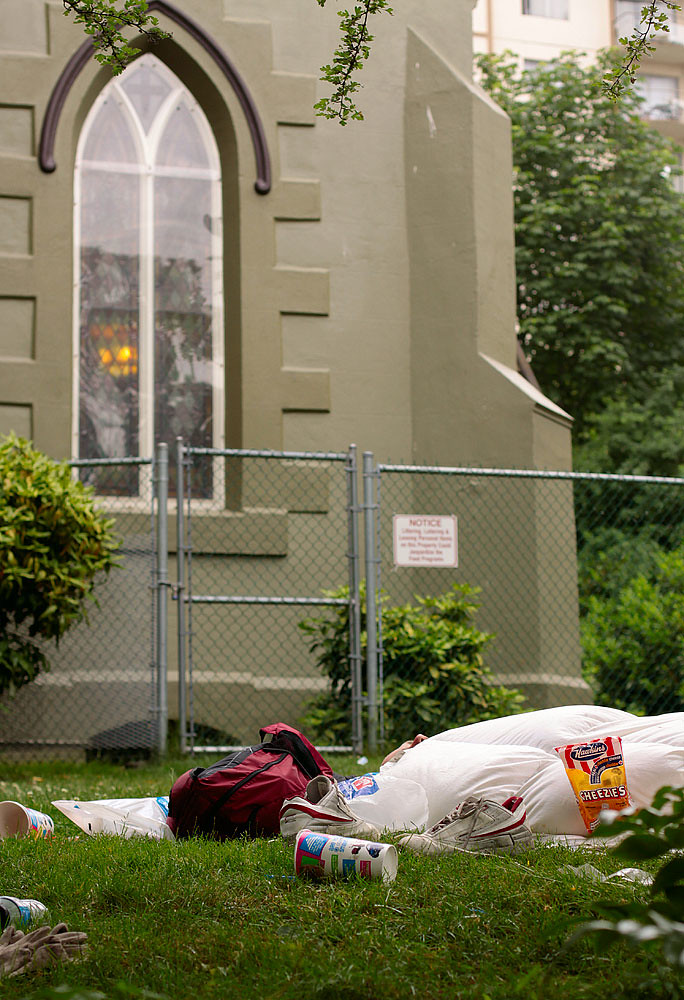
Photo: “IMG_2971a” by Elvert Barnes is licensed under CC BY-SA 2.0.

Weekend read: Using form: Nonce form: Benjamin Cannicott Shavitz, ‘The Subway 2023’

“I just need help,” the homeless man announces to the train
And, somehow, to himself as well.
And everybody cares,
Though no one makes a move.

“I just need help.” He mumble-shouts again his one refrain.
And everybody sees his hell,
Despite our downward stares.
But how can we improve

His plight when I still can’t afford both surgery and food,
And you live drowned in college debt
And she just froze her eggs
For when the rent hikes stop?

“I just need help,” he tries once more. Our eyes stay navel-glued.
We want to fill his need and yet
Just what’s the help he begs
For? Should we call a cop?

We know the way that that has gone before.
We know he’d simply suffer even more.
We know he’s not what cops are really for.
We hope we’re wrong, but we just see no choice,
Except to steel our ears against his voice
And, staidly silent, mourn inside
As though he had already died.

*****

‘The Subway 2023’ was first published in The Lyric. Benjamin Cannnicott Shavitz writes:

  1. The entire poem is in iambs. 
  2. Every line rhymes with at least one other line.
  3. In the first four stanzas, the rhyme scheme is ABCDABCD repeated twice. 
  4. In each of the first four stanzas, the line lengths are as follows: line 1: seven feet; line 2: four feet; line 3: three feet; line 4: three feet. 
  5. In the last stanza, the rhyme scheme is AAABBCC. 
  6. In the last stanza, the line lengths are as follows: lines 1-5: five feet each, lines 6-7: four feet each. 
  7. Points (3)-(6) create a pattern in which any lines that rhyme are of the same length as each other. 

    “Some background about my approach to form:
    I received my PhD in linguistics last year and I have been using my knowledge of language structure and the math background I have from my undergraduate engineering studies to innovate and sometimes re-conceptualize form in poetry. As I’m sure you know, the past century has seen a massive decline in knowledge of how form works in general. What you may be less aware of is that that same period has seen major developments in linguistics that can be brought in to expand our understanding of form. Most people know nothing about form anymore and the few people who do are working with an understanding that, while based on a lot of sound information, would benefit from being updated by the last century’s developments in linguistics research. There is an expansive future for formal verse ahead of us if we not only revive interest in form but also recognize that we are still learning about it. Form is not just tradition. It is an aspect of nature and there is a lot more we haven’t done with it yet. There is an essay in the back of two of my books that deals with the way formal verse and its history have been mischaracterized by proponents of free verse, I have developed a short course for teaching formal verse writing from a linguistically informed perspective, and I hope to use my academic knowledge (and credentials) to provide further support for the revival and expansion of formal verse in the future.”

Benjamin Cannicott Shavitz is a writer and linguistics scholar whose studies in language have led him to a great enthusiasm for formal poetry. He lives in Manhattan, New York City and received his PhD in linguistics from the Graduate Center at The City University of New York. He has published two collections of his own poetry (Levities and Gravities), as well as an anthology of poems by New York City poets from throughout history (Songs of Excelsior). His work has also been published in The Lyric, The Fib Review, and the journal of The Society of Classical Poets. See www.kingsfieldendeavors.com/writing for links to his writing. 

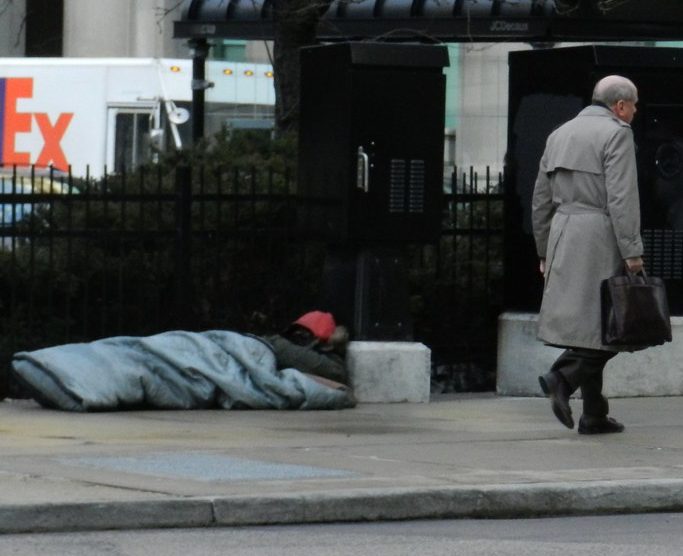
Photo: “Homeless in the subway” by phrenologist is licensed under CC BY-NC 2.0.

Using form: Couplets: Maryann Corbett, ‘Fugue in October’

Baroque chamber ensemble and homeless encampment, Saint Paul

Perfect: the singers, strings, and keyboards. Perfect
Bruised sky above the tents of the squatters’ district
the little jewel-box church, its bright acoustic
calm in the year’s last mildness, the only music
softened a little in the candles’ lighting,
the mumbling underpass. The wind. No fighting
for this is God’s mind, woven of harmonies
for once. Tonight, for once, no one ODs—
and our souls thread through the flame of the vigil lamp
someone got lucky at the entrance ramp
as we hold, hold to Monteverdi’s line
(panhandling, on this warm day, with a sign)
and stop our breath until the last string dies
and parcels out his manna of salty fries
in the last great chord of his Beatus vir
while sirens wail some sorrow, far from here.

*****

Editor’s comments: “In case it isn’t clear from whatever device you are reading this on, each couplet here is comprised of a line about a musical ensemble in a church followed by a line about a homeless encampment under a highway. You can read it straight through as a soft-voiced line followed by a harsher one; or you can read every other line in one voice and the remaining lines in a different voice; either way, you are blending two very different aspects of city life into a larger, richer picture of community sharing, whether in glamour or squalor. This is an unusual and remarkably effective use of rhymed couplets of iambic pentameter.
The contrast built into the poem, and the skill with which it was done, made it a natural poem for inclusion in the ‘City! Oh City!‘ Potcake chapbook. It first appeared in Measure Review; and is included in the collection In Code.

Maryann Corbett writes: “Events that trigger a poem need not be as simultaneous as the poem makes them seem. The choral concert in this poem took place on a subzero night during the Christmas season; the rise of homeless encampments occurred at a warmer time of year–but both could be happening in my city at any time, and they probably still are.”

Maryann Corbett earned a doctorate in English from the University of Minnesota in 1981 and expected to be teaching Beowulf and Chaucer and the history of the English language. Instead, she spent almost thirty-five years working for the Office of the Revisor of Statutes of the Minnesota Legislature, helping attorneys to write in plain English and coordinating the creating of finding aids for the law. She returned to writing poetry after thirty years away from the craft in 2005 and is now the author of two chapbooks, five full-length collections already published, and a forthcoming book. Her fifth book, In Code, contains the poems about her years with the Revisor’s Office. Her work has won the Willis Barnstone Translation Prize, has appeared in many journals on both sides of the Atlantic, and is included in anthologies like Measure for Measure: An Anthology of Poetic Meters and The Best American Poetry 2018.

Her web page: http://maryanncorbett.com

Photo: “sleeping on the rock of ages” by waferboard is licensed under CC BY 2.0.

J.D. Smith, ‘Consultative’

The noted scholars of the institute
Are tasked with framing issues and debate.
Through data and the values they impute
By proxy–or assume—they correlate

The wealth of nations and their policies,
Distinguishing phenomenon and cause
Until equations cut through fallacies,
Assuming over time the air of laws.

Accordingly, with every factor weighed,
The State will be apprised of how to spend.
In high demand, proportionately paid,
Those who’ve advanced their field approach day’s end

With puzzles yet to solve, but satisfied,
And step around the beggars stretched outside.

*****

J.D. Smith writes: “The poem arises from the daily–and uneasy–contrast between ‘Washington’, the arena of politics and policy that draws players from around the world, and ‘DC’, the place that most residents know, with all the attendant problems of urban life in the United States. (I work in the former, though in a minor capacity, and live in the latter.) A complex society needs experts, so I won’t get on the bandwagon of anti-intellectualism, but I remain deeply troubled by the disconnect between many of those experts’ abstract work, accompanied by ambition, and how they address or refuse to address the actual human beings they encounter.”

J.D. Smith has published six books of poetry, most recently the light verse collection Catalogs for Food Loversand he has received a Fellowship in Poetry from the United States National Endowment for the Arts. Smith’s first fiction collection, Transit, will be published in December 2022. His other books include the essay collection Dowsing and Science. Smith works in Washington, DC, where he lives with his wife Paula Van Lare and their rescue animals. Twitter: @Smitroverse

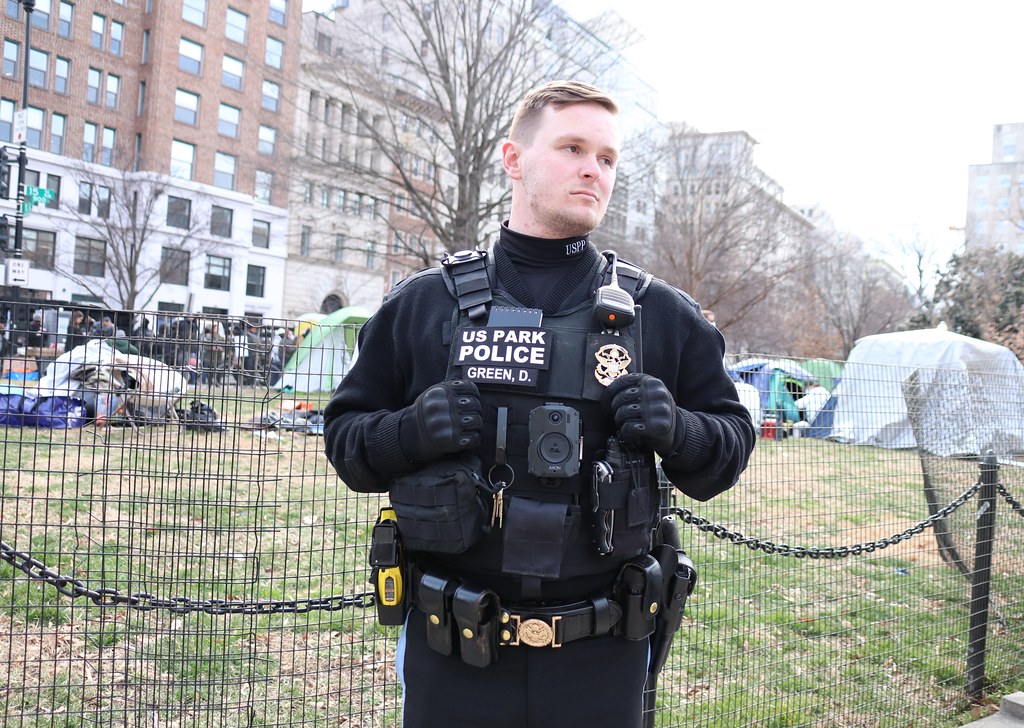
Separated at Berth” by Chicago Man is licensed under CC BY-NC 2.0.