Tag Archives: love affairs

Sonnet: Edna St. Vincent Millay, ‘I shall forget you presently, my dear (Sonnet IV)’

I shall forget you presently, my dear,
So make the most of this, your little day,
Your little month, your little half a year
Ere I forget, or die, or move away,
And we are done forever; by and by
I shall forget you, as I said, but now,
If you entreat me with your loveliest lie
I will protest you with my favorite vow.
I would indeed that love were longer-lived,
And vows were not so brittle as they are,
But so it is, and nature has contrived
To struggle on without a break thus far,—
Whether or not we find what we are seeking
Is idle, biologically speaking.

*****

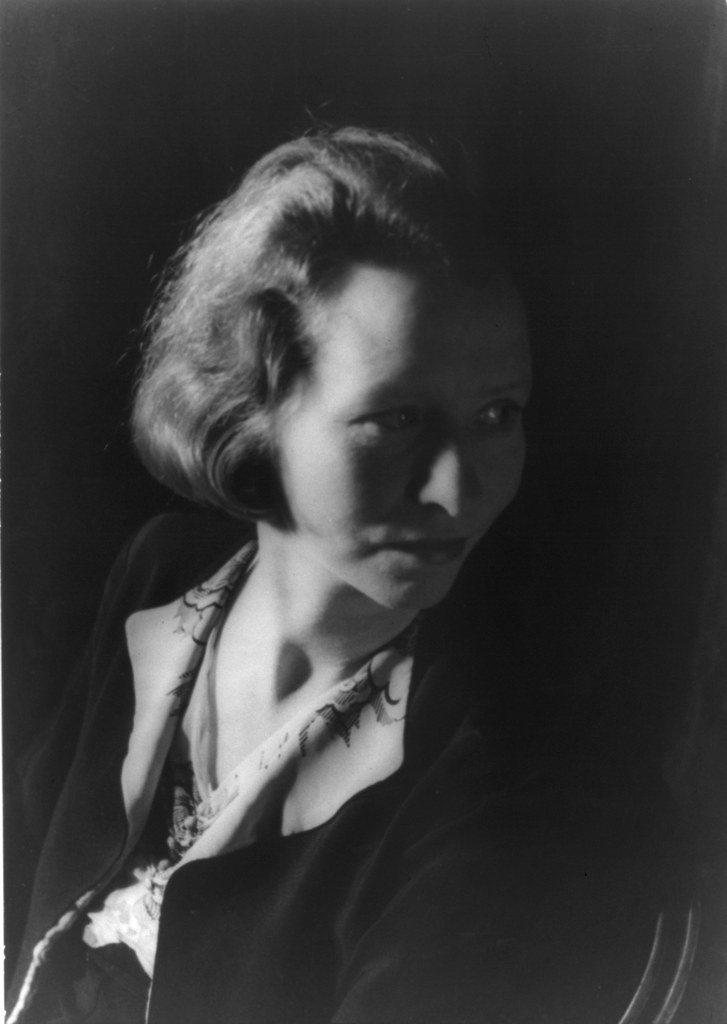
Edna St. Vincent Millay, 1892 – 1950

From Wikipedia: “After experiencing his remarkable attention to her during her illness, she married 43-year-old Eugen Jan Boissevain in 1923. Boissevain was the widower of labor lawyer and war correspondent Inez Milholland, a political icon Millay had met during her time at Vassar. A self-proclaimed feminist, Boissevain supported Millay’s career and took primary care of domestic responsibilities. Both Millay and Boissevain had other lovers throughout their 26-year marriage. For Millay, one such significant relationship was with the poet George Dillon, a student 14 years her junior, whom she met in 1928 at one of her readings at the University of Chicago. Their relationship inspired the sonnets in the collection Fatal Interview, which she published in 1931.”

Photo: “No Known Restrictions: Edna St. Vincent Millay by Carl Van Vechten, 1933 (LOC)” by pingnews.com is marked with Public Domain Mark 1.0.
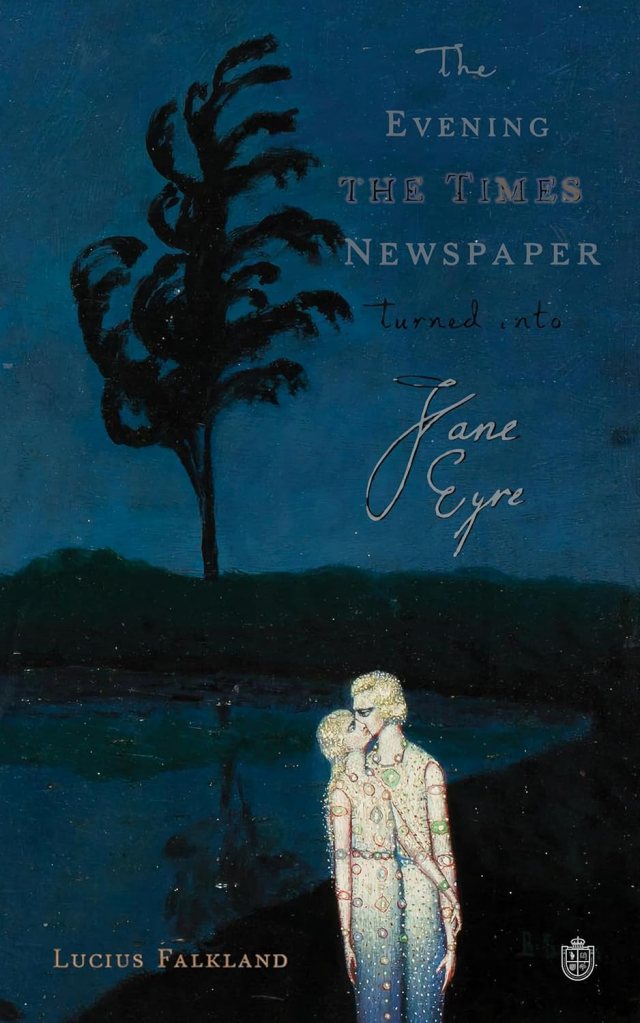
Lucius Falkland, ‘The Evening The Times Newspaper Turned Into Jane Eyre’

My life had become like a broadsheet,
The Telegraph, maybe The Times:
The financial section—prose sober and neat;
Inflation—the yen falls and climbs.
While reading this daily, and ever more jaded,
By boring discussions of wages,
My newspaper tore, the ink quickly faded:
You ripped your way up through the pages.

The suits on the concourse at Waterloo Station
All noticed my joy and my fright.
My Times underwent a divine transformation
Like someone regaining his sight.
You stood by the clock where they waited for trains,
Familiar, reserved, but with flair.
My journal of record? It went up in flames:
In a flash, I was reading Jane Eyre.

My feelings, so dulled by SSRIs
And age with the wealth of a hovel,
Without any warning felt very alive;
I was suddenly part of a novel.
My wife was now Bertha, enraged in the attic,
Your boyfriend was St. John, I guess.
Attraction was instant, inspiring, emphatic:
This burgundy-nailed governess.

The prose promptly altered: transcendent, noetic,
No longer the stark black and white;
Facts, figures, but beauty so very poetic:
A sunset one Thornfield Hall night.
I’m not quite as brooding as him, that I’m sure,
And you’re not as serious or neat.
The Times had become such a hideous bore,
All it took was for us two to meet.

Within half an hour we both felt so certain
But English restraint and control
Meant it took time to say we were clearly one person,
Each making the other one whole.
I’ve accepted my life’s not The Times but Jane Eyre
And in Brontë my future I’ll find.
Let’s hope if this moves beyond an affair
I don’t get myself burnt and go blind.

*****

Lucius Falkland writes: “This poem (first published in The Society of Classical Poets) recalls how my sometime paramour and I first met and very quickly felt that we had encountered ourselves in each other. Due to the large age gap, her friend referred to me as Mr Rochester, from Jane Eyre. This is how we started referring to each other. Her boyfriend also became known as St John thereafter. It also tries to capture the feeling, when you are deeply in love, that life seems fateful and inherently profound, as though you are just a character in a novel written by someone else. The jocular tone attempts to encapsulate the joy and absurdity of the experience.”

Lucius Falkland is the nom de plume of a writer and academic originally from London. His first poetry volume, The Evening The Times Newspaper Turned Into Jane Eyre, was published in 2025 with Exeter House Publishing. It can be purchased here.

Using form: Pantoum: Brian Allgar, ‘And then I told you’

We kissed. And then I told you (it was over
dinner at some fancy restaurant)
I loved you, but I couldn’t live like this,
meeting from time to time; I needed more.

Dinner at some fancy restaurant,
and timid sex at your place; that was all, each
meeting. From time to time, I needed more
than you were ready for, so reticent

and timid. Sex at your place – that was all. Each
meeting’s end, I tried not to ask more of you
than you were ready for. So, reticent,
I touched your face in silence, lovingly.

Meetings end. I tried not to ask more of you;
I loved you, but I couldn’t live like this.
I touched your face. In silence, lovingly,
we kissed, and then I told you it was over.

*****

Brian Allgar writes: “In general, I don’t much care for poetic forms, such as the triolet and the villanelle, with repeated lines. But I was attracted by the pantoum’s requirement that the repeated lines, though containing exactly the same words, should somewhat change in meaning each time.”

‘And then I told you’ was first published in Snakeskin.

Brian Allgar was born a mere 22 months before Adolf Hitler committed suicide, although no causal connection between the two events has ever been firmly established. Despite having lived in Paris since 1982, he remains immutably English. He started entering humorous competitions in 1967, but took a 35-year break, finally re-emerging in 2011 as a kind of Rip Van Winkle of the literary competition world. He also drinks malt whisky and writes music, which may explain his fondness for Mendelssohn’s Scottish Symphony. He is the author of The Ayterzedd: A Bestiary of (mostly) Alien Beings and An Answer from the Past, being the story of Rasselas and Figaro. He is also the co-author, with Marcus Bales, of Baleful Biographica, all published by Kelsay Books and available from the publisher or from Amazon.

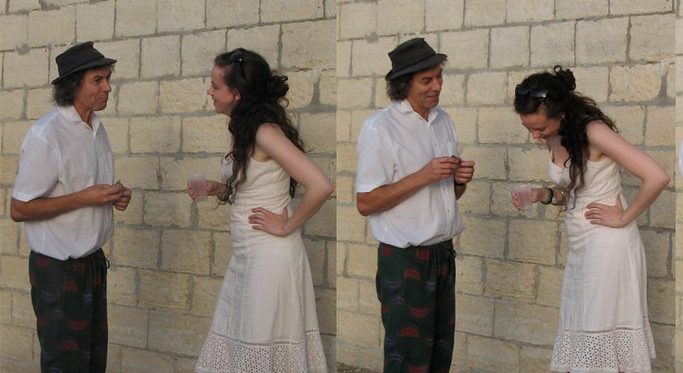
Photo: “French restaurant with Jean” by obvio171 is licensed under CC BY-SA 2.0.

Parody: Brian Allgar, ‘If you can …’

If you can make her laugh, that’s half the battle,
Especially if she’s married to a bore;
If you can make her glad to be your chattel,
Yet treat her like a lady, not a whore;
If you can undo bra-straps single-handed
While murmuring enticements in her ear;
If you can make her think you’re being candid
When telling her just what she wants to hear;
If you, my friend, can easily persuade her
To sample things she’s never tried before,
Or if she sighs with pleasure when you’ve laid her,
And smiles as you sneak out by the back door;
If you can tolerate her endless prattle,
(And never tell her “Darling, get a life”),
Her gossip and her foolish tittle-tattle—
Then you’re the bastard who seduced my wife!

*****

Brian Allgar writes: “Written with a particularly amoral friend of mine in mind, although I am glad to say that the narrator is not me.”

Brian Allgar was born a mere 22 months before Adolf Hitler committed suicide, although no causal connection between the two events has ever been firmly established. Despite having lived in Paris since 1982, he remains immutably English. He started entering humorous competitions in 1967, but took a 35-year break, finally re-emerging in 2011 as a kind of Rip Van Winkle of the literary competition world. He also drinks malt whisky and writes music, which may explain his fondness for Mendelssohn’s Scottish Symphony.
He is the author of “The Ayterzedd: A Bestiary of (mostly) Alien Beings” and “An Answer from the Past, being the story of Rasselas and Figaro”, both available from Kelsay Books and Amazon.

Photo: “Making Her Laugh II” by kahala is licensed under CC BY-NC-ND 2.0.