Tag Archives: England

Semi-formal at best, RHL, ‘Remembering Winter’

I remember winter when it was only
Mostly too cold to swim –
The churning suck and drag of waves under the rock.
Yes, there are flowers – there are always flowers –
But, with the poinciana stripped of leaves,
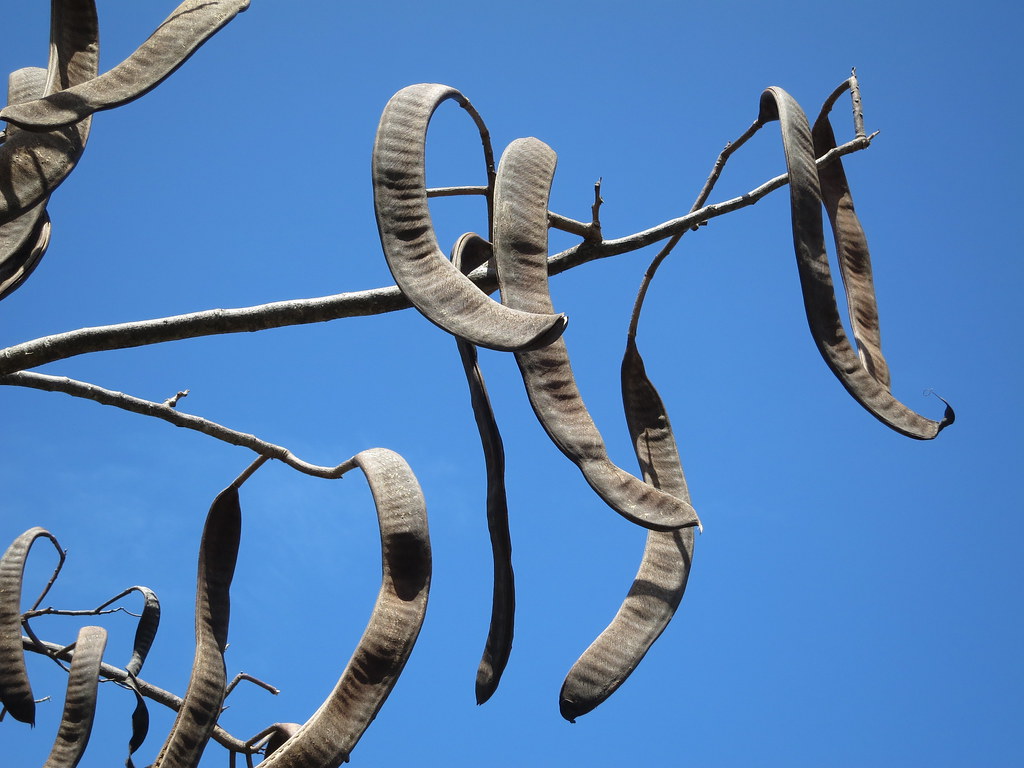
Its pods like forearms thinned and bent with age,
The rattling of sticks, the hiss of wind,
The broken sea stuck futilely on Wash
With endless turning, churning, foaming pulse –
How long can waves beat on a rock before
The tired rock gives up?

Yes, I remember later northern winters –
The bitter satisfaction of a too-thin sun,
Beauty without the joy, light without heat.
Feet always cold, clothes never quite enough;
Skin drying back from fingernails, lips chapped, throat raw,
The smell of damp coats, never fully dry.

I dream of alternating south and north
And never having to be cold again,
Turning, returning, always in the sun –
Or settling in an equatorial land
And swimming year-round, mellowing on the sand
Flattening my temperature, my will,
Soaking up sun, and dreaming I’m asleep.

Bitter it is, the winter argument,
Betrayed by world that slices off the years,
I have no love of winter, and I feel
Trapped, and betrayer of true kids of mine –
But look – they love it, so I’m further trapped,
Bound to the year that crushes as it turns,
And has become their home – are they then kids of mine?
Ice – snow – the winding down of life and year.

And I’ve known other winters all too well –
Where years of spring gave way to years of warmth,
Blossoms to children sparkling in the light,
The wonders of the world’s sharp sense delight;
Then years of fruit, as independent seeds
Form their own thoughts and follow darkening paths
Falling away, on purpose shrivel up,
And days grow shorter, moods swing soft and harsh
Drizzle sets in for weeks, cold in the bones,
Cold in the head, and colder in the heart –
That’s how the years of endless winter start.

Bleakness to bleakness, blackness into black;
Lives dry and crack,
Sap gone from tree and house and bone.
Who knew that emptiness could weigh so much?
Give me the strength to last to Spring, or start my own.

*****

This poem is from decades ago, in one of those periods where life felt bleak. (But such seasons pass!) For a long time I was unsure of the poem because it always feels like sloppiness and cheating when my rants are low on rhythm and rhyme; but George Simmers liked it enough for inclusion in Snakeskin, and that’s more than good enough for me.

Photo: “Shack-Shacks” by Chris Hunkeler is licensed under CC BY-SA 2.0.
Odd poem: King Canute’s spontaneous song

Merie sungen the Muneches binnen Ely,
Tha Cnut ching reu ther by.
Roweth, cnites, noer the land,
and here we thes Muneches saeng.

King Canute, on a journey by water to Ely, heard the chanting of monks and at once–according to the 12th century Liber Eliensis, but translated out of the original Latin and Old English–“With his own mouth expressing the joy he felt in his heart, he composed a song in English, in these words, which begins thus:

Merrily sang the monks of Ely
As Canute the king rowed there by.
Row, knights, nearer the land,
And hear we these monks’ song,

and the rest that follows, which to this day is sung at dances among the people and remembered in popular sayings.”

After a rocky beginning, the Danish-born Canute (or Cnut) became a well-loved King of England. Canute’s father Sweyn Forkbeard, King of Denmark, had invaded England twice. The first time was in 1003 to avenge the death of his sister Gunhilde in the St. Brice’s Day general massacre of Danes ordered by the Wessex King Æthelred the Unready (the massacre itself being in response to years of slaughter and pillage by raiding Danes). The second time was in 1013, when he overthrew Æthelred. Sweyn died in 1014, and Æthelred resumed his rule. Sweyn’s son Canute invaded in 1015, Æthelred died in 1016, and Canute the Great ruled England (and Denmark, and latterly Norway) until 1035.

First misconception: Æthelred the Unready doesn’t mean he was ill-prepared. The “red” or “rede” in both his name and his nickname means “advice”, and his pun of a nickname makes him “King Well-Advised the Ill-Advised”.

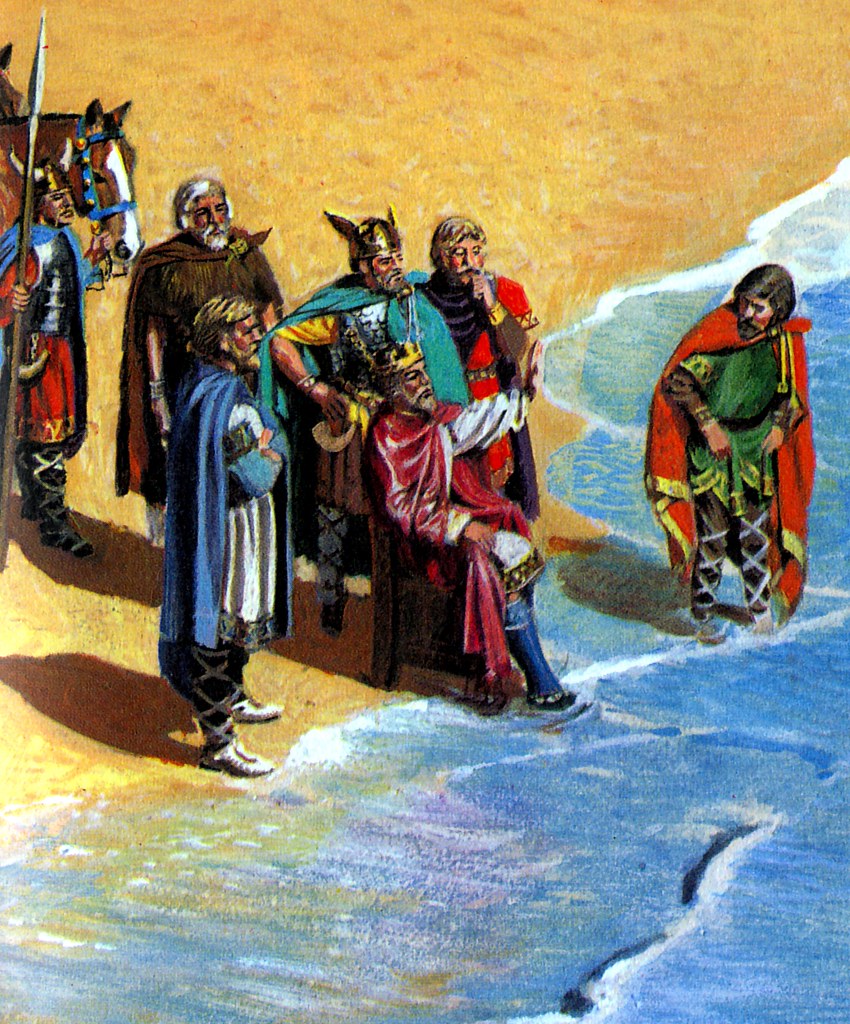
Second misconception: King Canute wasn’t being foolish in the story of his ordering the incoming tide to stop. He did it to shut up the flattering courtiers who told him he was all-powerful and could do anything. He had his chair set up on the beach and ordered the tide to go back; when the sea soaked him and his courtiers, he made it clear that he wanted truth and not flattery from his advisers.

Canute married King Æthelred the Unready’s widow Emma, perhaps for political reasons and as a way for Emma to protect her sons; it seems that the marriage grew to be very affectionate. Canute was very happy in England, and increasingly relied on the Anglo-Saxon nobility rather than on imported Danes for his control, taxation and administration of the country. Two of his sons followed him as kings of England, and for a while it looked like England might become a permanent part of Scandinavia. And personally, as an Anglo-Dane, I regret this didn’t happen.

Picture: “The Wisdom of Knut” by spratmackrel is licensed under CC BY-SA 2.0