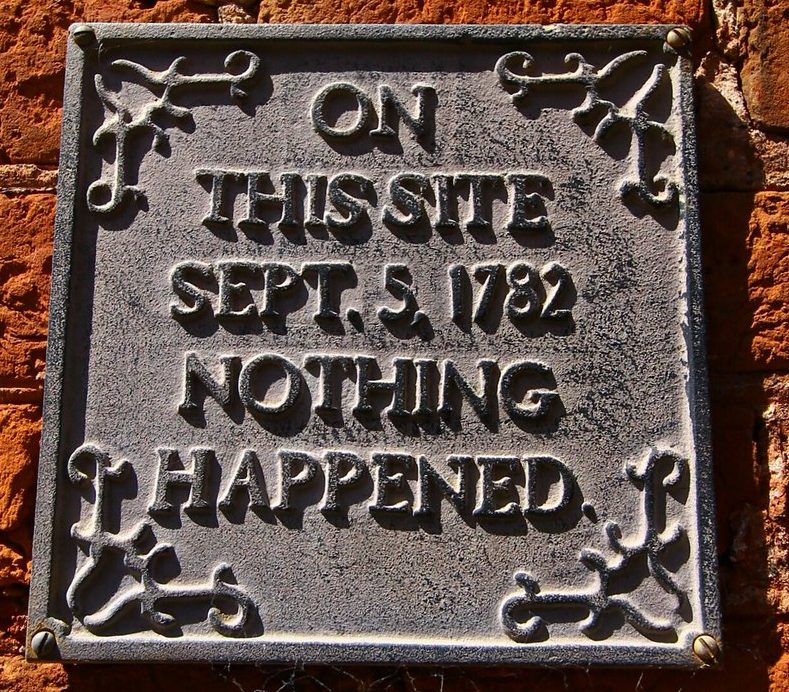
“poetry makes nothing happen . . . .”
—W. H. Auden, “In Memory of W. B. Yeats”
Poetry makes nothing happen.
Song lyrics, on the other hand,
Wedge into people’s hearts
When sung by a heartthrob band.
Poetry makes nothing happen.
It doesn’t enforce a cause.
That’s the way of propaganda,
With all its fixed applause.
Poetry makes nothing happen.
But I’ve seen something sublime
In the eyes of a student reading
Eliot’s Prufrock the first time.
Poetry makes nothing happen.
But must events take place
For poems to be eventful—
To make a normal pulse race?
*****
David Galef writes: “This poem was inspired by the memory of a graduate seminar taught by Edward Mendelson, a professor at Columbia University and the executor of the Auden estate. What Mendelson doesn’t know about Auden probably isn’t worth knowing, and what he brought to the study of Auden’s poetry was a deep knowledge of technique, context, and Auden’s modus cogitandi. Tired of those who quoted Auden’s famous line from “In Memory of W. B. Yeats” to indicate the inutility of poetry, Mendelson pointed out that the significance of “For poetry makes nothing happen” is more a point about art versus propaganda. The emphasis shouldn’t be on “nothing” but on “makes.” The aim of agitprop is to make all minds bend in one direction. True art, on the other hand, doesn’t force one meaning on the audience, though it may be powerfully suggestive. As Auden continues (and people who quote often omit surrounding words),
“it survives
In the valley of its making where executives
Would never want to tamper, flows on south
From ranches of isolation and the busy griefs,
Raw towns that we believe and die in; it survives,
A way of happening, a mouth.”
Poetry does indeed enjoy a special, immortal status, but those who want it to be a crowd-controlling megaphone will probably be disappointed.
What I wanted to accomplish in ‘A Question of Emphasis’ is just what stressing the right
word can do, and how poetry can change lives, in its own way.”
David Galef has published over two hundred poems in magazines ranging from Light and Measure to The Yale Review. He’s also published two poetry volumes, Flaws and Kanji Poems, as well as two chapbooks, Lists and Apocalypses. In real life, he directs the creative writing program at Montclair State University.
www.davidgalef.com
Editor: I can’t help adding this 6-minute exposition of emphasis from Hamlet: https://vk.com/video17165_456239062 with its star-studded cast… Enjoy!
Photo: “Nothing happened” by Graham Ó Síodhacháin is licensed under CC BY-SA 2.0.
 Form in Formless Times
While I admire David Galef’s artistry, I must quibble with his premise…
The biblical prophets certainly made things happen with their poetry. Not always for the best, thinking of verses that endorsed slavery, sexism, ethnic cleansing and genocide, but no one can deny their influence.
I have argued the William Blake is the world’s most important poet/artist due to his influence on singer-songwriters like Bob Dylan, John Lennon and Jim Morrison (who named his group the Doors after Blake’s “doors of perception”).
Walt Whitman was a powerful voice for tolerance, a voice millions of people have heeded directly, and even more indirectly.
Blake and Whitman helped inspire the hippies, the flower children, the Beats, the Beatles, etc.
Robert Burns has been influential around the world with his idea that the common man is as good as any king or lord (and probably better than most). Abraham Lincoln was a lover of Burns’s poetry and could have been influenced by Burns to oppose slavery.
Spiritual poets like Hafez, Rumi and St. John of the Cross have impacted many lives.
In our day poets like Langston Hughes and Maya Angelou have been impactful voices for racial equality and social justice.
Wilfred Owen and other war poets helped inform the world of the harsh realities of modern warfare.
I could continue, but these are the names that leap to mind.
LikeLiked by 2 people