Category Archives: parody

Ann Drysdale, ‘Winter Song’

When blizzards blow under the tiles
and the dishcloth crisps on the draining board
and the snowscape stretches for miles and miles
and only the idiot ventures abroad.
When it’s early to bed, and thank heavens for that,
then coldly keens the cast-out cat:
Miaow! Miaow! – a doleful din –
and who will rise and let him in?

When slippery stones by the pond
make filling a bucket an effort of will
and you’re walled-up for weeks in the back of beyond
in a farm at the foot of a hell of a hill
then it’s early to bed, and thank heavens for that,
till coldly keens the cast-out cat:
Miaow! Miaow! – a doleful din –
and who will rise and let him in?

*****

Ann Drysdale writes: “It was published in my very first collection, The Turn of the Cucumber (Peterloo Poets 1995) and dates from a time when I was bringing up three children as a single mum on a hand-to-mouth smallholding on the North York Moors.”

Editor’s note: Ann Drysdale takes the structure, but not the precise metre, of Shakespeare’s ‘Winter Song’ from Love’s Labours Lost. Her rollicking metre allows her “and the snowscape stretches for miles and miles” and the wonderful “in a farm at the foot of a hell of a hill”, for a bigger wintry landscape than Shakespeare shows.

Ann Drysdale now lives in South Wales and has been a hill farmer, water-gypsy, newspaper columnist and single parent – not necessarily in that order. Her eighth volume of poetry, Feeling Unusual, has recently joined a mixed list of published writing, including memoir, essays and a gonzo guidebook to the City of Newport.
http://www.poetrypf.co.uk/anndrysdalepage.html
http://www.shoestring-press.com

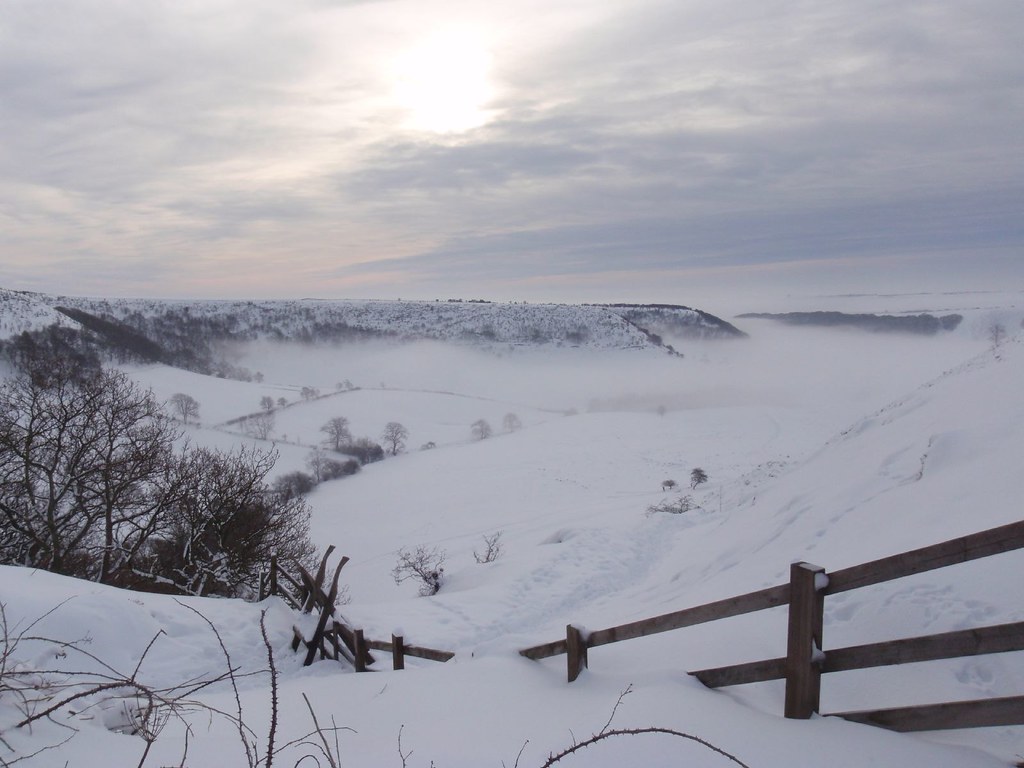
Photo: “Hole of Horkum, North York Moors” by reinholdbehringer is licensed under CC BY-NC-SA 2.0.

Marcus Bales, ‘Down-sizing’

I will retire and go to buy a ranch-house home,
And a fenced yard build there, for the dogs to roam around,
And raised beds, full of easier-weeding loam,
And cultivate my garden’s ground.

And I shall have my wife there, who knows the signs of stroke.
Morning and night, we’ll take the pills our doctors gave us,
And cook our meals of beans and rice because we’re broke —
And hope the kids vote blue, and save us.

I will retire, and maybe write and, when I’ve napped,
Cruise the internet, perhaps, and lament the loss
Of civility, and watch the fascists arrive, wrapped
In the flag, and holding a Bible and cross.

*****

Marcus Bales writes: “Yeats‘s ‘The Lake Isle of Innisfree‘ irritates me. Its narrator, left to live on an isle, would be dead in a week. Yeats’s mode of life was a series of retreats from country-home to country-home, sponging off the wealthy. Retreat is his vade mecum, and ‘The Lake Isle’ is only his most famous one. So I thought, well what the hell am I doing differently? And the answer is, not much. I made a career out of selling expensive things to rich people, too. And my retirement will be a retreat as well. Where’s my Lake Isle? In the suburbs, funded by Social Security instead of Lady Gregory, perhaps, but no less a throwing up of the hands and leaving it to the next generation to try to straighten out what mine has done.

“So Yeats’s narrator retreats to the high-fantasy farming of an isle in a lake, as if farming weren’t hard enough but it needed the difficulties of getting supplies across water. My narrator retreats to the suburbs without enough money to sustain his prior lifestyle. Two silly poets writing silly stuff.”

Not much is known about Marcus Bales except that he lives and works in Cleveland, Ohio, and that his work has not been published in Poetry or The New Yorker. However his ‘51 Poems‘ is available from Amazon. He has been published in several of the Potcake Chapbooks (‘Form in Formless Times’).

Photo: “Rosie poising with the garden Buddha, plants, raised bed, bamboo fence, Garden for the Buddha in progress, front yard, Seattle, Washington, USA” by Wonderlane is marked with CC0 1.0.

The Kipling Boom, 1890

“Rudyard Kipling, gifted stripling”… a lot of his work is superb: the voices caught in his poems and short stories, the endlessly rereadable Just So Stories with his own lush illustrations and catchy peripheral poems, his novels. It’s more than just the verse that has lasting strength.

George Simmers's avatarGreat War Fiction

Researching (i.e. idly Googling) Kipling, I came across this rather good bit of verse printed in the San Francisco Examiner of 1890. It’s a reaction to the sudden and seemingly unstoppable vogue for the works of Kipling. The Examiner credits it to the Saturday Review, but since the references are mostly American, I don’t think this would be the London Saturday.

View original post 90 more words

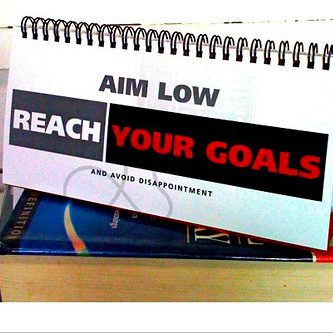
Peggy Landsman, ‘Minimum Achiever’

Minimum Achiever, for years forlorn,
Grew grey and fat and out of fashion;
She wore the jeans she’d always worn,
And swore with passion.

Minimum loved the days gone by
When wars were wrong and songs were moving;
With files from the FBI,
What was she proving?

Minimum sighed for what had been,
And bitched and moaned how nothing lasted;
She longed for one more great love-in,
And dropping acid.

Minimum mourned the hippie years,
The counterculture’s zest and freedom;
She mourned ideals—her sell-out peers
Didn’t seem to need ’em.

Minimum loved her artsy friends,
And swore that she would start achieving;
Her starts were great, but had no ends
And left her grieving.

Minimum cursed the worthless game
And gave it up instead of trying;
She missed her fifteen minutes’ fame,
But wasn’t crying.

Minimum scorned the job she sought,
But how could she survive without it?
Minimum thought, and thought, and thought,
And thought about it.

Minimum Achiever, starting late,
Started out by hesitating;
Minimum knew she shouldn’t wait,
And kept on waiting.

*****

‘Minimum Achiever’ was first published with apologies to Edwin Arlington Robinson in Clockwise Cat.

Peggy Landsman writes: “I started writing ‘Minimum Achiever’ in 1978. Back then, Minimum watched TV: “…She turned and turned and turned the dial,/ but every station showed World War Three,/ modern, nuclear style.” She was also very political: “Minimum loved the anarchists,/ did actions in the name of Emma….”  In the almost thirty years it took me to complete the present version, she went through many changes. The one constant, though, has always been that she is the great-granddaughter of Miniver Cheevy.”

Peggy Landsman is the author of the full-length poetry collection, Too Much World, Not Enough Chocolate (forthcoming from Nightingale & Sparrow Press, 2023), and two poetry chapbooks, Our Words, Our Worlds (Kelsay Books, 2021) and To-wit To-woo (Foothills Publishing, 2008). She lives in South Florida where she swims in the warm Atlantic Ocean every chance she gets. A selection of her poems and prose pieces can be read on her website: https://peggylandsman.wordpress.com/

Photo: “For all those low achievers” by Claire_Sambrook is licensed under CC BY-NC 2.0.

Parody poem: Marcus Bales, ‘Slash Wednesday’

I
Because I do not do the limerick line
Because I do not do
Because I do not do the limerick
Desiring this man’s schtick or that man’s joke
I will stick to knocking out free verse
(If here and there a rhyme so much the worse)
In mournful moans
Presented ragged-right upon the page.

II
There once was a Lady with three
White leopards, a juniper tree,
And a bag full of bones
That sang their sad moans
Of what they had once hoped to be.

III
At every turning of the turning stair,
Your breathing hard, your eyesight edged with dark,
You see the face of hope and of despair.

You breathe the vapor of the fetid air
And toil as if some atmospheric shark
At every turning of the turning stair

Was hunting through the gathering darkness there,
While back and forth across the narrative arc
You see the face of hope and of despair.

At every turning there’s a window where
You contemplate a drop that’s still more stark
At every turning of the turning stair.

Instead you circle upward as you swear
Like you are looking for a place to park.
You see the face of hope and of despair.

You can’t endure the future’s dismal dare
Nor drag yourself to put out your own spark
At every turning of the turning stair.

You’re learning how to care and not to care
And whether you will make or be a mark.
You see the face of hope and of despair
At every turning of the turning stair.

IV
Higgledy piggledy
Here we are all of us
Trudging along where some
Billions have trod

Smelling the flowers and
Trusting religionists’
Tergiversational
Rodomontade.

V
If the word that is lost isn’t lost,
And the word that is spent isn’t spent
Then silence is actually speaking,
And meaning is something unmeant.

If the meaning is what is unheard
And the word is the thing that’s unspoken
Then how do you hear if a word
Has a meaning that hasn’t been broken.

If the unspoken word must be still
And the unheard is what it’s about
To have heard the unhearable meaning
The inside has got to be out.

If the unheard were out of this world
And the light shone in darkness were dark
Then the unlit unheard would be meaning
If the snuffer provided the spark.

If the yadda can yadda its yadda
And the pocus was what hocus took
Then gobble must surely be gobble
Though dee separates it from gook.

VI
Awake! Your hope to turn or not to turn
Is wasting time – but go ahead and yearn
To see the light or hear the word to know
A heaven human beings can’t discern.

There’s nothing there for such as you and me;
We make our meaning up from what we see
And hear and touch and taste and smell and think —
But all there is is fragments and debris.

The steps are just the steps, the stairs the stairs,
The rest is merely human hopes and prayers
That do no more than hopes and prayers can do,
And nothing’s chasing you except your heirs.

No unmoved mover writes upon some slate
That mortals may abate or not abate;
No hope and no despairing of that hope
Reveals what nothing states, or doesn’t state.

Whatever happens happens because of us
We get a muss when we don’t make a fuss
Demanding right from wrong not mere convenience:
We’re all complicit underneath this bus.

Awake! Don’t hope to turn or not to turn,
Don’t pray that this is none of your concern.
Awake! What will it take for you to learn
That if it all burns down you, too, will burn?

*****

Marcus Bales has produced this wonderful set of parodies of the long T.S. Eliot poem ‘Ash Wednesday‘, beginning with a piece in the poem’s style for Part I,
Because I do not hope to turn again
Because I do not hope
Because I do not hope to turn
Desiring this man’s gift and that man’s scope

but then moving into a limerick for Part II’s
Lady, three white leopards sat under a juniper-tree

and a 22-line villanelle for Part III’s
At the first turning of the second stair

and a double dactyl for Part IV’s
Who walked between the violet and the violet

and quatrains for Part V’s
If the lost word is lost, if the spent word is spent
If the unheard, unspoken
Word is unspoken, unheard;

and finally rubaiyat with a strong flavour of FitzGerald’s Omar Khayyam for Part VI’s
Although I do not hope to turn again
Although I do not hope
Although I do not hope to turn

Ash Wednesday‘ has proved one of Eliot’s best-known and most quoted poems, with its signature mixture of Christian mysticism, personal emotion, loose form and scattered rhyme, rich imagery and memorable wordplay. Bales’ ‘Slash Wednesday‘ is an appropriate tour de force of a back-handed homage, mocking Eliot’s ragged rambling with a sampling of forms that could have been used (inappropriately) instead.

Not much is known about Marcus Bales except that he lives and works in Cleveland, Ohio, and that his work has not been published in Poetry or The New Yorker. However his ’51 Poems’ is available from Amazon. He has been published in several of the Potcake Chapbooks (‘form in formless times’).

This is being posted two days late for T.S. Eliot’s birthday, but as it’s for the already late T.S. Eliot that shouldn’t matter too much…

Photo: “File:T S Eliot Simon Fieldhouse.jpg” by Simon Fieldhouse is licensed under CC BY-SA 3.0.

Potcake Poet’s Choice: Marcus Bales, ‘Miniver Cheever III’

Miniver Cheevy Junior’s kid
Despised his own contemporaries,
Like his poetic forebears did,
As functionaries.

Miniver missed old apartheids,
South Africa and Mississippi,
And longed to go on freedom rides
And lay a hippie.

Miniver yearned for days gone by,
For free love’s newly bra-less boobies,
For Woodstock, rock and roll, tie-dye,
And smoking doobies.

Miniver mourned for Owsley Blue,
The name, he understood, for acid.
At Kool-Aid Tests and love-ins, too,
He’d be less flaccid.

Miniver loved the Beatles, Stones,
Frank Zappa, Zep, and, yes, the Monkees;
He didn’t care, he had a jones
For tuneful junkies.

He cursed the mosh-pit debutantes,
And viewed hip-hop with open loathing;
He missed the sight of Mary Quant’s
Bell-bottomed clothing.

He metaphored and analogued
And similed to try to flout it;
Miniver blogged, and blogged, and blogged,
And blogged about it.

And so there’s Miniver number three,
Who’s no more dour but no less bitter.
He shakes his head and sighs. Then he
Logs in to Twitter.

Marcus Bales writes: “Here’s one that has its own built-in reason for writing it: DF Parry had done such a good job, who could resist? But Miniver Cheevy III was written so long ago, now, that possibly it’s time to explore IV.”

Not much is known about Marcus Bales except that he lives and works in Cleveland, Ohio, and that his work has not been published in Poetry or The New Yorker. However his “51 Poems” is available from Amazon. He has been published in several of the Potcake Chapbooks (“form in formless times”), and would like you to be familiar with the forerunners to his ‘Miniver Cheevy III’:

‘Miniver Cheevy, Jr.’ by D.F. Parry

Miniver Cheevy, Jr., child
Of Robinson’s renowned creation
Also lamented and reviled
His generation.

Miniver similarly spurned
The present that so irked his pater,
But that langsyne for which he yearned
Came somewhat later.

Miniver wished he were alive
When dividends came due each quarter,
When Goldman Sachs was 205
And skirts were shorter.

Miniver gave no hoot in hell
For Camelot or proud Troy’s pillage;
He would have much preferred to dwell
In Greenwich Village.

Miniver cherished fond regrets
For days when benefits were boundless;
When radios were crystal sets
And movies soundless.

Miniver missed the iron grills,
The whispered word, the swift admission,
The bath-tub gin, and other thrills
Of Prohibition.

Miniver longed, as all men long,
To turn back time (his eyes would moisten),
To dance the Charleston, play mah jong
And smuggle Joyce in.

Miniver Cheevy, Jr., swore
And drank until the drink imperiled
Health, then sighed, and read some more
F. Scott Fitzgerald.

The original, of course, is Miniver Cheevy‘ by Edwin Arlington Robinson:

Miniver Cheevy, child of scorn,
Grew lean while he assailed the seasons;
He wept that he was ever born,
And he had reasons.

Miniver loved the days of old
When swords were bright and steeds were prancing;
The vision of a warrior bold
Would set him dancing.

Miniver sighed for what was not,
And dreamed, and rested from his labors;
He dreamed of Thebes and Camelot,
And Priam’s neighbors.

Miniver mourned the ripe renown
That made so many a name so fragrant;
He mourned Romance, now on the town,
And Art, a vagrant.

Miniver loved the Medici,
Albeit he had never seen one;
He would have sinned incessantly
Could he have been one.

Miniver cursed the commonplace
And eyed a khaki suit with loathing;
He missed the mediæval grace
Of iron clothing.

Miniver scorned the gold he sought,
But sore annoyed was he without it;
Miniver thought, and thought, and thought,
And thought about it.

Miniver Cheevy, born too late,
Scratched his head and kept on thinking;
Miniver coughed, and called it fate,
And kept on drinking.

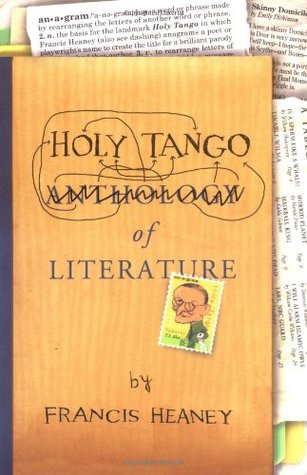
Review: “Holy Tango of Literature”, amazing parodies by Francis Heaney

Holy Tango

T.S. Eliot anagrams to “Toilets”. Francis Heaney therefore uses that theme to parody Eliot’s best-known poem, “The Love Song of J. Alfred Prufrock”, as the opening poem of the book:

Let us go then, to the john,
Where the toilet seat waits to be sat upon
Like a lover’s lap perched upon ceramic;
Let us go, through doors that do not always lock,
Which means you ought to knock
Lest opening one reveal a soul within
Who’ll shout, “Stay out! Did you not see my shin,
Framed within the gap twixt floor and stall?”
No, I did not see that at all.
That is not what I saw, at all.

To the stall the people come to go,
Reading an obscene graffito.

We have lingered in the chamber labeled “MEN”
Till attendants proffer aftershave and mints
As we lather up our hands with soap, and rinse.

And so it goes, throughout the Holy Tango of Literature: anagram the poet’s name, use that as the theme for parodying their best known poem. Here are some of the openings:

e. e. cummings: “nice smug me”

nice smug me lived in a pretty hip town
(with up so noses snobs looking down)
saks moomba vong prada
i wore my mesclun i ate my uggs

William Shakespeare: “Is a sperm like a whale?”

Shall I compare thee to a sperm whale, sperm?
Thou art more tiny and more resolute:

Gerard Manley Hopkins: “Kong ran my dealership”

I hired last summer someone simian, King
Kong of Indies islands, fifty-foot-fierce Gorilla, out of hiding

Chaucer, Dorothy Parker, Frost, Whitman, Gwendolyn Brooks… it is an extensive collection, including parodies of plays by Wilde, Woody Allen, Beckett, Pinter and so on. Samuel Taylor Coleridge, who anagrams to “Multicolored Argyle Sea”, is a particular delight. Beginning

It is an ancient Mariner,
And he taketh lots of drugs,

it surreptitiously develops a second level of parody of a completely different drug-related poem. I’ll let you discover it for yourself.

And one of my favorites is William Blake, “Likable Wilma”:

Wilma, Wilma, in thy blouse,
Red-haired prehistoric spouse,
What immortal animator
Was thy slender waist’s creator?

When the Rubble clan moved in,
Was Betty jealous of thy skin,
Thy noble nose, thy dimpled knee?
Did he who penciled Fred draw thee?

Wilma, Wilma, burning bright, ye
Cartoon goddess Aphrodite,
Was it Hanna or Barbera
Made thee hot as some caldera?

The book is out of print, and its publisher out of business, but even if you can’t find a used copy, it is still available online for free, although without the illustrations… just scroll down the linked page and you’ll find it. It is the most satisfying collection of parodies I have ever read.