
Tag Archives: alliterative verse

Translation from the Exeter Book: Maryann Corbett, ‘Riddle 25’

A wonder, that’s me, · what the women wait for
with hope, and a handy · help to their near ones.
I won’t hurt a soul · but the one who slays me.
I’ve a stem that sticks · up straight in the bed
and shaggy hairiness · hidden below.
The farmer’s girl– · she’s a forward thing,
and good to look at– · gets me in a grip
and reaches right · for my ruddy self,
handles my head · and holds me close
clasping me firmly. · She’ll feel my force,
the toss-curled tease. · There’ll be tears in her eyes.

*****

Maryann Corbett writes: “Riddle 25: Onion–This poem is a fairly faithful translation of one of the Old English riddles of the Exeter Book. Readers new to the riddles are sometimes surprised that a book preserved in a cathedral library includes such bits of naughty double-entendre.”

Maryann Corbett’s translation is collected in ‘Mid Evil’ (which won the 2014 Richard Wilbur Award). The original reads:
Ic eom wunderlicu wiht · wifum on hyhte
neahbuendum nyt; · nægum sceþþe
burgsittendra nymthe · bonan anum.
Staþol min is steapheah · stonde ic on bedde
neoðan ruh nathwær. · Neþeð hwilum
ful cyrtenu · ceorles dohtor
modwlonc meowle · þæt heo on mec gripe
ræseð mec on reodne · reafath min heafod
fegeð mec on fæsten. · Feleþ sona
mines gemotes · seo þe mec nearwað
wif wundenlocc. · Wæt bið þæt eage.

Maryann Corbett earned a doctorate in English from the University of Minnesota in 1981 and expected to be teaching Beowulf and Chaucer and the history of the English language. Instead, she spent almost thirty-five years working for the Office of the Revisor of Statutes of the Minnesota Legislature, helping attorneys to write in plain English and coordinating the creation of finding aids for the law. She returned to writing poetry after thirty years away from the craft in 2005 and is now the author of two chapbooks and six full-length collections, most recently The O in the Air (Franciscan U. Press, 2023). Her work has won the Willis Barnstone Translation Prize and the Richard Wilbur Award, has appeared in many journals on both sides of the Atlantic, and is included in anthologies like Measure for Measure: An Anthology of Poetic Meters and The Best American Poetry.

Photo: “Onion’s effect” by the Italian voice is licensed under CC BY 2.0.
Using form: alliterative verse: A.M. Juster, ‘Three Visitors’

Mist on moonspill as midnight nears.
Adrift but not dreaming our drowsy son
is covered and kissed. At the kitchen door
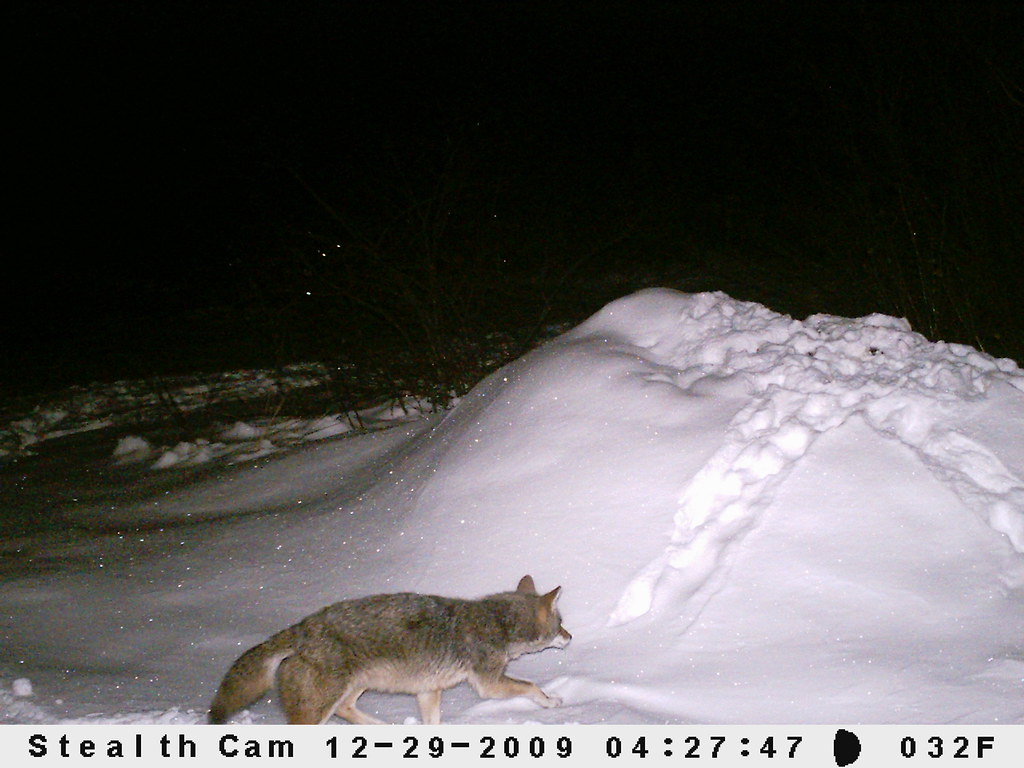
our old basset is barking; coyotes out back
are standing like statues down by the dogwoods.
Across the crystal of crusted snow,
they search for stragglers to startle and chase.
Their vigil reveals no victims this night.

Trash would be trouble; they trot away
unbothered by bloodthroated growling and baying.
No star distracts their stealthy march.
As the highway hums they howl through the calm,
then savor new scents that spice their path
in this world awash in wonder and wrath.

*****

Editor’s comments: “Alliterative verse is a form found across the old Germanic language family including Old English, Middle English, Old Norse, Old High German and Old Saxon. It relies on a chant-like use of stressed syllables and does not count all syllables in the way that Romance poetry tends to; and it relies on alliteration rather than rhyme as its key memory-aid for recitation. Although there are many regional variations in the structure, most include these key points:
each line is divided into two halves by a heavy caesura;
each half has two heavily stressed syllables (“lifts”) as well as some unstressed ones (“dips”);
the two lifts of the first half alliterate with the first lift of the second half, but not with the second.
There is a good article on alliterative verse in Wikipedia which goes into more detail and also quotes or references a range of modern poets who have experimented with the form: Tolkien, C.S. Lewis, Auden, Richard Wilbur, Ezra Pound, Heaney… and Alaric Watts for his alliterative abecedarian ‘Siege of Belgrade‘. Alliterative verse can work smoothly and powerfully in English.”

A.M. Juster writes: “After translating the anonymous long Old English poem ‘The Phoenix‘ for a stalled book, I became interested in the possibilities for original alliterative verse—this poem is the first of those poems. A reader should also be able to detect the ghost of a sonnet in it due to the length of the stanzas, the turn, and the closing rhymed couplet.
“The poem started in my mind with the real invasion of coyotes in our suburban Boston neighborhood, but as I struggled with the poem it seemed to be situated in a beautiful place I have never seen—a fusion of our house and the house my bride’s parents used to have in Vermont (where I set an experimental sonnet in my first book).
“Although I think the religious undercurrents are fairly subtle, Micah Mattix & Sally Thomas did include the poem in their recent Paraclete Press anthology of Christian Poetry in America since 1940.”

A.M. Juster’s poems and translations have appeared in Poetry, The Paris Review, The Hudson Review and other journals. His tenth book is Wonder and Wrath (Paul Dry Books 2020) and his next book will be a translation of Petrarch’s Canzoniere, which W.W. Norton will release in early 2024. He also overtweets about formal poetry @amjuster.

Photo: “LZGC coyote” by animaltourism.com is licensed under CC BY-NC-ND 2.0.