Tag Archives: failure

Lindsay McLeod, ‘She’

She drinks a bit more
she loves a bit less
she no longer fits
in her wedding dress.

She’s given up trying,
accepted her fate,
feels herself thinning
while she stacks on the hate.

Doesn’t feel like his partner
his mate or his wife,
all she feels is as hard
and as sharp as a knife.

She reels her mind back
but can’t seem to recall,
what she ever saw in him,
why she married at all.

It’s a dead man’s float,
face down on the bed,
they sleep separate, unsound
in their queen sized dread.

So she’ll tread bitter water
as she has done for years,
not so much married to him
as she is to her fears.

*****

Lindsay McLeod writes: “‘She’ was written in my head, wearing ear protection in a factory. It was about my (then) partner who had recently escaped a toxic relationship.” The poem was originally published in Fine Flu.

Lindsay McLeod is an Australian writer who lives quietly on the coast of the great southern penal colony with (yet another ferocious Aussie animal) his cattle dog,  Mary. Lindsay still drives a forklift to support his poetry habit.

Photo: “fulla-ocell / leave-bird ( Every little thing she does is magic )” by Jordi@photos is licensed under CC BY-NC-SA 2.0.

Ballade variant: Johnny Longfellow, ‘Like Normal People Do’


Ya’ ever wanna go someplace?
I mean…jus’ disappear.
Leave ev’rythin’. But, leave no trace.
Git your ass out o’ here
To somewhere – could be far or near –
Where you’re no longer you.
Where you can dwell, year after year,
Like normal people do.

Ya’ ever stare at your own face
But still can’t see it clear? –
Ya’ struggle hard jus’ keepin’ pace,
While neighbors, they all steer
‘Tween college, marriage, an’ career,
‘Til – somehow coastin’ through –
They barbeque, an’ drink col’ beer
Like normal people do…

Ya’ ever think they won that race,
But still, fall prey to fear
Them dreams ‘n’ rainbows they all chase,
Once gone, won’t reappear?
Or, do they jus’ choke back each tear
As one beer turns to two,
Findin’ it’s Hell to persevere
Like normal people do?

Ya’ see? You ain’t the first to veer
Off course. That much is true.
Or, last to lose all you hol’ dear
Like normal people do.

*****

First published in The Rotary Dial, Issue 34, December 2015 – best dial poems of 2015

Johnny Longfellow writes: “I’ve discussed the personal circumstances that partially inspired this poem in interviews at the Talk with Me podcast and at the now defunct Sonnetarium, both of which can be linked to in the bio below. So, I’ll just note here, the poem was written roughly six months after a heavy bout of depression. During said bout, I inadvertently stumbled upon The Geographies of Missing People website, hosted by Glasgow University, wherein I took special interest in their Stories of Missing Experience page. Listening to those mashed-up accounts of people who’d elected to go voluntarily missing was profoundly helpful to me during a dark period in my life. With that, I can only recommend to anyone going through a similar period in their own lives that they consider listening to those accounts. For, I can confidently say they helped inspire in me more than just a poem.”

Johnny Longfellow is a poet from Massachusetts. His work has appeared in The Five-Two, The Literary Hatchet, Misery Tourism, Punk Noir, and other fine literary venues, with more work forthcoming in Form in Formless Times. You can learn more about both him and his poetry at Heeeeeeere’s Johnny . . . Longfellow, that is.   

Photo: “Missing Persons” by ChiralJon is licensed under CC BY 2.0.

Morri Creech, ‘Mileage’

The car mechanic’s counting out his bills
behind the E-Z Mart at one a.m.;
he’ll toss rocks at beer bottles just for thrills
until his dealer comes, it’s fine with him.

He draws in a deep breath and sees the light
swerve from the highway, puzzling the back wall
he leans against just to keep out of sight.
A quarter bag and some fentanyl, that’s all.

His phone vibrates again though nothing’s wrong.
For two years he’s been living in a trailer
with a girl who works at Publix. They get along
even if sometimes she says he’s a failure—

what can he say to that? Sure. He lives cheap.
They’ll fight until she forces a decision,
then roll around on the couch. Once she’s asleep
he’ll take a dose and watch some television.

At night he dreams of cylinders and sprockets,
the trucks and cars too busted up to fix;
startled awake, eyes aching in their sockets,
he’ll watch the clock hands grope their way to six.

A car pulls up but he can see it’s not
his hookup. Just kids with nothing else to do
but drink a six-pack in the parking lot
before they head out to the lake to screw.

He had his share of mischief, too, Lord knows.
The girls don’t eye him in the check-out aisle
much anymore, the ones with painted toes.
A few years back, at least, they used to smile.

The boys can see the grease that stains his hands;
they all think, damn, who wants to work that hard?
He spends the day beneath their dads’ sedans
while they play tackle football in the yard.

Chasing a football blew out both his knees
and broke his wrist. That was three years ago.
Customers say, “go Stags,” and toss their keys,
then look at him real close as if they know.

A text says no one’s coming. The BP sign
flickers over the pumps, and though it’s half-
past two now, and he’s tired, he’s feeling fine
enough to think it’s all a bust, and laugh.

And, anyway, it’s good to be alone
with the gas fumes and blinking traffic light
and fifteen missed calls lighting up his phone.
Later, he thinks, once he and his girl fight,

and once she falls asleep on his left arm,
he’ll stare at the divots on the ceiling tile
and wait to hear the clock sound its alarm
while the night’s odometer counts one more mile.

*****

Morri Creech comments: “As Mark Strand once said, I write to find out what I have to say. I don’t start a poem with an idea; I start with a line, an image, a rhetorical stance. Then I write in search of context: how can I situate this in a situation, a narrative moment, an argument, a meditation? The language takes me wherever I end up. This poem was constructed like that. I started with a first line and then wrote toward trying to figure out the context of the line. In this case, it led me to a character sketch. It was fine to discover what this character was about; the decisions I made about his character and circumstances were largely directed by rhymes. They steered me in what I hope was the right direction.”

Morri Creech is the author of five collections of poetry, including the Sleep of Reason, a finalist for the Pulitzer Prize, Blue Rooms, and The Sentence (published by LSU Press, and which includes this poem). A recipient of NEA and Ruth Lilly Fellowships, as well as North Carolina and Louisiana Artists Grants, he teaches at Queens University of Charlotte.
www.morricreech.com

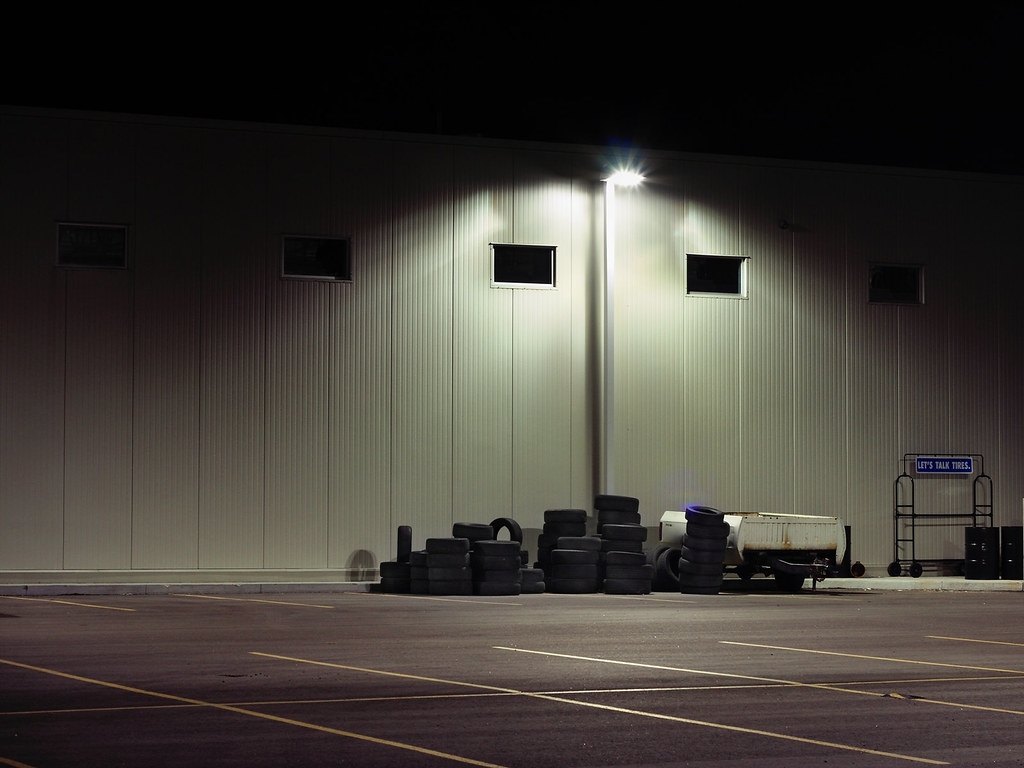
Photo: “Let’s Talk Tires” by gfpeck is licensed under CC BY-ND 2.0.

Sonnet: RHL, ‘Zombies and Wolves’

Women I’ve failed or wronged or left behind
approach my thoughts like zombies for the kill;
I’ve literary walled defences – still
given the chance, they’ll eat my brains, my mind.

Through forest, orchard, farmyard in decay,
a shadow of a wolf slips greyly in,
my thoughts of death, grim, wasted, ill, rib-thin,
tracking my weak resolve, hungry to slay.

Mountaintops blown apart, forests clear-cut,
where’s there to hide? Nature doesn’t exist;
her landscapes crushed in patriarchal fist.
This former farmland hides my ruined hut.

Impotent, I still write, thus giving birth
to future wolves and zombies of the earth.

*****

This sonnet was originally published in Candelabrum (a twice-yearly print magazine of formal verse that ran bravely from 1970 to 2010… now sadly defunct, eaten by wolves or zombies or whatever snacks on print poetry magazines), and republished in Bewildering Stories #1039, a decades-old online magazine of primarily speculative fiction.

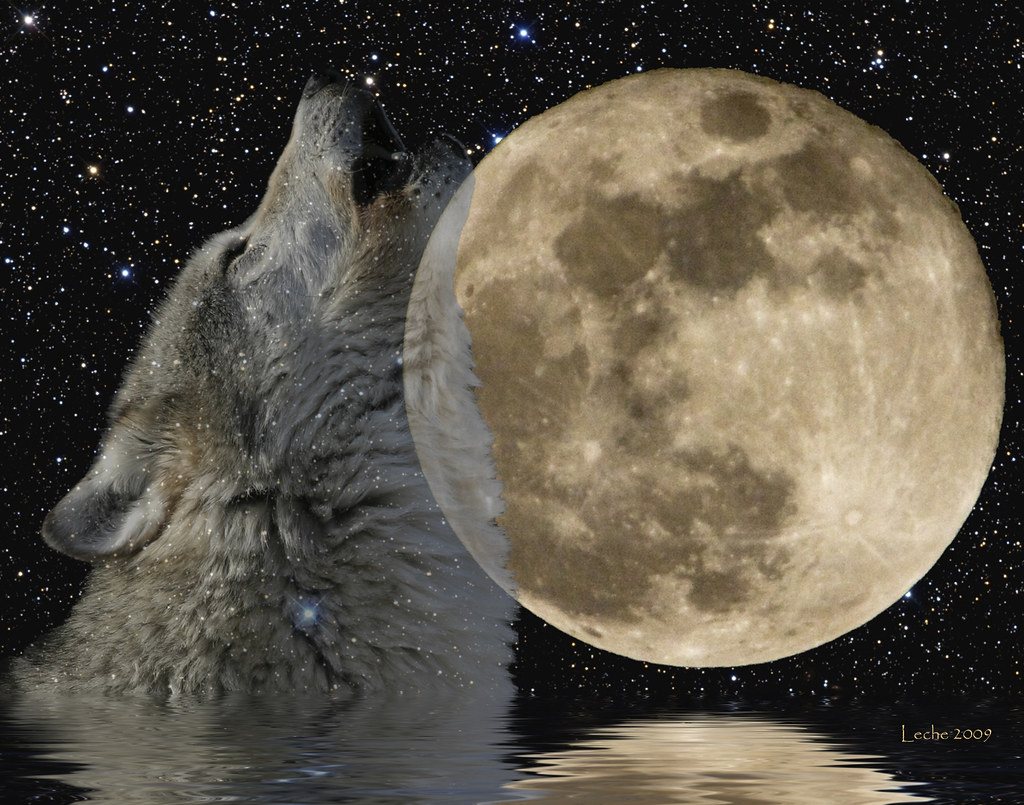
Photo: “Full ‘Wolf’ Moon – January 22, 2008” by Rick Leche is licensed under CC BY-NC-ND 2.0.

Using form: biform poem: Daniel Galef, ‘Casey to his Bat’

(as a sonnet after Eugene Lee-Hamilton’s 1888 collection “Imaginary Sonnets”)

You’re swell! No wizard’s-wand or Rod of Aaron
With this ease can whack one past the glove
The way a sparrow weaves through trees. No baron
Wields your power—you’re the scepter of
A king, and blood descendent of the club
That Hercules did swing. That bat was blessed!
It knocked the blocks off lions. (Not a cub—
A full-grown beast.) Herc wore its skin, the rest
Cooked up for grub. My point: We’ll stand immobile.
It’s beneath us—just a dud. To swing
At these poor lulus would insult your noble
Blood. One pitch will come—the air will sing—
We’ll know that this is it. We’ll swing. We’ll hit!
The crowd will cheer! We’ll run! We’ll win!—Oh, shit.

~ ~ ~ ~ ~ ~ ~ ~ ~ ~ ~ ~ ~ ~ ~ ~ ~ ~ ~ ~ ~ ~ ~ ~ ~ ~ ~ ~ ~ ~ ~ ~

(in the meter of Ernest Thayer’s 1888 poem “Casey at the Bat”)

You’re swell! No wizard’s-wand or Rod of Aaron with this ease
Can whack one past the glove the way a sparrow weaves through trees.
No baron wields your power—you’re the scepter of a king,
And blood descendent of the club that Hercules did swing.
That bat was blessed! It knocked the blocks off lions. (Not a cub—
A full-grown beast.) Herc wore its skin, the rest cooked up for grub.
My point: We’ll stand immobile. It’s beneath us—just a dud.
To swing at these poor lulus would insult your noble blood.
One pitch will come—the air will sing—we’ll know that this is it.
We’ll swing. We’ll hit! The crowd will cheer! We’ll run! We’ll win!—Oh, shit.

*****

Daniel Galef writes: “I wrote this poem in 2017 while I was a student at McGill University and looking for anything to work on except my work. I have always loved both math and language, as well as making them kiss like two Barbies you mash together, and “Casey” was inspired by a couple of happy arithmetical coincidences: First, that there are exactly 70 metrical feet (or 25.52 imperial metres) in either one sonnet or 20 lines of ballad meter. Second, that both Ernest Thayer’s famous ballad “Casey at the Bat” and Eugene Lee-Hamilton’s not-so-famous collection Imaginary Sonnets were published in 1888.
The speaker of “Casey” is the mighty mock-hero of Ernest Thayer’s poem, subtitled a “Ballad of the Republic,” which is composed of standard ballad meter: rhyming couplets in iambic heptameter or alternating lines of tetrameter and trimeter. Thayer’s was possibly the last American poem to have massive popular appeal to the extent that it was commonly memorized for fun, performed on the vaudeville stage, and adapted into multiple films and even Disney cartoons. I memorized it in college as a party trick, which I’m quite eager to try out if I ever get invited to any parties.
As far as I know, this is the first sonnet* of its kind. I wrote another after, which was published first. Now that my first book is out,** I’ve written a third and fourth, but am still in the process of trying to find them loving homes in some journal or website where they can frolic and play with the other little sonnets. Of course, nothing’s wholly original. When I was a child I read a short poem by Mary Youngquist in a Willard Espy book which was readable as eight lines of six syllables or six lines of eight syllables. Robin informed me when the second of these was first printed (“A Poke of Gold” in Snakeskin Poetry in 2019; “Casey” was published in Able Muse in 2020) that the French surrealist Louis Aragon was toying with similar four-six/six-four patterns in the 1940s. But I think these are the first sonnets!
If you liked these, by all means check out my book, Imaginary Sonnets, available wherever sonnets are sold—but try here first: danielgalef.com/book/

*Sometimes they’re sonnets! I don’t really know what to call these. “Convertible sonnets” makes it sound like the rain will get in if you leave the top down, and “transforming sonnets” are plastic toys that come with a kid’s meal. The inaugural issue of the Journal of Wordplay called it an “equivocal sonnet,” and linked it to the 19th century genre “equivoque.” If you alternate the letters of sonnet and ballad, you get “sboanlnleatd.”*** Or, if you change the lineation of the poem only on a full moon: “were-sonnets”?
**Imaginary Sonnets (Able Muse Press, 2023), inspired by the Lee-Hamilton book—70 persona poems all from the point of view of different historical figures, literary characters, and inanimate objects, including Lucrezia Borgia, Wernher von Braun, and a new brand of breakfast taco.
***Both “sonnet” and “ballad” come from the Old Occitan troubadours; “sonnet” is a diminutive of “song” whereas “ballad,” a cognate with “ballet,” comes from “dance.”

*****

Daniel Galef’s first book, Imaginary Sonnets, is a collection of persona poems all from the point of view of different historical figures and objects, including Nossis the Epizephyrian, Christopher Smart’s cat, and a breakfast taco. Besides poetry, he has written plays that won the McGill University Drama Festival, flash fiction selected for the Best Small Fictions anthology, and last year he placed second in the New Yorker cartoon caption contest, which doesn’t really mean anything but he’s been telling everyone anyway.

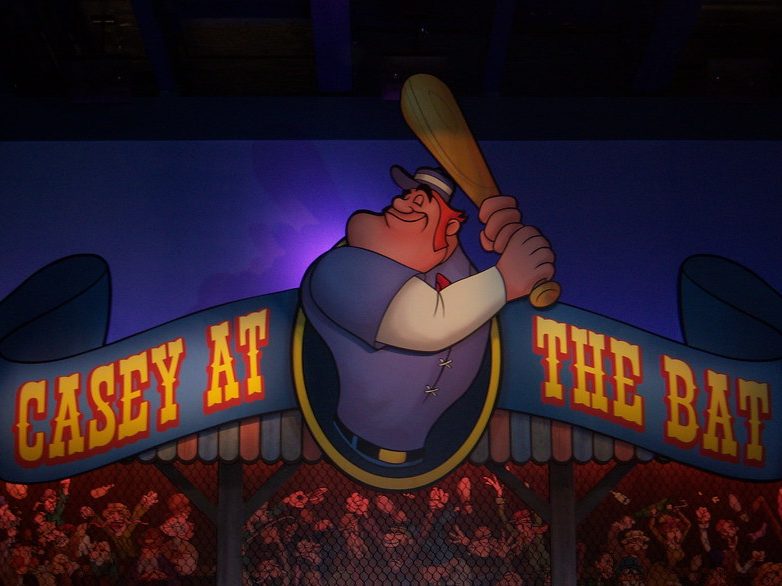
Photo: “Casey At The Bat at Games On The Boardwalk” by Castles, Capes & Clones is licensed under CC BY-ND 2.0.
Calling the Poem: 14. ‘What About Failure?’

But what if the poem’s not there?
Is just an idea?
A vague vapor?
What if there were only a few words, heard freshly?
Then write them down even (or rather, especially)
if you must get out of bed, find pen and paper.

By getting up and writing out
the poem letter by blind letter
you are showing by your doing
your devotion to your gods.
Writing verse invokes the Muses,
turns up fresh thoughts, more and better…
not for certain, but just writing
will of course increase the odds.

The hidden gods now bidden,
gods willing, by gods you’ll be ridden.

*****

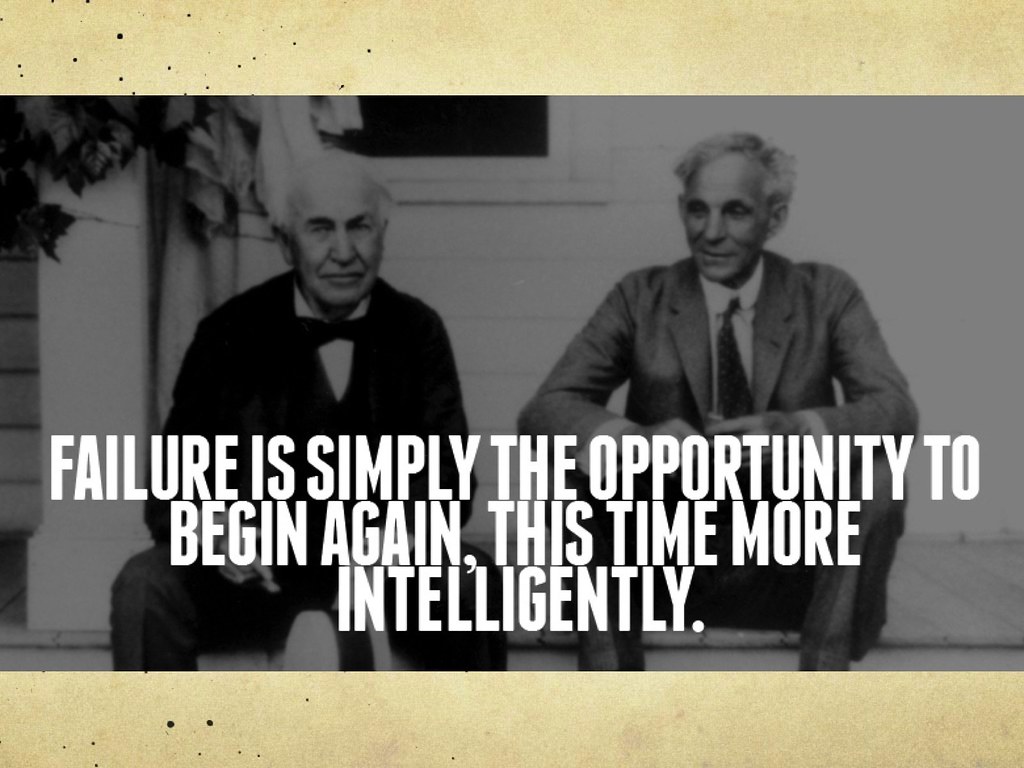
It’s not possible for everything to succeed every time. So what? As they say, Wisdom comes from learning; learning comes from experience; experience comes from mistakes. Failure is an inherent part of life and learning and achievement – but of course it is essential to learn from failures, not to simply repeat them. So even failures are a gift – be grateful!

Photo: “Failure – Try again” by Tatiana12, CC from OpenPress