Tag Archives: gardening

Sonnet: Bob Trewin, ‘It Doesn’t Last’

No matter what you do, it doesn’t last:
Your best endeavours are gone in an hour.
If you could see the present become past,
Your better weather just a passing shower,
If you could see your garden run to weeds
That once was hoed and tended with such care
And understand you only bury seeds
That will outlive us, and will still be there
When we are gone, to sprout and live anew,
Would you think that your labour is worth while
To do the things you feel you have to do,
To make the effort, go the extra mile?
What else is there to do but push ahead?
So damn them all and be glad you’ll be dead.

*****
Bob Trewin writes: “This is my first poem in Snakeskin. I have previously appeared in some anthologies produced by the Holmfirth Writers’ Group (published by George Simmers, who is a founder member). I have also self-published two collections: Snowflakes in the Night, available from Amazon and the Lulu bookstore and Sonnets and Sundries, available from the Lulu bookstore.

“As for where this poem came from, I wonder how much you, living elsewhere, are aware of the rapid transformation that is happening in the UK, a transformation that no recent government has had a mandate to sanction, let alone actively pursue. If it is reversible, I will certainly not be around to witness it.”

Since scribbling some mediocre verse as a teenager, Bob Trewin put aside his pen for the best part of half a century. He began writing poetry again after retirement and now belongs to a number of groups scattered across the Pennines in West Yorkshire. He has won first and second prize in successive years in the National Association of Writers and Groups’ Open Poetry Competition.

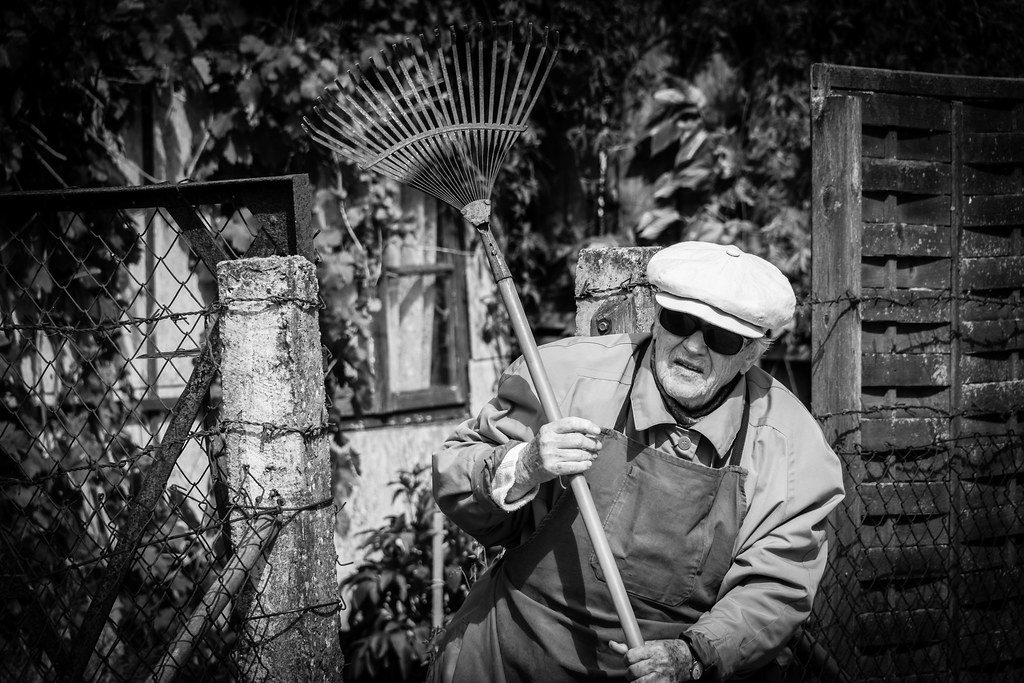
Garden work” by Bilderschachtel Photography is licensed under CC BY 2.0.

Using form: Quatern: Susan McLean, ‘Cropped’

He doesn’t care for flowers or for fruit,
so don’t implore him not to clip or prune
the fig trees and camellias. His pursuit
of geometric form makes him immune

to luscious tastes and beauties others crave.
He doesn’t care for flowers or for fruit,
so once the buds appear, don’t try to save
them from his trimmer. All your pleas are moot.

He holds a tidy yard in high repute,
a verdant symbol of his mastery.
He doesn’t care for flowers or for fruit,
but takes some pleasure in your misery

as he destroys what you had hoped to see.
His need to have control is absolute,
and you can’t argue with machinery.
He doesn’t care for flowers or for fruit.

*****

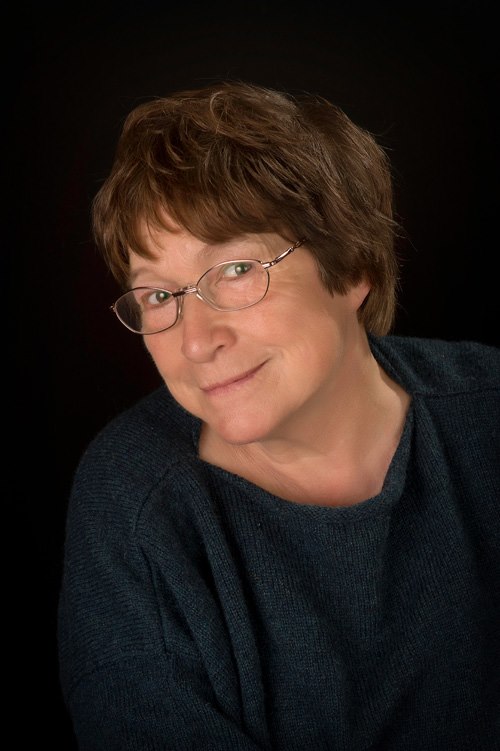
Susan McLean writes: “This poem started with my desire to write a quatern, a form that I had encountered in Chad Abushanab’s workshop on rare poetic forms at the Poetry by the Sea conference in 2024. A quatern is four quatrains long, and the first line of stanza one becomes the second line of stanza two, and so on. As for the poem’s content, it grew out of a dispute about gardening practices with someone I know well. I was unable to convince him to change his ways. I should add that his ascribed motives are all conjectural on my part, not based on anything he said. But poets don’t really lose an argument; they just take the opportunity to restate it as a poem. This poem first appeared in the August 2025 issue of Snakeskin.”

Susan McLean has two books of poetry, The Best Disguise and The Whetstone Misses the Knife, and one book of translations of Martial, Selected Epigrams. Her poems have appeared in Light, Lighten Up Online, Measure, Able Muse, and elsewhere. She lives in Iowa City, Iowa.
https://www.pw.org/content/susan_mclean

Photo: Snakeskin

R.I.P. Ann Drysdale… ‘Weirdness Observed’

What is she doing, the mad old bat,
Down on her knees in the garden?
In her busted boots and her happiness hat
She doesn’t know and she wouldn’t care
That the size of the arse sticking up in the air
Is shading so much of the garden.

She pulls out a weed, the mad old bat,
Out of the face of the garden.
She tuts at the trauma and fusses it flat
While the waste-not weed she will put to use
By turning it into salubrious juice
And giving it back to the garden.

What is she up to, the mad old bat
As she struts, stiff-kneed in the garden
With her doo-dah dog and her galloping cat?
Spreading compost and scattering seed
So one may sprout and the other may feed
In the windmill world of the garden.

She’s a cruel cartoon, is the mad old bat
As she talks to herself in the garden.
What on earth is this? and Good Lord, look at that!
And she squats and she mutters and giggles out loud
And informs her potatoes they’re doing her proud
As she creeps like a crone in the garden.

Where is she going, the mad old bat
As the sunset blesses the garden?
She is going nowhere, and that is that.
She will dig in the dark till the dawn sky pales
And the damp on her knees and the dirt in her nails
Go singing the song of the garden.

*****

Ann Drysdale, who died unexpectedly on August 16th (apparently in her sleep) was a superb poet and self-aware, self-directed, life-rich eccentric lover of the natural world, of gardens, of animals and birds, of unpretentious people in all walks of life. I knew her only through her poetry and our correspondence – which is to say, well enough to deeply regret that I never got to meet her in person.

The poem above was collected in Miss Jekyll’s Gardening Boots, Shoestring Press, 2015; as was the poem that I put up on this blog earlier this month, ‘When Mister Nifty Plays the Bones‘. Here is the bio that she chose to represent herself with:

Ann Drysdale still lives in South Wales. She has been a hill farmer, water-gypsy, newspaper columnist and single parent – not necessarily in that order. She has written all her life; stories, essays, memoir, and a newspaper column that spanned twenty years of an eventful life. Her eighth volume of poetry – Feeling Unusual – came together during the strange times of Coronavirus and celebrates, among other things, the companionship of a wise cat and an imaginary horse.”

She was a much-loved member of the world of (especially formalist) poetry. George Simmers posted her ‘Song of Wandering Annie’ in the Snakeskin blog, and there is a tribute (and an enormous selection of her verse) in The HyperTexts. She was a truly good person.