
You learn to call, to pray, and to invoke
the gods with incense, roasting meat and smoke,
the smell drawing the gods like flies.
They like being honoured, they like gifts and sacrifice.
How do you gift a god of writing? Write!
Write when you have a thought, write day, write night.
How do you sacrifice? Accept this hardship:
you give up all activities
(regardless of your duties, your proclivities,
relationships) – for bardship,
because you don’t have time for them and writing.
Downgrade all love, work, striving, fighting –
for you must write.
You read, read, write, recite,
write and rewrite,
reread and rerecite.
(The modes you read impact the words you write,
impact the thoughts you have, and how they’re phrased.
Read novels, you’ll have thoughts in prose: straight, trite;
read verse, your thoughts will ramble, rhyme, be crazed.)
How bargain with the gods? Well, you can offer.
Can you demand? Well, no; you can’t.
Do they play fair? Take care with what they proffer;
you’re never sure if it’s a loan or grant.
How long will favours last? While you’re in favour;
a god or goddess owns you like a slaver.
And while for them you still produce,
still honour them… you still have use.
So keep on writing until you collapse,
and they’ll continue liking you. Perhaps.
*****
This is the sixth in the 15-poem sequence on Calling the Poem. The basic idea is that if you pay attention to the little scraps of poetry that come your way, in a random rhyme, a stray image; if you write them down and expand on them as you can; if you respect what comes to you, even if it isn’t what you want to hear; if you spend more time immersed in the medium that you want to develop… then you are encouraging the further communication from the mysterious force that provides the insights and images and words, the force that appears to be both inside and outside of you, the force that can be thought of as a muse or god. But the process is unreliable, because gods are unreliable, being inherently uncontrollable by us.
Matthew Arnold has a typically lugubrious and pessimistic overview of ‘The Progress of Poesy’:
Youth rambles on life’s arid mount,
And strikes the rock, and finds the vein,
And brings the water from the fount,
The fount which shall not flow again.
The man mature with labour chops
For the bright stream a channel grand,
And sees not that the sacred drops
Ran off and vanish’d out of hand.
And then the old man totters nigh
And feebly rakes among the stones.
The mount is mute, the channel-dry;
And down he lays his weary bones.
But that’s Matthew Arnold for you. He had a remarkably mournful muse. Perhaps he spent too much time as a responsible Victorian, a dedicated Inspector of Schools, and not enough time in the state T.S. Eliot called the “necessary receptivity and necessary laziness” of the poet. Eliot again: “The progress of an artist is a continual self-sacrifice, a continual extinction of personality.” You are striving to be at the mercy of forces outside your conscious control – there can be no guarantee that it will work out exactly the way you want.
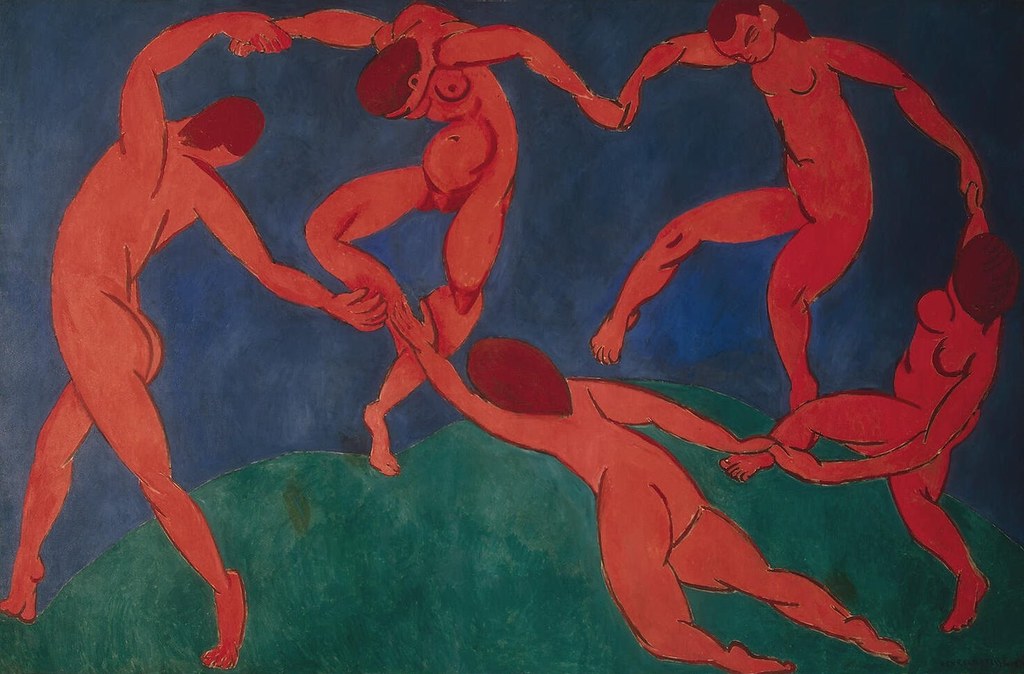
Illustration: “Sacrifice” by Tamara Artis is licensed under CC BY-SA 2.0.



 Form in Formless Times