Tag Archives: semi-formal verse

Helena (“Nell”) Nelson, ‘Separation’

i

Mrs Philpott goes to bed alone.
The clock in the hall ticks on.
Philpott turns to cut glass, then stone.

All the things we do to be loved,
all of them pointless.
The clock ticks on.

Nothing but moonlight dawns.
The distance from downstairs
to upstairs yawns.

Philpott sags and snoozes alone
in the wishing chair,
in the wishing air.

All the things we do to be loved –
in the night they slip far away.
It will never be day.

The clock ticks on
as well it may.

ii

She wakes first. He has not slept
in the chair all night.

At first light
he has crept

into the bed on the other side.
He will not (cannot) say it, but

everything about him is sorry –
only half of him is under the duvet

and his eyes aren’t really shut.
She pulls the covers over them both and he falls

into a sleep as deep and sound
as a lost child who has wandered far out of sight

(while his mother calls and calls and calls)
and is finally found.

*****

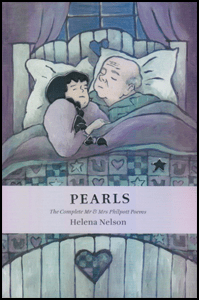
This poem is one of over 80 in Helena Nelson’s ‘Pearls – the Complete Mr & Mrs Philpott Poems’. Starting with poems of the end of their first marriages, it tracks their decades-long second marriage through (as the blurb says) “dreams, anxieties and needs – even sudden spurts of happiness – despite the rainy holidays, arguments and illness. The ordinariness of their love is magical and miraculous. Because ordinary love is a kind of miracle.”

People talk about “novels in verse” but those often don’t capture the poetry of verse. This is definitely a novel in poetry, and the most rereadable novel I’ve come across in a long time.

Helena Nelson writes: “happy that you like Pearls. I made it as well as I could, but it largely came unasked for. I don’t think I have anything to say about it.”

Helena Nelson runs HappenStance Press (now winding down) and also writes poems. Her most recent collection is Pearls (The Complete Mr and Mrs Philpott Poems). She reviews widely and is Consulting Editor for The Friday Poem.

Semi-formal quatrains: Rachel Hadas, ‘Roadblock’

Call me the bee buzzing in the museum.
The younger sister fussing through a house
still stiff with loss.
The meddling goblin in the mausoleum.

My dream: with three in the front seat, we drive
under a bridge and halt. A huge gray bus
blocks the whole road, including us,
the only travelers who are left alive.

It’s drizzling; the windshield wiper blades
busily gesture, yet we’re nearly blind.
You two seem not to mind
blank windows, pulled-down shades.

I mind. I want to get out and explore,
to move around
the deathly obstacle. “Don’t make a sound,”
you say. (Who are you?) “Don’t go near that door.”

Our mountain drive last month—that wasn’t dreamed.
We three again. We ran a dog down. I
alone looked back, alone let out a cry.
I saw it lying in its blood and screamed.

So tell me what these images portend.
Am I a noisy bird of evil omen
or just a person, apprehensive, human,
moving ahead, kid sister into woman,

stonewalled by death each time she rounds a bend?

*****

Rachel Hadas writes: ” ‘Roadblock’ is an older poem, inspired by a visit to my sister and her then husband  years ago.  Our drive, and running over the dog really happened, as did the dream…but which came first?  And another question: would I have remembered either the car accident or the dream had I not written them into a poem?  Dreams still figure often in my poems.  And the fact that I’ll always be a younger sister, while it doesn’t get mentioned all that frequently, is a permanent feature of my consciousness that probably works its way into many of my poems however subliminally. The bee buzzing: my sister once complained that going to a museum with me was like going to a museum with a bee, a comment I’d forgotten until rereading this poem brought it back.  And those “blank windows, pulled-down shades”: doesn’t poetry often strive to pull the shades up?”

‘Roadblock’ is collected in ‘Halfway Down the Hall: New and Selected Poems’ (Wesleyan University Press, 1998)

Rachel Hadas’s recent books include Love and Dread, Pandemic Almanac, and Ghost Guest. Her translations include Euripides’s Iphigenia plays and a portion of Nonnus’s Tales of Dionysus. Professor Emerita at Rutgers-Newark, where she taught for many years, she now teaches at 92Y in New York City and serves as poetry editor of Classical Outlook. Her honors include a Guggenheim fellowship and an award from the American Academy-Institute of Arts and Letters.

Photo: “Bus Crash at Ladprao-Chokchai4” by isriya is licensed under CC BY-NC 2.0.

Semi-formal: RHL, ‘Laffable Religion’

No matter how seemingly affable,
a priest always hopes to be greased;
while others, invoking hellfire,
have us wait for our trip in the hearse
and preach in their suits neatly creased,
these fishers of men that are gaffable,
in this world that they’ve made mud and mire.
That the point of a flock’s to be fleeced
can only be said in light verse;
for religion is simply so laughable
it’s amazing it’s not yet deceased.

*****

Isn’t it amazing that the Pope can claim to have voluntarily taken a vow of lifelong poverty, and millions of his supporters who live in involuntary poverty send money to support him living in a palace? Is it different from a billionaire politician soliciting donations from his impoverished supporters? Is the human need to glorify the tribal god and the tribal leader never going to end?

This poem was first published in The HyperTexts, as part of the August 2024 Spotlight.

Short poem: RHL, ‘Ghosts Twitter’

Ghosts twitter in my head like the memory of predawn birds.
Digging below my present house I find
a structural supportive past with rock veins to be mined.
Upstairs the future isn’t fully built or roofed.
Has someone goofed?
The Architect is vague on final thirds.

*****

I am finding many ways to say I don’t understand existence at all; this is one of them.

This short, semi-formal poem was published recently in The Lyric.

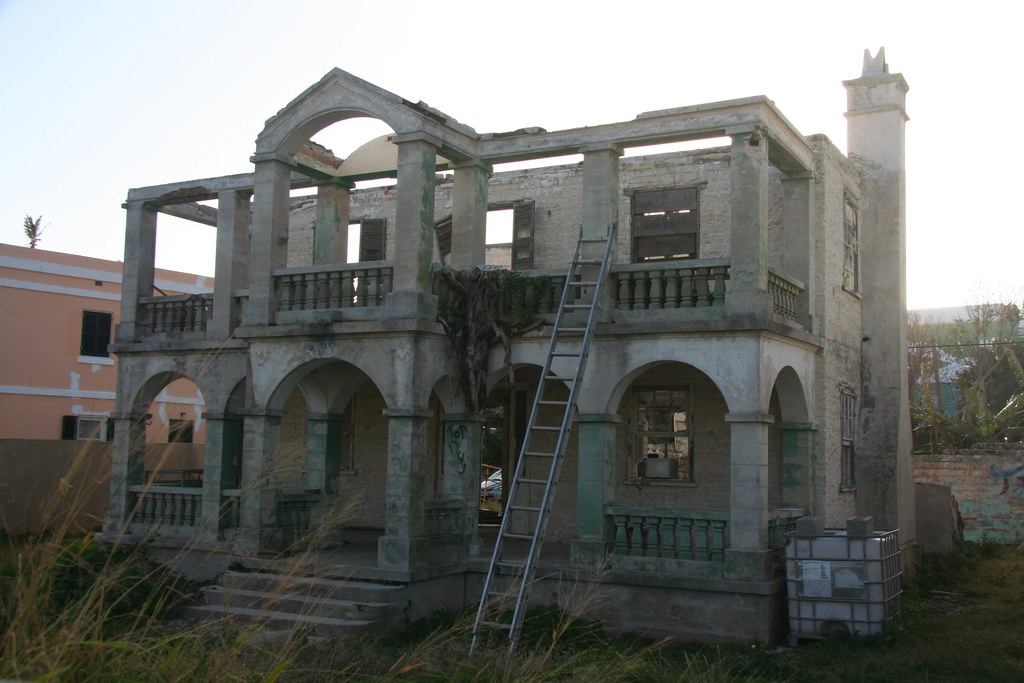
Photo: “unfinished house” by Lodigs is licensed under CC BY-NC-ND 2.0.

Semi-formal poem: RHL, ‘Layered Understanding’

The Universe with which we grapple
searching for structure, meaning, is no apple
with glossy skin outside, substance beneath,
where deep within its core it meets our needs
to find its meaning: seeds.
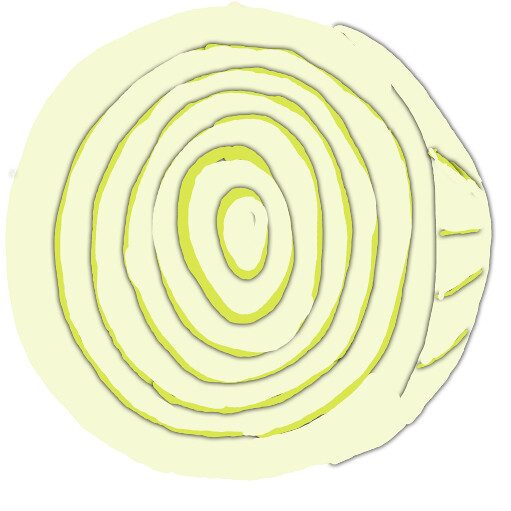
No, it’s an onion – peel off the outer sheath
of sensory impressions,
and you uncover explanations
coming first from mystic revelations
and then from faith’s and Science’s professions.
Research from Galileo through to Quantum realms
reveals, and contradicts, and overwhelms
until you take away the final layer
and find: there’s nothing there.

*****

I’m a Militant Agnostic: “I don’t know, and neither do you!” We keep searching and probing, the certainties get disproved, new lines of enquiry open up… and off we go again, Quixote-like, because we’re humans.
This poem rhymes irregularly, and is in iambics of different line lengths. Semi-formal.

‘Layered Understanding’ was first published in the Shot Glass Journal #43.

Photo: “half onion peeled” by Hanna Khash is licensed under CC BY 2.0.

Semi-formal? or Spoken Word? RHL, ‘Life is a Bubble’

A life is a bubble:
somewhere the Grand Druid
dips his wand into the universal fluid
and then a new life is formed, floating
on chance breezes until it – pops –
and the thin skin coating
falls back to earth as mere drops,
the shape and rare rainbow glint gone to air,
and the bubble is where?

Earth is a bauble
in the universal flux,
as it foams, boils and freezes,
just dust from God’s various mucks,
sneezes afloat on chance trans-solar breezes.

The humans babble,
rabble rising from the rubble of other lives cut to stubble,
they burble some Bible as they gab, grab and gobble,
cobbling conning towers of Babel and Hubble,
their progress hobbled by their wobbly bobble,
reams of hopes, dreams and schemes
just a bubble.

*****

Sometimes a chance-occurring phrase in some moody mode of thought lets me ramble wildly through tangled words and ideas. It’s not amenable to regular form, but it’s fun. It seems in the spirit of Spoken Verse, though I’ve never performed. The earliest poem I wrote in this style is from over 50 years ago… which is 30 years before I ever had a poem accepted for publication. I was definitely out of step with the non-verse that then controlled the poetry industry to the exclusion of almost all actual verse. Things have eased in recent years, and dozens of poems from those early years have since been published. (Note to struggling young poets: Don’t give up! But have another career that pays money!)

Anyway, ‘Life is a Bubble’ only needed a couple of years to be published in 2024 in The Lyric.

Photo: “Blowing bubbles” by Song_sing is licensed under CC BY 2.0.

Excerpt: ‘You, Yes You’

You, yes you, contain multitudes, conflicted mobs-–
the adroit who holds two jobs,
the maladroit who fails and sobs,
the shortcut thug, dacoit, who simply robs-–
you’ve urges to protect and to exploit:
be just! (but help yourself when you’ve the chance
and no one’s there to look at you askance.)
Priests educate, instruct and rape their flock
as farmers care for, milk and eat their herd
and statesmen love the country they extort.

*****

This is (apparently) the most interesting excerpt from a longer rant that was more than the Rat’s Ass Review wanted. Thanks Roderick Bates for selecting this piece!

Disagreement” by Petri Damstén is licensed under CC BY-NC-ND 2.0.

Poem on Poetry: ‘Poets Do Tricks With Words’

Poets do tricks with words,
play games, weld rhyme,
but we don’t do this nicely all the time–
we’ve also anger at unfairness, anger hot-white
at wasteful power, at greed and spite,
where fear meets selfishness, drives right and left
to persecution, torture, war and theft.

Each trick sticks bricks, fixed and unfixed,
into an apartheid verbal wall
that warbles claims to separate
sense from nonsense–though we appreciate
all’s one, all’s all the same,
word walls are just a Jenga game,
and all bricks fall.

We can play games with words,
thread and unthread them in a silly tangle,
loom and illuminate light warp, dark weft,
wrong them and wring them ringing through a mangle
as sometimes the only way
to find a new way to say
things said ten thousand times before:
how brightness has a rightness,
whether in the sky, the sea, a face or an idea.

So cook with words, mix, bake,
packing in raisins, nuts, half cherries for a cake
with flour just enough for a pretence
that it’ll hold together and make sense.

*****

Formal? Free? The arguments about the appropriate structure for poetry in English never seem to end. The semi-formal compromise has been around for a long time: take the rhythmic, rhyme-rich ramblings of Arnold’s ‘A Summer Night’ from 170 years ago, or Eliot’s ‘Prufrock’, written in 1911. To me, the test of good verse is that it is easy to memorise and recite: the ideas and imagery have to be memorable, but so does the expression, word for word. The tricks may vary by language and culture, but whatever tricks the poet can manage to achieve memorableness are legitimate.

‘A Summer Night’ was in my English A Level curriculum <cough> years ago, and the middle section which I still know by heart encouraged me to run away from school. (I was found trying to sleep in a phone booth while waiting for a morning train, and brought back to school at 2 in the morning.) The poem’s semi-formal structure has always appealed to me with its rhetorical power, and over the years I’ve often used that freedom when writing about poetry, as in ‘Some Who Would Teach‘ and ‘Inspiration 2‘ and ‘Memorableness‘.

‘Poets Do Tricks With Words’ has just been published in Orbis, edited by Carole Baldock.

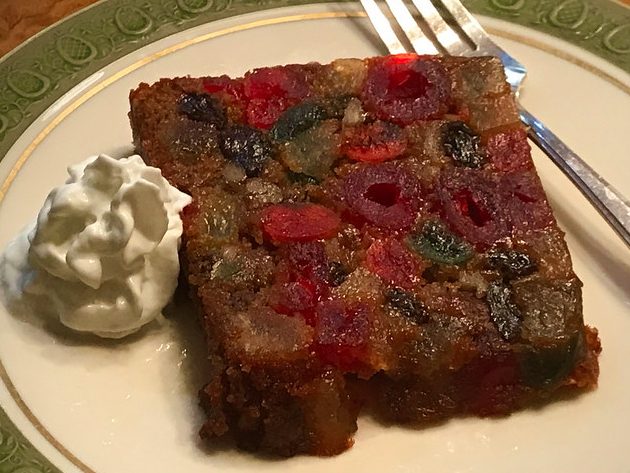
Photo: “National Fruitcake Day” by outdoorPDK is licensed under CC BY-NC-SA 2.0.
Semi-formal poem: ‘The Viking in Winter’

O it is a wide winter, windy with gales,
Hard, harsh and horizonless, cold,
And I can do nothing more this year
But sharpen the swords, mend the gear,
Mend cloth, patch sails,
Listen to tales told by the old,
Listen to horses stamp in stalls.
Feel the blood in my veins going nowhere,
Feel the river halt, the bay iced in,
The sun brief and thin
The food dried, smoked, salt
And no fresh fruit, fresh meat,
No fresh lands, fresh goods,
No fresh deeds, fresh girls,
No seas running and blood running
And people running and tales running…
For what is the good of inaction
Save to prepare for fresh action;
And what is the good of fresh action
Save for fresh tales;
And what is the good of fresh tales
Save for the glory and the name
And the fame that lives past the death rattle
For the sword singer,
Word winger,
The Bard of Battle?

*****

I feel the same fascinated connection to my Viking ancestors that I feel to my even earlier chimp-like forbears and modern chimp and bonobo cousins. All have social networks, hierarchies, politics, violence and ways of overcoming violence, cherished families, a sense of fairness and ways of cheating. I suspect the Viking gods would be far easier for chimps and bonobos to accept than modern scientific understanding could ever be. I greatly enjoy Vikings, chimps and bonobos, recognise that a lot in me comes from them, and am thankful to have outgrown much of their limitations. (And to neo-Nazis who think they are Vikings, I say this: “You’re not; don’t be so stupid.”)

This rambling semi-formal poem was first published in Snakeskin; thanks, George Simmers!

Icy sea” by piropiro3 is licensed under CC BY 2.0.

Semi-formal poem: ‘Thin Thin Skin’

Life on the earth is thin as dust on an apple.
25,000 miles round the planet, and if we go 2 miles high
we struggle to breathe, claw at the air, fight it, grapple.
25,000 miles round the planet, mostly sea
and if sea levels rise a foot, whole communities are lost
and if a storm gives 10 foot waves, houses and lives are lost.
We live on the thin thin skin of the earth.
Is the soil three inches deep, or a foot, or five?
Can we grow enough to survive?
We live on that thin thin skin of dirt.
And people too are fragile, their bones, organs, held in
by their thin thin skin. A knife,
a bullet, even too much sun,
will break the thin thin skin and drain the life.
And society too is fragile, with too many knives and guns,
too little respect for sun, ocean, climate change;
too many people with a thin thin skin
leading their ignorant people into the razorwire of unpredicted change.

*****

This poem was originally published in Lighten-Up Online (or LUPO) last year – thanks, Jerome Betts! It’s not really a formal poem, though there are some rhymes. As for the subject matter, all I can say is: If you haven’t run across the delightful XKCD graphic of the past 12,000 years of temperature change, please click here!

Photo by Allison Shelley for EDUimages: A middle school science teacher explains a lesson on climate change using a SMART board. Copyright CC BY-NC 4.0