Tag Archives: using form

Using form: Couplets: Maryann Corbett, ‘Fugue in October’

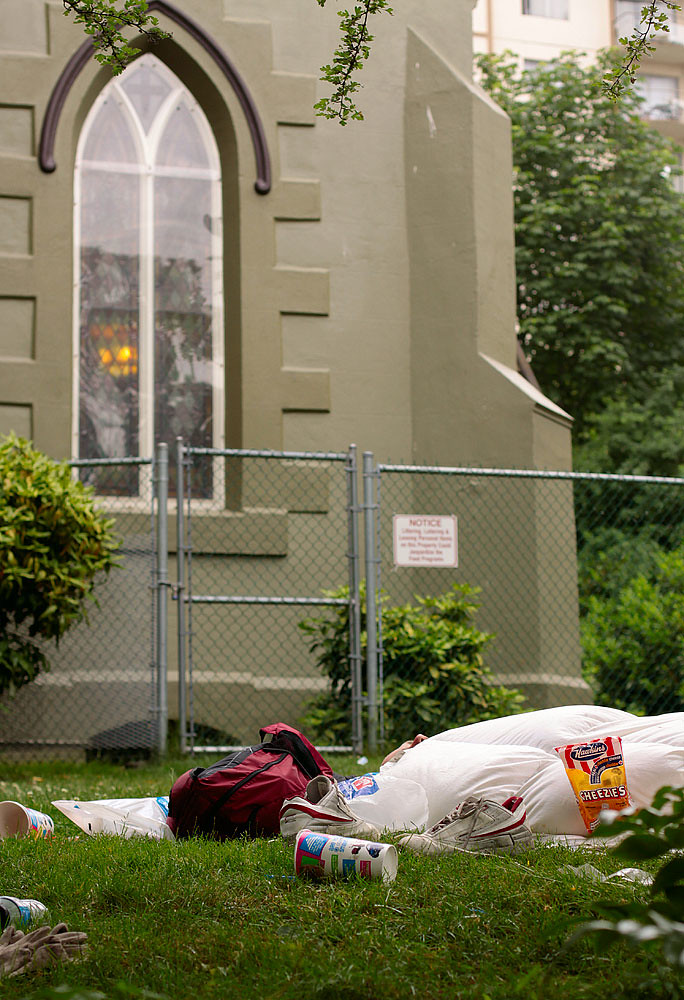
Baroque chamber ensemble and homeless encampment, Saint Paul

Perfect: the singers, strings, and keyboards. Perfect
Bruised sky above the tents of the squatters’ district
the little jewel-box church, its bright acoustic
calm in the year’s last mildness, the only music
softened a little in the candles’ lighting,
the mumbling underpass. The wind. No fighting
for this is God’s mind, woven of harmonies
for once. Tonight, for once, no one ODs—
and our souls thread through the flame of the vigil lamp
someone got lucky at the entrance ramp
as we hold, hold to Monteverdi’s line
(panhandling, on this warm day, with a sign)
and stop our breath until the last string dies
and parcels out his manna of salty fries
in the last great chord of his Beatus vir
while sirens wail some sorrow, far from here.

*****

Editor’s comments: “In case it isn’t clear from whatever device you are reading this on, each couplet here is comprised of a line about a musical ensemble in a church followed by a line about a homeless encampment under a highway. You can read it straight through as a soft-voiced line followed by a harsher one; or you can read every other line in one voice and the remaining lines in a different voice; either way, you are blending two very different aspects of city life into a larger, richer picture of community sharing, whether in glamour or squalor. This is an unusual and remarkably effective use of rhymed couplets of iambic pentameter.
The contrast built into the poem, and the skill with which it was done, made it a natural poem for inclusion in the ‘City! Oh City!‘ Potcake chapbook. It first appeared in Measure Review; and is included in the collection In Code.

Maryann Corbett writes: “Events that trigger a poem need not be as simultaneous as the poem makes them seem. The choral concert in this poem took place on a subzero night during the Christmas season; the rise of homeless encampments occurred at a warmer time of year–but both could be happening in my city at any time, and they probably still are.”

Maryann Corbett earned a doctorate in English from the University of Minnesota in 1981 and expected to be teaching Beowulf and Chaucer and the history of the English language. Instead, she spent almost thirty-five years working for the Office of the Revisor of Statutes of the Minnesota Legislature, helping attorneys to write in plain English and coordinating the creating of finding aids for the law. She returned to writing poetry after thirty years away from the craft in 2005 and is now the author of two chapbooks, five full-length collections already published, and a forthcoming book. Her fifth book, In Code, contains the poems about her years with the Revisor’s Office. Her work has won the Willis Barnstone Translation Prize, has appeared in many journals on both sides of the Atlantic, and is included in anthologies like Measure for Measure: An Anthology of Poetic Meters and The Best American Poetry 2018.

Her web page: http://maryanncorbett.com

Photo: “sleeping on the rock of ages” by waferboard is licensed under CC BY 2.0.

Using form: nonce form; John Beaton, ‘Wolves’

I’m wakened, drawn towards the ice-thin window,
to witness scenes as faint and still as death.
How bleak the moon; how bare the trees and meadows;
sky’s pale maw overhangs
Earth bleached beneath star fangs.
Night’s curled lip sneers on shadows
of mountains set like teeth.

Two bow waves shear the median of the valley,
iced hayfield yields as feral muscles glide–
hoarfrost disturbed by wakes of live torpedoes.
Grey shoulders breach and lope,
implode and telescope,
impelled by ruthless credos
of chilled and vicious pride.

The wolves tear savage furrows down the nightscape;
their eyes are shined with blood, their mission clear.
Grass springs back shocked to green behind their passage–
twin tracks traverse the vales,
cold comets trailing tails
leave scarred in frost their message:
the wolves, the wolves passed here.

*****

John Beaton writes: “This describes a real incident on our acreage when I woke in the middle of a frosty night for no apparent reason and looked out the window. I was struck by the grace, power, and sense of danger the wolves evoked.
“The first three lines are pentameter and the endings alternate—feminine, masculine, feminine. The next four lines contract to trimeter to give a sense of speed and acceleration. Lines two and seven have a masculine rhyme that closes the stanza and ties its parts together. The overall rhyme-scheme is xabccba. My intent was to convey the power and motion of the wolves running and I built in alliteration and internal rhyme to help with this.”

John Beaton’s metrical poetry has been widely published and has won numerous awards. He recites from memory as a spoken word performer and is author of Leaving Camustianavaig published by Word Galaxy Press. Raised in the Scottish Highlands, John lives in Qualicum Beach on Vancouver Island.
https://www.john-beaton.com/

Photo: “Wolves With Northern Lights (Color Corrected)” by edenpictures is licensed under CC BY 2.0.

Using form: alliterative verse: A.M. Juster, ‘Three Visitors’

Mist on moonspill as midnight nears.
Adrift but not dreaming our drowsy son
is covered and kissed. At the kitchen door
our old basset is barking; coyotes out back
are standing like statues down by the dogwoods.
Across the crystal of crusted snow,
they search for stragglers to startle and chase.
Their vigil reveals no victims this night.

Trash would be trouble; they trot away
unbothered by bloodthroated growling and baying.
No star distracts their stealthy march.
As the highway hums they howl through the calm,
then savor new scents that spice their path
in this world awash in wonder and wrath.

*****

Editor’s comments: “Alliterative verse is a form found across the old Germanic language family including Old English, Middle English, Old Norse, Old High German and Old Saxon. It relies on a chant-like use of stressed syllables and does not count all syllables in the way that Romance poetry tends to; and it relies on alliteration rather than rhyme as its key memory-aid for recitation. Although there are many regional variations in the structure, most include these key points:
each line is divided into two halves by a heavy caesura;
each half has two heavily stressed syllables (“lifts”) as well as some unstressed ones (“dips”);
the two lifts of the first half alliterate with the first lift of the second half, but not with the second.
There is a good article on alliterative verse in Wikipedia which goes into more detail and also quotes or references a range of modern poets who have experimented with the form: Tolkien, C.S. Lewis, Auden, Richard Wilbur, Ezra Pound, Heaney… and Alaric Watts for his alliterative abecedarian ‘Siege of Belgrade‘. Alliterative verse can work smoothly and powerfully in English.”

A.M. Juster writes: “After translating the anonymous long Old English poem ‘The Phoenix‘ for a stalled book, I became interested in the possibilities for original alliterative verse—this poem is the first of those poems. A reader should also be able to detect the ghost of a sonnet in it due to the length of the stanzas, the turn, and the closing rhymed couplet.
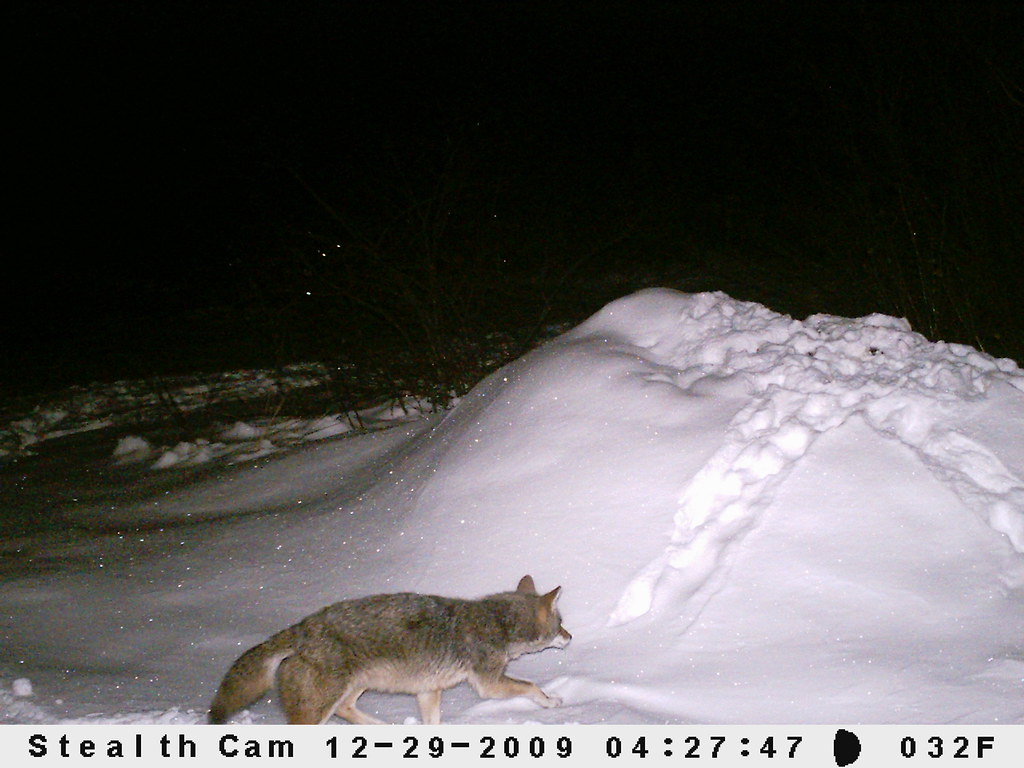
“The poem started in my mind with the real invasion of coyotes in our suburban Boston neighborhood, but as I struggled with the poem it seemed to be situated in a beautiful place I have never seen—a fusion of our house and the house my bride’s parents used to have in Vermont (where I set an experimental sonnet in my first book).
“Although I think the religious undercurrents are fairly subtle, Micah Mattix & Sally Thomas did include the poem in their recent Paraclete Press anthology of Christian Poetry in America since 1940.”

A.M. Juster’s poems and translations have appeared in Poetry, The Paris Review, The Hudson Review and other journals. His tenth book is Wonder and Wrath (Paul Dry Books 2020) and his next book will be a translation of Petrarch’s Canzoniere, which W.W. Norton will release in early 2024. He also overtweets about formal poetry @amjuster.

Photo: “LZGC coyote” by animaltourism.com is licensed under CC BY-NC-ND 2.0.