Monthly Archives: October 2021

Various updates

I am shifting the focus of this blog to give more coverage to the wide range of formal poets currently writing (especially those who have contributed to the Potcake Chapbooks) and to songwriters who, at their best, are superb poets with tricks up their sleeves not accessible to regular versifiers.

The Potcake Chapbooks continue to be produced on an occasional basis: the tenth in the series, ‘Travels and Travails’, came out recently and the 11th, ‘Lost Love’, has been assembled to be illustrated by Alban Low. Future titles may (or may not) include chapbooks on cities, on teachers, on the seasons, on pets… it all depends on my finding or being sent enough strong and diverse poems on an interesting theme.

I had hoped to have a Christmas-season-themed chapbook out this year, but I am having difficulty finding the diversity I want. Not only diversity of style, but also of content: I would like to acknowledge not just Christmas and Christmas trees and Christmas parties, but also Hanukkah, Kwanzaa, Festivus… everything around the solstice that has given birth to celebrations of the change in the year. (And with some recognition that this looks very different in the southern hemisphere.) Perhaps I will find enough to pull this chapbook together for the end of 2022.

In the meantime I welcome submissions of formal poems on any theme to robinhelweglarsen@gmail.com, but I prefer poems previously published: I don’t have an “accept or reject” procedure, I simply hang onto poems I like until, one of these years, I may have a use for some of them. So, as I don’t want anyone getting antsy about a poem not being available for use elsewhere, the Potcake Chapbooks should not normally be your first place publishing any given poem.

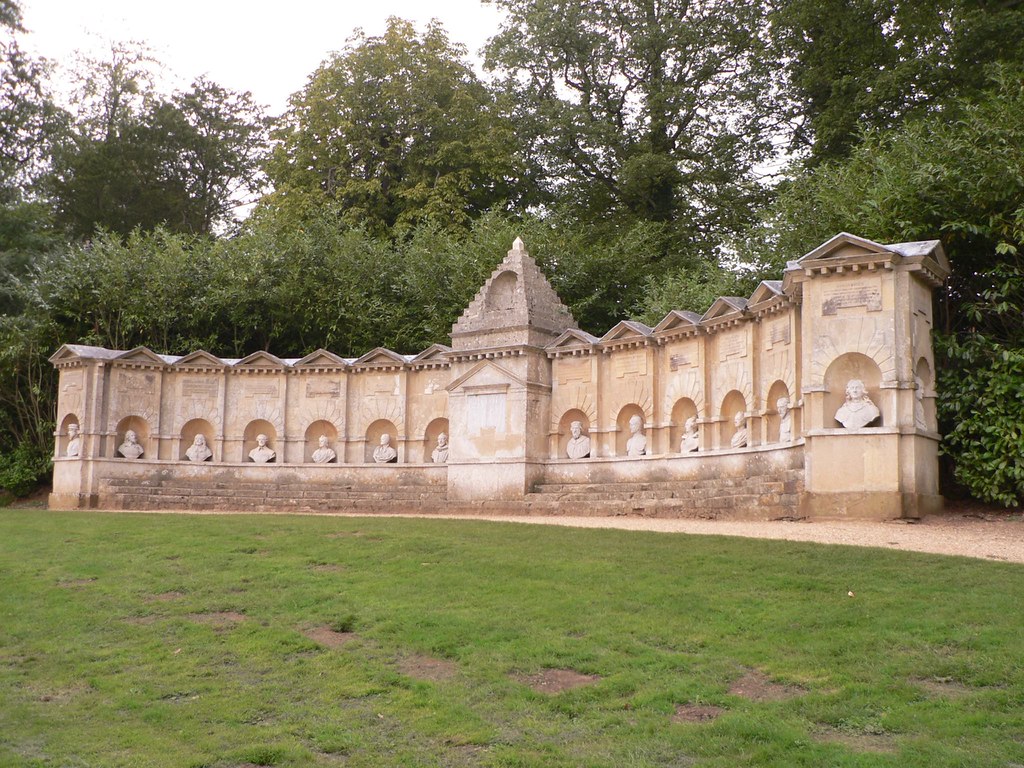
“Temple of British Worthies” by foshie is licensed under CC BY 2.0

Potcake Poet’s Choice: Marcus Bales, ‘Shore’

They grind across the continental shelf,
enormous in their long, well-muscled swells;
I know their sweaty smells of staling spray
and fishy sand; and oh, all by myself
I’ve heard the tide tell what it always tells:
some things wash up and others wash away.

They rise out there a long way from the beach,
and curl and pitch up face down on the sands
from roaming just too far to make it home,
and try to hold with fingers scrabbling, reach
for us, and fail and, failing, trail their hands
under water backwards in the foam.

Finally, though, the greyest weather clears:
small lapping waves replace exploding spume,
and one deep-breathing moment seems sublime;
sweet breezes sway embroidered window sheers
while pleasant sunlight fills the hospice room,
now empty, clean, and ready for the next time.

Marcus Bales writes: ‘The problem with me choosing or talking about one of my poems is that the impetus behind most of them is the same: a phrase or circumstance became a donnee because it resonated in some instant way, and I used it — and sometimes the actual donnee doesn’t survive the process of writing — to write something. It’s the resonance that interests me to turn the phrase over and look at it, clean it up, smear it with something, make it start, make it finish, bury it in the middle, whatever. The question that strikes me about a phrase with resonance is why does it resonate? The poem is the answer. In my view poetry is what a poet does to make a reader feel that resonance by putting it in a context that moves the reader to a feeling. I reject the notion that poetry is the poet expressing their feelings — at least, I don’t say poets cannot express their feelings, but that that expression must be in the service of making the reader feel the reader’s feelings in a directed way. Poetry is a method to make the reader resonate emotionally in response to the words.. If the best you can do is blurt out your pain or joy or whatever, then you’re doing it wrong. Yes, wrong. Write it in your diary, because poetry has never been about the poet. It’s always been about how the poet can make the reader feel in a directed way by using words, not a therapy-substitute for the poet. If you need therapy, get it, but don’t scatter the resulting words across ragged-margined pages and call it poetry.’

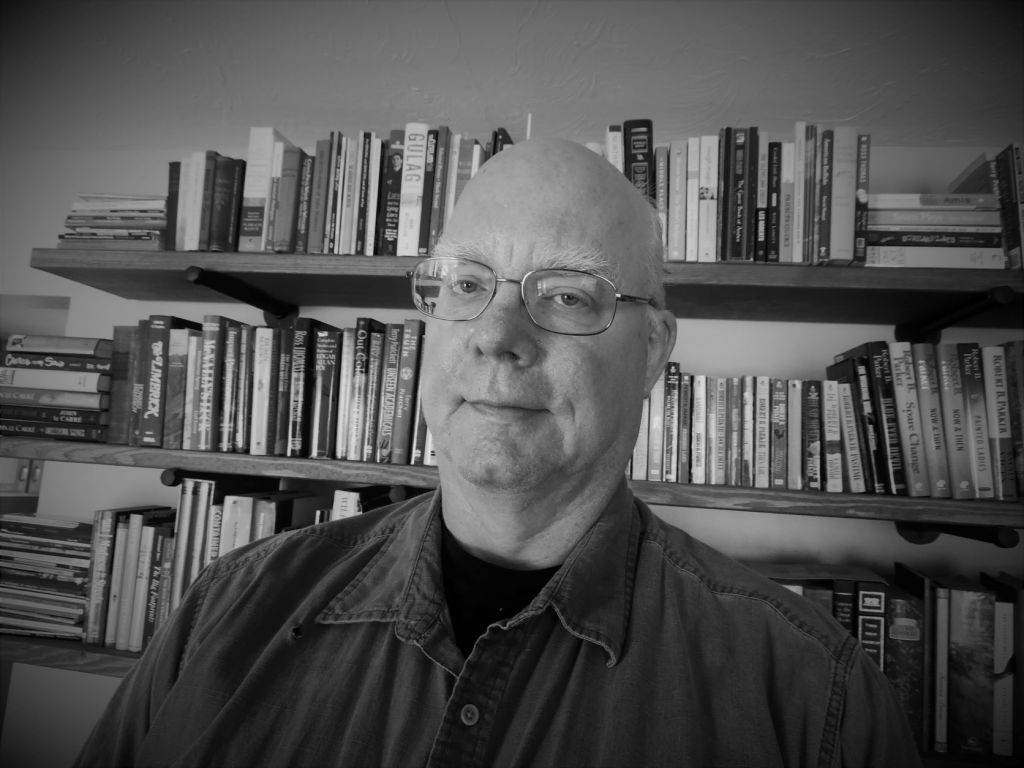
Not much is known about Marcus Bales except that he lives and works in Cleveland, Ohio, and that his work has not been published in Poetry or The New Yorker. However his “51 Poems” is available from Amazon.

Marcus Bales has appeared in several of the Potcake Chapbooks:

Tourists and Cannibals
Rogues and Roses
Careers and other Catastrophes
“Strip down,” she ordered
Wordplayful
Murder!
Houses and Homes Forever
Robots and Rockets

all available at https://sampsonlow.co/potcake-chapbooks/ for the price of a coffee.

Potcake Poet’s Choice: Amit Majmudar, ‘Eyespots’

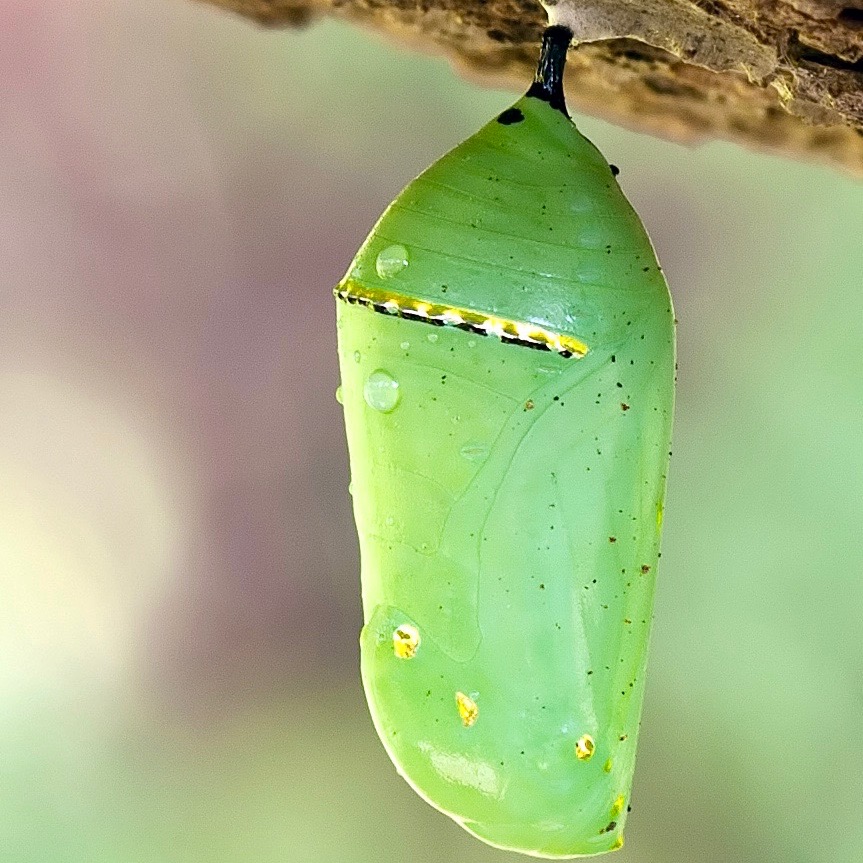
Caterpillars build their bunkers out
of terror. Transformation hunts them, haunts them
as oak leaf peepholes open underfoot
to bare the air, the emptiness that wants them.
I have a measure of infinity
inside me. A is no and mit is measure
in an ancestral tongue that haunts me, hunts me.
I’m half in love with what I have to be.
The other half is looking for a razor
to make of me the Amit who was once me,

my yogi’s beard a clump of Spanish moss
limp at my feet, a piece of furry roadkill.
I’m no ascetic. Half in love with loss,
I’ll seek out beauty, or at least my ode will,
night-blooming jasmines dooming my samadhi,
scenting, resenting my hermetic dark
because they know a yogi, breathing in
his first girlfriend’s perfume, unarchives her body,
and drives her, after dusk, to the vanished park
where memory of sin cocoons the sin.

Caterpillars ravel bunkers into
bodybags—no way for them to know
the moment that they poke themselves a window,
the rebirth they were hiding from will show:
Two stained-glass windows mounted on my back,
two earshaped eyespot petals I can flex
and fold, a flailing that transforms to flight
while all the darkling jasmines that I lack,
past loves that called me onward to the next,
unpetal in the bodybag of night.

In love, or half in love, with mere aesthetics,
I’ve daydreamed Himalayan caves, a hive
that hums with “Aum” from ninety-nine ascetics,
their senses hibernating, half alive.
No one has ever scaled Kailash, the peak
where Shiva sits in bud, in shut-flytrap samadhi
with ashes smeared across his chest and arms.
But that’s just not the changelessness I seek.
I want my language, shapely as a body,
to weave and rive cocoons, enchantments, forms

with giant wings inside their ashgray berries.
I want my transience to live in speech,
if only as a resonance that carries,
like jasmine scent, beyond my voice’s reach.
I tell myself: Old soul, don’t be afraid
of changing. You are old enough to know,
whenever something changes, something dies,
but the dark you flowered in won’t let you fade.
A crack in this cocoon admits a glow.
The blue moon butterfly will wear your eyes.

Amit Majmudar writes: “This poem, ‘Eyespots’, is what I think of as a Keatsian ode, borrowing its stanzaic form and (I hope) something of its musicality. Yet the poem incorporates Hindu religious imagery throughout and sings of self-transformation in a way that isn’t to be found in Keats. This hybridization of Eastern and Western traditions in the poem feels idiosyncratic. There remain elements still opaque to me about it; so I never really delved into the metaphysical significance of the title’s false eyes, these seeming sense organs that are not actually sensing anything, but, given the focus on ascetic imagery, there seems to be something in that. Maybe in another essay? Or another poem….

I feel as though there are poems I have written that someone else could conceivably have written. But not this one; even ignoring that my name hides caterpillar-like inside the cocoon of the poem, I feel that the range of influences and ideas is simply too idiosyncratically “me” for this to have come from any other poet’s hand. Will everyone like it? Probably not, for precisely that reason. But I know that no one else could have produced this sequence of words, so I confess a certain fondness for it. It’s the one of my literary children who most resembles me. And it’s as good a way as any to get to know me as a writer.”

Amit Majmudar is a diagnostic nuclear radiologist who lives in Westerville, Ohio, with his wife and three children. The former first Poet Laureate of Ohio, he is the author of the poetry collections What He Did in Solitary and Dothead among other novels and poetry collections. Awarded the Donald Justice Prize and the Pushcart Prize, Majmudar’s work has appeared in The New York Times, The New Yorker, Best of the Best American Poetry, and the eleventh edition of The Norton Introduction to Literature. Two novels are forthcoming in India in 2022: an historical novel about the 1947 Partition entitled The Map and the Scissors, and a novel for young readers, Heroes the Color of Dust. Visit www.amitmajmudar.com for more details.

‘Eyespots’ was first published in Measure Review.