Monthly Archives: November 2025

Sonnet: Marcus Bales, ‘This Bar’

In the middle of their movie each arrives
Smiling in this gutter, still the stars
Of broad moments in their narrow lives.
They tell of other people, other bars,
Other husbands, lovers, friends, and wives,
Re-writing both their pleasures and their scars;
How one thing given up another strives
To get; how what one shines another tars
With one of the varieties of hate.
But here the villain is a dead-end job
Or marriage, or failing kids; it would be great
If Yankees, Nazis, drug lords, or The Blob  
Were why we’re lost, or losing, or alone –
But here the tales and failures are our own.

*****

Marcus Bales writes: “The bar culture was a mystery to me. For much of the western developed world, though, it seems central to the human experience. The only reason I went to bars for a long time was to see a performer, and then only for that. The genes for enjoying intoxication and for enjoying the taste of alcohol seem to have missed me. I’d have a soft drink, enjoy the show, and go home. I thought bars were noisy theaters full of fairly rude people who were missing the point of the entertainment. Yeah, well. 

“As usual in these sorts of tales, it was a woman who showed me I had mistaken the whole thing. 

“When I met Linda ‘going out’ for me meant a poetry reading. Linda’s idea of a good time was a fried baloney sandwich and a few glasses of wine at a bar. After a couple poetry readings we went to bars. And while everyone at a poetry reading has a story, they are there to tell those stories, often in the kind of detail, physical, mental, and emotional, that can be pretty harrowing. A  poetry reading is more like therapy than a lot of therapy. 

“The stars of the show, the featured readers, do not, for the most part, mix with the common folk of the open mic. Most of the time the feature readers come late, perform, and leave, giving no one a chance to chat with them or get to know them. There is a distinct class system, and if the performer is known more than locally, those exalted folks prefer to be kept separate from the audience, deigning to meet only a selection of the organizer’s favored few friends in a private room beforehand. You can judge your status in the local hierarchy by whether you are never, sometimes, or often invited to be in that room. 

“In bars, though, you can talk to anyone and everyone, if you’re willing. Well, middle-class bars, anyway. Dive bars are a whole other phenomenon. But in middle-class bars people talk to the people around them, and listen to one another, and drink. And talk some more. And drink. The point is the social drinking, the freeing-up, the letting-down. And for a collector of stories it’s a gold mine. 

“I still have a soft drink, but if you tip well you can get it served to look like it’s alcoholic. And you can remember what people said, afterwards.”

Not much is known about Marcus Bales, except he lives and works in Cleveland, Ohio, USA, and his work has not appeared in Poetry or The New Yorker. His latest book is 51 Poems (which includes ‘This Bar’); reviews and information at http://tinyurl.com/jo8ek3r

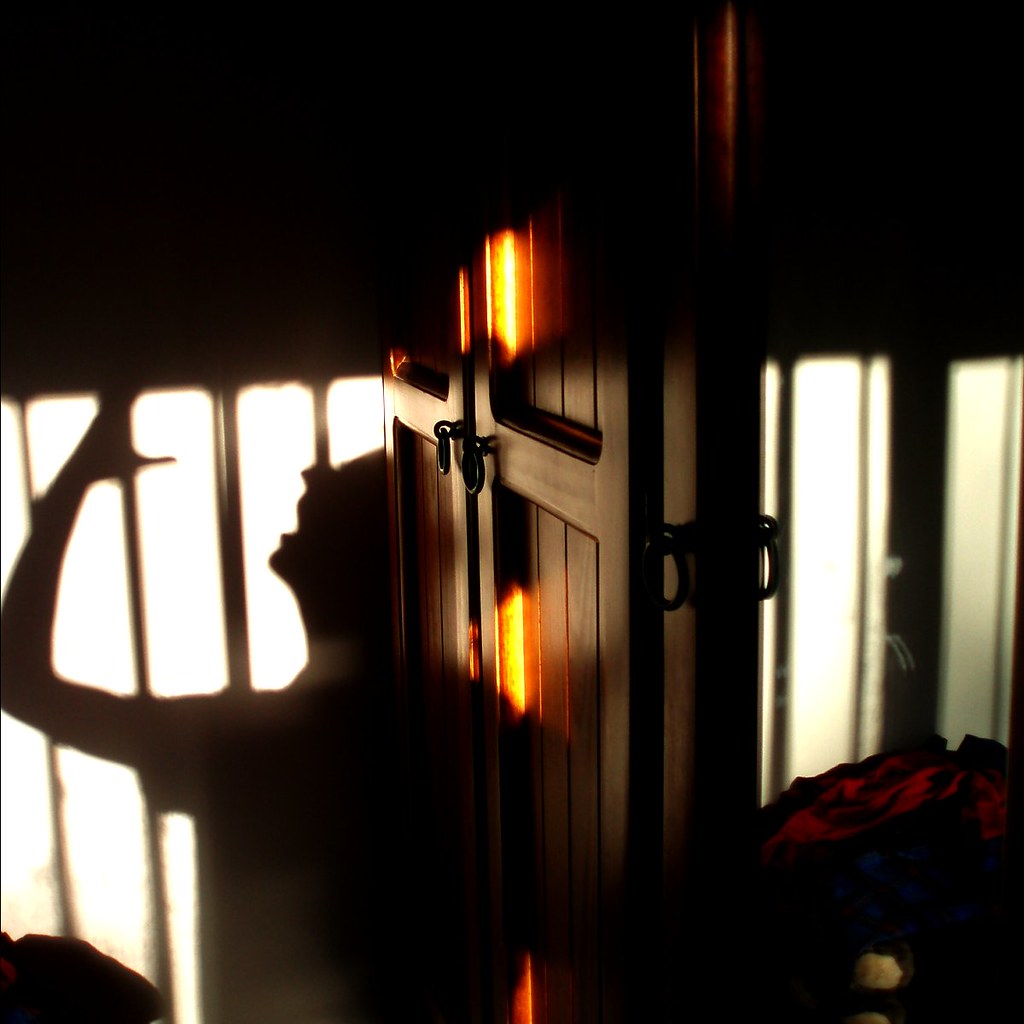
Photo: “Down Drinking at the Bar” by swanksalot is licensed under CC BY-NC-SA 2.0.

Tom Vaughan, ‘One of Us’

A starter British passport,
now with a French one too,
I can vote in both and put down roots
in either, and stroll through

eGates and customs checks
head high, as one of us,
legitimately pukkah, blessed
by birth/life/luck, and thus 

with paperwork in order
should copper or gendarme
ask me who on earth I am:
I smile and keep my calm

and my right to an annual break
upon a sunlit beach
where seas digesting some who yearned
my paradise to reach

lap peacefully as though
the summer days could last
as far into the future as
they failed to in the past . . .

*****

Tom Vaughan writes: “The older I get, the more I ask myself the question: ‘Where would we be without our (double) standards?’.”

‘One of Us’ was first published in Snakeskin.

Tom Vaughan is not the real name of a poet whose previous publications include a novel and three poetry pamphlets (A Sampler, 2010, and Envoy, 2013, both published by HappenStance; and Just a Minute, 2024, from Cyberwit). His poems have been published in a range of poetry magazines, including several of the Potcake Chapbooks and frequently in Snakeskin and Lighten Up Online. He currently lives in Brittany.
https://tomvaughan.website

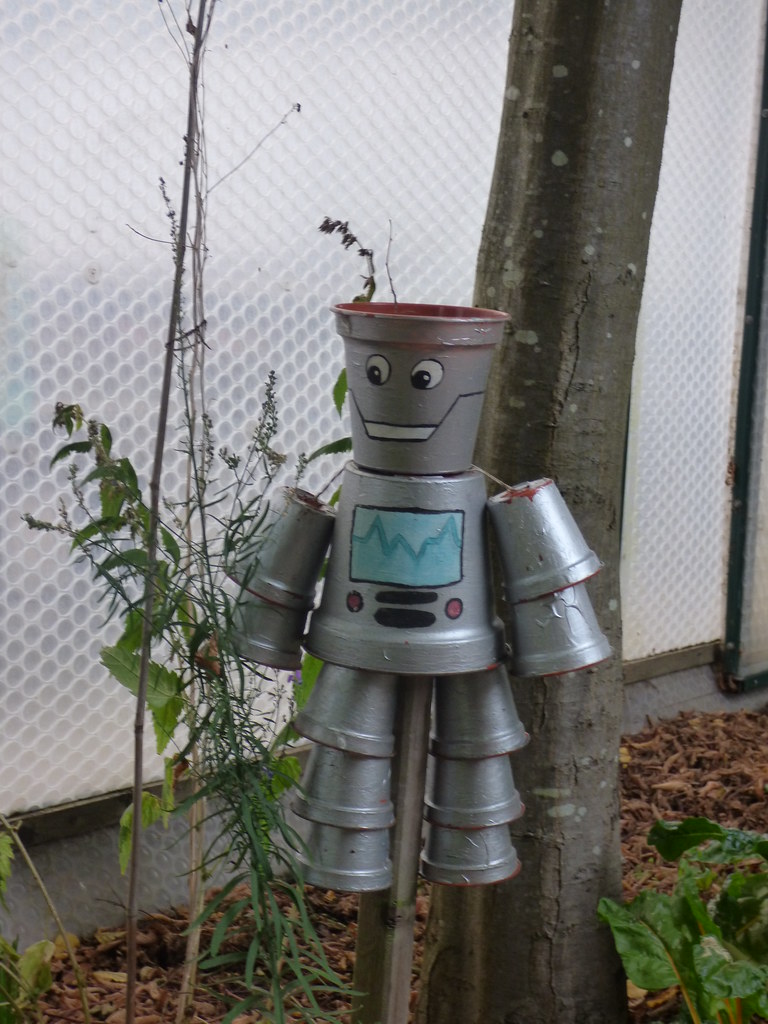
Illustration: RHL and ChatGPT

Using form: Iambic trimeter: Susan McLean, ‘Danse Macabre’

The dancers, taut as bows,
burn in their joyous fire.
They whirl, entwine, and pose
in friezes of desire.

No skeletons appear
to shock the celebration.
The dancers, bowing, hear
a rapturous ovation.

Outside, the wind blows colder.
Although she’d rather linger,
she senses on her shoulder
the tap of a light finger.

And, though she came alone
and doesn’t need a ride,
a shadow, thin as bone,
attends her, stride for stride,

then leaves her, still denied.
But the end is not in doubt.
The skeleton inside
eventually wants out.

*****

Susan McLean writes: “I wrote this poem after attending a performance of Ailey II, the junior corps of dancers in the company founded by Alvin Ailey. It was on a cold night in autumn around Halloween, and even though there was nothing sinister about the dances I witnessed, I was reminded of the medieval Dance of Death, in which skeletons appear to people in the midst of their daily routine to summon them away to death. One of the most memorable images of that theme occurs at the end of Ingmar Bergman’s film The Seventh Seal, and I have seen it portrayed also on the wooden bridge in Lucerne in Switzerland. The poem is written in three-beat lines of iambic trimeter, which reminded me of a stately waltz.”

‘Danse Macabre’ originally appeared in THINK Magazine.

Susan McLean has two books of poetry, The Best Disguise and The Whetstone Misses the Knife, and one book of translations of Martial, Selected Epigrams. Her poems have appeared in Light, Lighten Up Online, Measure, Able Muse, and elsewhere. She lives in Iowa City, Iowa.
https://www.pw.org/content/susan_mclean

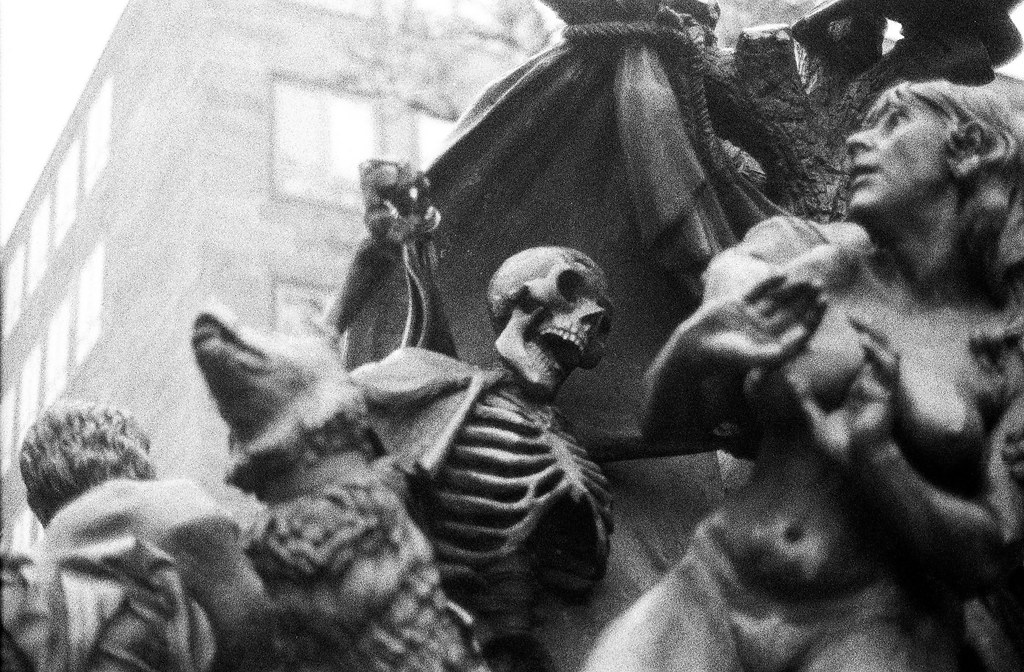
la danse macabre” by a magic monkey! is licensed under CC BY-NC-SA 2.0.

Sonnet: Edna St. Vincent Millay, ‘I shall forget you presently, my dear (Sonnet IV)’

I shall forget you presently, my dear,
So make the most of this, your little day,
Your little month, your little half a year
Ere I forget, or die, or move away,
And we are done forever; by and by
I shall forget you, as I said, but now,
If you entreat me with your loveliest lie
I will protest you with my favorite vow.
I would indeed that love were longer-lived,
And vows were not so brittle as they are,
But so it is, and nature has contrived
To struggle on without a break thus far,—
Whether or not we find what we are seeking
Is idle, biologically speaking.

*****

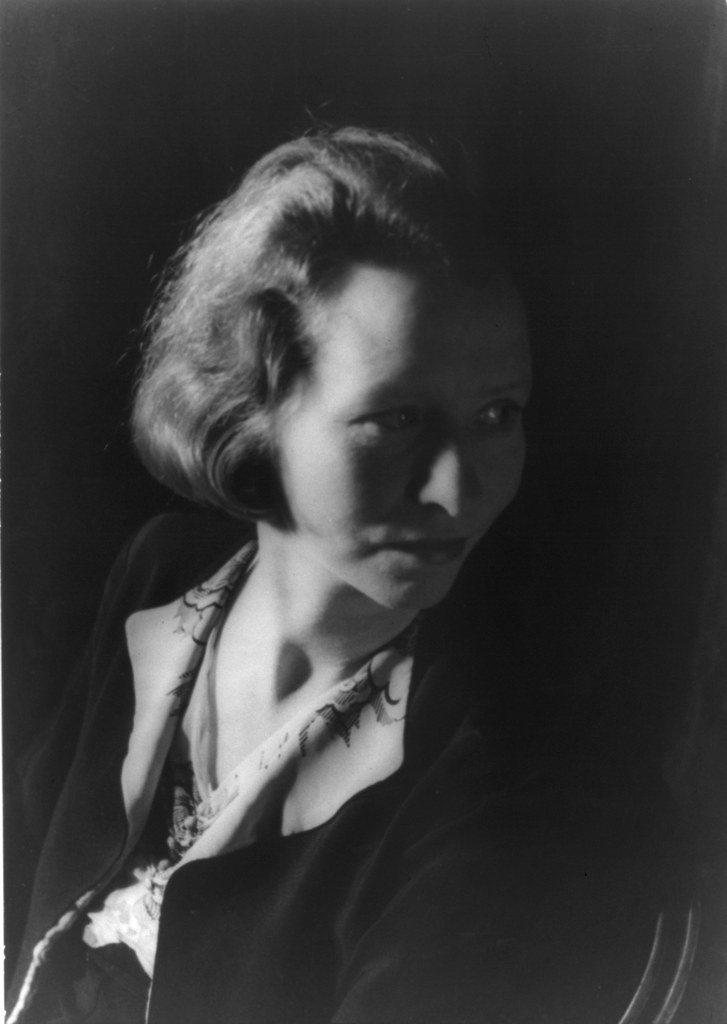
Edna St. Vincent Millay, 1892 – 1950

From Wikipedia: “After experiencing his remarkable attention to her during her illness, she married 43-year-old Eugen Jan Boissevain in 1923. Boissevain was the widower of labor lawyer and war correspondent Inez Milholland, a political icon Millay had met during her time at Vassar. A self-proclaimed feminist, Boissevain supported Millay’s career and took primary care of domestic responsibilities. Both Millay and Boissevain had other lovers throughout their 26-year marriage. For Millay, one such significant relationship was with the poet George Dillon, a student 14 years her junior, whom she met in 1928 at one of her readings at the University of Chicago. Their relationship inspired the sonnets in the collection Fatal Interview, which she published in 1931.”

Photo: “No Known Restrictions: Edna St. Vincent Millay by Carl Van Vechten, 1933 (LOC)” by pingnews.com is marked with Public Domain Mark 1.0.