I hear an army charging upon the land,
And the thunder of horses plunging, foam about their knees:
Arrogant, in black armour, behind them stand,
Disdaining the reins, with fluttering whips, the charioteers.
They cry unto the night their battle-name:
I moan in sleep when I hear afar their whirling laughter.
They cleave the gloom of dreams, a blinding flame,
Clanging, clanging upon the heart as upon an anvil.
They come shaking in triumph their long, green hair:
They come out of the sea and run shouting by the shore.
My heart, have you no wisdom thus to despair?
My love, my love, my love, why have you left me alone?
*****
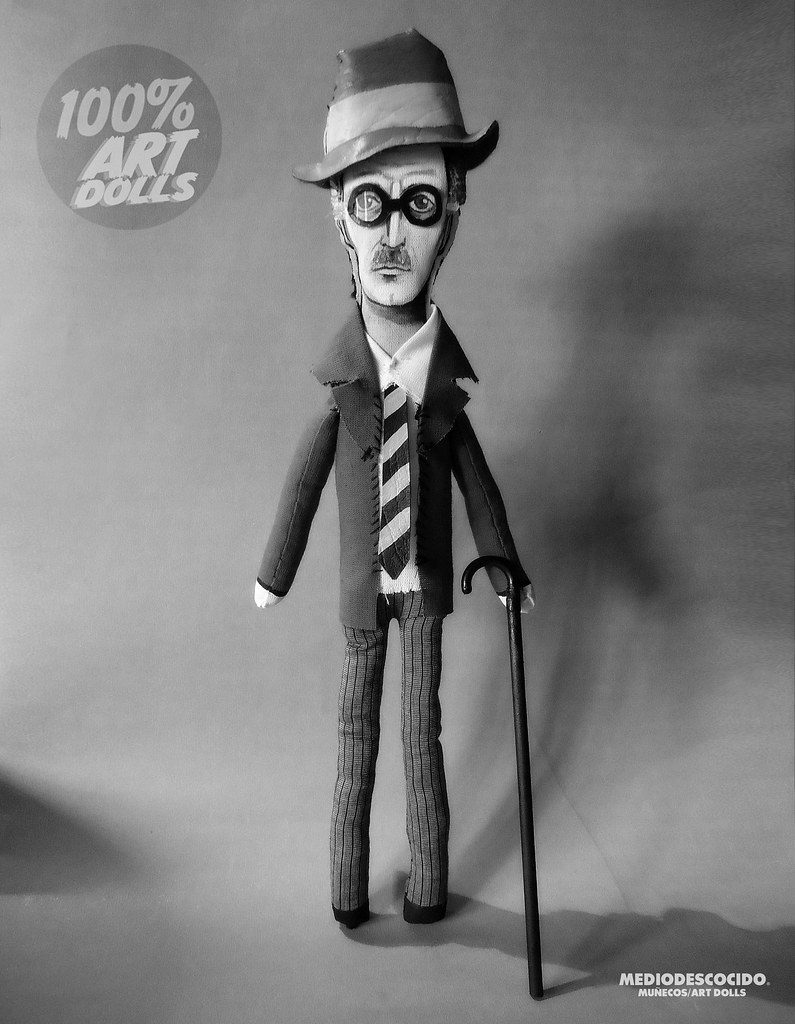
James Joyce is a fascinating author, from his novels dense with ideas, descriptions and wordplay, to his grotesque private love letters, normal short stories and formal verse. This poem is the last of the 36 in his 1907 collection ‘Chamber Music’, and the one that I come back to the most. Apart from the imagery, I am intrigued by the unnatural rhyming of the first and third lines, and not the second and fourth, in each stanza: the form is unsettling, and works very well with the inverted reality of dreams and with the discomfort of these particular emotions swirling through fear, loss and loneliness.
“James Joyce” by MEDIODESCOCIDO is licensed under CC BY 2.0.


This poem is absolutely WEIRD, Robin. When you get to the end, you’re actually desperate for a rhyme or even a half-rhyme for ‘alone’, at least I was. And the phrasing of ‘thus to despair’ seems almost like a grammarian but also a contorted way to get to a rhyme that doesn’t even matter that much, and in any case the charging armies and the characters with green hair don’t seem to be despairing much to me (although I realise that is kind of the point). My dreams are somewhat quieter than James Joyce’s, thankfully….
LikeLiked by 1 person
I agree. It is all appropriately disturbing in concept, imagery and versification.
LikeLike