Category Archives: short poems

Political poem: Jerome Betts, ‘Call for Obliteration’

Crackpotus thinks that war is fun
(Of course, he never fought in one)
And so he bombed his little heart out…
Oh, chuck the cruel crazed old fart out!

The 25th amendment’s what
Is needed, not a sniper’s shot,
Until, his time come, all can cry
Damnatio memoriae!

*****

Jerome Betts writes: “This squib was prompted by the civilian casualties caused by the War of Donald’s Ego and the increasingly callous madness of his accompanying tweets. The second stanza supports a remedy advocated by a growing number in the USA, unlikely as it is to be put into effect  by the spineless sycophants that make up his Cabinet of Horrors. It would be nice to find words to really hit him where it hurts, but the nearest I could come up with is Damnatio memoriae, a modern Latin term for an Ancient Roman practice. Might it just puncture the hide of a POTUS obsessed with attaching his name to buildings and institutions?”

‘Call for Obliteration’ was first published in The New Verse News.

Jerome Betts edits the verse quarterly Lighten Up Online

Illustration by David Horsey, Seattle Times.

Monostich: Farah Shah, ‘Funhouse’

father as a funhouse mirror: somewhere in that mess is my reflection.

*****

 Farah Shah writes: “I was actually not very moved at first to participate in OnlyPoems’ call for monostitch poem submissions. I’m unfortunately a woman of many words, especially in my writing. I’ve found word limits, shortening stories, and other forms of briefening composition painstaking at best. However, I’ve been trying to do things I’m not very good at (or maybe not very passionate about) because I’ve found the more you move a muscle, the stronger it becomes. I recently cut a piece of mine I loved into less than 300 characters; the Frankenstein-esque process of sewing back the body parts of that poem was difficult, but the new composition that emerged I found to be much stronger. In a way, with less to write, I had more to say. Like many  peoples’ poems, mine is about my father (dads just make for such great material), and because of that, it’s also about me. My father is someone I could write almost anything about: love songs, comedies, tragedies. I didn’t think I could write about us in one line, but I tried to, and I did. Like I mentioned to Karan, the editor of Only Poems, writing this poem reminded me to call my dad.”

‘Funhouse’ was originally published in Only Poems.

Farah Shah is a recent University of Central Florida graduate, spending time between degrees learning to bake sourdough, overworking her airfryer, and penning sappy poetry while she waits for her dough to proof.  She spent her formative years in Dar Es Salaam, Tanzania, and thinks the best parts of herself come from that time. She writes: “I have yet to wrangle my writing into one specific place, but I post here and there on my instagram @farahxshah, and I’ve been featured on Threads “Closing” Issue for microfiction: https://www.threads.com/@threadlitmag/post/DTTbwivjNQW?xmt=AQF0J35LQzeadqjpGB8j6qbUeGGrAMYyGhCUb3x810IEZg

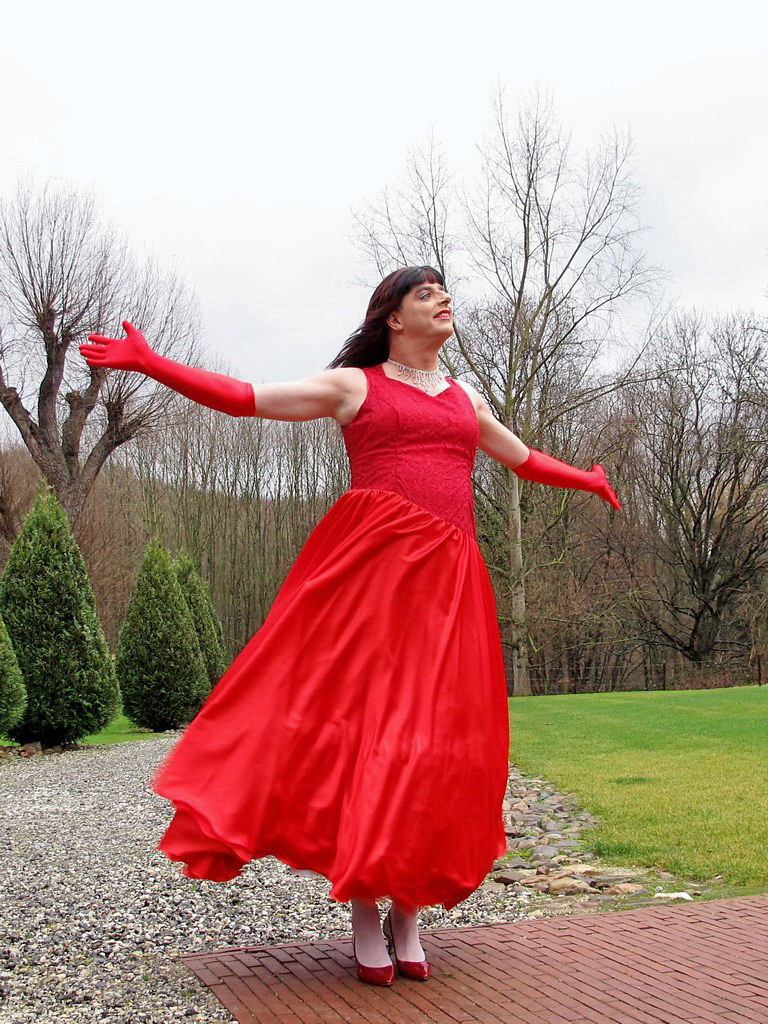
Sunday Self Portrait” by davitydave is licensed under CC BY 2.0.

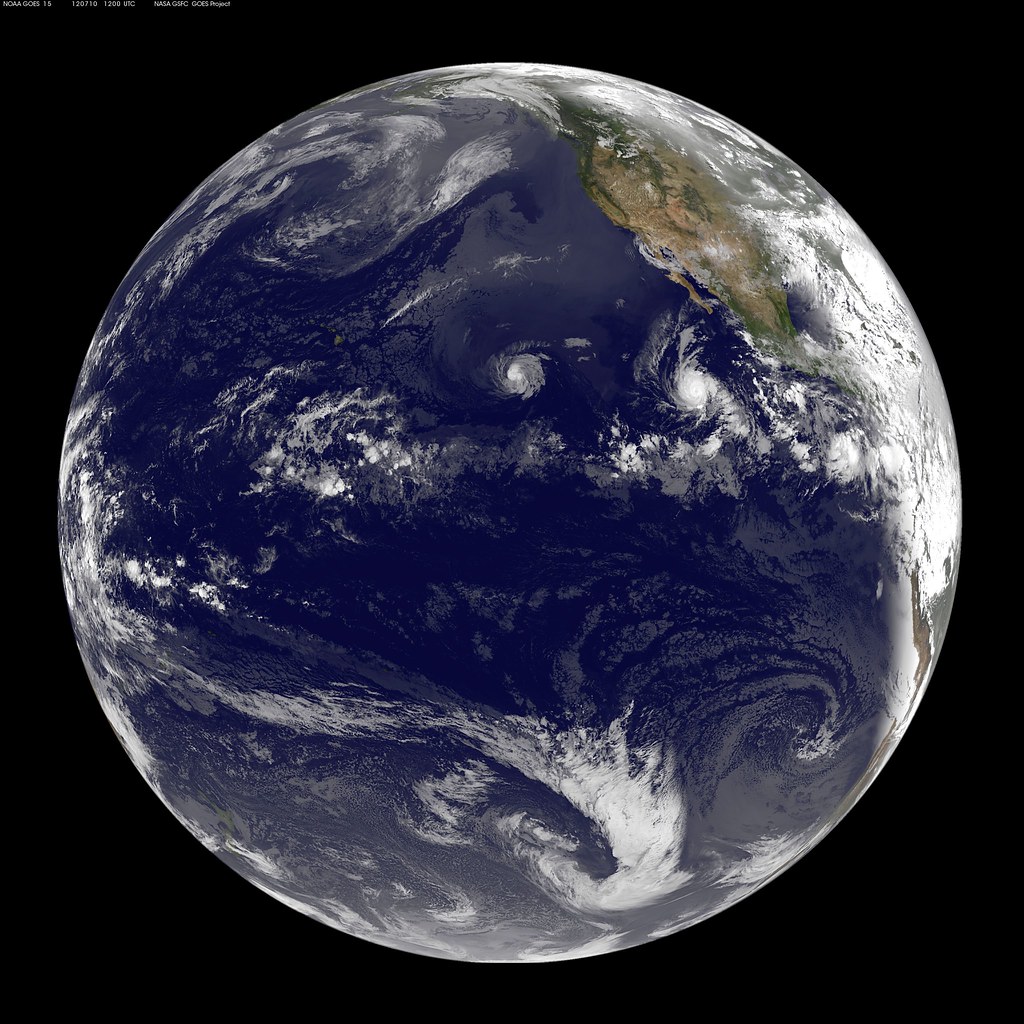
Short poem: RHL, ‘Earth (and Mars)’

This planet is humanity’s place of birth,
but not the end of what we’re capable of –
we’ve just begun.
 
But don’t let Elon Musk take off from Earth:
he’ll nuke us if and when he gets pissed off…
or just for fun.

*****

‘Earth (and Mars)’ was first published in Rat’s Ass Review.

The trouble with space!” by Philip Ed is licensed under CC BY-NC 2.0.

Short poem: Langston Hughes, ‘God’

I am God–
Without one friend,
Alone in my purity
World without end.

Below me young lovers
Tread the sweet ground–
But I am God–
I cannot come down.

Spring!
Life is love!
Love is life only!
Better to be human
Than God–and lonely.

*****

Langston Hughes, key figure in the Harlem Renaissance, published his short poem ‘God’ in the October 1931 issue of Poetry. Despite the illustration I have chosen for his poem, Hughes was neither straight nor white… but I’m sure he would forgive my choice, as he was a very tolerant individual.

Le Printemps (Spring), oil painting by Pierre Auguste Cot, 1873. Metropolitan Museum of Art, online collection (The Met object ID 438158), Public Domain, https://commons.wikimedia.org/w/index.php?curid=20137984

Using form: rhymed univocalic: Susan McLean, ‘No-Show’

Oh no, Godot!
So slow to show.
Who knows how low
two fools won’t go
to hold off sorrow?
How cold, how wrong
to con or ghost
hobos who long
for comfort most.
So go tomorrow.

*****

Susan McLean writes: “For its ‘Moon’ issue, Ecotone put out a call for submissions in the rarer French repeating forms and suggested that one way to evoke the moon was by using the word O or words in which a lot of o’s appeared. I wanted to write a rondelet using words whose only vowel was o, which made sense because the subject was the moon. Therefore, I made a list of as many words as I could think of that used no vowel but o, looking particularly for words that rhymed with one another. Luckily, that vowel can be used to represent many different sounds. I wrote a rondelet called “Solo” that later appeared in the journal.
I had heard of Christian Bök’s Eunoia, a collection in which each poem uses a single vowel, and I later learned from Pedro Poitevin that it is called “univocalic verse.” I had many words left over from my search for o-words, one of which was “Godot.” I have always been a huge fan of drama, and I attended and read many plays in my youth, when Theatre of the Absurd was still in vogue. But some of my most boring and irritating theatre experiences were at plays by Samuel Beckett. I decided to write a poem that was my critique of the premise of Waiting for Godot. The poem first appeared in Pulsebeat Poetry Journal.

Susan McLean has two books of poetry, The Best Disguise and The Whetstone Misses the Knife, and one book of translations of Martial, Selected Epigrams. Her poems have appeared in Light, Lighten Up Online, Measure, Able Muse, and elsewhere. She lives in Iowa City, Iowa.
https://www.pw.org/content/susan_mclean

Waiting for Godot” by UMTAD is licensed under CC BY-NC 2.0.

John Gallas, ‘Timmer’s new specs’

See the horses run.
Mares’-tails in a row.
Yurt No 1
a toy drum way below.

Del-skirt sponged with dew,
up the hill goes Timmer:
bright the early air,
grasses waft and shimmer.

Brand new SPFives.
High above the plains
he counts the hairs of horses
and sees the songs of cranes.

*****

John Gallas writes:

*’Timmer’ is often used in Mongolia as a short-name version of Timmerlane/ Tamerlane/ Tamburlaine – adds a little heroic element to fat-boy’s climb and specs. 

*SP5s – SP (with an H) means (according to Specsavers!) ‘Sphere’ and is a power-measure of a spec lens: and ‘the higher the number the stronger the lens’ – so Sp(h)5s are a power. I’ve cheated for the rhythm (with no ‘h’), but hopefully all will understand they were the specs!

This little poem is from a set of 10 formal pieces describing scenes from YURT life in Mongolia. I made books full of notes when travelling there years ago, and mined them for the whole set. They range from bike-generating electrics, a horse-riding tiny-tots’ ‘raid’, a new felt lining, and a wash-your-yurt product, to a quiet Winter camp, a visit from a People’s Painter, and a ‘moving house’ journey. The poems are intended to have no ‘meaning’ beyond what they are and say: something I’ve tried hard to do for the whole of ’10X10′.

’10X10′ is:  

  1. 10 formal, 3-verse poems called ‘ffenstri’ (people-sketches/resurrections from Welsh gravestones)
  2. ‘Southern Critters’: 10 not-real Aotearoa/NZ animals, made to look real. Spot the lies.
  3. as set 1, but telling the sad tale of ‘Lawrence of Australia’.
  4. ‘Wasted by Whitemen’: 10 awful colonial disasters: all true, fully researched. 4 prize-winners amongst the 10. 
  5. YURTS as above. 
  6. ‘The Persian Version’: my take on 10 medieval Persian poems, redone from a 1931 booklet by the Rev. H. Minkin.
  7.  ‘It’s Your Sam’: as 1/3/5, 10 formal little poems dedicated to Samuel Beckett.
  8.  ‘News from Niue’: 10 brief travel-poems from my favourite Pacific island.
  9. ‘Luminosities’: little formal poems from literal ‘bright spots’ on my travels over the years.
  10. ‘Episodes from the Cuban Revolutionary War’: 10 utterly objective poems from Ernesto ‘Che’ Guevara’s writings: these intentionally a ‘bowing-out’ of the poet as him/herself an interesting person with interesting thoughts and feelings. Guevara’s unselfish eye is a lesson to all.

I try not to ‘explain’ the poems in ’10X10′ as they are truly an exercise in not-me writing: or, when there, using the ‘unselfish eye’. I’ve always preferred telling tales to parading my thoughts and emotions, except in ‘The Extasie’ (Carcanet) – which is the Big Download of personal Love. 

*****

John Gallas, Aotearoa/NZ poet, published mostly by Carcanet. Saxonship Poet (see www.saxonship.org), Fellow of the English Association, St Magnus Festival Orkney Poet, librettist, translator and biker. 2025 Midlands Writing Prize winner. Presently living in Markfield, Leicestershire. Website is www.johngallaspoetry.co.uk which has a featured Poem of the Month, complete book list, links and news.  

Photo: “_WIL0594.jpg” by Paul Williams www.IronAmmonitePhotography.com is licensed under CC BY-NC-SA 2.0.

R.I.P. – X.J. Kennedy, ‘Epitaphs’

I who in life stood upright as a tree
Have found a still more basic way to be.

Dirt was I made from, back to dirt I went.
Envy me now. I’m in my element.

The hardest part of dying is to turn
Your back on that deep calm for which you burn.

*****

X.J. Kennedy, one the greatest and most active formalists of the late 20th century, died last week at the age of 96. Short pieces like his ‘Epitaphs’ can be found in the Brief Poems blog; longer and somewhat less flippant pieces all over the place, including in Poetry. He published dozens of collections of verse for adults and children.

Midge Goldberg, ‘Words My Mother Didn’t Know’

Starting with the obvious:
iPad, cell phone, cannabis,

Mitochondrial DNA—
but science changes every day—

sushi, pad thai, jasmine rice,
almost any kind of spice,

zipline, snowboard, kayaking,
tongue or belly-button ring.

Then, things she’d heard of, so she knew,
but not imagined one could do:

Go to Iceland, make French bread,
care what anybody said,

watch a sunrise, touch a bug,
want to give your child a hug.

*****

Midge Goldberg writes: “Often I’ll find myself in situations or places that my parents never would have encountered or dreamed of. That got me thinking of even words that they would not have known. I started writing the funnier couplets, then all of a sudden the poem took a darker turn that I hadn’t expected. Writing in rhyme and meter does that for me sometimes, leads me to a more complicated poem than I had originally imagined.”

‘Words My Mother Didn’t Know’ was originally published in Light, and nominated by them for a Pushcart Prize.

Midge Goldberg has published three books of her own poetry, including To Be Opened After My Death, a children’s book, and was the editor of Outer Space: 100 Poems, published by Cambridge University Press. She lives in New Hampshire, where her newly expanded tomato garden is now under two feet of snow. She still has the same approximate number of chickens.

Photo: “Untitled” by Leon Fishman is licensed under CC BY 2.0.

Short poem: Daniel Brown, ‘So Large’

Big world when I was very young.
The shopping aisles a mile long …
Our lawn, though anything but wide,
Unfolding like the countryside …
The sky! So large and far away …
Exactly as it is today.

*****

Daniel Brown writes: “In his brilliant tome ‘The Poem’, Don Paterson says  “[I]f you ‘get a good idea for a poem’, I’d suggest you run a mile, as this generally isn’t the way poems make themselves known.” Advice worth attending to, though it’s also worth noting the little ‘out’ Paterson gives himself with that ‘generally’. I’m glad Robert Frost didn’t run from the powerfully suggestive idea–that “the people along the sand” are always looking out to sea, not back at the land–of his ‘Neither Out Far nor In Deep’; that W. S. Merwin didn’t run from the piercing premise–that “every year without knowing it” we pass the date of our death– of his ‘For the Anniversary of my Death’ . . . When the idea for “So Large” hit my hook, I felt like I had a big one on the line.”

“So Large” first appeared in The New Criterion under the title “A Giant.”

Daniel Brown’s poems have appeared in Poetry, Partisan Review, PN Review, Raritan, Parnassus, The New Criterion and other journals, as well as in a number of anthologies including Poetry 180 (ed. Billy Collins) and The Swallow Anthology of New American Poets (ed. David Yezzi). His work has been awarded a Pushcart prize, and his collection Taking the Occasion (Ivan R. Dee, 2008) won the New Criterion Poetry Prize. His latest collection is What More?  (Orchises Press, 2015). Brown’s criticism of poets and poetry has appeared in The Harvard Book Review, The New Criterion, PN Review, The Hopkins Review  and other journals, and the LSU Press has published his critical book, Subjects in Poetry. His Why Bach? and Bach, Beethoven, Bartok are audio-visual ebooks available at Amazon.com. His website is danielbrownpoet.com .

‘Odd Formations’, England, The Peak District, Kinder Scout Hilltop” by WanderingtheWorld (www.ChrisFord.com) is licensed under CC BY-NC 2.0.

Short poem: John Gallas, ‘Tywyn Promenade – John Longwen (1951-1971)’

A telescope stands by the railing
its eye turned out to sea
the ocean is there for a sixpence
the Lounges of Dark are free.

A little brass coin can be bought
bickering gulls on the rails
fishingboats ride in the shelters
darkness fills their sails.

John John the wind is wild
I shall keep my sixpence for sweets
strangers hide in their raincoats
rain falls on the streets.

*****

John Gallas writes: “I’ve just completed (draft 10,000, or it feels like it) a collection called ’10X10′ which includes 5 sets of 10 small, 3-verse, rhyming poems (plus 5 sets of Otherwise). This is number 3 from the ‘ffenestri’ set (10 Welsh encounters). These are poems intended to be reader-led as far as any ‘meaning’ goes, and so purposely impressionistic, wobbly and fluid – but tucked into a strict rhythm-and-rhyme form).”

John Gallas, Aotearoa/NZ poet, published mostly by Carcanet. Saxonship Poet (see www.saxonship.org), Fellow of the English Association, St Magnus Festival Orkney Poet, librettist, translator and biker. 2025 Midlands Writing Prize winner. Presently living in Markfield, Leicestershire. Website is www.johngallaspoetry.co.uk which has a featured Poem of the Month, complete book list, links and news.  

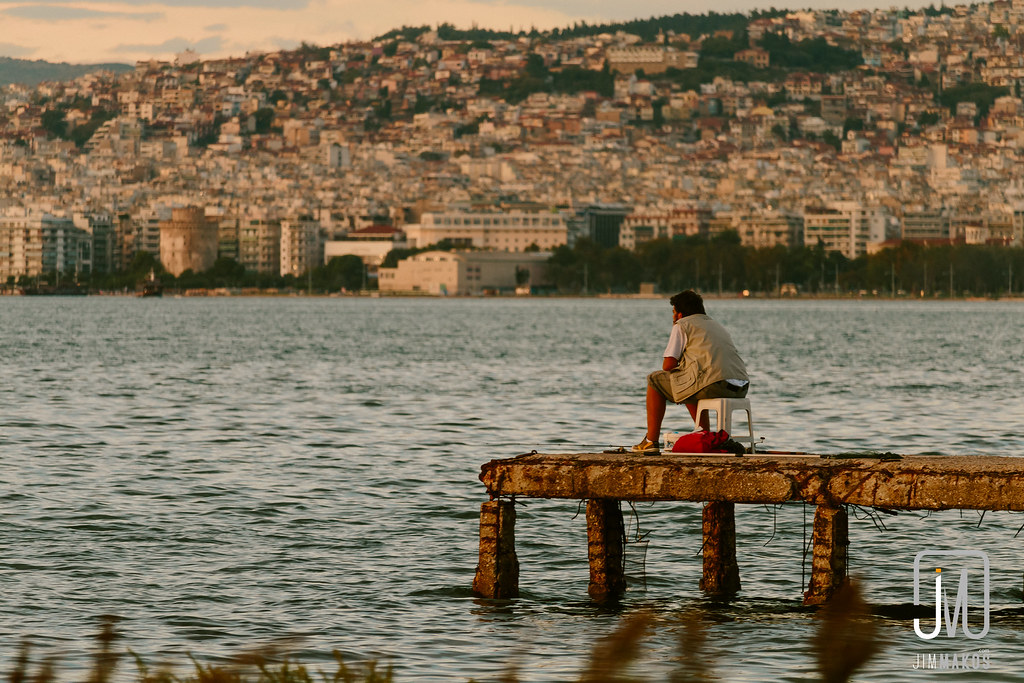
Photo: “Lost at Sea” by SimplSam is licensed under CC BY-NC-SA 2.0.