Tag Archives: James Joyce

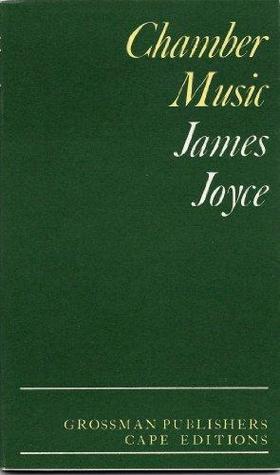
Using form: James Joyce, ‘XXXVI’ from ‘Chamber Music’

I hear an army charging upon the land,
And the thunder of horses plunging, foam about their knees:
Arrogant, in black armour, behind them stand,
Disdaining the reins, with fluttering whips, the charioteers.

They cry unto the night their battle-name:
I moan in sleep when I hear afar their whirling laughter.
They cleave the gloom of dreams, a blinding flame,
Clanging, clanging upon the heart as upon an anvil.

They come shaking in triumph their long, green hair:
They come out of the sea and run shouting by the shore.
My heart, have you no wisdom thus to despair?
My love, my love, my love, why have you left me alone?

*****
James Joyce is a fascinating author, from his novels dense with ideas, descriptions and wordplay, to his grotesque private love letters, normal short stories and formal verse. This poem is the last of the 36 in his 1907 collection ‘Chamber Music’, and the one that I come back to the most. Apart from the imagery, I am intrigued by the unnatural rhyming of the first and third lines, and not the second and fourth, in each stanza: the form is unsettling, and works very well with the inverted reality of dreams and with the discomfort of these particular emotions swirling through fear, loss and loneliness.

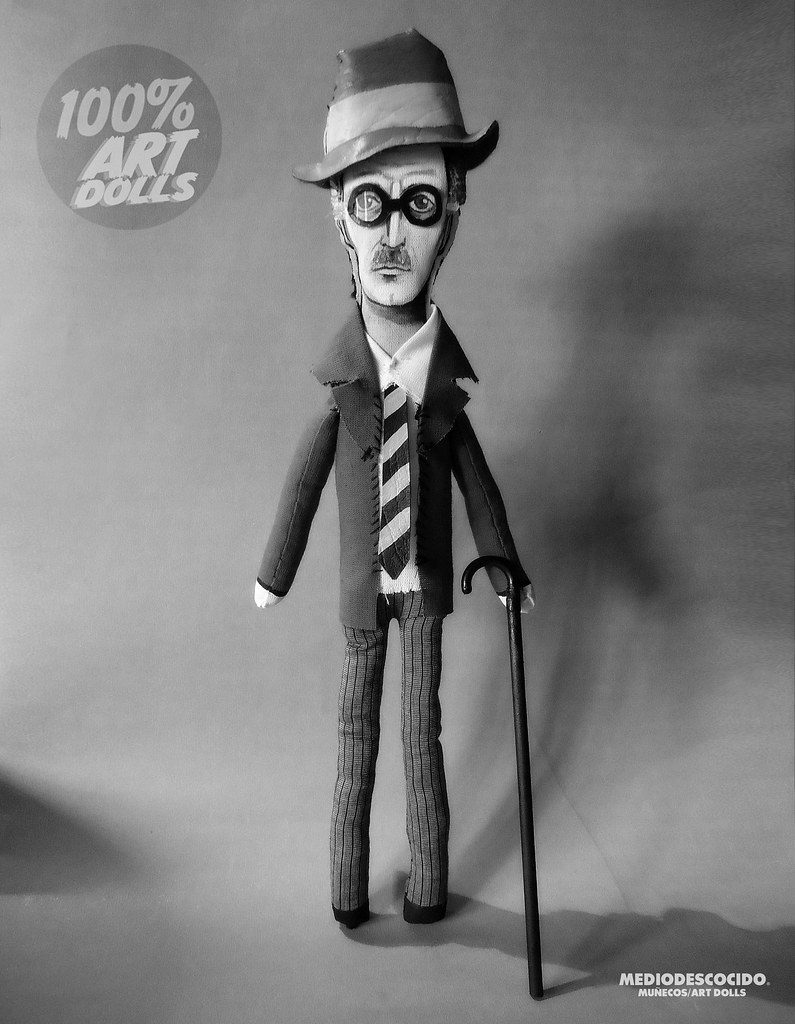
“James Joyce” by MEDIODESCOCIDO is licensed under CC BY 2.0.
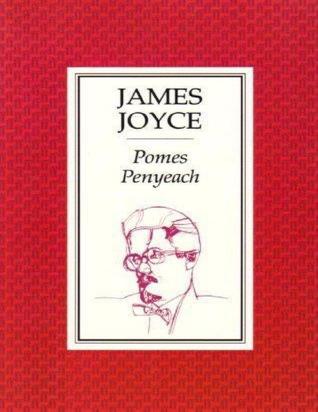
Review: James Joyce, ‘Pomes Penyeach’

That James Joyce would have written and published formal poetry seems out of keeping with his image of the writer of chaotic language (as in how he chose to spell his work’s title rather than Poems, a penny each), but the poems he wrote in the early 20th century are in the language of the time… moderated by his rich words.

Wind whines and whines the shingle,
The crazy pierstakes groan;
A senile sea numbers each single
Slimesilvered stone.

His poetry is often repetitive, but occasionally rich and memorable. (Another of his slim volumes, “Chamber Music”, is arguably more interesting than “Pomes Penyeach”.)

Pomes Penyeach was so small–14 poems of less than a page each–that when Faber republished it they added three more pieces: The Holy Office, Gas from a Burner, and Ecce Puer. The first two are early, crude and bombastic multi-page rants against poets and publishers:

Thus I relieve their timid arses,
Perform my office of Katharsis.

Ecce Puer (“Behold the Boy”) is a later light, sweet meditation on his newborn grandson:

Young life is breathed
On the glass;
The world that was not
Has come to pass.

You never know quite what you’re going to get with Joyce, and that in itself is one of the pleasures of reading him.

Review: ‘Chamber Music’ by James Joyce

James Joyce’s ‘Chamber Music’ was published in 1907, a tightly organised collection of very singable little love songs published three years after he met his future wife, Nora Barnacle. She was a chambermaid from Galway, and their first outing together–a walk through the Dublin suburb of Ringsend–was sufficently memorable (she masturbated him) that the date of 16 June 1904 was made the day of the events of Joyce’s novel ‘Ulysses’, and is now celebrated in various fashions around the world as Bloomsday.

The first poem of ‘Chamber Music’ sets the tone, not necessarily what you would expect from Joyce, but definitely related to his very fine singing voice:

Strings in the earth and air
Make music sweet;
Strings by the river where
The willows meet.

There’s music along the river
For Love wanders there,
Pale flowers on his mantle,
Dark leaves on his hair.

All softly playing,
With head to music bent,
And fingers straying
Upon an instrument.

Yes, well… Anyway, apart from the Joycean suggestiveness the lyrics provide a simple narrative over the 36 poems, short poems of eight to 18 lines. He sings of a girl, a maiden, shy, beautiful; she is a dove, a sweetheart, his true love, and only becomes a lady in Number 28. Then in the last three we have the “unquiet heart”, then “the grey winds”, and finally the last dream poem begins “I hear an army charging upon the land” and ends “My love, my love, my love, why have you left me alone?”

The narrative of the lyrics does not reflect Joyce’s life with Nora. She had moved with him to Austria-Hungary in 1904, and they stayed together until his death in 1941.