Category Archives: Potcake Poet

Potcake Poet’s Choice: Jerome Betts, ‘In Northampton Museum’

Among the hide-and-canvas lace-ups made
For some poor elephant’s giant tender feet
And leathery minutiae of trade
     In boots, dissected or complete,

Mint Army-issue, every shade of bruise,
With Tudor scraps from trenches workmen dig,
You find a case containing John Clare’s shoes,
    Asylum-worn, and very big.

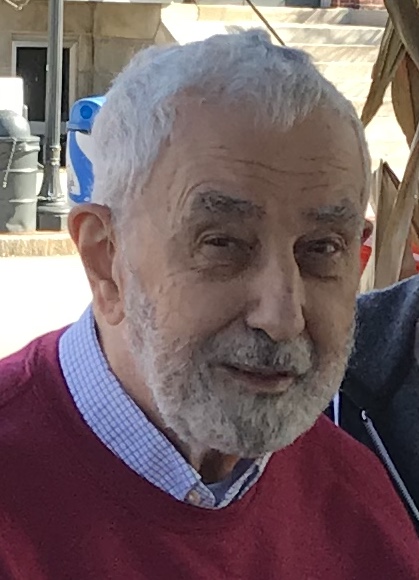
Jerome Betts writes: ”In Northampton Museum, published in Angle and The Hypertexts, is for me one of those pieces in which some lines just seem to arrive fully formed. In 1969-70 I lived for eighteen months in Northampton and sometimes visited its Shoe Museum whose displays reflected the traditional local industry. The town also still had the former Northampton County Asylum (now a private psychiatric hospital) where John Clare spent his last years. Somehow, the military  footwear, the curious elephant boots and Clare’s shoes all seemed to come together. Oddly enough, nearly  two years ago  I received a Lighten Up Online contribution about elephants from someone in the USA who, it turned out, knew another contributor who knew the American leader of the expedition in 1950, testing some theory about Hannibal’s’ crossing of the Alps, for which the elephant boots had been made.”

Jerome Betts was born and brought up on the Welsh border, but now lives in South Devon, where he edits the quarterly Lighten Up Online. In addition to articles and verse in consumer and specialist magazines his work has appeared in Pennine Platform, Staple and The Guardian, as well as anthologies like The Iron Book of New Humorous Verse, Limerick Nation, Love Affairs At The Villa Nelle,  Extreme Sonnets, Extreme Formal Poems and The Potcake Chapbooks 1 & 2, and online at Amsterdam Quarterly, Angle, The Asses of Parnassus, Autumn Sky Poetry Daily, Better Than Starbucks,  The Hypertexts, Light, The New Verse News, Parody, The Rotary Dial, Snakeskin, and other sites.

https://www.lightenup-online.co.uk/

Potcake Poet’s Choice: Terese Coe, ‘The Bumbly’ (after Edward Lear)

He ran the State in a daze, he did,
In a daze he ran the State:
In spite of howls and obnoxious jeers
And those who said it would end in tears
In a daze he ran the State!
And when the daze became a rout
That turned the country inside out
The Bumbly cried, I’m much too big!
I’m Alpha male, I’m never-fail,
the biggest gig and vig!
In a daze I’ll run the State!

So vast and vain, so vast and vain
Is the bog where the Bumbly brays;
His face is green, to think a strain,
And he ran the State in a daze.

He carried on in a daze, he did,
In a daze he carried on,
With carrion eaters on his staff,
Perpetual sneers and snickery laughs,
And predators stalking prey;
And though they said they’d legislate
They knew too little and much too late,
And worse, they could not stand up straight!
For in their skin was a powerful hate
That chewed them up till dawn.
So vast and vain, so vast and vain
Is the bog where the Bumbly brays;
His face is green, to think a strain,
And he ran the State in a daze.

And while he ran the State, he did,
And flew far over the seas
He incurred great debt and was bought by a bro
With a host of spies and some quid pro quo
And a hive of slithery sleaze.
And he bought a city or two, and some laws,
And when he was fitted with monkey claws
His climbed a tree, shrieked Chee-chee-chee!
And his arms reached down to his knees.
So vast and vain, so vast and vain
Is the bog where the Bumbly brays;
His face is green, to think a strain,
And he ran the State in a daze.

In twenty years they all were dead,
In twenty years or less,
And the people said How good they’re gone!
For they’d been through the muck of the Swamp-a-Thon,
And the dung of Fakery Cess.
And they feasted and drank at the Bumbly grave
With homemade wine and a weeklong rave,
And everyone sang, We shall live in chalets!
If only we live! We’ll attack and raze
The ruins of Fakery Cess!

So vast and vain, so vast and vain
Is the bog where the Bumbly brayed;
His face was green, to think a strain,
And he ran the State in a daze.

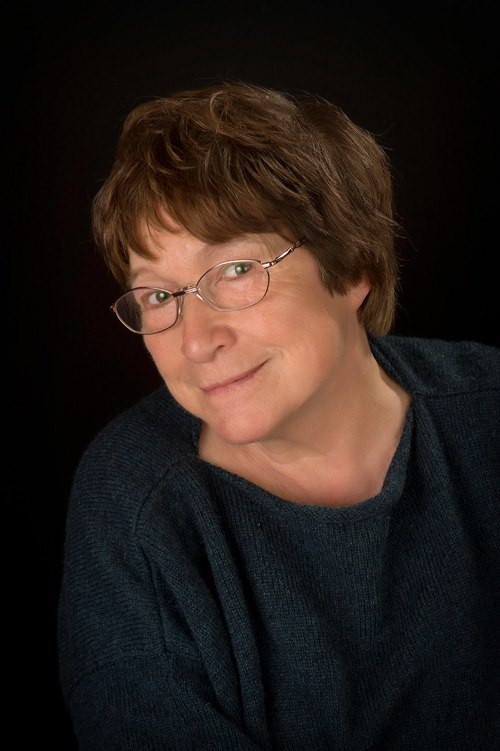
Terese Coe writes: “Writing this was more fun than I can say!”

Terese Coe’s poems and translations have appeared in Agenda, Alaska Quarterly Review, The Cincinnati Review, The Moth, New American Writing, New Writing Scotland, Ploughshares, Poetry, Poetry Review, The Stinging Fly, Threepenny Review, and the TLS, among many other journals. Her collection Shot Silk was listed for the 2017 Poets Prize. https://en.wikipedia.org/wiki/Terese_Coe

‘The Bumbly’ was first published in Xavier Review, 2019. Her ‘Apology From Fiji’ appeared in the Potcake Chapbook ‘Tourists and Cannibals’ from Sampson Low Publishers.

Potcake Poet’s Choice: Edmund Conti, ‘In Memoriam’

John Betjeman cannot read his In Memoriam.  Not
Today
    Or ever.

So what’s the use of writing another jot.
    Why, pray,
    Endeavor?

For he who could best compose one is decomposing.  Rot!
    Away
    Forever.

His spirit lives in every ingle-nook where England claims the heart
    And soul.

That poet so lightly musical, so serious and straight (an art)
    And droll.

Whose lines were seen and heard in every church, in every mart.
    And knoll.

Muckby-cum-Sparrowby cum Sphinx, County Westmeath, Cheltenham;
    The set.

Henley-on-Thames, also Highgate, Bristol, Clifton, Mint-on-Lamb:
    Gazette.

Places etched forever in his poems, each one a Betje-gram.
    Je bet!

We remember chintzy cheeriohs in his brilliant combinations.
    Cheeribye.

Farewell, so long, bunghosky, too — Goodbye to all his permutations.
    Never grim.
    Never dry.

Well, it’s getting time for supper and we’ve had our ruminations.
    This is him.
    Dry your eye.

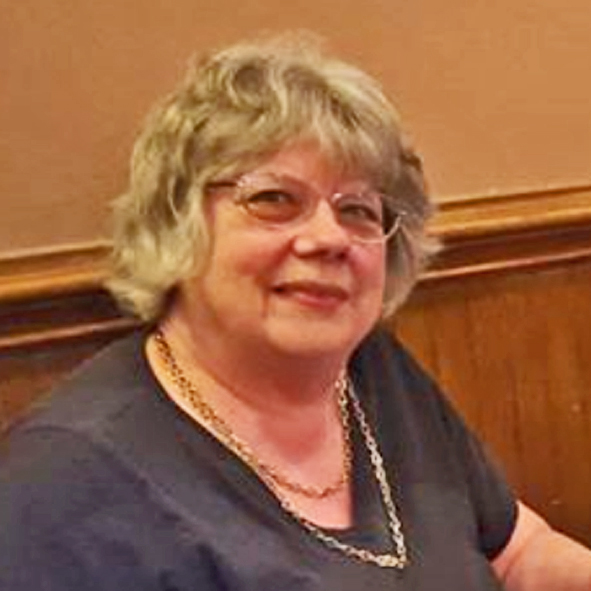
Edmund Conti writes: “I remember saying (to myself) in high school after writing a few verses, “I’m not a poet I don’t like poetry, I just like to rhyme and scan.” I had an image of who poets were and what poetry was, and it just didn’t fit my imagined profile. I stuck to my guns for a while even as I was sending out my verse and getting comments like, “Please, no more rhymes” and “How about sending your smug cloaca elsewhere?” But eventually some poems were accepted and published and I met more poets and I got married. Marilyn loved poetry (no, she didn’t say real poetry but I imagined her thinking it). She was a member of a woman’s poetry group that called themselves The Lady Blue Stockings. They would smack their lips over Amy Lowell (“Christ, what are patterns for?”) and E. E. Cummings (“How do you like your blue-eyed boy, Mister Death?”). Marilyn tolerated my poetry but didn’t appreciate any of my parodies of her favorites.

Meanwhile, I met other poets and joined two groups: The South Mountain Poets and the Bards Buffet. The former was a local group (in NJ) and met weekly and discussed each other’s poems. I was usually advised to have more gravitas. The Bards, all light versifiers, met in a penthouse dining room of an insurance company in Manhattan.  Among them Willard Espy, William Rossa Cole, inventor of River Rhymes and other well-published poets.

So, in spite of myself, I was becoming a poet and appreciating others. Among them, Wallace Stevens, Robert Wallace, Vachel Lindsay, Frank O’Hara, and Robert Southey. And more and more swam into view. Luckily Marilyn brought many poetry books to the marriage and I found myself one day leafing through “John Betjeman’s Collected Poems.” There I came across his poem titled (entirely) “I.M. Walter Ramsden, ob. March 26 1947, Pembroke College, Oxford”. I loved the poem, the rhyming and the place names. Of course, I had to write my own version, not as parody, but an appreciation.  It was fun playing with the format and making up some English place names. One of my two or three favorite poems.

This was originally published in Orphic Lute. Later I sent it to Lighten-Up Online. They accepted it, made some changes to the place names and changed some of the wording. It was republished in my book “Just So You Know” from Kelsay Books. There I had problems with line lengths, some lines longer than Kelsay’s book limits allowed. Here it is, back in its original format.

Edmund Conti has recent poems published in Light, Lighten-Up Online, The Lyric, The Asses of Parnassus, newversenews, Verse-Virtual and Open Arts Forum. His book of poems, Just So You Know, released by Kelsay Books
https://www.amazon.com/Just-You-Know-Edmund-Conti/dp/1947465899/
was followed by That Shakespeherian Rag, also from Kelsay
https://kelsaybooks.com/products/that-shakespeherian-rag

His poems have appeared in several Potcake Chapbooks:
Tourists and Cannibals
Rogues and Roses
Families and Other Fiascoes
Wordplayful
all available from Sampson Low Publishers


R.I.P. Susan de Sola

Wonderfully warm and witty poet Susan de Sola passed away last week after a short battle with cancer–she was only 59, very active, and had recently published ‘Frozen Charlotte‘ with Able Muse Press. Tributes in Snakeskin’s blog and Light Poetry Magazine have shown some of her charming, amusing work.

Her work appeared in a couple of the Potcake Chapbooks–‘Family and Other Fiascoes’ and ‘Strip Down’–but I think the most fitting poem for showing her spirit is the last poem in ‘Frozen Charlotte’. She likens the lives of humans to the brief lives of fruit flies and ends, acceptingly, with
“The fruit is fine, the day is long.
Let us feed, buzz, rejoice
.”

Indeed. But many of us miss you, all the same.

Potcake Poet’s Choice: Noam D. Plum, ‘Making a Clean Breast of It’

(Three of four men, according to a survey,) would rather take a shower with a beautiful celebrity than with their partner. “I’m not surprised,” said lifestyles counselor Carol Wise. – Reuters

Wise Wise
Replies,
“It’s no surprise.
It’s thighs–
Not ties–
That tantalize.

“True love’s the prize?
It’s otherwise.

“If four comprise
The sampling size,
Three guys
Revise
Their picks. Love dies.

“The fourth one lies.”

—–

Noam D. Plum writes: “The counselor’s name exerted a strong pull toward writing this. I like that the title is as funny as the poem. I was surprised and delighted that Mary Meriam considered this enough of a sonnet to include it in Irresistible Sonnets.”

Another poet’s pseudonym, Noam D. Plum has published in The Spectator, The Country Mouse, Light Poetry Magazine (where this poem was first published) and elsewhere. Having won several prizes, he is a more successful breadwinner than the poet for whom he fronts.

His poems have appeared in the Potcake Chapbooks ‘Wordplayful’ and ‘Murder!’

Potcake Poet’s Choice: Bruce McGuffin, ‘News Hound’

I sit and I stare at the TV and stew.
The news is so bad I don’t know what to do.
Then a dog nose appears and it rests on my knee
‘Til I look at my dog, who is looking at me.
And she gives a small wag. Her eyes silently say
The same thing they do at this time every day
“Why are you here in this room, on this couch
Watching the news and becoming a grouch?
There are dogs to be petted, with ears you can scratch,
Outside in the park there are squirrels to catch.
Let’s go for a walk, we should give it a try.
Bring a ball too, you’re a ball throwing guy”.
So I pet her and scratch her, it’s good for the blues.
And tonight we’ll go walking right after the news.

Bruce McGuffin writes: “My favorite dog poem is the one called ‘News Hound‘, above. It’s not my best dog poem technically speaking, but it captures the essence of dog. At least the better sort of dog, which I have been lucky enough to have owned a few of over the years.”

This poem first appeared in Lighten Up Online, on Dec. 1 2018.

Bruce McGuffin writes all kinds of poetry, but meter has a way of sneaking in even when it’s not invited, sometimes bringing rhyme along for the ride. His subjects range from the profound to the utterly frivolous with a decided tilt toward frivolous, which he justifies by claiming he writes for his own amusement. He divides his time between Lexington Massachusetts, where he has a day job as an engineer at a radio research lab, and Antrim New Hampshire, where he lives with his wife and pretends to be practical (when he’s not writing poetry). At work the practical engineers think he’s a theorist, and the theorists think he’s a practical engineer. His poetry has appeared in Light, Lighten Up Online, The Asses of Parnassus, Better Than Starbucks, and other journals. His poem ‘The Mad Scientist‘ appeared in the Potcake Chapbook ‘Robots and Rockets‘.

Potcake Poet’s Choice: Ann Drysdale, ‘Sleeping in Tongues’

Three of us breathing; me and dog and cat.
Awoken by a faint and plaintive mew,
I hold my own breath, ascertaining that
the sound comes from one of the other two.
I act upon an educated guess
and lay a hand on cat, who quickly twists
into a different pose of idleness
and settles, silent. But the sound persists.
So dog it is, who wheezes in a dream
that has bestowed on him the gift of tongues
and things both are, and are not, what they seem.
I let the captive air out of my lungs.
Three of us breathing, dog and cat and me;
companionable synchronicity.

Ann Drysdale writes: “This poem emerged from a situation that took a minute to happen and evolved into a sonnet that takes a minute to read. I can almost believe that it sprang fully-formed from my fingertips, now that the pile of sawdust, chippings and paintflakes generated by the making of one into the other has been swept under the carpet and forgotten.”

Ann Drysdale now lives in South Wales and has been a hill farmer, water-gypsy, newspaper columnist and single parent – not necessarily in that order. Her most recent volume of poetry, Vanitas, joined a mixed list of published writing, including memoir, essays and a gonzo guidebook to the City of Newport. Another collection is accreting nicely and is due to be published next year.

Her poems have been published in several of the Potcake Chapbooks:
Tourists and Cannibals
Rogues and Roses
Careers and Other Catastrophes
Families and Other Fiascoes
Houses and Homes Forever
… all available from Sampson Low for the price of a coffee.

Potcake Poet’s Choice: Gail White, ‘Julian of Norwich in Seclusion’

Because an anchoress could have a cat,
We may assume she had one. That it sat
Beside her while the pilgrims came and went,
Giving, like her, a lesson in content.
That it was quiet when her visions came
And when they passed it slumbered just the same,
But any mice who trespassed in the cell
Were given reason to believe in hell.
That with a feline love of body heat
It nestled in her lap or on her feet.
That it died peacefully, grown old and fat.
Love was my meaning, purred St. Julian’s cat.

Gail White writes: “The Ancrene Wisse or Ancrene Riwle (Rule for Anchoresses), written in Middle English in the 13th century, states that an anchoress might have a cat, although other animals were forbidden. I have therefore taken the liberty of sketching the life of a cat belonging to Julian of Norwich. Her book, A Revelation of Divine Love in Sixteen Showings, ends by asking if the reader wishes to know God’s meaning in her visions, and replies ‘Love was His meaning’. I have transferred this sentiment to her cat.”

Gail White is the resident poet and cat lady of Breaux Bridge, Louisiana. Her books ASPERITY STREET and CATECHISM are available on Amazon. She is a contributing editor to Light Poetry Magazine. ‘Tourist in India’ won the Howard Nemerov Sonnet Award for 2013.

Her poems appear in several of the Potcake Chapbooks:
Tourists and Cannibals
Rogues and Roses
Families and Other Fiascoes
“Strip down,” she ordered
… all available at https://sampsonlow.co/potcake-chapbooks/ for the price of a coffee.

Potcake Poet’s Choice: Jean L. Kreiling, ‘The Waves’

Sprawled on a pew of sand, you meditate
on miracles of tide and time. Without
a prayer but apparently devout,
and humbled by the water’s shifting weight,
you watch with wonder, even venerate
this higher power rolling in and out:
omnipotence too obvious to doubt,
authority too awful to debate.
Like salty spray, some blue-green grace may cling
and seep unsanctified into your soul,
without a psalm or sermon—for the sea
makes its own joyful noise: the breakers ring
uncounted changes, and no church bells toll
more faithfully or irresistibly.

Previously published in 14 by 14. 

Jean L. Kreiling writes: “Growing up on the beach, and living on another coast in adulthood, I have never lost the sense of awe and humility that the sea inspires.  And of course I have never succeeded in capturing its magic in words, but I hope I’ve made a start in this poem.  Its form, my favorite, imposes the sonnet’s graceful structure onto what might otherwise have been an amorphous rhapsody; in addition, its meter and rhyme might suggest a bit of the ocean’s own rhythms and harmonies.”

Jean L. Kreiling is the author of two collections of poetry: Arts & Letters & Love (2018) and The Truth in Dissonance (2014). Her work appears widely in print and online journals, and has been awarded the Able Muse Write Prize, three New England Poetry Club prizes, the Plymouth Poetry Contest prize, and several other honors.  She is Professor Emeritus of Music at Bridgewater State University, and an Associate Poetry Editor for Able Muse: A Review of Poetry, Prose & Art.   

Her poem ‘The Salisbury Crags’ which first appeared in the Orchards Poetry Journal, is included in the ‘Travels and Travails’ Potcake Chapbook.

Various updates

I am shifting the focus of this blog to give more coverage to the wide range of formal poets currently writing (especially those who have contributed to the Potcake Chapbooks) and to songwriters who, at their best, are superb poets with tricks up their sleeves not accessible to regular versifiers.

The Potcake Chapbooks continue to be produced on an occasional basis: the tenth in the series, ‘Travels and Travails’, came out recently and the 11th, ‘Lost Love’, has been assembled to be illustrated by Alban Low. Future titles may (or may not) include chapbooks on cities, on teachers, on the seasons, on pets… it all depends on my finding or being sent enough strong and diverse poems on an interesting theme.

I had hoped to have a Christmas-season-themed chapbook out this year, but I am having difficulty finding the diversity I want. Not only diversity of style, but also of content: I would like to acknowledge not just Christmas and Christmas trees and Christmas parties, but also Hanukkah, Kwanzaa, Festivus… everything around the solstice that has given birth to celebrations of the change in the year. (And with some recognition that this looks very different in the southern hemisphere.) Perhaps I will find enough to pull this chapbook together for the end of 2022.

In the meantime I welcome submissions of formal poems on any theme to robinhelweglarsen@gmail.com, but I prefer poems previously published: I don’t have an “accept or reject” procedure, I simply hang onto poems I like until, one of these years, I may have a use for some of them. So, as I don’t want anyone getting antsy about a poem not being available for use elsewhere, the Potcake Chapbooks should not normally be your first place publishing any given poem.

“Temple of British Worthies” by foshie is licensed under CC BY 2.0