Category Archives: Potcake Poet’s Choice

Potcake Poet’s Choice: Helena Nelson, ‘On Gloom and Proper Respect’

He doesn’t exactly blame her for it. No,
it’s not her fault. She is the way she is—
incorrigibly optimistic. But
the strain of her unbridled cheerfulness

must tell. His gloom requires due diligence.
It’s there to serve a need, and needs a slow
and proper processing. That’s it—a proper pro-
cessing. To this he must commit, and hence

his necessary isolation. No,
he is not depressed. He’s just process-
ing. Some ‘thing’ is passing through. It will go
eventually, but it must run its course.

The weight of doom would be a minor stress
if she would just dispense with cheerfulness.

Helena Nelson writes: “This poem is part of a book-length sequence telling the story of an ordinary, conventional marriage (albeit a second marriage for each partner). It’s about love that struggles to survive the difficulties of aging, loss and illness. The husband, Mr Philpott, has always suffered from anxiety but he has bouts of depression too, when he withdraws into himself. In fact, he might fairly be described as a ‘difficult’ man, though he can’t help it. Here the sonnet form reflects his need for tight control, repressing his anxiety about depression, which gets squeezed uncomfortably across the line breaks. There’s humour here, too. Because how absurd it is, surely, to wish your wife were less cheerful? And yet he does. He certainly does.” 

Helena Nelson runs HappenStance Press and sometimes writes poems, one of which appears in the soon-to-be-released latest Potcake Chapbook, ‘Lost Love’. She has been writing the story of Mr and Mrs Philpott for over twenty years, and it can finally be found in its complete form as Pearls (The Complete Mr and Mrs Philpott Poems)

Potcake Poet’s Choice: Jerome Betts, ‘Morning Calls’

Though buds, light-headed, arrow to the sun,
Wood-pigeons cautiously descend to drink
As through the roof the first faint cheepings run
From half-fledged nestlings in some straw-warm chink,
While welling far and near − to float and sink
Like spidery fibre silvered on the lawn −
Mercurial lark song trails out link by link,
Rocking serrated-throated crows have drawn
Their broad indelible raw weals across the dawn.

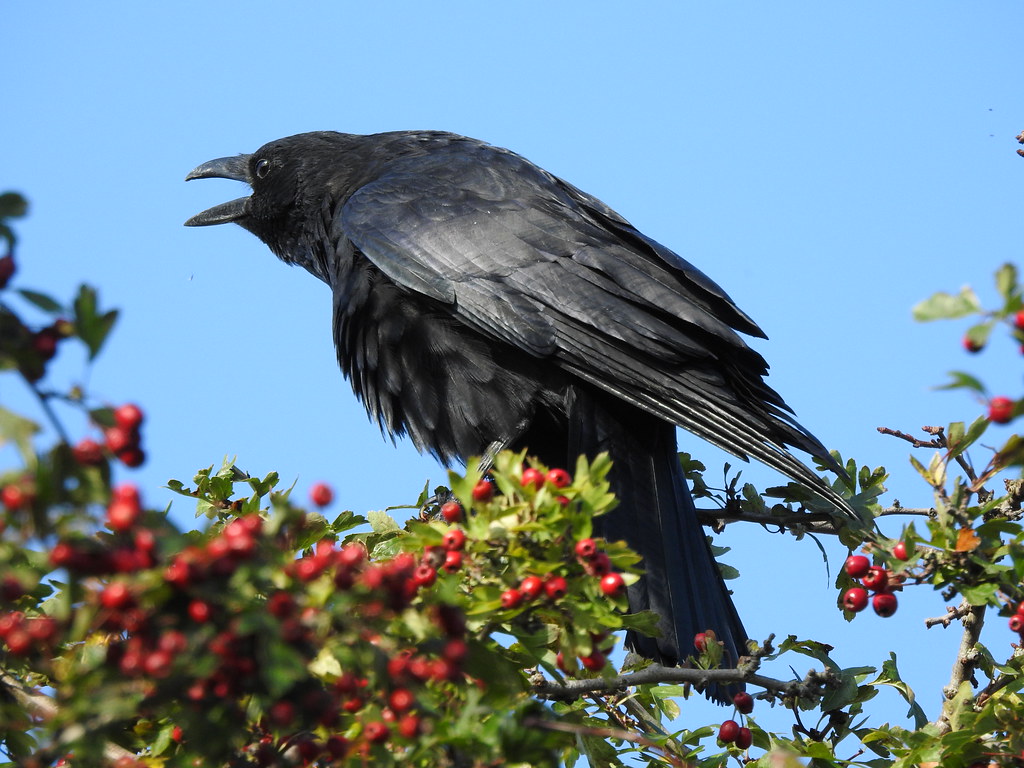
Jerome Betts writes: “Have only tried the intricate patterning of the ‘Spenserian stanza‘ a couple of times. On the first occasion it seemed to suit a comment on the design of a 4th century Roman mosaic floor and on the second, in ‘Morning Calls’, appearing in Snakeskin, a memory of the rich dawn chorus in rural Herefordshire many years ago. The point of particular interest for me is the phrase ‘rocking serrated-throated crows’ in Line 8, unchanged from one jotted at the time. The words fitted a rocking or bobbing movement, but why ‘serrated-throated’?  This is appropriate for ravens with their ‘shaggy throat feathers’  (RSPB Handbook 2014) but not, I thought, crows. The words resisted attempts at tweaking and the stanza stalled. Some weeks later I saw a crow standing on top of a Devon street light rhythmically calling and rocking . . . and as it did so its neck feathers briefly parted on the upstroke of the movement. The line had preserved an exact observation made when young and then forgotten.”

Jerome Betts edits the quarterly verse webzine Lighten Up Online in Devon. His work has appeared in Amsterdam Quarterly, Angle, Autumn Sky Poetry Daily, Pennine Platform, Light, The Rotary Dial, and Snakeskin, other American, British and Canadian publications and two Iron Press anthologies.
www.lightenup-online.co.uk

Photo: “A Crow calling – gardenDSCN9711” by ianpreston is marked with CC BY 2.0.

Potcake Poet’s Choice: Michael R. Burch, ‘Neglect’

What good are tears?
Will they spare the dying their anguish?
What use, our concern
to a child sick of living, waiting to perish?

What good, the warm benevolence of tears
without action?
What help, the eloquence of prayers,
or a pleasant benediction?

Before this day is over,
how many more will die
with bellies swollen, emaciate limbs,
and eyes too parched to cry?

I fear for our souls
as I hear the faint lament
of theirs departing …
mournful, and distant.

How pitiful our “effort,”
yet how fatal its effect.
If they died, then surely we killed them,
if only with neglect.

Michael R. Burch writes: “This original poem has over 3,000 Google results, perhaps because it has been published by Daily Kos, Black Kos, Course Hero, Think Positive, Katutura (Namibia), Vanguard News (Nigeria), Best Naira News (Nigeria), The World News Platform, Darfur Awareness Shabbat, Genocide in Art, Genocide Awareness, and other human rights organizations including the UNHCR (United Nations Refugee Agency).”

Photo: “Carrying a lifeless and dying child (Famine Memorial)” by Can Pac Swire is marked with CC BY-NC 2.0.

My own comments: The statue in the photo is at House Quay, Dublin, and relates specifically to the Great Famine, the Great Hunger, the Irish Potato Famine of 1845-1852 in which a million died and two million left the country then and in the next couple of years. The potato blight also impacted continental Europe, causing a further 100,000 deaths there and becoming a contributory cause of the widespread Revolutions of 1848.

So let us be clear: whether children are dying from famine, climate disaster, pandemics, government inaction, or warfare (all present in today’s world)–dying without in any conceivable way being culpable–there is not just a moral duty to help, there is self-interest in helping, self-interest in preventing civil unrest and floods of refugees. Refugees are the product of an intolerable domestic situation: all other things being equal, people would rather make their future in the place they were raised, with familiar friends, family, foods, festivals. It is the duty of all governments to make all places so pleasant that no adults or children feel forced to leave, that no one is left to die.

Happy Easter. Happy Passover. Ramadan kareem.

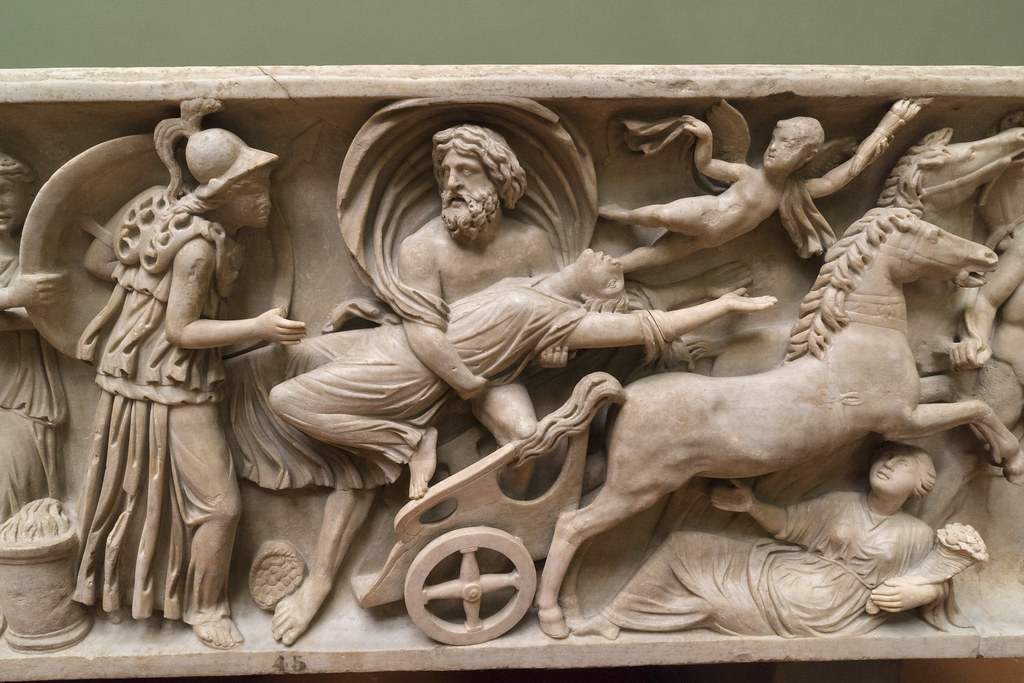
Potcake Poet’s Choice: Mindy Watson, ‘(Under)worlds Collide – (an ovillejo chain)’

Makaría, my girl, though you’ve heard 
Every word 
Of this myth I’ve recounted before, 
I implore 
You—indulge me again. For at last 
You’ve surpassed
Fragile childhood’s constraints. Now hold fast 
And let fantasy shift into creed. 
You’re Persephone’s daughter; please heed
Every word, I implore. You’ve surpassed 

Expectations I set at your birth.
From my dearth 
You drew bountiful joy; from disgrace 
You forged grace.
And it’s clear that your eyes could induce 
Mighty Zeus
To devise an elaborate ruse 
That would send you careening unseen
Down to Hades, where I was once queen. 
From my dearth, you forged grace mighty Zeus—

Who, three decades ago sent me bound 
Underground
As a chthonian bride—would aspire 
To acquire. 
Once, Demeter’s stray heart, all aglow
For the beau
She’d just met, allowed Zeus to sow woe.
He pared back the earth’s crust, laying waste 
To her harvest and left me displaced 
Underground to acquire. For the beau

Who then claimed me, I burned seven years. 
Through her tears, 
Fair Demeter cursed Earth and repealed
Springtime’s yield,
Vowing Winter would linger ‘til I
Bid goodbye 
To the underworld. Hades complied, 
For the innocent girl he’d once craved 
Was no more. As I rose, Mother waved 
Through her tears. Springtime’s yield bid goodbye

To its seven-year drought. But although
Status quo 
Seemed to flourish again, when detained
I’d retained 
Hades’ seed. It entrenched its black song
For so long 
In my belly, no matter how wrong,
The abyss still enthralled me. When eight 
More years passed, I spit out the innate 
Status quo I’d retained for so long,

And descended at twenty to reign
Hell’s domain.
Disavowing my schooling to seek 
Dark’s mystique,
In the city, I stripped on a stage
To assuage 
What convention had trapped in a cage.
And I deemed each male patron a thrall
On whose worship I’d draw to recall
Hell’s domain—dark’s mystique. To assuage 

The lacuna lost innocence spread 
In its stead,
I sought lust, ‘til a man who’d paid much 
Dared to touch 
Me as Zeus had once touched. But his ploy
To destroy
My esteem served instead to deploy 
Comprehension. Mercurial youth
Had to forfeit illusion that truth,
In its stead, dared to touch—to destroy.

While these decades I’ve learned to delight
In the light,
I acknowledge I’ll always endure
Dark’s allure. 
For the Hades against which I strain 
Lives to reign.
Makaría, I’ll need not explain
When, from underworld’s embers you rise
And return to me, blinking your eyes 
In the light—dark’s allure lives to reign.

Originally appeared in Star*Line, Fall 2018

Mindy Watson writes: “‘(Under)worlds Collide,’ which originally appeared in Star*Line’s Fall 2018 issue, constitutes my most ambitious attempt at restructuring a prior creative nonfiction/memoir essay (the initial ‘Underworlds Apart: A Story for Ailie’ piece appeared in Adelaide Magazine’s online March 2017 edition) into poetic form—in this case, an 8-stanza string of linked ovillejos. While the poem follows the original memoir’s metaphorical trajectory and overarching narrative—that is, a mother leverages a well-known Greek myth’s parallels to her own coming of age story to relay a “moral” (of sorts) to her burgeoning young daughter—I wanted the compressed, verse form to read less like a dark bedtime story and more like a literary song… but without losing the original’s intensity. While in hindsight I concede that my chosen form’s line/length constraints hampered my ability to clearly align my real-world characters to their mythological counterparts (a far easier feat via prose), I believe the form’s stipulation that each terminal ovillejo line contain a convergence of previously distinct phrases conferred a sense of interconnectedness between one elapsed past and another possible future that no mere prose ever could. I applaud George Simmers for penning ‘Strip,’ which made me remember my prior manifesto, and Robin for posting it.”

Mindy Watson is a formal verse poet and federal writer who holds an MA in Nonfiction Writing from Johns Hopkins University. Her poetry has appeared in venues including Snakeskin, Think Journal, the Poetry Porch, Orchards Poetry Journal, Better Than Starbucks, Eastern Structures, the Quarterday Review, and Star*Line. She’s also appeared in Sampson Low’s Potcake Poets: Form in Formless Times chapbook series and the Science Fiction and Fantasy Association’s 2019 Dwarf Stars Anthology. You may read her work at: 
https://mindywatson.wixsite.com/poetryprosesite.

Photo: “Persephone’s Rape at Uffizi -II” by Egisto Sani is marked with CC BY-NC-SA 2.0.

Potcake Poet’s Choice: George Simmers, ‘Strip’

The pub’s old-fashioned, and is somewhat seedy.
The clientele, all male, look lumpish, needy,
And when the stripper comes, their eyes are greedy.

A smile fixed firm upon her painted face,
She starts gyrating with a teasing grace,
Smoothly undressing at a languorous pace.

She struts through routine choreography
Removes her bra, and lets her breasts go free
The silent men watch her impassively.

And still they stare unmoving as she slips
The golden panties from her mobile hips,
Pauses a sec, then sensually unzips

Her smooth pink skin, and flings it open wide, 
To show the flesh and beating heart inside.
Her audience observes all this, dead-eyed.

The flesh from bone she now expertly rends,
And now it’s just her skeleton bops and bends
Seductively until the music ends.

Silence. She picks up flesh and skin, and drawers
So often dropped before on grubby floors.
The men are stirred to offer mild applause.

She dresses quickly, picks up a pint glass,
And then begins the customary pass
Among the men, who goggle at her arse,

Say nothing, but poke fivers in the pot
Because that is expected. They do not
Even try to meet her eye, or speak of what

They’ve seen, but, weekly ritual complete,
Get up, and, bodies drooping with defeat,
They head out to the grey indifferent street.

George Simmers writes: “It must be thirty years ago that I was in a run-down district of some industrial city, looking for a pub that would sell me a pint and a sandwich. I passed one with a sign that said ‘Stripper: 1.30’ and I thought: ‘Why not?’
The audience was very much as described in the poem, though the performance was less extreme. It was a fairly melancholy occasion, and one that stayed in my memory. It was a long while ago, and the pot that day probably filled with £1 notes (maybe even ten bob) rather than fivers, but I thought £5 would be the appropriate donation today – if lunchtime pub strippers still exist. They’re an endangered species in the North of England, I gather, and lockdown has probably killed them off completely.
I wrote this in triplets because the first three lines came to me together, and I thought I’d see how well I could continue. I feel the form somehow suits the subject, or at any rate is better than couplets, which tend to be faster-moving. The triplets seem (to me at least) sluggish and a bit unusual.
I dimly remember years ago seeing an animated film in which a stripper goes on to unzip her skin, so to that extent the poem is not original. But it was the deliberately unimpressed audience I really wanted to write about, and making them still stolid even after watching the impossible made my point, I hoped.
This is one of a series of poems that I’ve written over the past couple of years, telling stories that are extreme or somewhat gothic. I may get some of them together into a short collection later in the year.”

George Simmers used to be a teacher; now he spends much of his time researching literature written during and after the First World War. He has edited Snakeskin since 1995. It is probably the oldest-established poetry zine on the Internet. His work appears in several Potcake Chapbooks.
https://greatwarfiction.wordpress.com/
http://www.snakeskinpoetry.co.uk/

Photo: “luchavavoom stripper” by ourcommon is marked with CC BY-NC-ND 2.0.

Potcake Poet’s Choice: Marcus Bales, ‘Miniver Cheever III’

Miniver Cheevy Junior’s kid
Despised his own contemporaries,
Like his poetic forebears did,
As functionaries.

Miniver missed old apartheids,
South Africa and Mississippi,
And longed to go on freedom rides
And lay a hippie.

Miniver yearned for days gone by,
For free love’s newly bra-less boobies,
For Woodstock, rock and roll, tie-dye,
And smoking doobies.

Miniver mourned for Owsley Blue,
The name, he understood, for acid.
At Kool-Aid Tests and love-ins, too,
He’d be less flaccid.

Miniver loved the Beatles, Stones,
Frank Zappa, Zep, and, yes, the Monkees;
He didn’t care, he had a jones
For tuneful junkies.

He cursed the mosh-pit debutantes,
And viewed hip-hop with open loathing;
He missed the sight of Mary Quant’s
Bell-bottomed clothing.

He metaphored and analogued
And similed to try to flout it;
Miniver blogged, and blogged, and blogged,
And blogged about it.

And so there’s Miniver number three,
Who’s no more dour but no less bitter.
He shakes his head and sighs. Then he
Logs in to Twitter.

Marcus Bales writes: “Here’s one that has its own built-in reason for writing it: DF Parry had done such a good job, who could resist? But Miniver Cheevy III was written so long ago, now, that possibly it’s time to explore IV.”

Not much is known about Marcus Bales except that he lives and works in Cleveland, Ohio, and that his work has not been published in Poetry or The New Yorker. However his “51 Poems” is available from Amazon. He has been published in several of the Potcake Chapbooks (“form in formless times”), and would like you to be familiar with the forerunners to his ‘Miniver Cheevy III’:

‘Miniver Cheevy, Jr.’ by D.F. Parry

Miniver Cheevy, Jr., child
Of Robinson’s renowned creation
Also lamented and reviled
His generation.

Miniver similarly spurned
The present that so irked his pater,
But that langsyne for which he yearned
Came somewhat later.

Miniver wished he were alive
When dividends came due each quarter,
When Goldman Sachs was 205
And skirts were shorter.

Miniver gave no hoot in hell
For Camelot or proud Troy’s pillage;
He would have much preferred to dwell
In Greenwich Village.

Miniver cherished fond regrets
For days when benefits were boundless;
When radios were crystal sets
And movies soundless.

Miniver missed the iron grills,
The whispered word, the swift admission,
The bath-tub gin, and other thrills
Of Prohibition.

Miniver longed, as all men long,
To turn back time (his eyes would moisten),
To dance the Charleston, play mah jong
And smuggle Joyce in.

Miniver Cheevy, Jr., swore
And drank until the drink imperiled
Health, then sighed, and read some more
F. Scott Fitzgerald.

The original, of course, is Miniver Cheevy‘ by Edwin Arlington Robinson:

Miniver Cheevy, child of scorn,
Grew lean while he assailed the seasons;
He wept that he was ever born,
And he had reasons.

Miniver loved the days of old
When swords were bright and steeds were prancing;
The vision of a warrior bold
Would set him dancing.

Miniver sighed for what was not,
And dreamed, and rested from his labors;
He dreamed of Thebes and Camelot,
And Priam’s neighbors.

Miniver mourned the ripe renown
That made so many a name so fragrant;
He mourned Romance, now on the town,
And Art, a vagrant.

Miniver loved the Medici,
Albeit he had never seen one;
He would have sinned incessantly
Could he have been one.

Miniver cursed the commonplace
And eyed a khaki suit with loathing;
He missed the mediæval grace
Of iron clothing.

Miniver scorned the gold he sought,
But sore annoyed was he without it;
Miniver thought, and thought, and thought,
And thought about it.

Miniver Cheevy, born too late,
Scratched his head and kept on thinking;
Miniver coughed, and called it fate,
And kept on drinking.

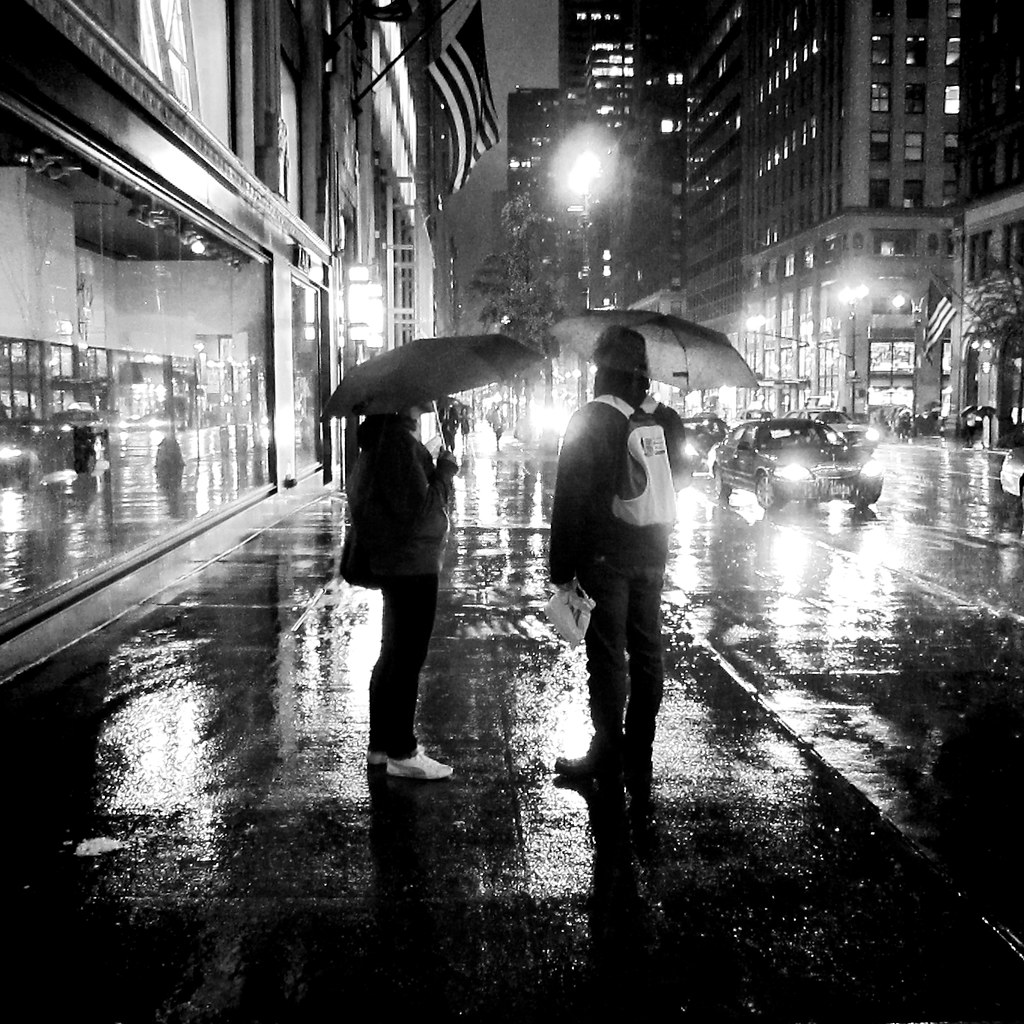
Potcake Poet’s Choice: Max Gutmann, ‘Raindroppings’

Can anyone make out
The quality inherent
In being with an umbrella, that makes people without
Completely transparent?

On the rainiest days,
In the hardest of showers,
People with umbrellas courteously step out of other umbrella’d people’s ways
Right into ours.

Or, if as it starts
To really pour, ya
Dash for the shelter of a little awning, sure as rain’s wet someone with an umbrella darts
Under it before ya.

And you look at the fella
As you stand in the steady
Downpour, but he ain’t gonna budge, ’cause, as any one-eyed idiot could plainly see, his umbrella
Is wet enough already.

Beyond disputation,
We already hear a lot
About the many forms of indiscriminate discrimination
Our world has got.

Still, I wish some teller’d
Deign to tell us
The reasons for the way the umbrellered
Treat the umbrell’less.

Max Gutmann writes: “In ‘Raindroppings,’ a line of OgdenNashian length is part of each otherwise regularly metered quatrain. These lines get longer and longer, and then shorter and shorter. I hope this helps the poem feel both sillily loose, and formally structured: the topic, though it may sound invented, is an actual aspect of human nature, trivial in itself but reflective of more serious attitudes.”

Max Gutmann has worked as, among other things, a stage manager, a journalist, a teacher, an editor, a clerk, a factory worker, a community service officer, the business manager of an improv troupe, and a performer in a Daffy Duck costume. Occasionally, he has even earned money writing plays and poems.

linkmaxgutmann.com

‘Raindroppings’ was first published in Light Quarterly

Photo: “Downpour” by roeyahram is marked with CC BY-NC-ND 2.0.

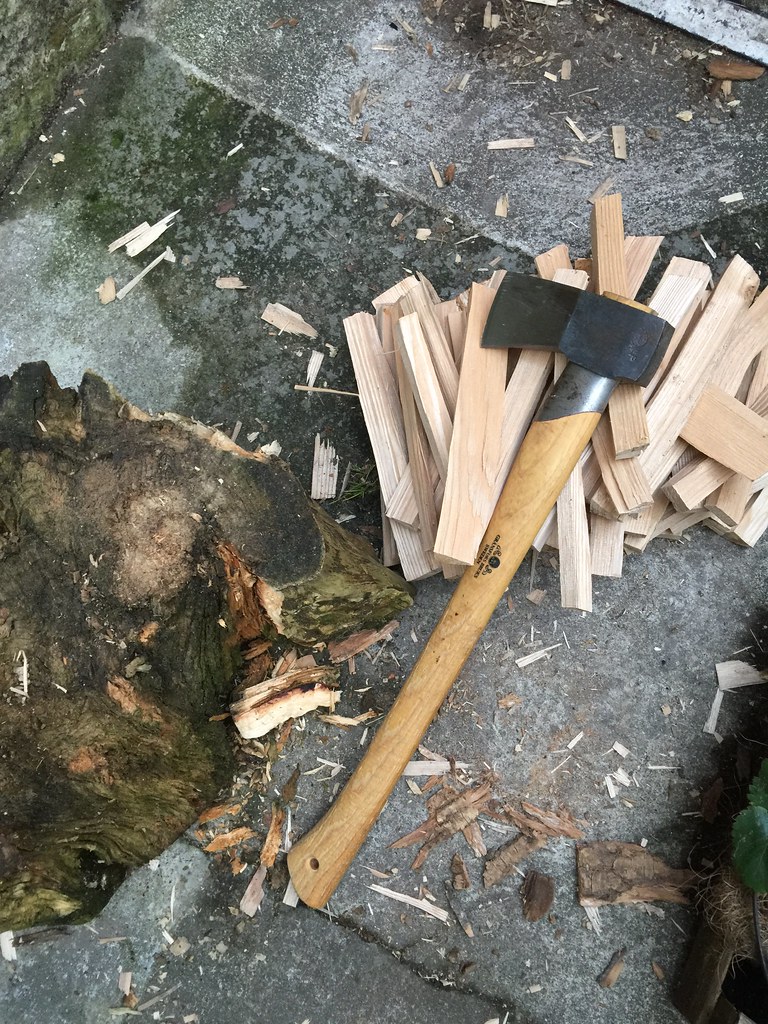
Potcake Poet’s Choice: Max Gutmann, ‘Kindling’

The day his girlfriend’s father let him cut
The kindling was the cracking of a crust,
A heavy volume falling open at
A pleasant page. He felt the guard relax
At last: it takes some trust
To hand a man an ax.

They foraged for straight grain, which wouldn’t knot
The blade, but give hospitably, a quick
Clean breach, if he could hit the angle right.
The older man first watched, and then went in.
Alone, he chopped each stick
To almost pencil-thin,

Absorbed in seeking out that magic split,
Delicious every time that it occurred,
A touch of luck rewarding skill and sweat,
Though earned, still only half-anticipated,
Like just the sought-for word,
Or love reciprocated.

Max Gutmann writes: “I like the pattern—unique without being complex, rhyming throughout but ringingly only at the stanza ends. I hope the last simile feels both surprising and, like an ax biting a block, inevitable.”

Max Gutmann has worked as, among other things, a stage manager, a journalist, a teacher, an editor, a clerk, a factory worker, a community service officer, the business manager of an improv troupe, and a performer in a Daffy Duck costume. Occasionally, he has even earned money writing plays and poems.

‘Kindling’ was first published in The Formalist.

maxgutmann.com

Chopping kindling” by *Tom* is marked with CC BY-NC-SA 2.0.

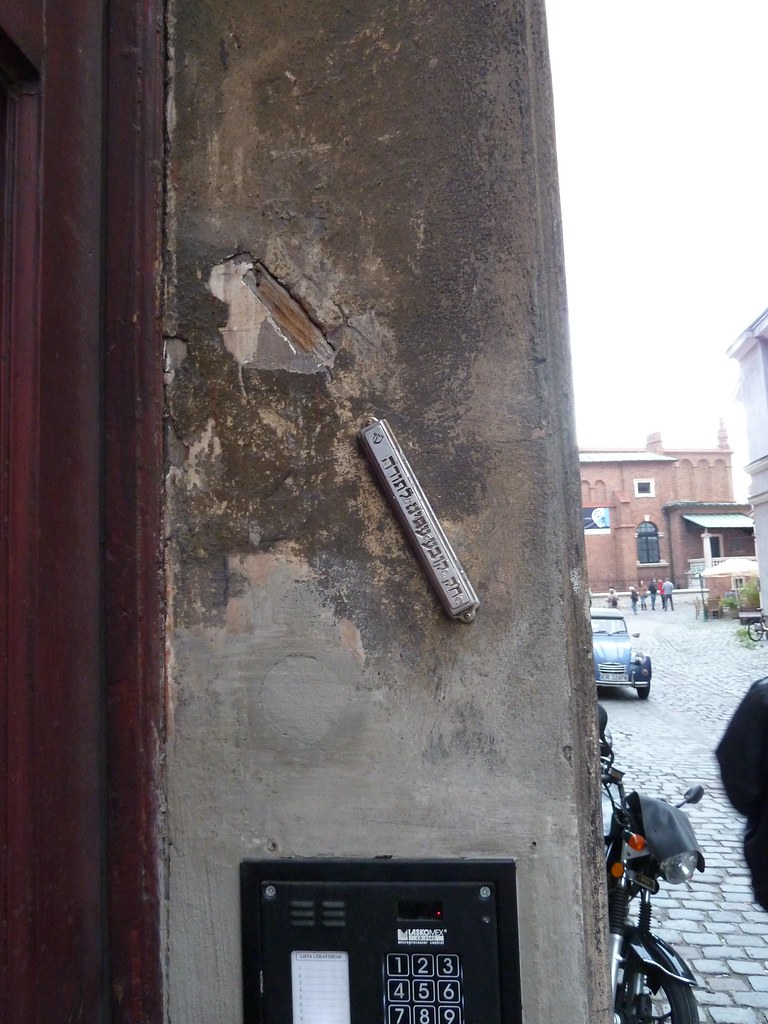
Potcake Poet’s Choice: Tom Vaughan, ‘To Whom It May Concern’

Remember waking, starting, stupidly young
the promises, the lies, the world’s forked tongue

Remember how you longed for love, and how
you long for love the same way, even now

you know that there’s no cure for loneliness
not even love, let alone happiness

Remember marriage, children, summer holidays
Remember work, remember all the ways

you chose to be defined which were not you –
if there’s a self definable as ‘true’

Then remember prayer, answered or unanswered
(either way, how to tell?). Remember whispered

doubts. Remember the words and images
which led/misled you on your pilgrimage

Remember how you crossed the desert, cursing
Remember how you crossed the desert, hoping

Remember age and illness, letting go
of everything you’d told yourself you know

Remember forgetting the Lord your God decreed
you must remember him, and teach your seed

the stories storing their identity.
And if you read this, please remember me.

Tom Vaughan writes: “I like it because it came in a rush, like something hammering in my head, and because it reflects not just what seems to me the crucial nature of the link between memory (however selective and indeed creative) and identity, a link I saw brutally put to the test during my mother’s long decline with Alzheimer’s, but what has always fascinated me about Judaism and the wonderful emphasis in the Jewish scriptures and festivals on the need to remember, in order to retain/create a sense not just of individual but also of collective identify.

The rush also meant that substantial trimming was called for: it was originally about twice the length. But I hope the final compressed result pins down more precisely the push and tumble of the writing process.”

Tom Vaughan is not the real name of a poet whose previous publications include a novel and two poetry pamphlets (A Sampler, 2010, and Envoy, 2013, both published by HappenStance). His poems have been published in a range of poetry magazines, including several of the Potcake Chapbooks:
Careers and Other Catastrophes
Familes and Other Fiascoes
Strip Down
Houses and Homes Forever
Travels and Travails.
He currently lives and works in London.
https://tomvaughan.website

‘To Whom It May Concern’ was first published in Snakeskin 277, October 2020

Photo: “Jewish house with Mezuzah” by La Laetti is marked with CC BY-NC 2.0.

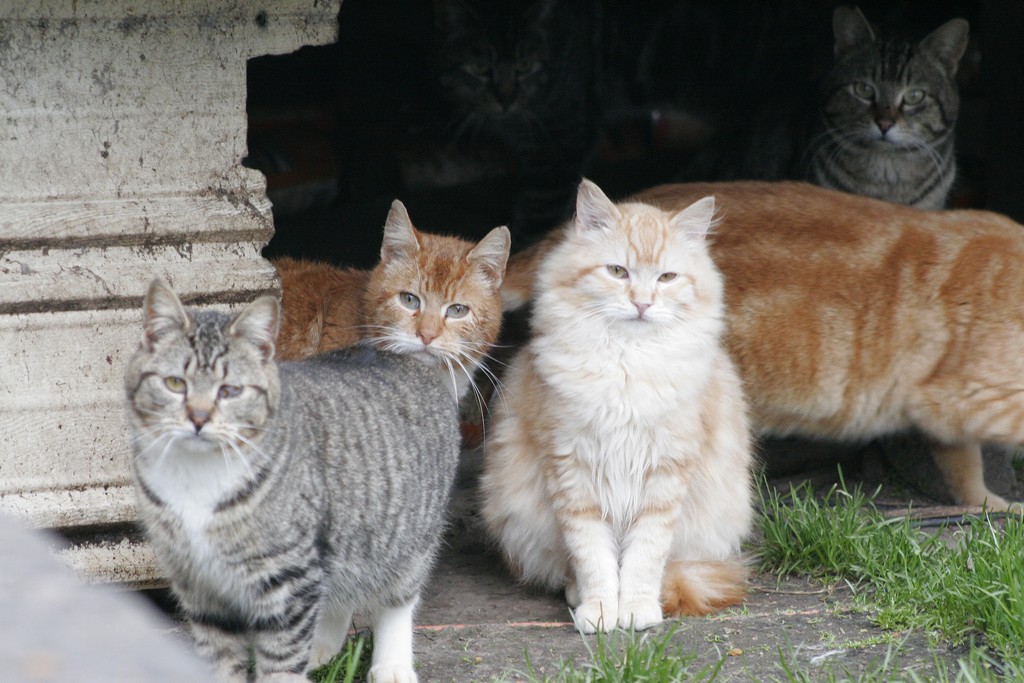
Potcake Poet’s Choice: Gail White, ‘Feeding the Feral Cats’

Three at the door tonight –
big ugly orange one,
two gray and white –
staring reproachfully
over the empty dishes:
Where are the loaves and fishes?

And I put out some food,
having no more excuse than that
I might be heaven’s feral cat –
driven by cold despair,
not seeking warmth or bed
or even entrance there –
but sure of being fed.

Gail White writes: “Cats are my totem animal and they have a way of inserting themselves into my poetry. This one was printed in the Alabama Literary Review, and a reader wrote to say she agreed with my eucharistic theology. I didn’t even know I had a eucharistic theology.”

Gail White is the resident poet and cat lady of Breaux Bridge, Louisiana. Her books ASPERITY STREET and CATECHISM are available on Amazon. She is a contributing editor to Light Poetry Magazine (lightpoetrymagazine.com). “Tourist in India” won the Howard Nemerov Sonnet Award for 2013. Her poems have appeared in the Potcake Chapbooks ‘Tourists and Cannibals’, ‘Rogues and Roses’, ‘Families and Other Fiascoes’ and ‘Strip Down’.
https://www.amazon.com/Asperity-Street-Gail-White/dp/1927409543

“Many Feral Cats” by Chriss Pagani is licensed under CC BY-NC-ND 2.0