Tag Archives: memory

Susan McLean, ‘Mending’

Her cashmere sweater, navy blue,
was passed to me when Mother died.
Though soft and warm, with little wear,
it has a hole that needs repair.
Mending it from the other side,
I spot another, then a few.
I hold the sweater to the light.
Small holes shine out like stars at night.

From her I learned this homely art,
as well as not to toss or waste
what might be saved. I thread and sew
and knot and thread again. Although
I salvage what the moths defaced,
I cannot patch my threadbare heart,
for I can never, never, never
suture what is gone forever.

*****

Susan McLean writes: “I got the idea for this poem and began writing it in my head as I was mending the sweater, and since, as I mention, the mending took quite a while, I had several lines completed before I was done with the sewing. The rhyme scheme, ABCCBADD, rather mimics the activity of closing up a hole and tying off the thread with the final couplet, though that was not something I was conscious of as I was writing it. My unconscious does its own thing while my conscious mind struggles with finding what to say. However, I was quite conscious of echoing Lear’s lament for Cordelia in the repeated “never, never, never” of the next-to-last line. That repetition and negation have always struck me as being the epitome of grief.”

‘Mending’ was first published in Pulsebeat Poetry Journal.

Susan McLean has three books of poetry: The Best Disguise, The Whetstone Misses the Knife, and her latest, Daylight Losing Time (Able Muse, 2026). She had also published a book of translations of Martial, Selected Epigrams. Her poems have appeared in Light, Lighten Up Online, Crab Orchard Review, Able Muse, and elsewhere. She lives in Iowa City, Iowa.

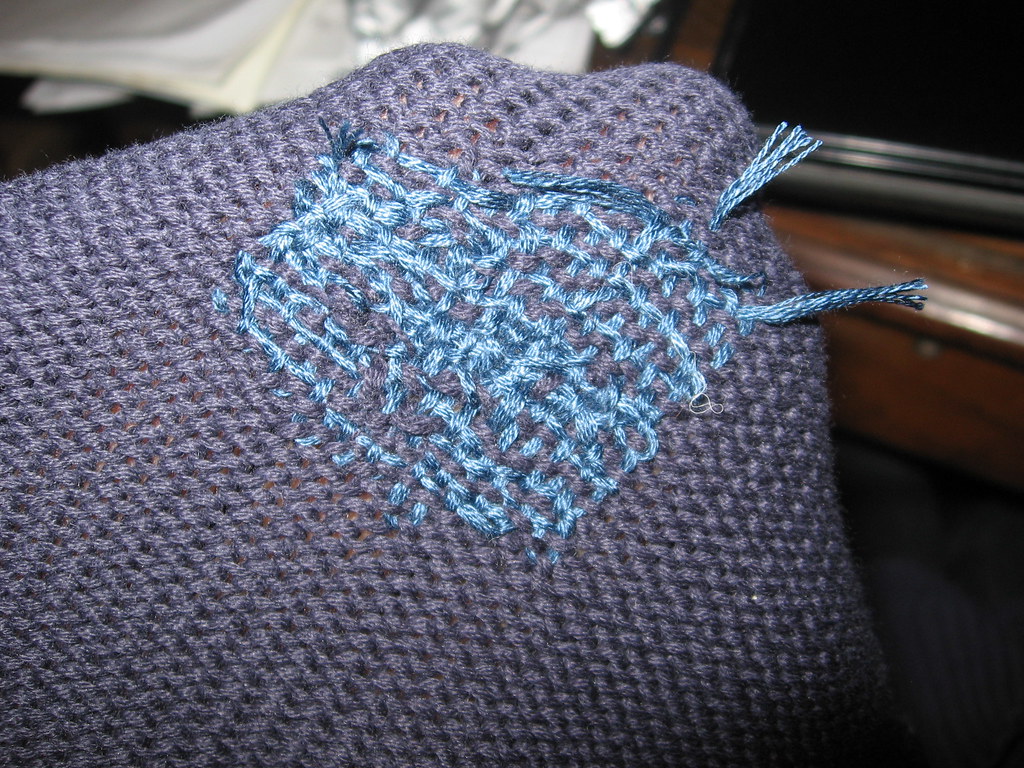
darning a sweater” by henna lion is licensed under CC BY-NC 2.0.
Aaron Poochigian, ‘The Old Man’

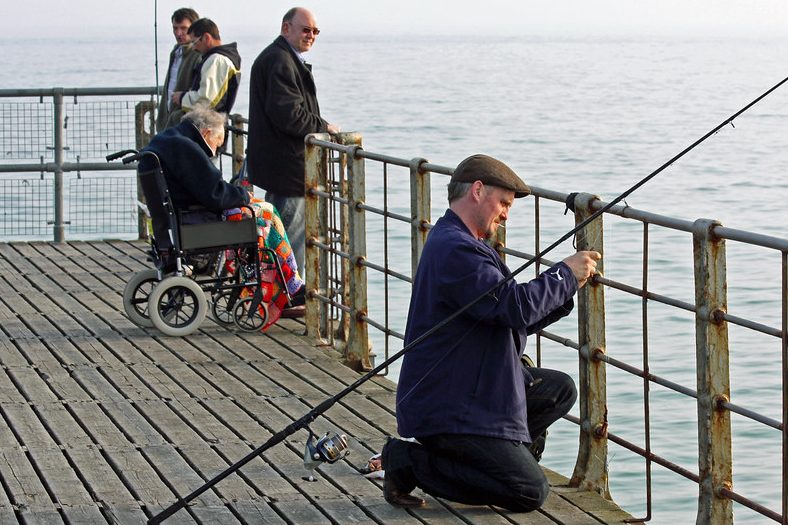
The old man wakens to a mute caregiver
pushing his chair past gulls along a railing.
This is the morning when he gets the river.
Surrendering to wind and a prevailing

saline tang kicked up from the Atlantic,
he lets whatever strikes him resonate.
A taut rod wrangling with a snagged and frantic
flounder whisks him to a lake upstate

where he, a wee one, tumbled off the dock,
his virgin perch still flapping in his grip.
A ferry, then, so very on the clock,
transports him to the boxy convoy ship

he steered through moonlit breakers toward Pyongyang
with perfect timing: his approach kissed land
at dawn. He dropped the ramp, and roughnecks sprang
out of the gangway onto commie sand.

Joggers, though, tug him back home from the war.
Whole herds of them keep gallivanting by
as thunder like they own the slate-paved shore.
He has to sit there coveting their high.

Sneakered and young as far as he can see,
they just keep leaving him behind to long
for liberty and the serene esprit
he got to savor when his legs were strong.

*****

Aaron Poochigian writes: “About the poem, all I want to say is that I think of it as flash fiction. I’ve started doing more studies of fictional characters in verse.”

‘The Old Man’ was first published in Portico Quarterly.

Aaron Poochigian earned a PhD in Classics from the University of Minnesota and an MFA in Poetry from Columbia University. His latest poetry collection, American Divine, the winner of the Richard Wilbur Award, came out in 2021. He has published numerous translations with Penguin Classics and W.W. Norton. His work has appeared in such publications as Best American Poetry, The Paris Review and Poetry.
aaronpoochigian.com
americandivine.net

Photo: “Bognor Regis Pier – Mar 2011 – Portrait of a Working Man at Play” by Gareth1953 All Right Now is licensed under CC BY 2.0.

Richard Fleming, ‘The Prayer’


I remember the cold, high-ceilinged room
where they had laid him, the smell of incense,
brass coffin handles shining in the gloom,
an aspidistra, dusty and immense.

To this small boy dressed in a mourning suit,
he seemed reduced, much less than he once was:
his scalp, without his cap, bald as a coot,
his fingers criss-crossed on his chest like claws.

I thought back to the day we watched geese rise
high over wetlands blurred with morning haze,
the laughter always dancing in his eyes,
his warm, familiar smell, his turn of phrase.

Life is so short while memories are long.
We the bereaved are left with words unsaid.
At the day’s end, he’d sing a lulling song
as I rode his strong shoulders home to bed.

A prayer unbidden reached me on a whim:
Preserve in me the things I loved in him.

*****

Richard Fleming writes: “This is a shortened, rhyming version of a lengthy free verse poem that I wrote over thirty years ago when I relocated to Guernsey from Northern Ireland. Like many love poems, the original version, The Hidden Traveller, has stood the test of time. This version stands as a homage to its source.”

Richard Fleming is an Irish-born poet and humorist based in Guernsey, a Channel Island between Britain and France. Widely regarded as one of the island’s foremost literary voices, his versatile work blends lyricism, sharp wit, emotional depth, and a strong sense of place. Drawing from his Northern Irish roots and adopted home, his poetry and prose explore love, loss, nostalgia, identity, and modern life. Collections include Strange Journey (2012), held in the National Poetry Library, and Stone Witness (Blue Ormer) featuring the BBC-commissioned title poem. His work can be found on
Facebook https://www.facebook.com/richard.fleming.92102564/
or Bard at Bay www.redhandwriter.blogspot.com


Short poem: RHL, ‘Clearing the Cache’

At night we dream to clean our memory,
discard trash from our cache.
Reincarnating after death would be the same;
the past, scraped by death’s emery,
unknown in the new game,
cleansed of our memories, but with a stash
of added skills…
and karma’s unpaid bills.

*****

No, I don’t believe in reincarnation. I don’t believe in anything, or in nothing; I’m an absolute agnostic. “I think therefore I am” is as far as you can go with any certainty – even “who or what I am” is ultimately unknown.

‘Clearing the Cache’ was published in Bewildering Stories. Thanks, Don Webb (if you exist, of course…)

Glitch 183” by mikrosopht [deleted] is licensed under CC BY 2.0.

Weekend read: Tom Vaughan, ‘Rhyme-Crime’

Does rhyme matter –
    however occasional?

It used to be
    considered vocational

a must for verse’s
    inspirational

impact, even
    educational –

but these days, it’s a
    generational

sign your stuff’s just
    recreational.

*****

Tom Vaughan writes: “For me, rhyme is not just a technical trick to help make poetry memorable. I think the world rhymes in odd ways. I also believe time rhymes, across the centuries but also in our short individual lives, sometimes in irony, but more often – if we listen hard enough to hear it – to point the way to a deeper level of challenge and reflection.”

Editor: I had been planning a rant on the essence of poetry being all the tricks that make it memorisable word-for-word: rhyme, rhythm, alliteration, assonance, etc; and on the fact that the bits of poems an adult remembers are invariably rhymed; and on poetry’s links to dance and song and the prenatal heartbeat. But Tom Vaughan introduces a whole new layer of value of rhyme, obliquely in his poem, incompletely in his comment. There are things to meditate on here.

Tom Vaughan is not the real name of a poet whose previous publications include a novel and three poetry pamphlets (A Sampler, 2010, and Envoy, 2013, both published by HappenStance; and Just a Minute, 2024, from Cyberwit). His poems have been published in a range of poetry magazines, including several of the Potcake Chapbooks and frequently in Snakeskin.
He currently lives in Brittany.
https://tomvaughan.website

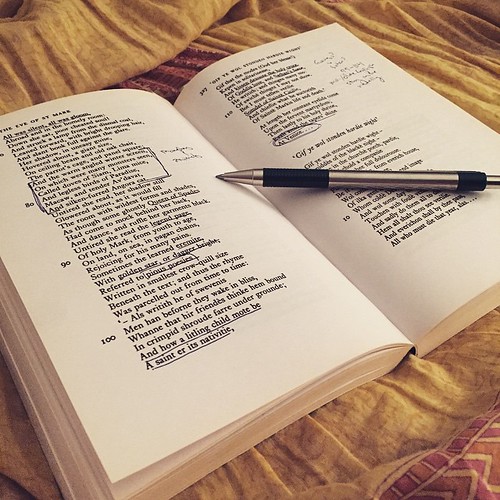
Photo: “Sometimes, I like going back into #poetry and pretending like I am still in college. #johnkeats #bookstagram #annotations #reading #books” by alis.smith is licensed under CC BY-NC 2.0.
Isabel Chenot, ‘Echoes of Love’

The house is creaking like a rocking chair.
I’m small again,
comforted by the sway of matter in a shift of air,
cosseted by wind.

Undulate earth, how do you slip your hum
around our roar
of concrete, needles, neon, wadded gum,
demented hungers, war,

discarded children? Your lap is full of us
and of our wrong.
How can you simplify the noise
to cradle our first song?

*****

First published in Shot Glass Journal.

Isabel Chenot has loved and practiced poetry for as long as she can remember. Her poems have been published in Shotglass and other places, and some of them are collected in The Joseph Tree, available from Wiseblood books.

Man, woman and child on verandah of weatherboard house” by State Library Victoria Collections is licensed under CC BY-NC 2.0.

Julia Griffin: ‘A Remembered Swan’

Former Ballerina with Alzheimer’s is able to remember her old dance routine when she hears “Swan Lake” – Yahoo! News 16th November 2020

A sudden glow: the hollowed arms upswept
Above the wandering head, the starry burst
Streaking the dark. The cobwebbed feet have kept
Their knowledge, not their power: she has been cursed,

Long since, this maimed princess. A crueller stroke
Than Rothbart’s holds her caged, blots out her sky;
How can frail forelimbs beat away his smoke?
How can a grounded spirit hope to fly

Back to its Lake? – except that something strange
Still beats in her, beneath her parchy skin:
A memory.
Among art’s kindlier things,
This timelessness, created out of change:
A ballerina, spotlit from within,
Trailing her lovely, half-extended wings.

*****

Julia Griffin writes: “I feel the form works with the subject-matter. This was inspired, of course, by the news story – and the way it seemed to reverse Yeats’ great poem by making the swan a deliverer from helplessness.”

Julia Griffin lives in south-east Georgia/ south-east England. She has published in Light, LUPO, Mezzo Cammin, and some other places, though Poetry and The New Yorker indicate that they would rather publish Marcus Bales than her.
Her poem ‘Wasp Waste’ was reprinted in the Potcake Chapbook ‘Robots and Rockets‘, and much more of her poetry can be found in Light, at https://lightpoetrymagazine.com/?s=julia+g&submit=Search

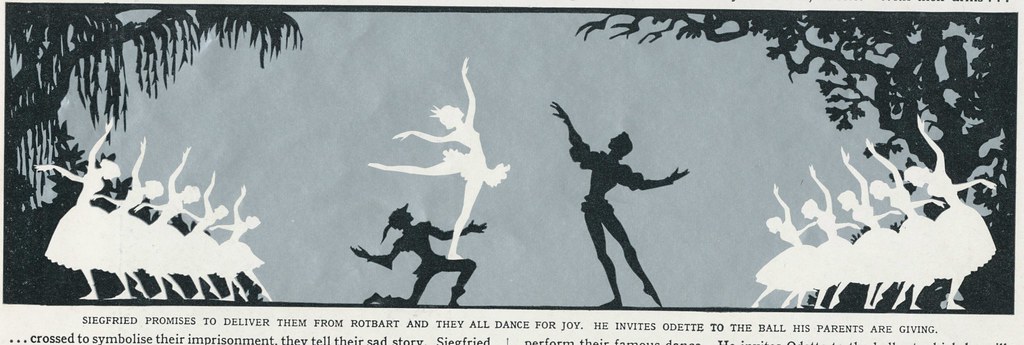
Photo: “swanlake c Lotte Reiniger” by janwillemsen is licensed under CC BY-NC-SA 2.0.

Michael R. Burch: ‘For All That I Remembered’

For all that I remembered, I forgot
her name, her face, the reason that we loved …
and yet I hold her close within my thought:
I feel the burnished weight of auburn hair
that fell across her face, the apricot
clean scent of her shampoo, the way she glowed
so palely in the moonlight, angel-wan.

The memory of her gathers like a flood
and bears me to that night, that only night,
when she and I were one, and if I could …
I’d reach to her this time and, smiling, brush
the hair out of her eyes, and hold intact
each feature, each impression. Love is such
a threadbare sort of magic, it is gone
before we recognize it. I would crush

my lips to hers to hold their memory,
if not more tightly, less elusively.

*****

Michael R. Burch writes: “For All That I Remembered” is one of my personal favorites and one of a number of poems I have written about the transience of memory, along with “The Effects of Memory,” “Violets,” “Moments,” “Distances,” “Redolence,” “Vacuum,” “Afterglow” “Memento Mori” and “Remembrance.” “For All That I Remembered” has been published by The Raintown Review, Boston Poetry Magazine, la luce che non muore (Italy), The Eclectic Muse (Canada), Kritya (India), Jewish Letter (Russia), Gostinaya (in a Russian translation by Yelena Dubrovin), Freshet, Orchards Poetry, Poetry Life & Times, Sonnetto Poesia (Canada), Trinacria, The New Formalist and Pennsylvania Review.”

Michael R. Burch is an American poet who lives in Nashville, Tennessee with his wife Beth and two outrageously spoiled puppies. Burch’s poems, translations, essays, articles, reviews, short stories, epigrams, quotes, puns, jokes and letters have appeared more than 7,000 times in publications which include TIME, USA Today, The Hindu, BBC Radio 3, CNN.com, Daily Kos, The Washington Post and hundreds of literary journals, websites and blogs. Burch is also the founder and editor-in-chief of The HyperTexts, a former columnist for the Nashville City Paper, and, according to Google’s rankings, a relevant online publisher of poems about the Holocaust, Hiroshima, the Trail of Tears, Darfur, Gaza and the Palestinian Nakba. Burch’s poetry has been taught in high schools and universities, translated into fifteen languages, incorporated into three plays and two operas, set to music by twenty composers, recited or otherwise employed in more than forty YouTube videos, and used to provide book titles to two other authors. To read the best poems of Mike Burch in his own opinion, with his comments, please click here: Michael R. Burch Best Poems.

Memory” by Kris Krug is licensed under CC BY-NC-ND 2.0.

Potcake Poet’s Choice: Tom Vaughan, ‘To Whom It May Concern’

Remember waking, starting, stupidly young
the promises, the lies, the world’s forked tongue

Remember how you longed for love, and how
you long for love the same way, even now

you know that there’s no cure for loneliness
not even love, let alone happiness

Remember marriage, children, summer holidays
Remember work, remember all the ways

you chose to be defined which were not you –
if there’s a self definable as ‘true’

Then remember prayer, answered or unanswered
(either way, how to tell?). Remember whispered

doubts. Remember the words and images
which led/misled you on your pilgrimage

Remember how you crossed the desert, cursing
Remember how you crossed the desert, hoping

Remember age and illness, letting go
of everything you’d told yourself you know

Remember forgetting the Lord your God decreed
you must remember him, and teach your seed

the stories storing their identity.
And if you read this, please remember me.

Tom Vaughan writes: “I like it because it came in a rush, like something hammering in my head, and because it reflects not just what seems to me the crucial nature of the link between memory (however selective and indeed creative) and identity, a link I saw brutally put to the test during my mother’s long decline with Alzheimer’s, but what has always fascinated me about Judaism and the wonderful emphasis in the Jewish scriptures and festivals on the need to remember, in order to retain/create a sense not just of individual but also of collective identify.

The rush also meant that substantial trimming was called for: it was originally about twice the length. But I hope the final compressed result pins down more precisely the push and tumble of the writing process.”

Tom Vaughan is not the real name of a poet whose previous publications include a novel and two poetry pamphlets (A Sampler, 2010, and Envoy, 2013, both published by HappenStance). His poems have been published in a range of poetry magazines, including several of the Potcake Chapbooks:
Careers and Other Catastrophes
Familes and Other Fiascoes
Strip Down
Houses and Homes Forever
Travels and Travails.
He currently lives and works in London.
https://tomvaughan.website

‘To Whom It May Concern’ was first published in Snakeskin 277, October 2020

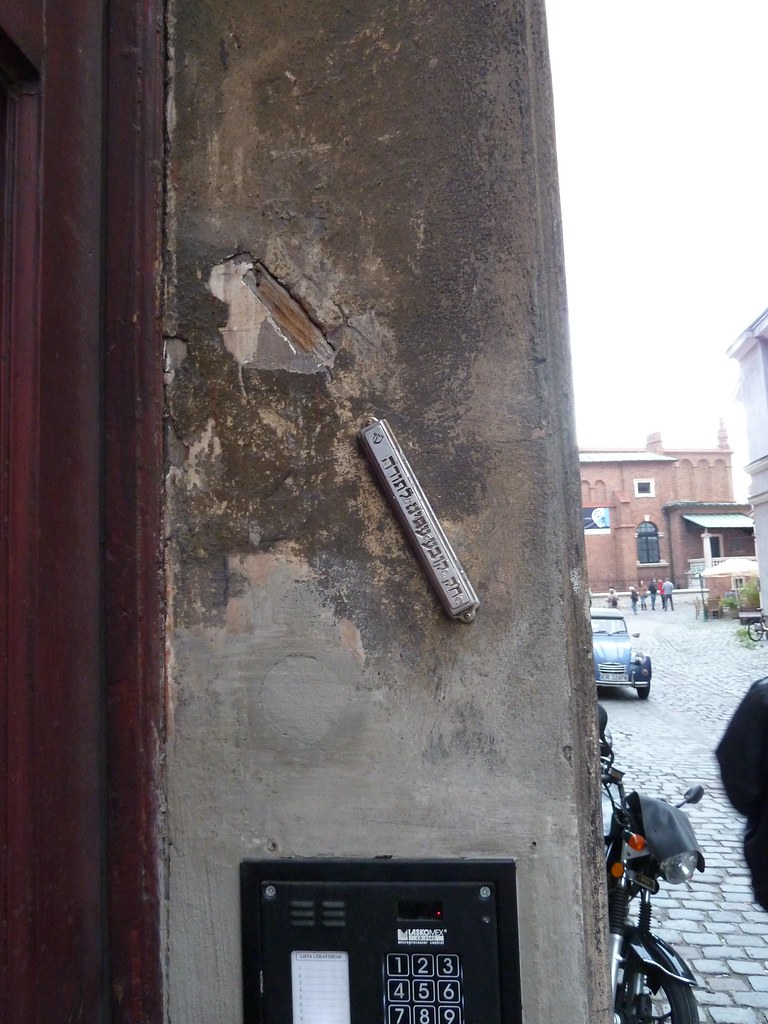
Photo: “Jewish house with Mezuzah” by La Laetti is marked with CC BY-NC 2.0.

Odd poem: William Faulkner, ‘After Fifty Years’

Her house is empty and her heart is old,
And filled with shades and echoes that deceive
No one save her, for still she tries to weave
With blind bent fingers, nets that cannot hold.
Once all men’s arms rose up to her, ‘tis told,
And hovered like white birds for her caress:
A crown she could have had to bind each tress
Of hair, and her sweet arms the Witches’ Gold.

Her mirrors know her witnesses, for there
She rose in dreams from other dreams that lent
Her softness as she stood, crowned with soft hair.
And with his bound heart and his young eyes bent
And blind, he feels her presence like shed scent,
Holding him body and life within its snare.

William Faulkner began writing poetry at an early age; and in his late 20s he published his first book, a collection of poems titled ‘The Marble Faun’. Though much of the fiction for which he won the 1949 Nobel Prize carries a heavy southern accent or is written in stream of consciousness, it is engaging to see that he could be meditative in the iambic pentameter of a regular sonnet if he chose.

Photo: “William Faulkner’s Typewriter 2” by visitmississippi is licensed under CC BY-ND 2.0