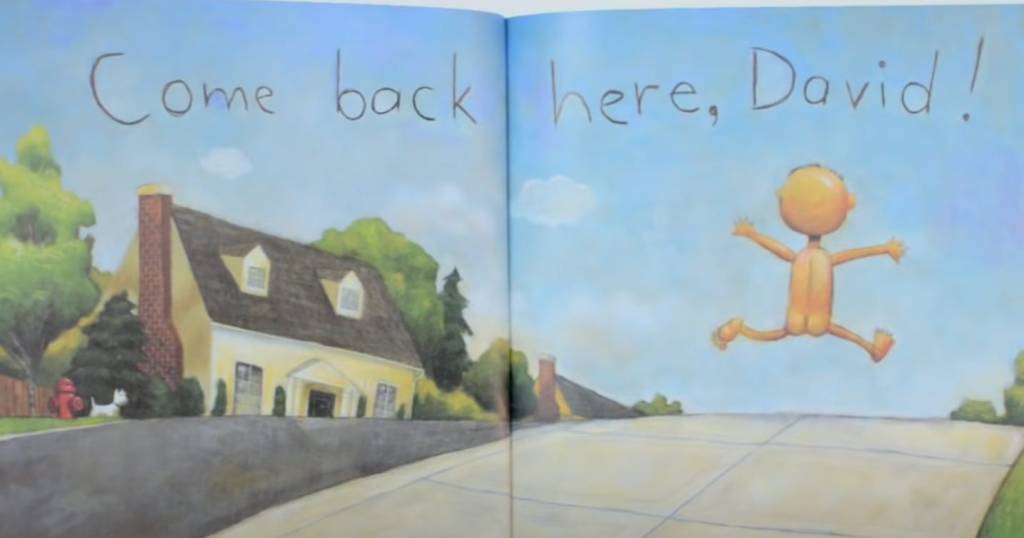
Everyone’s naked under their clothes, everyone’s bald under their hair; hide if you like, everyone knows! Everyone sees what you’re like under there.
Everyone’s meat under their skin, everyone’s bones under their meat; we know what your outside is hiding within: hiding will always end in defeat.
So banish the words and censor the book, draw little clothes on the cartoons for kids; everyone knows where your dirty eyes look, everyone sees that your life’s on the skids.
This poem was a response to the news out of Florida that elementary schools are being forced to draw clothing on cartoon characters in children’s books if the printed images show nakedness of either front or back. The right-wing nutcase group ‘Moms For Liberty’ is causing the trouble. This link https://popular.info/p/pressed-by-moms-for-liberty-florida gives details and shows some of the results. Incidentally, one co-founder of the Moms for Liberty group is Bridget Ziegler. Apparently she and her husband Christian Ziegler had sexual threesomes with another woman; and when Bridget backed out of a planned threesome event in October 2023, Christian went along anyway; the third party declined sex, saying she was in it more for Bridget; so Christian raped her. The woman then filed a complaint with the police. Why is it that the hysterically over-moral types seem to be the ones causing most of the problems?
Magazines courting raised circulation Decked with models they think most appealing Merely generate mild irritation When it’s clear what it is they’re revealing.
Whether languorous, muscular, ditzy, Strong and silent, demure, sentimental, Or suggestive, i.e. bum ‘n’ titsy, They display far too much that is dental.
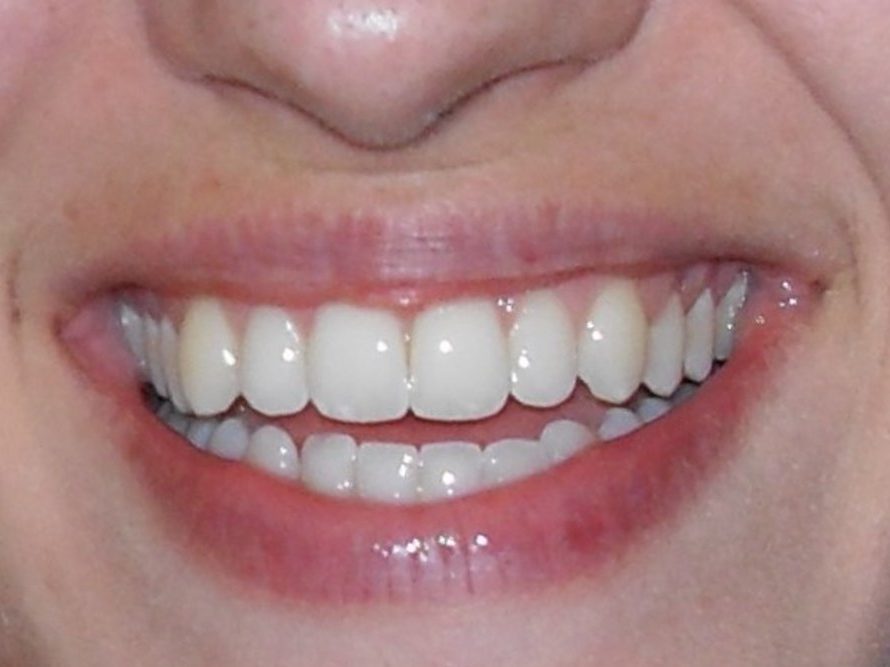
Why this boom in bared teeth, all Macleany? Why the photo-shopped grins that afflict us? Why must faces, both time-touched and teeny, Get reduced to a glistening rictus?
Can it be that the image-controllers Assume none of us buy printed paper Without first seeing canines and molars Being flashed by some gloss-coated gaper?
On a panel the world flocks to honour, Who charms with her tight-lipped composure? Yes, it’s L. da V.’s Louvre-hung donna − Those cover-mouths too deserve closure.
*****
Jerome Betts writes: “I can’t remember whether anything particular sparked off this slowly evolving piece apart from my becoming increasingly aware of the displays of dazzling female dentition on consumer magazine covers, sometimes a dozen or so different titles in a row to bizarre effect. My impression was that the apparently mandatory flashing smile became the focus, drawing the attention away from the rest of the face.”
Jerome Betts lives in Devon, England, where he edits the quarterly Lighten Up Online. Pushcart-nominated twice, his verse has appeared in a wide variety of UK publications and in anthologies such as Love Affairs At The Villa Nelle, Limerick Nation, The Potcake Chapbooks 1, 2 and 12, and Beth Houston’s three Extreme collections. British, European, and North American web venues include Amsterdam Quarterly, Better Than Starbucks, Light, The Asses of Parnassus, The Hypertexts, The New Verse News, and Snakeskin (where this poem was first published).
My verse is of the humorous variety, And does its best to brighten up society. To spread a little joy’s a noble calling, A life without a laugh would be appalling.
Yet still, of late, I’ve had a thought that niggles; What worth is work that just produces giggles? Should it be judged as slight and ineffectual, Compared to art we label intellectual?
And so I did what “proper” poets do, And signed up to The Scrivener’s Review, “The connoisseur of poesy’s magazine”, Where scribes will scratch your eyes out to be seen.
I found it was a terrifying place, Where people were obsessed with lower case, Allusions veered from cryptic to absurd, And “meaning” seemed to be a dirty word.
Their poetry was like the peace of God, That passeth understanding – truly odd. Some claimed to write for womxn and for mxn, Though none had come across the verb, “to scxn”.
With open mind, I asked, “Is it my fault That there is nothing here I can exalt?” But days of dredging through this awful rot Confirmed beyond all doubt that it was not.
Each new excrescence served to reinforce That I had veered disastrously off course. I wheeled around and fled back to the light Which shines upon the droll and erudite,
Bring on a world where rhyme and meter matters, And isn’t full of folk as mad as hatters. Adieu to “Scrivener’s Review”, I quit. Do I need what you’re full of? Not one bit.
*****
Stephen Gold writes: “The idea for So Pseud Me came from wading through an august poetry periodical which had better remain nameless, and coming to the following conclusion: WTF? There was some good, thoughtful work, but much of it was pretentious drivel, written by the deservedly obscure with their heads rammed firmly up that place where the Lord causeth not the sun to shine. If you were to ask them, I guess most would place high verse on a pedestal, way above light. But on this, I am with Kingsley Amis, who wrote in the New Oxford Book of Light Verse: “Light verse makes more stringent demands on the writer’s technique. A fault of scansion or rhyme, an awkwardness or obscurity that would damage only the immediate context of a piece of high verse endangers the whole structure of a light-verse poem. The expectations of the audience are different in the two cases, corresponding to the difference in the kind of performance offered. A concert pianist is allowed a wrong note here and there; a juggler is not allowed to drop a plate.” ‘So Pseud Me’ is a light-hearted attempt to speak up for jugglers.”
Stephen Gold was born in Glasgow, Scotland, and practiced law there for almost forty years, robustly challenging the notion that practice makes perfect. He and his wife, Ruth, now live in London, close by their disbelieving children and grandchildren. His special loves (at least, the ones he’s prepared to reveal) are the limerick and the parody. He has over 700 limericks published in OEDILF.com, the project to define by limerick every word in the Oxford English Dictionary, and is a regular contributor to Light and Lighten Up Online (where this poem was first published).