Tag Archives: Alabama Literary Review

Richard Meyer, ‘Sapiens’

By evolution born and bred
with something extra in the head
(and maybe also in the heart)
that sets us markedly apart

from all the teeming life on Earth,
we sapiens, for what it’s worth,
create and feel and comprehend,
but to what purpose, to what end?

Wisely foolish, cruelly kind,
with jumbled passions, muddled mind,
we’re oxymorons through and through.
In what we do or fail to do

a pestilential gifted ape
with a history we can’t escape.
Our future tenuous and stark,
we stumble onward in the dark.

*****

Richard Meyer writes: “I’ve always been amused that our species defines itself as Homo sapiens, meaning “wise man” or “wise human.” The history of humanity contains much that is wonderful, beautiful, and commendable, but it also records much that is horrible, dreadful, and appalling. The verdict as to which tendency will prevail remains uncertain. It’s difficult to be optimistic when the Doomsday Clock was recently set at 85 seconds to midnight. In addition, the political situation in the United States is grim. So, we stumble onward.”

‘Sapiens’ was originally published in the Alabama Literary Review (2023, Vol. 32)

Richard Meyer, a former English and humanities teacher, lives in Mankato, MN. His book of poems Orbital Paths was a silver medalist winner in the 2016 IBPA Benjamin Franklin Awards. He was awarded the 2012 Robert Frost Farm Prize for his poem “Fieldstone.” His poetry has appeared in a variety of print and online journals and has also received top honors several times in the Great River Shakespeare Festival sonnet contest. He is also the author of Wise Heart, a memoir of his mother Gert who was born in poverty, came of age during the Great Depression, enlisted in the army during World War II, served overseas, achieved the rank of first sergeant, and was awarded the Bronze Star for meritorious service performed during the Battle of the Bulge. Richard’s most recent book is Stumbling Onward, a collection of new and selected poems. His books are available on Amazon. 

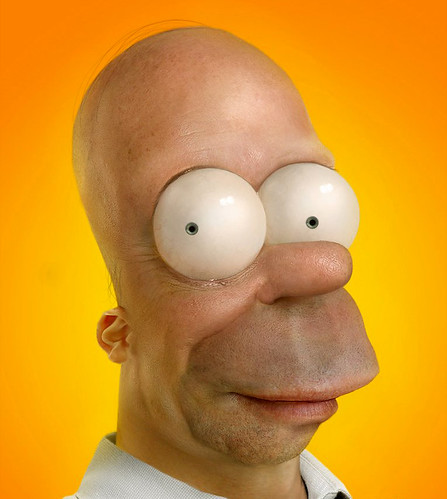
Photo: “Homer Sapiens” by Brett Jordan is licensed under CC BY 2.0.
Potcake Poet’s Choice: Gail White, ‘Feeding the Feral Cats’

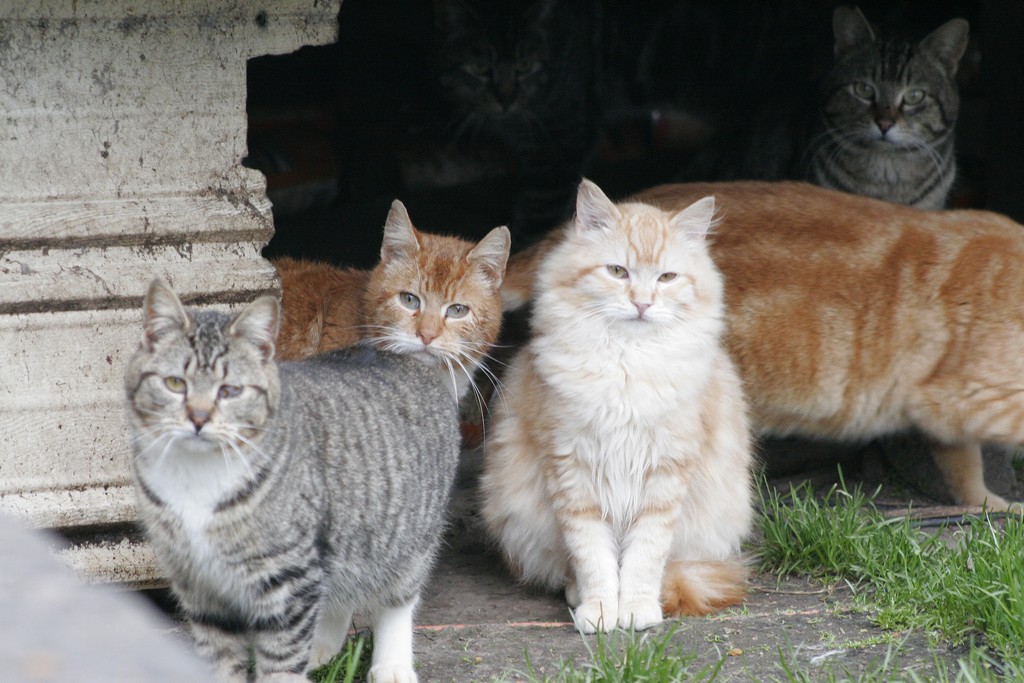
Three at the door tonight –
big ugly orange one,
two gray and white –
staring reproachfully
over the empty dishes:
Where are the loaves and fishes?

And I put out some food,
having no more excuse than that
I might be heaven’s feral cat –
driven by cold despair,
not seeking warmth or bed
or even entrance there –
but sure of being fed.

Gail White writes: “Cats are my totem animal and they have a way of inserting themselves into my poetry. This one was printed in the Alabama Literary Review, and a reader wrote to say she agreed with my eucharistic theology. I didn’t even know I had a eucharistic theology.”

Gail White is the resident poet and cat lady of Breaux Bridge, Louisiana. Her books ASPERITY STREET and CATECHISM are available on Amazon. She is a contributing editor to Light Poetry Magazine (lightpoetrymagazine.com). “Tourist in India” won the Howard Nemerov Sonnet Award for 2013. Her poems have appeared in the Potcake Chapbooks ‘Tourists and Cannibals’, ‘Rogues and Roses’, ‘Families and Other Fiascoes’ and ‘Strip Down’.
https://www.amazon.com/Asperity-Street-Gail-White/dp/1927409543

“Many Feral Cats” by Chriss Pagani is licensed under CC BY-NC-ND 2.0

Poem: ‘Advances in Personal Care’

1700 BCE
A length of fibre to extract a tooth –
a flint to decorate yourself with scars –
a large, strong thorn to make holes for tattoos –
an oyster shell to scrape off excess hair…
so health’s improved and beauty is accented.

1700 CE
High heels and wig show stature, vigour, youth;
a monocle improves both look and looking.
How we’ve advanced, compared to ancient times!
Some say there’ll be advances still to come,
but how, when all’s already been invented?

This poem is a riff on a 19th century joke. Charles H. Duell, the Commissioner of US Patent Office in the late 1890s, is widely quoted as having stated that the patent office would soon shrink in size, and eventually close, because “Everything that can be invented has been invented.” (In fact Duell said in 1902: “In my opinion, all previous advances in the various lines of invention will appear totally insignificant when compared with those which the present century will witness. I almost wish that I might live my life over again to see the wonders which are at the threshold.”) But the joke appears to have had earlier incarnations in the 19th century in Punch magazine and elsewhere, presumably as the world was adapting to the reality of life changing more and more rapidly.

The poem is in iambic pentameter, but the only rhymes are between the two verses: the first lines of each and the last lines of each. But I feel that produces enough echo to make it sound adequate. My thanks to Bill Thompson for including it in the Alabama Literary Review – ALR 2021.

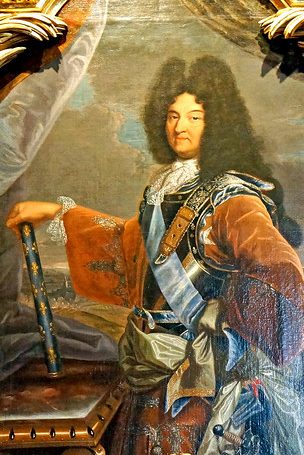
Photo: “France-001560 – Louis XIV” by archer10 (Dennis) is licensed under CC BY-NC 2.0