Tag Archives: author

Epigram: Brooke Clark, ‘Still Waiting’

You say your memoirs offer pointed re-evaluations
of countless authors’ puffed-up reputations
so you’ve arranged to have them published once you’re safely dead.
Nestor, it’s time your memoirs were read.

*****

Brooke Clark writes: “The original for this is by Martial: Epigrams IV.33; it’s a good example of the alternating 7-stress, 5-stress lines I finally settled on as the best way to capture the feeling of Martial’s elegiac couplets in English. Martial has a number of these “hurry up and die already” poems; if you read through large chunks of his epigrams at a go you’ll find a lot of themes recur over and over with slight variations. The addressee in the original is a poet, but somehow I found the idea of a writer who has left a “poison pen” memoir revealing what he really thinks of all his contemporaries more interesting. Nestor is one of the recurring “characters” in Urbanities, an idea I picked up from Martial’s treatment of Zoilus and expanded until I had a small cast whose stories developed over the course of the book.”

‘Still Waiting’ was originally published in Literary Imagination.

Brooke Clark is the author of the poetry collection Urbanities and has published work in ArionLiterary ImaginationTHINKThe WalrusLA Review of Books, and other places. He is also the editor of the online epigrams journal The Asses of Parnassus and the book reviews editor at Able Muse.
Twitter: @thatbrookeclark
Bluesky: @brookeclark.bsky.social

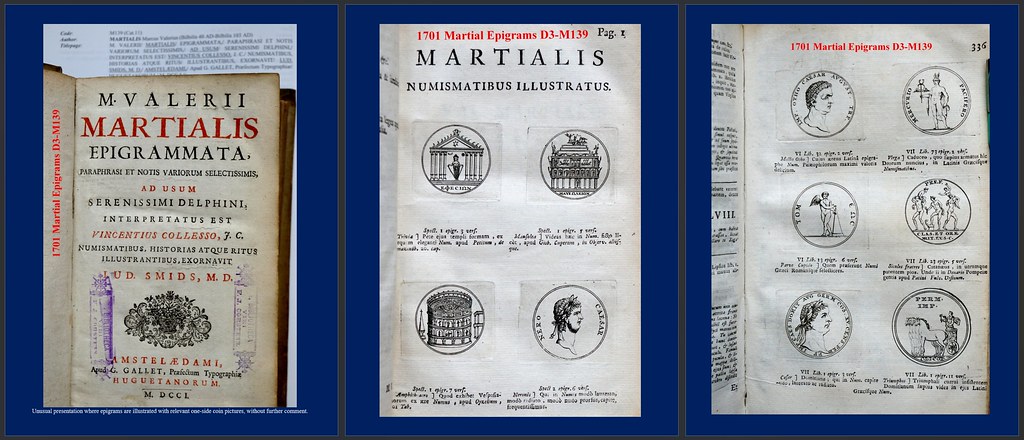
Photo: “1701 Martial Epigrams Dekesel M139” by Ahala is licensed under CC BY-NC 2.0.

Sonnet: ‘Marion Campbell of Kilberry, 1919-2000’

In winter’s broken skies, in spring’s thin drizzle,
The gardens wall in sun to warm the ground,
Can still be worked: vegetables grow year-round.
Fingers are cold – but hearths will crackle, sizzle.
It’s drear – but through a week’s rain, and two fair
Days’ sun, daffodils flood the world with light.
Otters slide down rocks, lambs jump in delight,
Rooks tumble, jump and slide, in empty air…
You love their flight; but, grounded, here you stand.
The summer dry and hot, sea almost warm,
Unpeopled heather hills, long days, no storm.
And you, embodying castle and land:
Stone walls and floors, trophies and weaponed walls,
Books read, books written, haunting ancestral halls.

Marion Campbell was a truly remarkable archaeologist, author and cultural activist. Her enormous store of memory of history and lore blended with personal experience, together with her desire to share her knowledge through writing books and creating local museums, is summed up in a charming anecdote at the start of her obituary in The Herald:

Two days before her death, as she lay apparently unconscious in the hospital at Oban, I was telling someone in the same ward about a lost standing-stone at Ballymeanach and remarking that nobody knew when it had fallen. Suddenly a muffled voice from behind the oxygen mask said: ”Well, I know! It was in 1943, when a Shetland pony was sheltering against it from the storm. The poor beast was nearly scared to death.”

She was a cousin of my mother’s, and I was fortunate enough to spend weeks and months with her at Kilberry in my teens and 20s. This sonnet, written in fond tribute, was published in The Orchards Poetry Journal a couple of years ago.

Review: “The Autobiography of a Super-Tramp” by W.H. Davies

Hobos

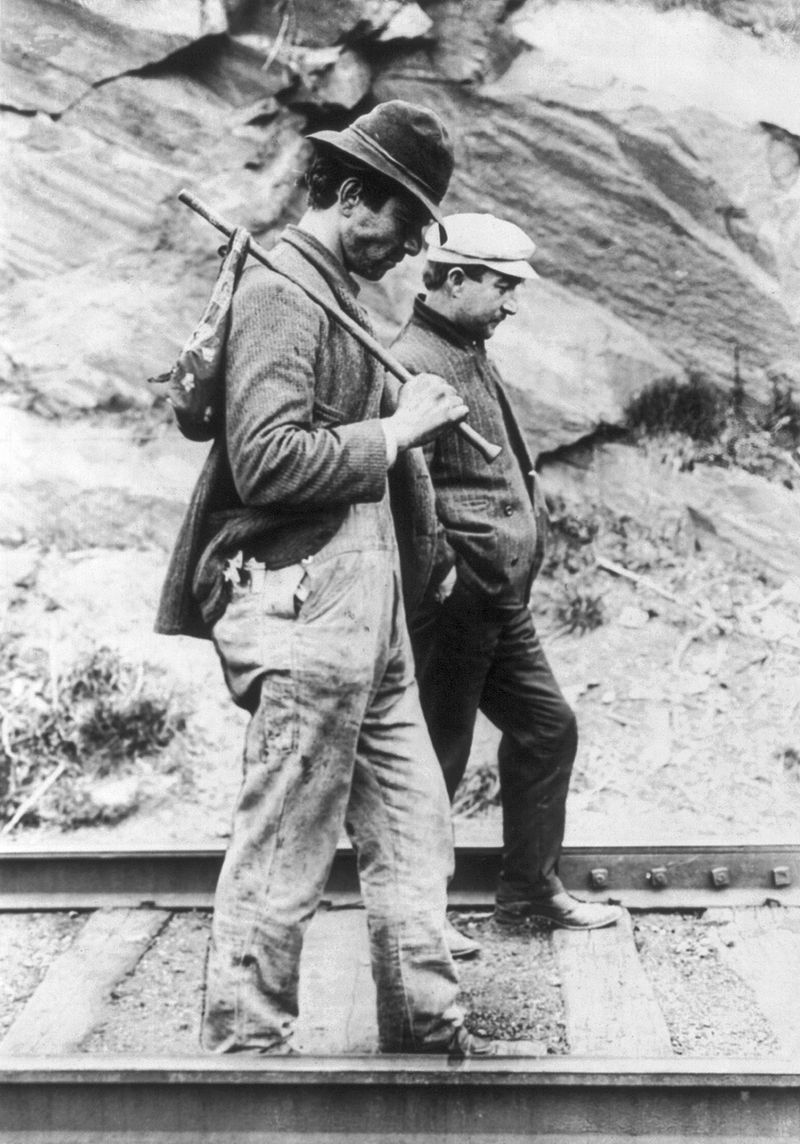
Hobos, US Library of Congress. Unknown date. Likely 1880s – 1930s

W.H. Davies was a poet whose best-known piece begins

What is this life if, full of care,
We have no time to stand and stare.

Born in Newport, Wales, in 1871, he was raised by his grandparents. As a boy he fought a lot, and at 13 was the leader of gang, was arrested for stealing handbags, and got twelve strokes of the birch. He read enthusiastically, disliked being apprenticed to a maker of picture frames, and at 21 took passage to America. His years of wandering provide a fascinating view of the US over 100 years ago, with chapters on jails, thieves, cattlemen, race issues in the Mississippi area, and so on. He worked his way back and forth over the Atlantic, lost a leg hopping a train in Canada and thereafter limited himself to England where he began writing his poetry and memoirs in doss houses in between bouts of tramping and begging. Eventually he was noticed, published for his poetry first and then for his autobiography–with a preface by George Bernard Shaw–and became famous.

His autobiography is frank, amusing, informative, insightful and naive all at the same time. A unique book, and a good accompaniment to his poetry (the link is to an 11-slide deck) which is also insightful and naive and oriented to observing life outside, whether in city or countryside. This is from “The Sleepers”:

As I walked down the waterside
This silent morning, wet and dark;
Before the cocks in farmyards crowed,
Before the dogs began to bark;
Before the hour of five was struck
By old Westminster’s mighty clock:

As I walked down the waterside
This morning, in the cold damp air,
I saw a hundred women and men
Huddled in rags and sleeping there:
These people have no work, thought I,
And long before their time they die.