Tag Archives: Bahamas

RHL, ‘Raised by Expatriates’

When I was young, best thing I’d seen
was Morgan’s fort gone under green
in jungled Panama.
The only flags in forests there
were what leaf-cutting ants could bear:
for planet’s anima.

I touched skulls resting in plain view
in empty deserts in Peru:
mud walls stood rainlessly.
I sailed on seas beyond all land,
stood with a sloth, yes, hand in hand,
saw men drink sugared sea.

I learned to bodysurf in waves;
I climbed cliffs, and saw bats in caves,
saw beaches of pink sand.
Result? I always loved to roam
but nowhere lets me call it home,
All lands are not my land.

Some places I’m a citizen
but never been a denizen;
with others, the reverse:
the places that I’ve lived in most
ignore me like an unseen ghost,
foreign, vague-skinned, perverse.

The wind has blown me since my birth,
my home is nowhere on the earth,
from place to place I roam.
My parentage determined that
my citizenship’s “Expatriate”…
so… everywhere is home.

*****

Not all my poems are autobiographical, even if first-person. This one is. It was published recently in the Amsterdam Quarterly (thanks, Bryan R. Monte!)

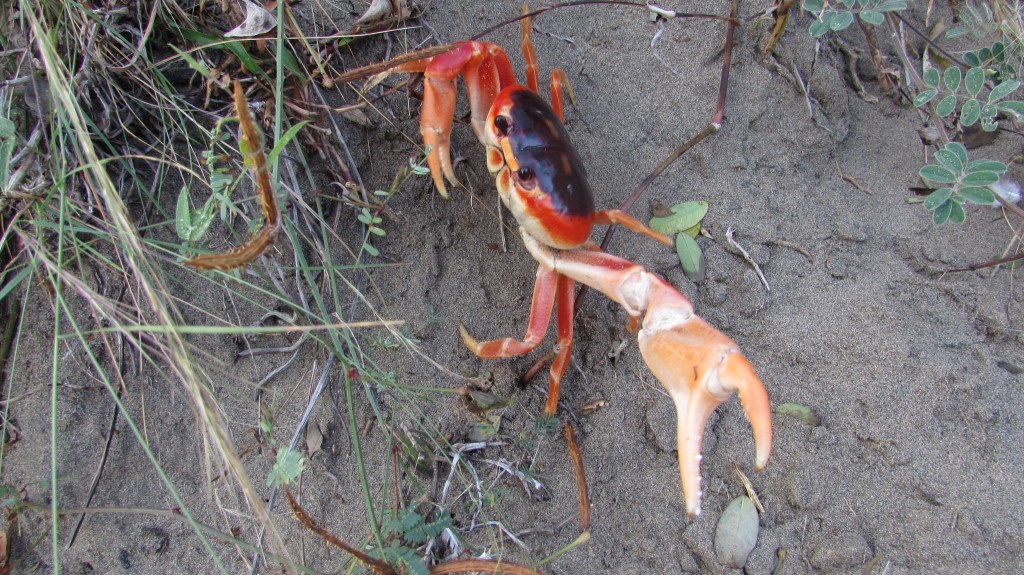
Short poem: RHL, ‘Brave Crab’

The little land crab stands right in the road,
Waving his big red claw.
Almost hit by a car rushing past –
Another, then one more.
The little crab stands fearless and alone,
He just won’t back away
And all the other crabs beside the road
Call out “¡Olé! ¡Olé!”

*****

This little poem was recently published in Rue Scribe, “an online journal for small literature”. Thanks, Eric Luthi!

We’re just coming up to the time of year when there are big crabs crawling in the bush (and getting taken by people for food), followed by lots of little crabs crossing the road (and the ones that get hit by cars becoming food for birds).

Photo: “bermuda land crab, blackback land crab, black land crab, common land crab, orange halloweenkrabbe, red land crab, rote landkrabbe, schwarze landkrabbe” by La Mancha en Movimiento is licensed under CC BY-NC 4.0.

Breaking my own rules: RHL, ‘Tropic Full Moon’

Under the midnight moon, the high garden’s outlined palms
Wait. The sky round the white moon
Is blue. And the clouds in the blue sky
Are white. And the shadows in the white clouds
Are blue. Below, offshore,
Where three green islands lay in daylight’s blue sea,
Tonight in the moon’s silver sea lie four black islands
And one, gliding imperceptibly north,
Is the black shadow of a white cloud in the blue sky.
Gone are the golden butterflies from the pink hibiscus,
Gone are the orange Monarchs from the purple bougainvillaea;
Black lizards hunt black insects through black flowers of black bushes.
The palms are black against the blue,
Complex silhouettes of simple forms,
Bending bowed fronds towards the moon –
To the white Moon in her blue sky.

*****

I’m always embarrassed in writing or sharing “poetry” that lacks form. But oh well. There are still things in it I enjoy. This one was published in Abraxas.

Photo: “Full moon eve” by John & Mel Kots is licensed under CC BY-NC-ND 2.0.

Semi-formal at best, RHL, ‘Remembering Winter’

I remember winter when it was only
Mostly too cold to swim –
The churning suck and drag of waves under the rock.
Yes, there are flowers – there are always flowers –
But, with the poinciana stripped of leaves,
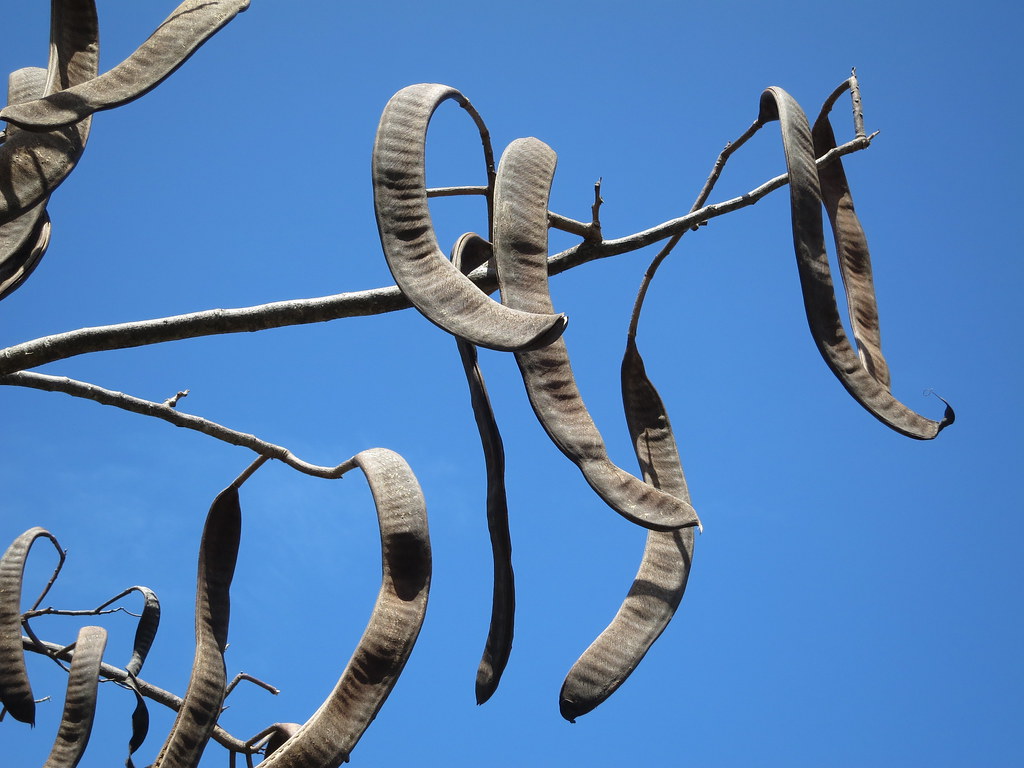
Its pods like forearms thinned and bent with age,
The rattling of sticks, the hiss of wind,
The broken sea stuck futilely on Wash
With endless turning, churning, foaming pulse –
How long can waves beat on a rock before
The tired rock gives up?

Yes, I remember later northern winters –
The bitter satisfaction of a too-thin sun,
Beauty without the joy, light without heat.
Feet always cold, clothes never quite enough;
Skin drying back from fingernails, lips chapped, throat raw,
The smell of damp coats, never fully dry.

I dream of alternating south and north
And never having to be cold again,
Turning, returning, always in the sun –
Or settling in an equatorial land
And swimming year-round, mellowing on the sand
Flattening my temperature, my will,
Soaking up sun, and dreaming I’m asleep.

Bitter it is, the winter argument,
Betrayed by world that slices off the years,
I have no love of winter, and I feel
Trapped, and betrayer of true kids of mine –
But look – they love it, so I’m further trapped,
Bound to the year that crushes as it turns,
And has become their home – are they then kids of mine?
Ice – snow – the winding down of life and year.

And I’ve known other winters all too well –
Where years of spring gave way to years of warmth,
Blossoms to children sparkling in the light,
The wonders of the world’s sharp sense delight;
Then years of fruit, as independent seeds
Form their own thoughts and follow darkening paths
Falling away, on purpose shrivel up,
And days grow shorter, moods swing soft and harsh
Drizzle sets in for weeks, cold in the bones,
Cold in the head, and colder in the heart –
That’s how the years of endless winter start.

Bleakness to bleakness, blackness into black;
Lives dry and crack,
Sap gone from tree and house and bone.
Who knew that emptiness could weigh so much?
Give me the strength to last to Spring, or start my own.

*****

This poem is from decades ago, in one of those periods where life felt bleak. (But such seasons pass!) For a long time I was unsure of the poem because it always feels like sloppiness and cheating when my rants are low on rhythm and rhyme; but George Simmers liked it enough for inclusion in Snakeskin, and that’s more than good enough for me.

Photo: “Shack-Shacks” by Chris Hunkeler is licensed under CC BY-SA 2.0.

Using form: Semi-formal: RHL, ‘Hunting’

The Osprey splashes, misses, and flies by
skimming the waves, rising, five yards away.
What’s its success rate? Does it care?
The Stingray searches, gliding, mouth to sand
five yards beyond the shallows where I stand.
Its Roomba-work’s its own affair.
The water splishes, burbles random rhythms.
The sun confuses, over-hot, then hidden.
The Oystercatcher calls. The Osprey rocks
on its branch in a casuarina,
flaps down-beach to another.
Along the margins of the shore, alone, each stalks.
They hunt for food
and I hunt them for what they mean, or could.

*****

There are elements of the sonnet about this semi-formal poem: it’s in iambics (though with uneven lengths of line); it has rhyme (though some only slant rhyme, and not patterned); it has 14 lines and a final couplet (though not with a clear volta where you would hope, after the 8th line). But I think the disjointed nature of the poem, its stop-and-go lines of different length, is suitable for the nature of the hunt: the searching, the sudden swoop, the pause, the restarting. In that sense the form is appropriate for the subject matter, and therefore good. It may be that I was too lazy to beat the whole thing into pentameters with a regular rhyme scheme… but it may also be that this was the right place to stop for this particular poem.

‘Hunting’ was originally published in Obsessed With Pipework, and has just been reprinted in Green Ink Poetry (motto: “We Welcome Chaos, Calamity, And The Natural World. Hope Punks & Witches” in their current collection with the theme of ‘Forage’.

Photo: “Osprey” by Mick Thompson1 is licensed under CC BY-NC 2.0.

Short poem: ‘Golden Childhood’

Golden girl on a sunset beach
With a dog and a horse,
Golden boy spears a silver shark
Under the sea;

Is such a dream forever in reach
Or forever false?
We stumble, emotional, through the warm dark
Back to the sea.

I wrote this in my 20s when I was saying goodbye to the Bahamas – my father had died, my mother had sold the house and moved back to Europe. For the next few decades I lived in Denmark, Canada, the US… but eventually came back to the sea.

The poem was originally published in Candelabrum. I always had difficulty with that seventh line. Originally it had “emotionally”, and I sort of justified it with the line itself being a stumble… but it’s a bad line, too many syllables, too many consonants. Sometimes when I submit a poem to a magazine, the editor points out a flaw, and more rarely, offers a useful alternative. Poems can always be tinkered with.

Photo cropped from “Girl riding a horse at sunset on Bali” by Jimmy McIntyre – Editor HDR One Magazine is licensed under CC BY-SA 2.0

(Loosely) Anapestic Sonnet: ‘A Run’

Over the island from beaches this side where it’s blowing,
it’s only a mile to the side where today it’s flat calm;
so over the hill’s potholed tarmac, to tracks of sand going
along under southern pine, seagrape, gum elemi, palm;
and then between sea-oats and cocoplums over the dunes
and down to the beach where the sand is as dusty as powder,
then lower across the high tide mark that seaweed festoons,
to harder packed sand under sun hot as bird-pepper chowder —
the sand at the ocean low tide, flat and hard as a ledge,
so flat you don’t feel that you’re running the side of a slope
where the ocean runs up inches deep and you splash through its edge,
one more mile to the end, where the sand is as pink as fresh hope,
is as pink as a conch shell, as pink as the still morning skies —
and you rest on the rocks in the shade while the southern pine sighs.

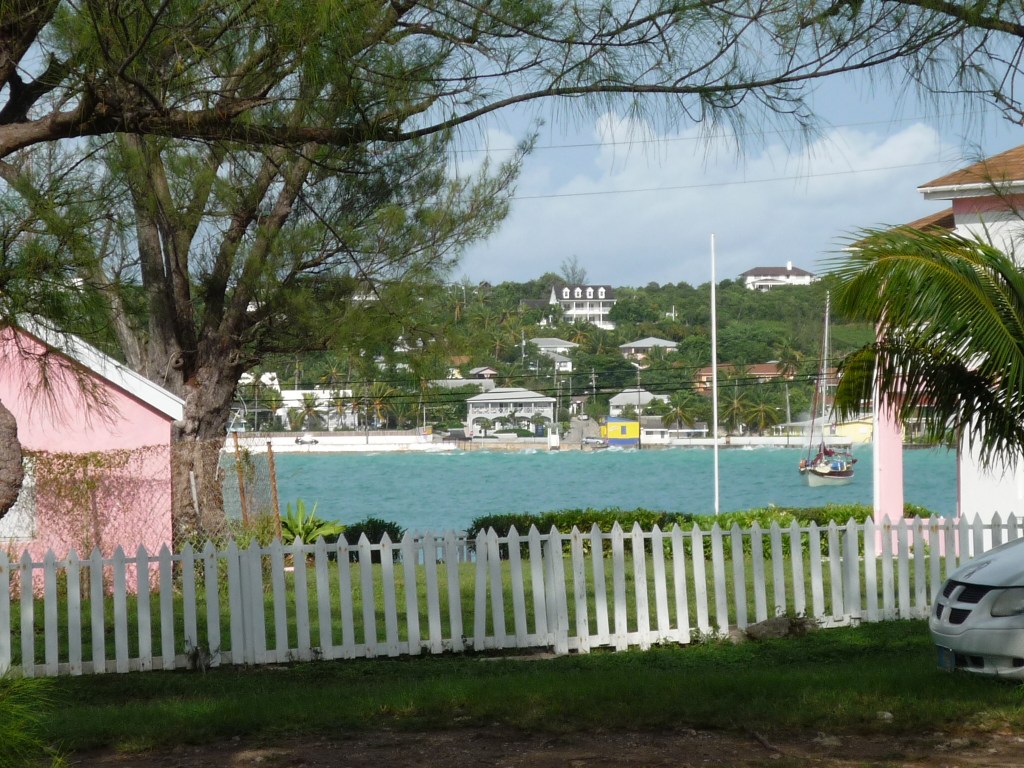
Eleuthera, the island where I was raised and where I live, is long and skinny like many of the Bahama Islands. A hundred and ten miles long, mostly a mile or two wide. I live on the south side (local name), the west side (tourist name), the sea side, the Sound side, the Caribbean side. It’s a great run of a mile over a 60 foot hill to the north side (or east side, ocean side, Atlantic side). On the south side the sand is white, and all the way out to the horizon the water is only 20 feet deep or so. On the north side the sand varies from powdery white to coarse pink, and long before you got to the horizon you would be in 8,000 feet of water. You can tell immediately from a photo which side you’re looking at: vegetation, beach, colour of the water, they’re all different.

This poem was published this month in Snakeskin, edited for 25 years by George Simmers. He is receptive to both traditional and free verse, everything depending on what appeals to him at the time. This is good for me, because I am inconsistent with what I produce. With this one, I went for the rhythm, the da-da-dum, da-da-dum which may not be the sound one person makes when running, but for me captures the mood of running. I can’t define it more than that. And so long as that rhythm is in the heart of each line, I don’t have a problem with being a syllable short at the beginning, or having an extra one at the end, so long as it all flows from one line to the next without a big hiccup.

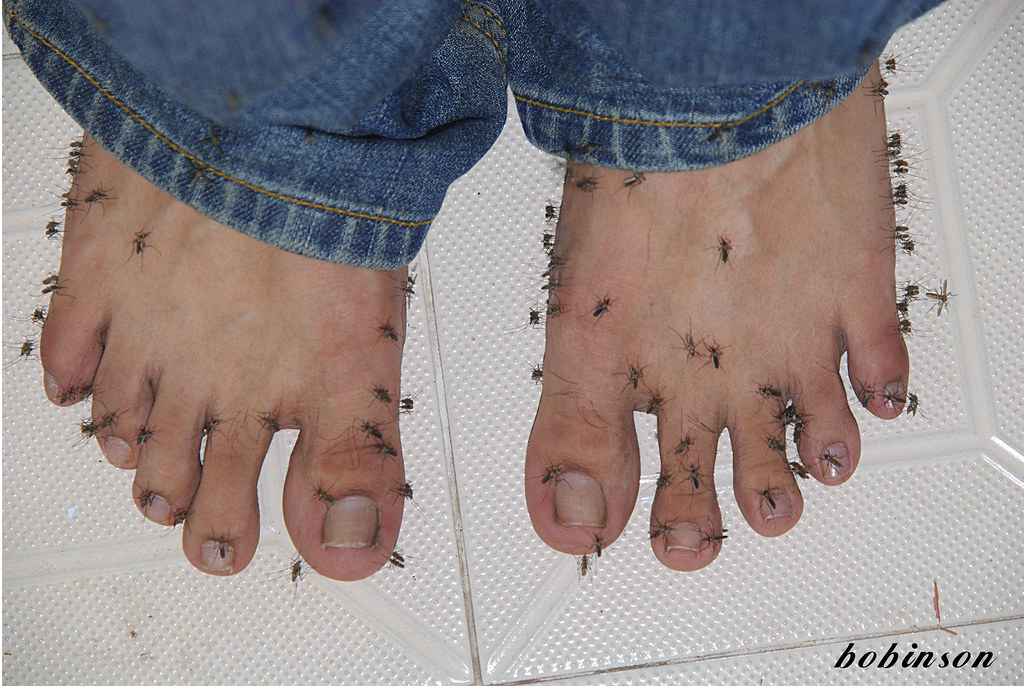
Poem: ‘Lizard an Mosquito’

Mosquito bite yuman,
Now e full a blood.
Lizard eat mosquito
Say, man dis is good.

Lizard help hatch mosquito,
Raise dem up good.
Send dem out like good daddy
Fe go find yuman blood.

Mosquito so happy
Dem eat plenty blood.
Lizard so happy
Dem mosquito taste good.

Politician same like dis:
Yu clap an yu sing,
Yu eleck im an den
E tax yu ting an ting.

I don’t normally write dialect verse, but it seemed appropriate for this idea. It was originally published in Snakeskin, republished in both The Hypertexts and Better Than Starbucks. The Bahamian accent can sound impenetrable to foreigners, but the words and grammar are not so different from standard English. By the way, “ting an ting” is just the non-specific plural of “tingum”–unspecified “stuff” rather than a specific “thing”.

Photo: “Brutality against mosquitoes.” by Bobinson K B is licensed under CC BY-NC-SA 2.0

Poem: “Blues Sonnet for the Bahamas, 1929”

Storm track of the 1929 hurricane, stalling over Nassau and Andros

The hurricane of 1929–
That massive killer storm of ’29–
Came when boats sailed, thinking the weather fine.

The storm came violent as a warrior–
Crept up in silence, struck like a warrior
The Ethel, Myrtle and Pretoria.

The three were bound for Andros, two escaped–
The Ethel and the Myrtle, they escaped–
But 35 drowned when the sea’s mouth gaped.

The storm sat over Nassau for three days–
It killed a hundred, sitting for three days–
Three quarters of all houses just erased.

Bahamians now don’t know what happened then…
They just sing ‘Run Come See Jerusalem’.

The September 1929 hurricane is memorialised in the old Blind Blake calypso ‘Run Come See Jerusalem‘. Poorly-built structures and ships were destroyed throughout the Bahamas. 142 people were killed, out of a population of less than 50,000. Andros Island was within the envelope of the storm’s hurricane-force winds and storm surge for two days. Parts of the island were inundated by a 12 ft (3.7 m) surge that advanced 20 mi (32 km) inland, wiping out all crops and most fruit trees and livestock.

A wind gust of 164 mph (264 km/h) was measured in Nassau, which also experienced the calm of the hurricane’s eye for two hours. An estimated 73% of the city’s homes and businesses sustained damage, leaving more than 5,000 people without homes. The hurricane was a heavy blow to the declining sponge industry on the islands. Following the storm, wild birds and crops were brought from the Caribbean to replenish their losses in the Bahamas. New building codes were enacted after the 1929 storm to prevent similarly extensive destruction. (Wikipedia)

For the most part, hurricanes in this part of the world come west from Africa, turn northwest before or after reaching the Caribbean, and somewhere around Florida turn northeast, ending up as gales in Ireland and the UK. That’s their natural track, anyway. It seems that the storms that do the most damage in the Bahamas are those that get off track in the Atlantic, turn southwest into the Bahamas, and then pause for a couple of days while the surrounding weather systems slowly force them north again. That was true of Joaquin in 2015, Betsy in 1965, and the unnamed 1929 hurricane. 

This week is the anniversary of Hurricane Dorian, the storm that devastated Abaco and Grand Bahama last year. Dorian turned from north-northwest to west, then stalled over Grand Bahama for a couple of days before turning north again. If the hurricane just keeps moving it may be powerful and destructive like Andrew in 1992 and Floyd in 1999, but no location will have strong winds for more than a couple of hours. Buildings can withstand this. But when a hurricane stalls, and the strong winds continue for a couple of days and nights, with storm surges on top of several high tides… that’s when the most damage can happen. But we’re into September. Hurricanes happen at this time of year.

As for the poem, it’s a Blues Sonnet, an established mashup of European sonnet and Afro-American blues. It contains less information than a regular sonnet because of the amount of repetition, but it works well to express a mood of lamentation. The Poet’s Garret has Hillary Clinton singing the blues as an example.

Sonnet: “Windsor and Oakes, 1943”

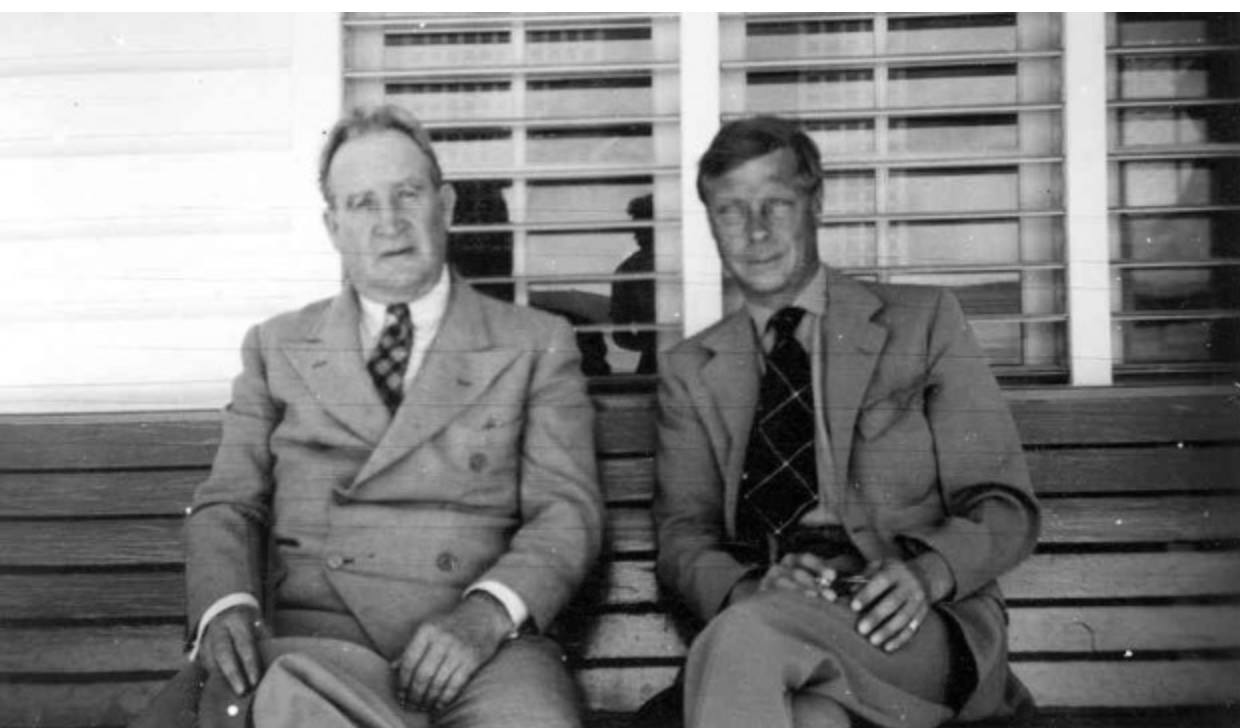
Oakes and Windsor

Sir Harry Oakes and the Duke of Windsor in Nassau

Edward, ex-king, pro-Nazi, was sent out
to the Bahamas for the War’s duration.
As Governor of our well-mixed-race nation
he joked with blacks but liked white rule and clout.
The wealthy Bay Street Boys, all white, agreed.
But one combative multimillionaire
felt equal pay for non-whites would be fair.
Canadian Harry Oakes disliked white greed.
Oakes pumped in cash for land, built an airport,
bought a hotel, hired coloured management,
then fought the U.S. Mob’s gambling intent.
Still, Bay Street had the Governor’s support.
Oakes wouldn’t change his mind, and he got killed.
Edward prevented justice. Whites were thrilled.

The 1943 murder in the Bahamas of Sir Harry Oakes–perhaps the richest man in the British Empire–was never legally solved. Having been found bludgeoned to death in his bed, with an attempt having been made to set the bed on fire, foul play might have been suspected immediately. But the top realtor in the Bahamas, Harold Christie (subsequently knighted) who had been sleeping in a guest bedroom two doors down from his host, hadn’t heard a thing and, discovering the body in the morning, tried to revive Oakes by getting him to drink some water.

Harold Christie first called his brother, and next the Duke of Windsor, rather than the police. The Duke of Windsor, being the Governor of the Bahamas, could have called the local police, or local British military forces, or brought in the CID, Britain’s Criminal Investigation Department. Instead he called two Miami detectives he knew (and who in later years were found to have Mafia connections), telling them “he wished to confirm the details of a suicide”. The Americans came, screwed up the crime scene, planted false clues, and then arranged for Oakes’ son-in-law to be charged.

But the evidence against the son-in-law, Alfred de Marigny, was so clearly fraudulent and the evidence against Christie and his brother was so strong that the Police Commissioner at the time refused to charge de Marigny. So the Duke of Windsor had the Police Commissioner transferred to Trinidad until the trial was completed, in order to prevent him from testifying.

One of the mysteries unresolved at the trial was matter of the four triangular holes in Oakes’ skull. Some form of local voodoo was suggested, but no one could think of anything specific that might have caused it. No one suggested it might have been a tool found on every boat in Nassau Harbour…

Oil drum bung wrench

Oil drum plug wrench

After one of the greatest legal defences of the 20th century de Marigny was acquitted and, although innocent and a British citizen, ordered deported. Unsuccessful attempts were made on his life in the next couple of years, as he detailed in his book A Conspiracy of Crowns.

Other books on the murder, two of which were called Who Killed Sir Harry Oakes?, initially failed to point a finger of blame. This was probably wise, as a couple of people who might have discovered unpleasant facts came to violent ends.

In 1950 American lawyer Betty Renner–a former Department of Justice lawyer who had done war crimes work in Japan–came to Nassau to gather evidence about the Oakes murder and speak to a potential informer. She was hit over the head, stripped half-naked, dragged over coral rocks and thrown head-first down a narrow well where she suffocated to death. Tree branches were cut and placed over the well. The autopsy concluded “there was no positive evidence of criminal attack but the possibility was still being investigated.”

In 1962 Dorothy Macksey, a 60-year-old white Bahamian secretary, was raped and murdered in her apartment some months after she told her employer she knew who had killed Oakes and was starting to write a book about it. Although it turned out she had been Harold Christie’s secretary in 1943, the Nassau police quickly determined there was no connection.

Books continue to be written about the Oakes murder. Perhaps the most complete and authoritative so far is John Marquis’ Blood and Fire, but the story is still dribbling out from those (apparently many) people who know the truth.

Oh, and by the way, my sonnet at the top was just published in Bewildering Stories, which I think is appropriate!