Tag Archives: birdsong

D.A. Prince, ‘Dawn Chorus’

That first sound splintering the listening dark,
letting the light slip in between the notes —
a blackbird, surely, surer now, his spark
picked up by robins. Liquid tuning floats
through unseen branches, marking territories
of nests and mating, brings the grudging air
its first flushed streak of colour. In the trees
a strengthening music, patterned like a prayer.

*****

D.A. Prince writes: “By a happy coincidence Snakeskin published ‘Dawn Chorus’ on International Dawn Chorus Day  —  the first Sunday in May when the early morning birdsong, (and every bird’s aim to establish territory and seduce a potential mate) is at its peak. You need to be awake early to hear it. I was out just after 5 a.m today and could pick out the differing songs of blackbird, robin, great tit and blue tit: not many species because although I live in a village (plenty of trees) we’re on the edge of a large city (so no open farmland). Still, the blackbirds made sure the chorus was loud and liquid, and the dawn chorus should be as musical for a few more days.

“This poem is not as it was first written but editing has, to my mind, given it a tighter focus. It was originally a sonnet, and covered two ‘choruses’: one, the birdsong (as appears here) and the second the early morning noises as an old house wakes up, with the creaking of hot water pipes and the radio’s news broadcast. Unsure if this worked I put it away for a few months: when it re-appeared I cut the sestet so that all the attention fell on the birdsong.” 

D.A. Prince lives in Leicestershire and London. Her first appearances in print were in the weekly competitions in The Spectator and New Statesman (which ceased its competitions in 2016) along with other outlets that hosted light verse. Something closer to ‘proper’ poetry followed (but running in parallel), with three pamphlets, followed by a full-length collection, Nearly the Happy Hour, from HappenStance Press in 2008. A second collection, Common Ground, (from the same publisher) followed in 2014 and this won the East Midlands Book Award in 2015. HappenStance subsequently published her pamphlet Bookmarks in 2018, with a further full-length collection, The Bigger Picture, published in 2022. New Walk Editions published her latest pamphlet, Continuous Present, in 2025.

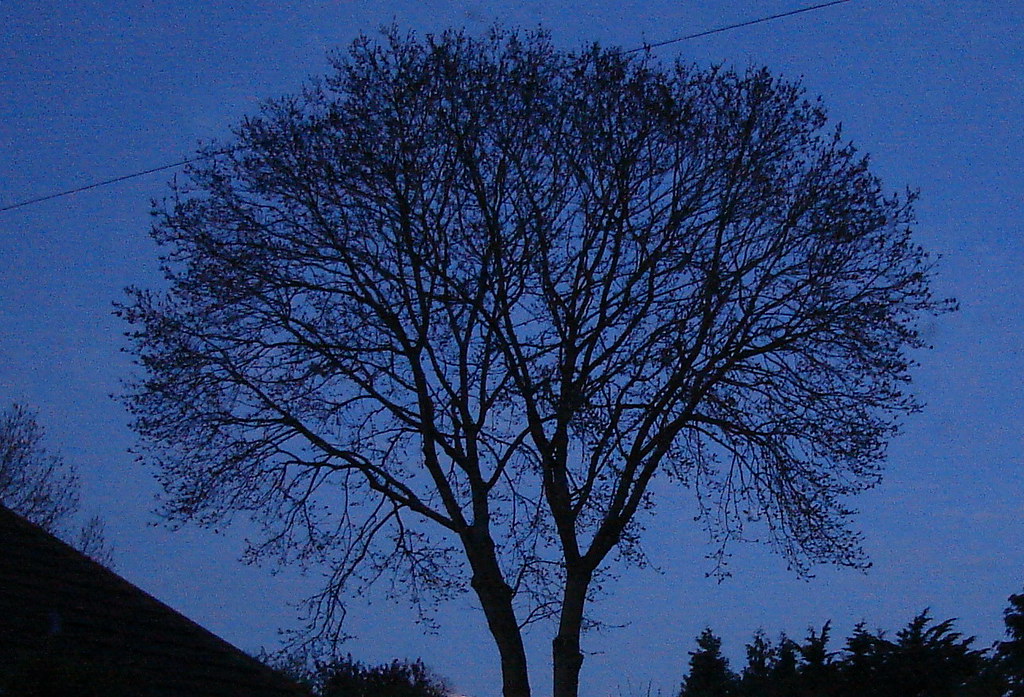
Photo: “Dawn Chorus…” by Dave – aka Emptybelly is licensed under CC BY-NC 2.0.
Stephen Edgar, ‘Dawn Solo’

First light beside the Murray in Mildura,
Which like a drift of mist pervades
The eucalypt arcades,
A pale caesura

Dividing night and day. Two, three clear notes
To usher in the dawn are heard
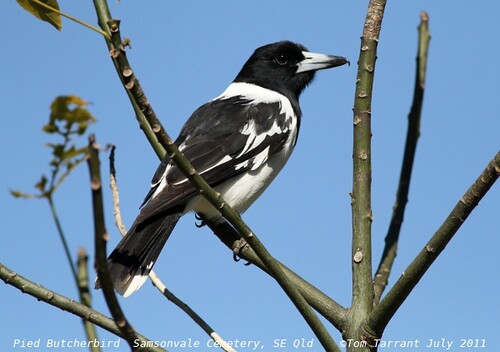
From a pied butcherbird,
A phrase that floats

So slowly through the silence-thickened air,
Those notes, like globules labouring
Through honey, almost cling
And linger there.

Or is it that the notes themselves prolong
The time time takes, to make it stand,
Morning both summoned and
Called back by song.

*****

Stephen Edgar writes: “This poem needs little comment, I think. The bird in question is the pied butcherbird, as the poem says, considered by some to have the most beautiful song of any Australian bird. Let me quote some field guides to Australian birds: “superb, slow, flute-like mellow notes”; “song is one of our finest: a varied sequence of pure fluty whistles, sometimes interspersed by throaty warbles”; “fluted, far-carrying notes that seem to reflect the loneliness of its outback haunts”. Perhaps that third quotation best suggests the quality I was trying to capture. The notes seemed to be in slow motion, slowing time. I was attending the Mildura Writers’ Festival. Mildura is on the southern bank of the Murray River in northwestern Victoria. This was the first occasion on which I had heard the pied butcherbird.

“The form is a quatrain rhyming ABBA, with lines progressively shortening from pentameter, though tetrameter, trimeter to dimeter. It was first published in Australian Book Review and then in my twelfth book The Strangest Place: New and Selected Poems (Melbourne, Black Pepper, 2020), which is available on the Black Pepper website.”

Stephen Edgar was born in 1951 in Sydney, where he grew up. From 1971 to 1974 he lived in London and travelled in Europe. On returning to Australia he moved with his then partner to Hobart, Tasmania, where he attended university, reading Classics, and later working in libraries. Although he had begun writing poetry while still at high school, it was in Hobart that he first began writing publishable poems and found his distinctive voice. He became poetry editor of Island Magazine from 1989 to 2004. He returned to Sydney in 2005. He is married to the poet Judith Beveridge.

He has published thirteen full collections: Queuing for the Mudd Club (1985), Ancient Music (1988), Corrupted Treasures (1995), Where the Trees Were (1999), Lost in the Foreground(2003), Other Summers (2006), History of the Day (2006), The Red Sea: New and Selected Poems (2012), Eldershaw (2013), Exhibits of the Sun (2014), Transparencies (2017), The Strangest Place: New and Selected Poems (2020) and Ghosts of Paradise (2023). A small chapbook, Midnight to Dawn, came out in 2025, and a new collection, Imaginary Archive,will be published in late 2025. His website is www.stephenedgar.com.au, on which publication details of his books, and where they can be purchased, are given.

He was awarded the Australian Prime Minister’s Award for Poetry in 2021 for The Strangest Place.

Photo: “Pied Butcherbird (Cracticus nigrogularis)” by aviceda is licensed under CC BY-NC-SA 2.0.