Category Archives: nature poems

David Callin, ‘Sangliers’

It is not a forest, more a sun-
dappled woodland near the Pont du Gard,
the river fol-de-rolling merrily.
Here, where they’ve been told the wild things are,
a family, a mother and her young,
step through wild garlic till they come upon
a small ménage of wild boars, sangliers:
a mother and her young, a glade away.
Their shadows lengthened by the dappling sun,
each gives way to the other and trots on.

*****

David Callin writes: “There are no deep secrets about the poem. It’s a memory from a family holiday in 2006, and my wife’s description of the experience of this strange meeting on her return from it. It struck me strongly at the time, but I must have stored it away, because I didn’t try to turn it into a poem until nearly 20 years later. Then, as a non-metrical poem, it didn’t take, but I found it again when looking for inspiration for George’s excellent short poems Snakeskin (issue 339, May 2026). It seemed to blossom in its new form.

“This is unlike the bulk of my poems, most of which – but by no means all – arise out of the life, history and folklore of the Isle of Man, where I’ve lived all my life apart from a brief period in the 1980s when I made a bolt for freedom, first to London and then to the Netherlands. But the place has a way of reeling you back in.

“My first full book of poems, From the Nab, is essentially Manx in subject matter. There is a review of it in Light (whose editor, I see, also features in your blog). This is the link to that … https://lightpoetrymagazine.com/book-reviews-summer-25/

“If any of your readers should like a copy – and who wouldn’t, based on that review? – a simple email to me, with their postal address, would do the trick:  dcallin2bvc@gmail.com

“Other than that, I pop up in Snakeskin from time to time – as often as I can, really. And occasionally in other places.”

*****

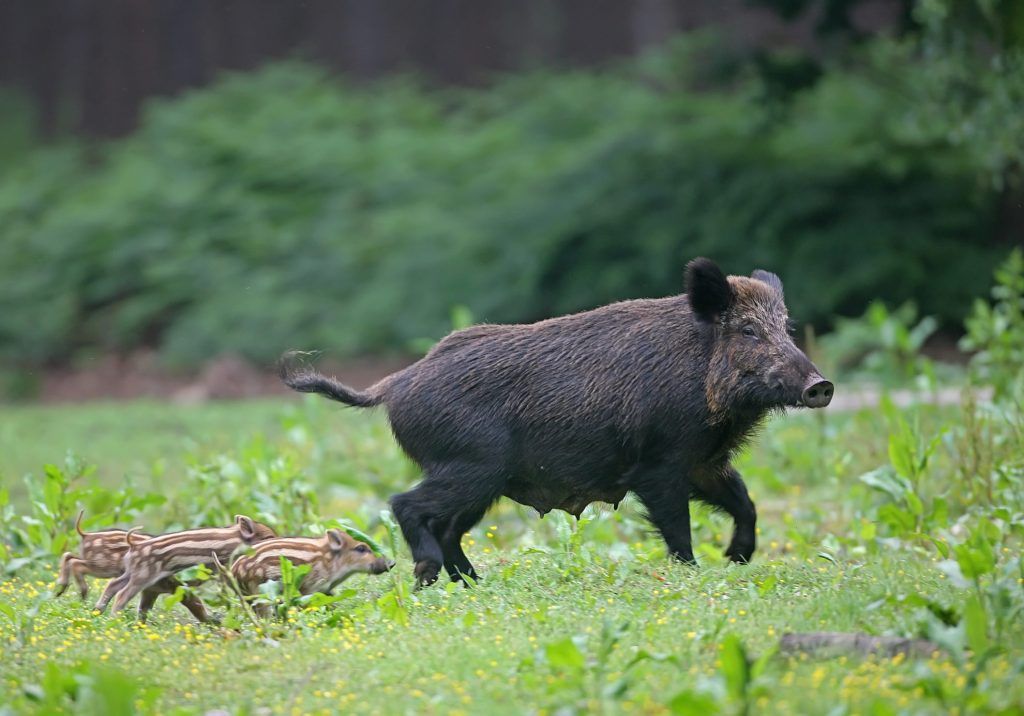
The image features a wild boar (Sus scrofa) with its piglets, commonly known as humbugs due to their striped appearance. 
Joe Crocker, ‘A one-way visit’

to the vet with our decrepit cat:
snaggle-toothed, arthritic, ectoparasitic.
His kick-ass piebald coat is now a mat
for fleas to wipe their feet on.

His legs are lame. His dignity is flat.
He used to know his name was Tipperary.
Today it could be Tom or even Jerry.
Enough. He’s had enough.
And that is that.

*****

Joe Crocker writes: “Tipper” was my youngest daughter’s cat. He had white socks and a white tip to his black tail. “Tipperary” seemed like a fitting formalisation for his vaccination record. (And somewhere in my head was TS Eliot’s “The Naming of Cats”.) I don’t suppose Tipper ever really knew our name for him. In his final weeks he looked utterly bewildered and certainly unable to “keep up his tail perpendicular, spread out his whiskers or cherish his pride.”

‘A One-way Visit’ was originally published in Snakeskin.

Brief biography of Joe Crocker (masculine/feminine/neutered)

He writes his stuff and slides it under doors.
His age and sex, his fantasies, are no concern of yours.

The rhymes reflect his humour — down to earth.
A pamphlet is forthcoming but refuses to come fearth.

Winner of the Awkward Prize, ham-fisted.
Never short- or long- but  sometimes black- or shopping-listed.

Nominated (pusher) for the pushcart.
Squawking from the slush pile, self-regarding little upstart.

Google says he’s one of Sheffield’s legends
— a rock star who gets by with little help from friends, well… ex-friends.

*****

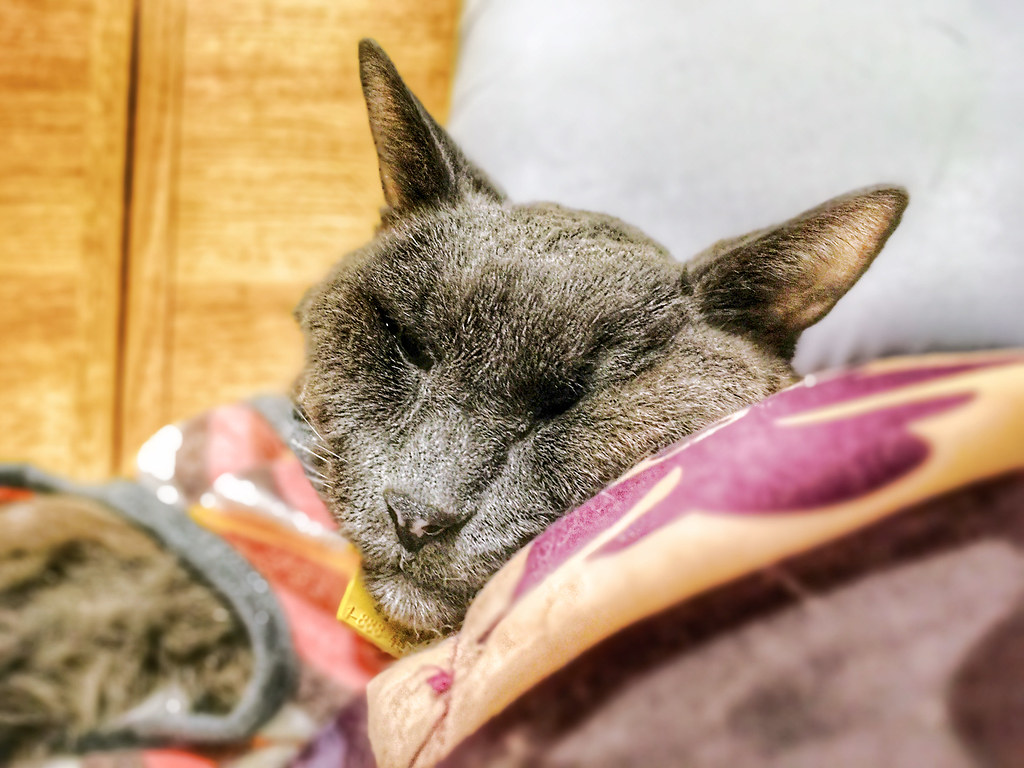
Photo: “Portrait of a Very Old Cat” by sjrankin is licensed under CC BY-NC 2.0.

D.A. Prince, ‘Dawn Chorus’

That first sound splintering the listening dark,
letting the light slip in between the notes —
a blackbird, surely, surer now, his spark
picked up by robins. Liquid tuning floats
through unseen branches, marking territories
of nests and mating, brings the grudging air
its first flushed streak of colour. In the trees
a strengthening music, patterned like a prayer.

*****

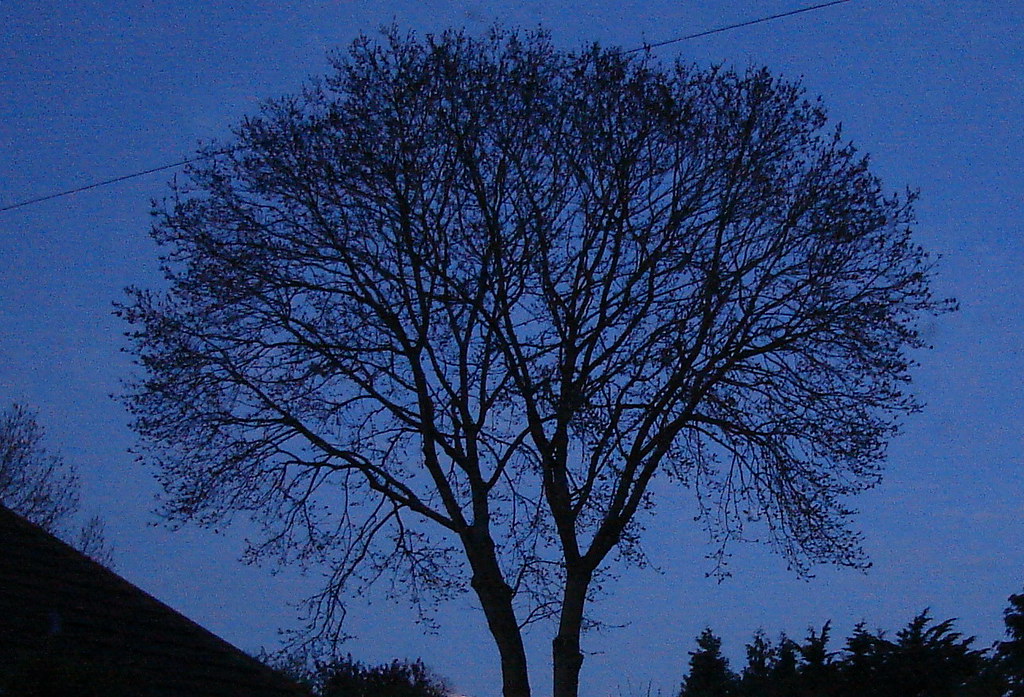
D.A. Prince writes: “By a happy coincidence Snakeskin published ‘Dawn Chorus’ on International Dawn Chorus Day  —  the first Sunday in May when the early morning birdsong, (and every bird’s aim to establish territory and seduce a potential mate) is at its peak. You need to be awake early to hear it. I was out just after 5 a.m today and could pick out the differing songs of blackbird, robin, great tit and blue tit: not many species because although I live in a village (plenty of trees) we’re on the edge of a large city (so no open farmland). Still, the blackbirds made sure the chorus was loud and liquid, and the dawn chorus should be as musical for a few more days.

“This poem is not as it was first written but editing has, to my mind, given it a tighter focus. It was originally a sonnet, and covered two ‘choruses’: one, the birdsong (as appears here) and the second the early morning noises as an old house wakes up, with the creaking of hot water pipes and the radio’s news broadcast. Unsure if this worked I put it away for a few months: when it re-appeared I cut the sestet so that all the attention fell on the birdsong.” 

D.A. Prince lives in Leicestershire and London. Her first appearances in print were in the weekly competitions in The Spectator and New Statesman (which ceased its competitions in 2016) along with other outlets that hosted light verse. Something closer to ‘proper’ poetry followed (but running in parallel), with three pamphlets, followed by a full-length collection, Nearly the Happy Hour, from HappenStance Press in 2008. A second collection, Common Ground, (from the same publisher) followed in 2014 and this won the East Midlands Book Award in 2015. HappenStance subsequently published her pamphlet Bookmarks in 2018, with a further full-length collection, The Bigger Picture, published in 2022. New Walk Editions published her latest pamphlet, Continuous Present, in 2025.

Photo: “Dawn Chorus…” by Dave – aka Emptybelly is licensed under CC BY-NC 2.0.

Sonnet: Barbara Loots, ‘Intimations’

This is a Wordsworth morning. Not a leaf
trembles, the water shimmers beneath a shawl
of vapor, and the wild primordial call
of one loon sounds its tremolo of grief
across the lake. The sunlight like a thief
infiltrates slowly, making shadows crawl
out of the hollows where each animal,
furred, feathered, winged or scaled, to its brief
life awakens. My awakened eyes
and all the senses that belong to me
discover in the love that glorifies
whatever was and is and is to be
the wonder and perpetual surprise
of momentary immortality.

*****

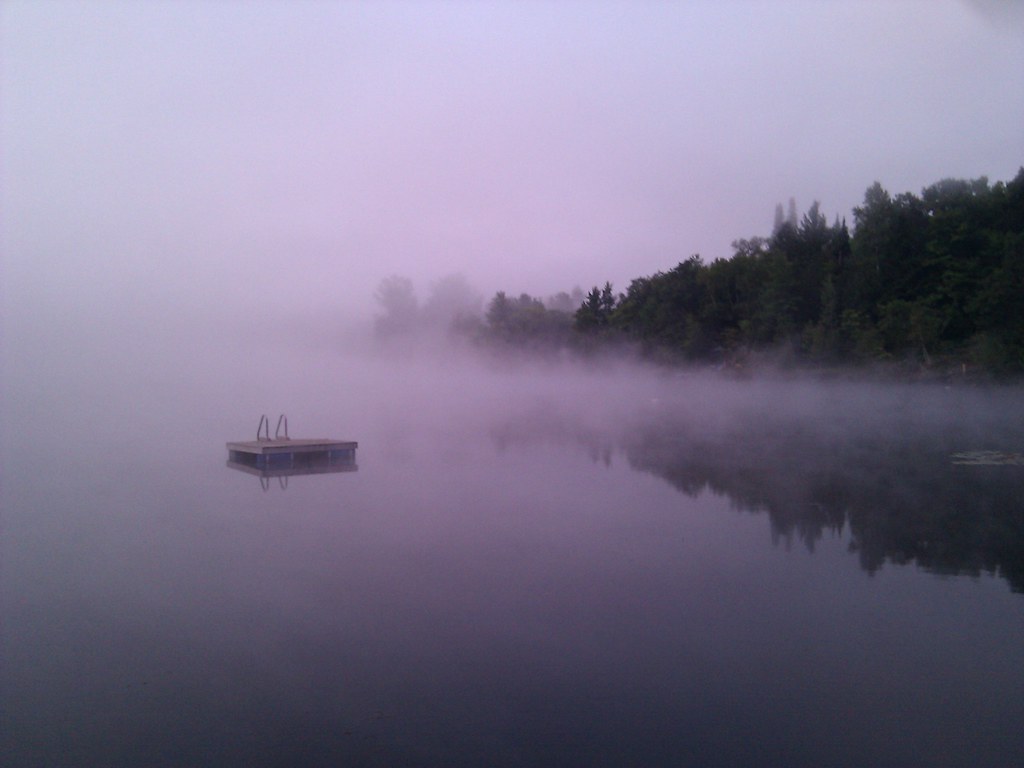
Barbara Loots writes: “My husband Bill and I spend summer months in Canada on a tiny pile of granite dropped by a glacier in the middle of Blackwater Lake near Parry Sound, Ontario. Bill’s father purchased the island right after WWII for the tiny price of a property owned by the Crown, in a deal similar to the American Homestead Act: you must build a domicile on it within 18 months. The cottage cobbled together at that time still stands, with a few improvements, not yet including running water, electricity, or indoor plumbing. We bring a lot of books. I often meet the Muse among the towering White Pines. Poems are a natural consequence. Many of them appear in my collection The Beekeeper and other love poems (Kelsay Books 2020).”

“Intimations” appeared in the Fall 2025 issue of The Lyric (Volume 105 Number 4).

After decades of publishing her poems, Barbara Loots has laurels to rest on, but doesn’t. Residing in Kansas City, Missouri, Barbara and her husband, Bill Dickinson, are pleased to share the household with an acrobatic tuxedo kitty named Jane Austen. Barbara has work forthcoming in The Orchards JournalThe Shining Years II anthology, and I-70 Review. Her concerns and complaints can be found on Facebook and at barbaraloots.com. She serves as the review editor for Light Poetry Magazine (see Guidelines at lightpoetrymagazine.com). 

Early morning lake” by josterpi is licensed under CC BY-NC 2.0.

Susan McLean, ‘Figs’

Because they don’t grow this far north; because
when I’m in Italy or France, it’s June
or earlier; because my parents raise them,
but when I visit, always it’s too soon
or late for that year’s crop; because they’re sold
in tiny cartons at outrageous cost
and not for long; because they’re slippery
and sweet as sin inside, and outside, soft
as breasts; because, once ripe, they split apart,
and rot or wasps destroy their fragile treasure;
because I know I’ll never get enough,
I always eat them with a groan of pleasure.

*****

Susan McLean writes: “I grew up in Maryland, in the suburbs of Washington, DC; it is a very mild climate zone, so when my sister gave my parents a fig seedling to grow, it flourished. By that time I was living in Iowa and Minnesota, where fig trees can’t survive the winters. I was a college professor, so I could visit my parents in summer or during the winter break, yet their figs didn’t ripen until late August and September, when I would be back at work. I liked traveling in Europe, too, during the summer vacation, but was usually there before the local figs had ripened. Thus, the only way I could eat fresh figs was by buying them imported from warmer locales, and they were extremely pricey and perishable. It became a sort of forbidden fruit for me, and therefore infinitely desirable.

“This poem is in the form of a litany, in which the introductory clauses all start with the same wording. It is a form familiar from the Bible (the Beatitudes, for example: “Blessed are . . .”) and from religious rituals, such as the repetition of a creed (“I believe in . . .”). I chose that form as a nod to the original forbidden fruit in Genesis. I alternate unrhymed lines with rhymed ones to mirror the tension between desire and fulfilment. The repetition of the “because” clauses without a main clause to finish the idea creates mystery and suspense, which is only resolved in the poem’s final line, evoking a sigh of satisfaction. The poem appeared in my first poetry book, The Best Disguise.”

[Figs are just so evocative; I can’t help linking to my own poem on them. RHL]

Susan McLean has two books of poetry, The Best Disguise and The Whetstone Misses the Knife, and one book of translations of Martial, Selected Epigrams. Her poems have appeared in Light, Lighten Up Online, Measure, Able Muse, and elsewhere. She lives in Iowa City, Iowa.
https://www.pw.org/content/susan_mclean

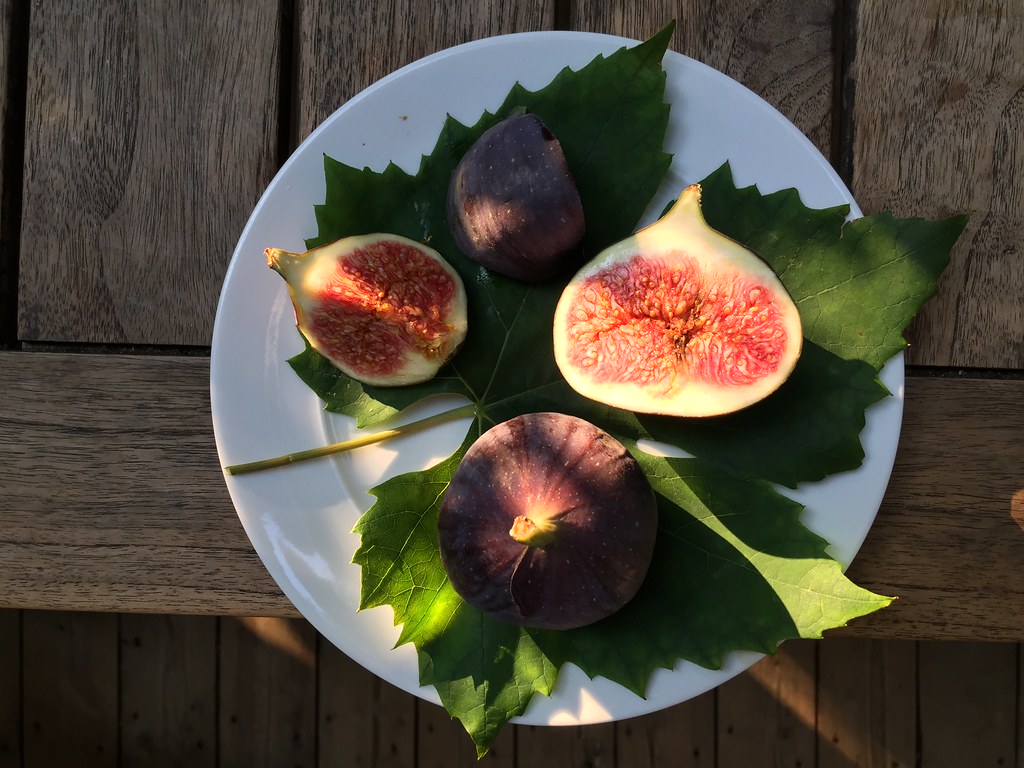
Black figs on a vine leaf” by CharlesFred is licensed under CC BY-NC-SA 2.0.

Susan Jarvis Bryant, ‘Armadillo’

A hand for the bandit in leathery livery
Advancing through grass to go grubbing in shrubbery –
Escaping the squeal and the squish of the rubbery
To comb and to roam neath the sun.

A bow to the wow of the charmer in armor,
A friend to the poet, a foe to the farmer –
This bug-crunching muncher, this flowerbed harmer,
Is digging up dirt just for fun.

A nod to the plod of this sod-lobbing critter
Whose shovel-shaped nose prods the gardeners bitter –
He begs me to bless him with lexical glitter
Till wittiest ditties are spun.

*****

Susan Jarvis Bryant writes: “When I first arrived in Texas from the UK, I had an overwhelming urge to feast my curious eyes upon an armadillo. I saw plenty of squished unfortunates callously labeled “roadkill”, but there wasn’t a live one in sight… until five years later on a bike ride at the local wildlife refuge, I saw my first wild armadillo (silver armor gleaming in the midday sun) rooting for grubs on the grass verge. Brimming with joy, I leapt off my bicycle and oohed and aahed from as near as I could possibly get. A lady walked towards me. My husband warned me not to get too exciteable about my find, as armadillos weren’t the most charming of Texas critters. I beg to differ, and the lady (from northern parts, apparently) was as excited as I was. To my husband’s undisguised surprise, we simply couldn’t get enough of this fascinating fellow. I had heard many stories (nearly all bad) and simply had to honor him the only way I know how – hence this poem. I love British hedgehogs and the armadillo is most certainly up there with his Kentish-countryside counterpart.”

Susan Jarvis Bryant is originally from the UK and now lives on the coastal plains of Texas. Susan has poetry published on The Society of Classical Poets, Lighten Up Online, Snakeskin, Light, Sparks of Calliope, and Expansive Poetry Online, The Road Not Taken, and New English Review. She also has poetry published in The Lyric, Trinacria, and Beth Houston’s Extreme Formal Poems and Extreme Sonnets II anthologies. Susan is the winner of the 2020 International SCP Poetry Competition and was nominated for the 2022 and 2024 Pushcart Prize. She has published two books – Elephants Unleashed and Fern Feathered Edges.

Photo: “Nine-banded Armadillo” by http://www.birdphotos.com is licensed under CC BY 3.0.

F.F. Teague, ‘Lament of the Leaning Trees’

We were planted to stand, not to sprawl in this way
  by the larger of lakes in the park,
to stare straight at the sky through the night and the day,
  not to ogle our own shades of bark.

But the lake has swelled swampily over the years,
  seizing soil in her cool clammy clench,
with a treasure of twigs-and-grass, sweet chestnut spheres,
  and a hoard of hard wood, once a bench.

How we cling to the earth with our tendrilous toes
  while the lake laps in sinister sheen,
rousing daily and nightly our powerless throes
  as we lean, and we lean, and we lean.

*****

​’Lament of the Leaning Trees’ was first published in The HyperTexts, July 2021​

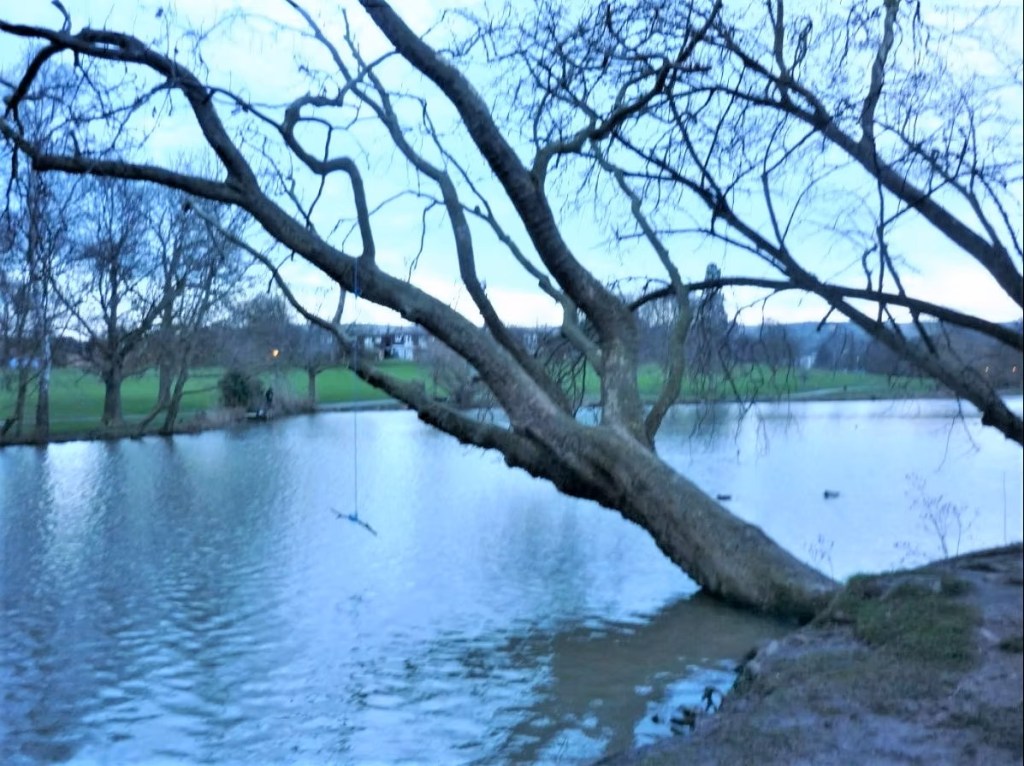
F.F. Teague writes: “I composed this in January 2021, while recovering from a broken leg and a few complications. A photo of the leaning trees appeared on the Facebook page Pittville Swans & Friends. I hadn’t been out for a while and it was lovely to see the Leaning Trees again. Suddenly I started thinking about being able to leave my flat one day, which made me feel a bit more cheerful about things. When I got out, I took the above photo.
“The trees have been leaning ever since I can remember. I lived in an area of Cheltenham called Fairview, not far from Pittville, for about nine months in 2001 and they were certainly leaning at that point. Every time I visit the park, I half-expect to see at least one tree lying in the water. But they must have very strong roots, because they just keep leaning. The council has removed a few branches over the years yet the shape of the trees remains distinctive.”

Felicity Teague (Fliss) is a copyeditor by day and a poet come nightfall. She lives in Pittville, a suburb of Cheltenham (UK). Her poetry features regularly in the Spotlight of The HyperTexts; her work has also appeared in AmethystLighten Up OnlineNew Verse ReviewSnakeskinThe Dirigible Balloon, and The Ekphrastic Review. Her first collection (2022) is titled From Pittville to Paradise; her second (forthcoming 2025), Interruptus: A Poetry Year. Other interests include art, film, and photography.

Photo by F.F. Teague