Tag Archives: Covid

Sonnets: David M. Katz, ‘Two Sonnets for Patrick Stewart, who read Shakespeare online during Covid’

I.
You slow it down and speak the speech from home
As if admitting no impediments,
No infectious thoughts into your room,
No intrusions, anxious sentiments,
Just cadences of comfort from your couch.
As close as that. Yet you are far enough
To thwart contamination borne of touch,
Random droplets in the air, a cough.
Every day I come to sit with you
To put this ghastly time and place aside,
Inject your native lightness here anew
Into my thoughts of those who may have died,
Or may be dying, or contaminate
Those in the street who can’t self-isolate.
II.
Summoning the bard into your lungs
Might be your day’s initial antidote
Against the plague. Then, climbing up the rungs
To the apex of the ague in the throat
Of your talent, holding his lines there
As if to muster powder for a shot
At wiping out the virus with a prayer
Or spell enacted in a sacred spot,
You step into the spirit of the thing.
You’ve got us where you want, and we’ve got you,
Artful doctor. You begin to sing.
We feel as if we just might make it through.
We step into your seance every day.
You gesture, and the plague has gone away.

*****

David M. Katz writes: “These two poems are part of “These Masks,” a “diary” of 20 Shakespearean sonnets I wrote from March to May 2020, during the very start of the pandemic. When I began, I resolved to read one of Shakespeare’s sonnets a day, along with Helen Vendler’s commentary on it in her book, The Art of Shakespeare’s Sonnets, and then write a sonnet responding to what was happening in the world. Before I wrote the sonnets published here (#s 4 and 5 in the sequence) I found that the great actor Patrick Stewart had begun reading a Shakespeare sonnet a day online from his home. I had previously found Stewart’s 1995 performance in the role of Prospero in The Tempest in New York’s Central Park an inspiration to me poetically and, now, there he was, a bright light during the dark days of the plague, reading to us intimately, every day. The sonnets are in praise of that great joy.”

The ‘Sonnets for Patrick Stewart’ were first published in the Sonnet Scroll of The Poetry Porch.

David M. Katz is the author of five books of poetry—The BiographerIn Praise of ManhattanStanzas on Oz, and Claims of Home, all published by Dos Madres Press, and The Warrior in the Forest (House of Keys). Poems of his have appeared in Able Muse, Poetry, The Paris Review, The Hudson Review, and THINK. He is a co-host of the Morningside Poetry Series in Manhattan and posts frequently on his website, The David M. Katz Poetry Blog. He recently starred in Gully’s Paradise, a feature-length film by Shalom Gorewitz.

Photo: ‘Patrick Stewart Performs the Complete Sonnets of William Shakespeare’ is an unabridged audio book from Simon & Schuster.
Semi-formal verse: Rachel Hadas, ‘Ides of March, MMXX’

New York, March 2020

Nothing new,
but it feels like an end.
An end that’s new.
This end is now?
No, I said new.
But who
could hear me through my mask?
Don’t ask.
Love
wears a glove.
I want to touch my friend.
.
This fear feels new.
We’ve all forgotten how
to live with it, to live it
day by day. And each
day begins anew,
begins a new
now we do not know,
oh no,
do not yet know.

*****

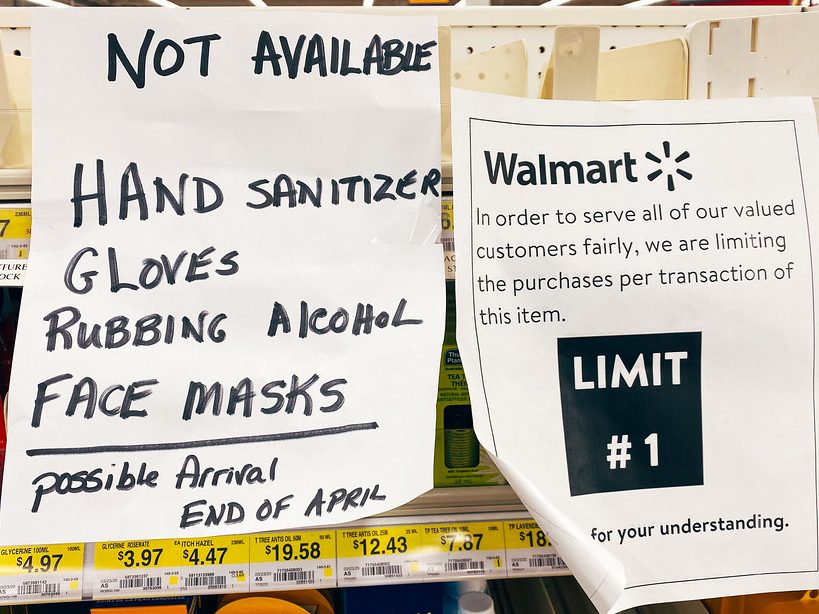
Rachel Hadas writes: Mid-March 2020, as I look back, did feel like both an end and a beginning.  Any moment in time is that, of course, but one’s sense of discontinuity was certainly heightened then.  A lot of familiar features of life just stopped, and an uncharted period began.  The confusion of trying to wrap one’s mind around all this at once is echoed in the overlapping  and echoing words “no, new, knew, know…”

“Ides of March MMXX” is collected in my 2022 volume “Pandemic Almanac,” a book in which, contrary to my usual practice, I append date and place of composition to each poem.  In 2020 we were in Vermont from early April until late November; “Ides” was written before people who could began to leave New York City in large numbers.

My 2025 collection “Pastorals” groups together texts written in and about Vermont over a period of years, certainly including the years of Covid but also extending both before and after the pandemic (if indeed there is an after).  I mention “Pastorals” because in one of its pieces (they’re all prose poems), “Blue Book,” which was  written sometime later during the pandemic, I do something similar to the play  in “Ides” on “no, know,” etc:   “We were elsewhere; we travelled back and forth, here and there.  Now mostly here.  Now only here.  Now here: nowhere.”

Rachel Hadas (born November 8, 1948) is an American poet, teacher, essayist, and translator. Her most recent essay collection is Piece by Piece: Selected Prose (Paul Dry Books, 2021), and her most recent poetry collection is Ghost Guest (Ragged Sky Press, 2023). Her honors include a Guggenheim Fellowship, Ingram Merrill Foundation Grants, the O.B. Hardison Award from the Folger Shakespeare Library, and an Award in Literature from the American Academy and Institute of Arts and Letters.

https://www.rachelhadas.net/

Photo: “Not Available Hand Sanitizer Gloves Rubbing Alcohol Face Masks” by Duncan Rawlinson – Duncan.co is licensed under CC BY-NC 2.0.

Richard Fleming, ‘Invisible’

It’s footwear that I recognise
not faces but that’s no surprise:
I don’t look up, they don’t look down
except occasionally to frown
then look away and hurry on
and moments later they are gone.
There’s city Oxfords, polished, black,
worn by the older, banking pack,
and Converse sneakers for the lads,
whose work is fabricating ads.
The women, they too, dress that way:
I rarely see high heels today.
A constant stream of passing feet
flows by me on this busy street
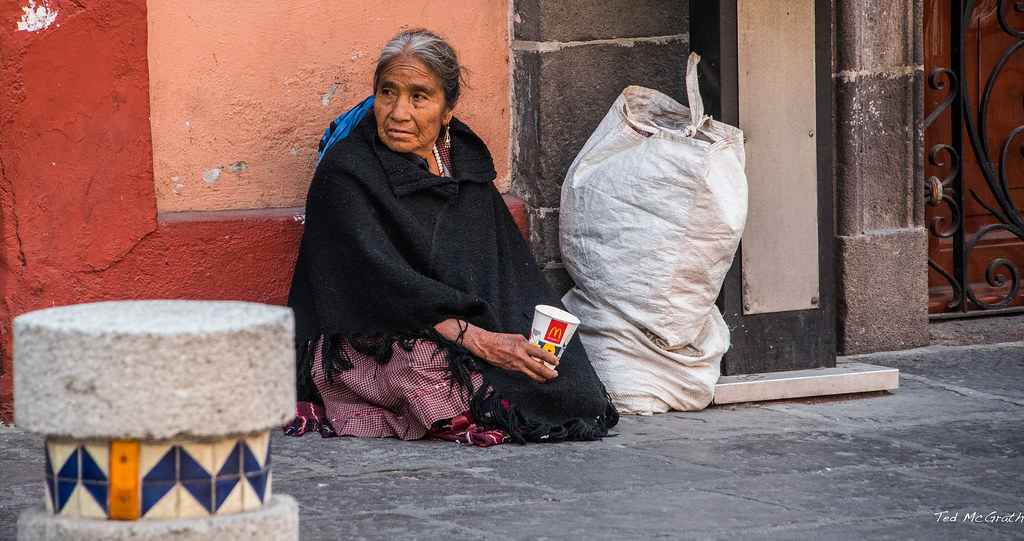
while I sprawl here, small in my shawl,
and ask, do I exist at all?

*****

Richard Fleming writes: “During my early life I wrote non-rhyming verse, having been conditioned to believe that rhyme and metre were old-fashioned and therefore to be avoided: the last thing a young person wants is to be thought of as old-fashioned.
I was also prejudiced against humorous verse: my enjoyment of it was something of a guilty secret as my contemporaries all wrote dark, navel-gazing, stream-of-consciousness nonsense.
During Covid lockdown I found myself with time to reevaluate these blinkered views and finally embraced my love of nonsense verse. I set myself a goal of writing a light-hearted rhyme a day for the duration of lockdown, to assuage boredom, but once I had established a routine, I just kept on writing a bit of rhyming verse each day.
That was more than a thousand days ago and the rhymes just keep rolling out, one per day on Facebook, often inspired by the quirky images I find online but frequently the verse bubbles up of its own accord and I have to seek a suitable accompanying image.
As you might image, I now have an embarrassment of poems that, like the mayfly, live for, at most, one day and are gone. There’s no obvious long-term home for them.”

Richard Fleming is an Irish-born poet (and humorist) currently living in Guernsey, a small island midway between Britain and France. His work has appeared in various magazines, most recently Snakeskin, Bewildering Stories, Lighten Up Online, the Taj Mahal Review and the Potcake Chapbook ‘Lost Love’, and has been broadcast on BBC radio. He has performed at several literary festivals and his latest collection of verse, Stone Witness, features the titular poem commissioned by the BBC for National Poetry Day. He writes in various genres and can be found at www.redhandwriter.blogspot.com or Facebook https://www.facebook.com/richard.fleming.92102564/

Photo: “2016 – Mexico – Puebla – Street Person” by Ted’s photos – For Me & You is licensed under CC BY-NC-SA 2.0.