Tag Archives: editors

Lucius Falkland, ‘Sado-Masochism in Love Poetry’

Some like being bound up in leather and chains,
Others spanked with a branch from a tree,
But the people who truly get turned on by pain
Try to publish their love poetry.

The poet’s not known for his psychical health:
He wrestles despair, feels dejected,
Not that undisposed to killing himself,
Yet his heart’s work so often rejected.

Sometimes he must wait the best part of a year,
Like an innocent man on death row,
To have to him confirmed his most terrible fear,
For they are quite sadistically slow.

And the hurt they inflict? It’s not over yet.
Do they find wounding fragile souls funny?
Some journals won’t read the submissions they get
If the poets don’t first send them money!

Once it’s crafted and honed and as good as Ted Hughes,
On a par with their earlier choices,
They find a new method to mentally abuse:
They prioritize “marginalised voices.”

The agony felt by a hounded young deer
As he’s brought to the ground by a predator
Is as nothing compared to the suffering and fear
That’s induced in a poet by an editor.

*****

Lucius Falkland writes: ‘I wrote this poem in response to having so many of my love poems rejected by poetry journals. It struck me as absurd that poets experience feelings, including being in love, so intensely that they must process them via poetry, they share the most poignant aspects of their lives with journal editors, and yet they know they will frequently get rejected. It is as though they write about their deepest pain only to then subject themselves to the further pain of being told that they can’t even express their pain properly. ‘Are we poets Masochists?’ I wondered. Naturally, this poem was itself rejected by a number of editors – with one even commenting that he was sympathetic to my plight. before rejecting it anyway because ‘it’s not the right fit’ (euphemism for ‘I don’t like it!) – before being published in The New English Review.”  

Lucius Falkland is the nom de plume of a writer and academic originally from London. His first poetry volume, The Evening The Times Newspaper Turned Into Jane Eyre, was published in 2025 with Exeter House Publishing. It can be purchased here.

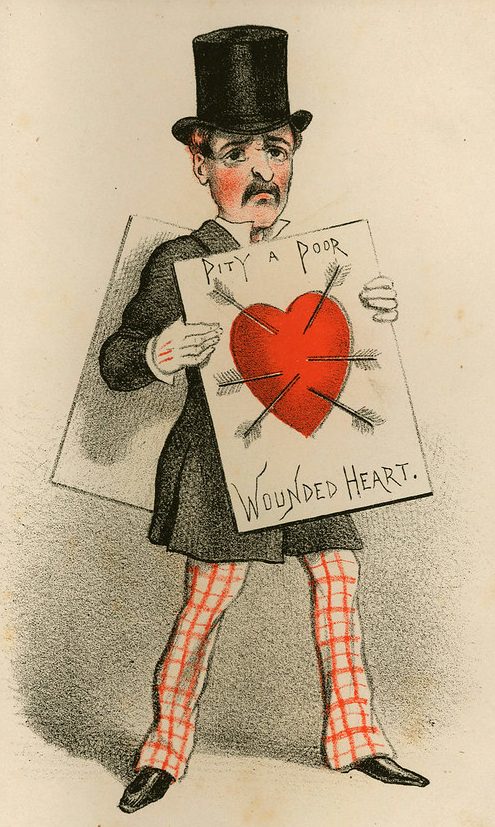
Illustration: “Vinegar Valentine – 05” by BioKnowlogy is marked with Public Domain Mark 1.0.
Short poem: ‘On a Magazine Editor’

He puts on his apron every day
and dusts, arranges, bests;
but the more finicky his entryway,
the fewer, it seems, the guests.

*****

This little poem was sparked by the difficulties I have in trying to submit to some magazines and in trying to contribute to some discussions. Eventually I give up. And then make snarky comments.

It was recently published in The Asses of Parnassus – thanks, Brooke Clark (who makes the contribution process very simple!)

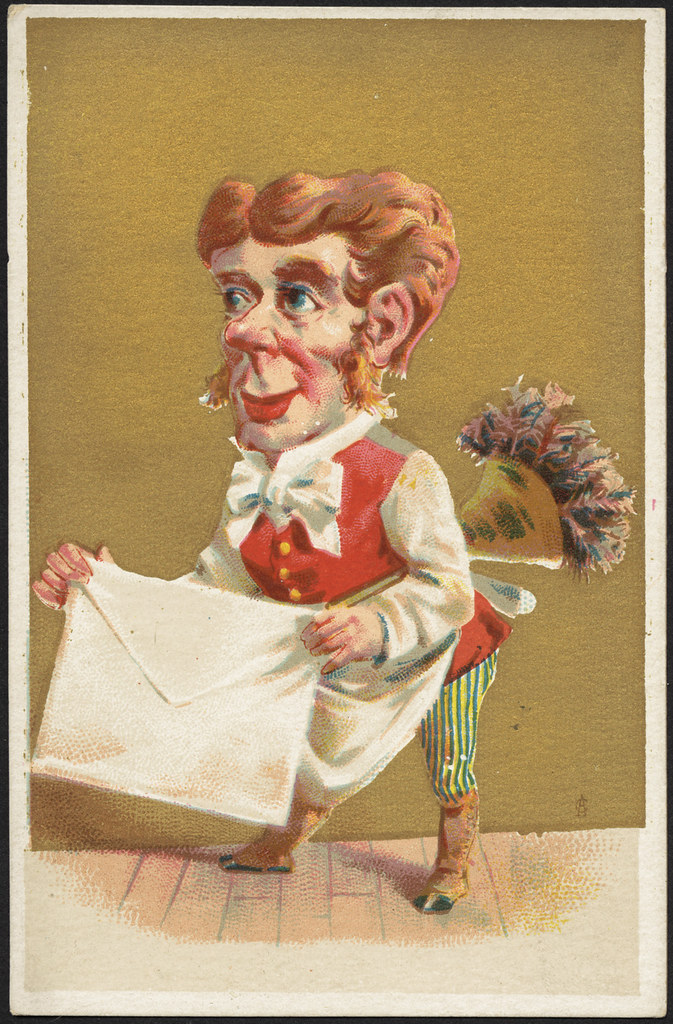
Illustration: “Man holding an envelope with a feather duster. [front]” by Boston Public Library is licensed under CC BY 2.0.

Poem: “The Moral Aesthetics of Politics”

The sense of poetry pervades all life:
Intense sensation, far-abstracted math,
Calm observation, passion-fired strife,
The glorious rise, the decadent aftermath.

Forgive me, pitying gods, for loving all
When “all” includes the tortured, starving, mad.
Symphonic raptures round pride’s bugle call
Drown out the truths where glory would be sad.

The very movement of the people lives,
Starring a missionary, or clown, or thief;
The moral climate either steals or gives –
It faith-filled strives, or slumps in disbelief.

So, in these patchwork years of peace and war,
Detached to calm the passionate lies that lurk,
We love life’s good and ill, but, more and more,
Our sympathetic vision makes us work.

“The Moral Aesthetics of Politics” was first published in The Penwood Review, which apparently possesses a faith-driven sense of superiority, something I was unaware of when I submitted the poem. Without warning, let alone a request for permission, they changed the word “gods” to “God”. Then, either as an apology or because the change glorified their self-righteousness, the poem was awarded the Editor’s Choice certificate.

I have always felt irritated by this, partly at them, partly at myself for not having checked them out more carefully. I used the word “gods” to signal a lack of belief. That’s how I’ve always understood the word, anyway: “The gods must be smiling on us” means “We’ve been lucky”. It is a deliberately tongue-in-cheek word used by the non-religious. But the editors made my poem religious, damn them. My only consolation is that I don’t think it is a very good poem.

Technically, the poem is okay: quatrains of iambic pentameter rhyming ABAB. Nothing special. And the overall gist is clear enough: you should help people. But the title? “The Moral Aesthetics of Politics”? What does that even mean? Why “aesthetics”? (Maybe the British spelling held a charm for them. Maybe “Dimension” would have been a better word, but it’s not as flamboyant.) From the first line on, the meaning is often vague, or arguable.

But then again, politics “starring a missionary, or clown, or thief”… I admit that resonates. Maybe the poem does have a couple of redeeming lines, after all.