How do I love you? Well, not any more —
I love you? Not even to bread slice height
That has been toasted, buttered, rye or white,
And dropped the wrong side down upon the floor.
I love you like a mildew or a spore
Or pestilential fungal blastocyte
That makes one’s breath itself a mortal fight
And living life seem like a choking chore.
I love you? The one who made the try
To break me with goodbye, yet kept that key
Because you thought that I’d lay down and die
If you returned, assuming I’d be free?
Oh no — I snarl and spit, deny your lie,
And save my love for one who’s loving me.
*****
‘I Will Survive‘ – Song by Gloria Gaynor ‧ 1978 on YouTube
At first I was afraid, I was petrified
Thinking I could live without you by my side
And after spending nights
Thinking how you did me wrong
I grew strong
And I learned how to get along
Now you’re back
From outer space
And I find you here
With that sad look upon your face
I should’ve changed that stupid lock
Or made you leave your key
If I’d’ve known for a second
You’d be back to bother me
Go on, go, walk out the door
Turn around now
You’re not welcome anymore
You’re the one who tried to hurt me with goodbye
Think I’d crumble?
You think I’d lay down and die?
No, not I, I will survive
Long as I know how to love, I know I’ll stay alive
I’ve got my life to live
And all my love to give and
I will survive
I, I, I will survive
It took all my strength not to fall apart
Trying with all my might to mend my broken heart
I spent so many nights feeling sorry for myself
How I cried
But now I hold my head up high
And you see me, somebody new
I’m not that lonely little person
Still in love with you
Now you come droppin’ in
Expectin’ me to be free
Now I’m saving my lovin’
For someone who’s loving me
Go on and go, walk out the door
Turn around now
You’re not welcome anymore
You’re the one who tried to hurt me with goodbye
Thinkin’ I’d crumble
Did you think I’d lay down and die?
No, not I, I will survive
Long as I know how to love, I know I’ll stay alive
I’ve got my life to live, and all my love to give
And I will survive
I, I will survive
Go on, go, walk out the door
Turn around now
You’re not welcome anymore
You’re the one who tried to hurt me with goodbye
Think I’d crumble?
You think I’d lay down and die?
No, not I, I will survive
Long as I know how to love
I know I’ll stay alive
I’ve got my life to live
And all my love to give and
I will survive
I, I, I will survive
Songwriters: Frederick J. Perren / Dino Fekaris
Marcus Bales writes: “It started after I’d posted If Shakespeare Had Written ‘Itsy Bitsy Spider’ to Sonnet Central, and Mike Alexander asked me if I was going to do the entire Mother Goose in Shakespearean sonnets. That sounded too much like real work to me, so I said I hadn’t thought of it, but I did have another “If Shakespeare Had Written” poem, “If Shakespeare Had Written ‘I Will Survive‘”. Looking that up in my files produced “If Yeats Had Written ‘I Will Survive‘”, as well, so I posted both those, and then Milton tapped me on the shoulder and cleared his throat. So I wrote that one.
“My method is to find a stash or cache of poems by the next poet who seems particularly likely — or unlikely — to have written ‘I Will Survive‘ if they’d been asked, and read through it, looking for characteristic modes, moods, tones, concerns, and sometimes just an old favorite that seems ripe for it. A sort of instant immersion in a poet’s work, and then try to flow into their tonality. Like a singer interpreting a song I try to inhabit the poet’s mise en scene. Some are more successful than others.”
Marcus Bales has now produced a dazzling array of his “If X Had Written ‘I Will Survive‘”, over 40 and still growing, with a dozen in the current Brazen Head, including this Elizabeth Browning as well as Dorothy Parker, Dylan Thomas, Wendy Cope, Robert Frost and of course Shakespeare. Go ahead, give them a try! – RHL
Not much is known about Marcus Bales, except he lives and works in Cleveland, Ohio, USA, and his work has not appeared in Poetry or The New Yorker. His latest book is 51 Poems; reviews and information at http://tinyurl.com/jo8ek3r
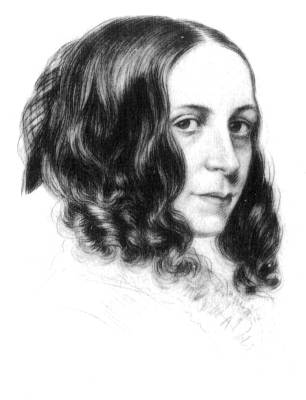
Illustration: Portrait of Elizabeth Barrett Browning in 1859. Public domain

 Form in Formless Times