Tag Archives: garden

George Simmers, ‘Earth’

Old Becky’s in her garden, delving among roots,
Cutting away dead wood, caressing shoots.
All this June morning, she has given her garden love
Tough as the fabric of her gardening glove.
She’s a no-nonsense woman; her words are earthy words.
She calls a spade a spade; she calls turds turds.

How old is she? As well ask how old’s that
Ridiculous and ragged old sun hat.
As well ask why the sun is blazing gold;
As well ask why she loves the limping old
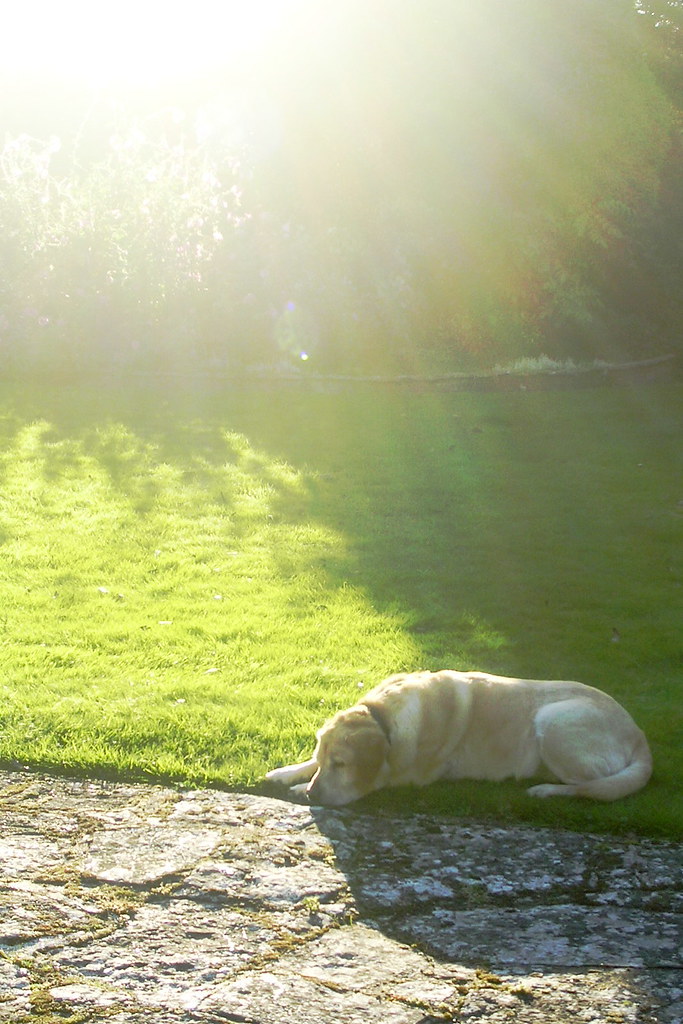
Fat spaniel whose idea of summer fun
Is stretching indolent in the summer sun
And watching as she plods around the plot.

Dogs, children, husbands: these are what
Her life has been. Husbands both buried now.
Children all visit when their lives allow,
And relish her gruff love and plenteous food.
The dog’s grown old with her, and now his mood
Is slow contentment. She was at his birth
And soon she’ll bury him beneath this earth.

For in this garden it is understood
That death is natural, and the earth is good.

*****

George Simmers writes: “This is the first of four character sketches, each based on one of the ancient elements – Earth, Air, Fire and Water. The complete sequence can be found in Snakeskin 309 (August 2023).”

George Simmers used to be a teacher; now he spends much of his time researching literature written during and after the First World War. He has edited Snakeskin since 1995. It is probably the oldest-established poetry zine on the Internet. His work appears in several Potcake Chapbooks, and his recent diverse collection is ‘Old and Bookish’.

Dog moving as the shade goes” by Ed.ward is licensed under CC BY-SA 2.0.

New Poem: “Buried in the Garden”

I have a poem published in May’s Snakeskin which (shock, horror!) is not formal.

Snakeskin logo

Buried in the Garden

Now I lie dead, buried in the garden,
And the plants take over.
Two hibiscus bushes grow from my eyes,
Oleander from my nose,
A sapodilla will fruit from my mouth,
Casuarinas grow to sigh from my ears.
From my chest a love vine straggles out
And black crabs live in the cavities of my lungs.
A chicken boa curls around and hunts up and down
And from my private parts grows
That least private of plants, a coconut palm.
From my feet termites are building tunnels out around the world.
So is my body divided, reused, and the birds take hair for their nests
And the calcium of bones and teeth for their eggs
And the body, the body is gone.
And what am I, but a body? What would remain in your sieve if you sift my remains?
Only some thoughts, others’ memories of some thoughts,
Blown away on the wind when the rememberers themselves are gone.

At a stretch, you could claim it has elements of formality. It has a structured sequence of appropriate tropical plants and other creatures growing from body parts – the most visually arresting from the eyes, the most highly scented from the nose, and so on. It has a volta, a turn in the argument from the description of transformation as positive, to the dismissal of that process as being mere erasure.

But are those things enough to make the whole piece word-for-word memorable? Because that is my test of poetry. And I think the answer is no. So no, it is not real poetry. There may be one or two memorable phrases, but that’s not enough. The underlying concept may be memorable, the images may be memorable; still not enough. Only if the entire piece is easy to recite because of the actual expression of the words, I argue, can it be called poetry.

Should you then put your time into transforming the images into formal verse, creating perhaps a Shakespearean sonnet, iambic pentameter and all?

Buried in the Garden (Take 2)

In garden buried, I sprout from my eyes
Hibiscus; oleander from my nose;
From mouth, a sapodilla; a pine sighs
From out my ear; from chest a love vine grows;
Black crabs in lungs, small boa in my guts;
From feet, ants tunnel out around the world;
My privates sprout a palm with coconuts.
Birds peck my bones, my teeth, hair that once curled,
For calcium for eggs and for a nest…
Sift my remains: what remains in your sieve?
Of my whole body I’ve been dispossessed,
Only the memory of some thoughts still live
Within the thoughts of others’ memories;
When those rememberers go, all traces cease.

So we come back to the old questions of poetry: is the expression itself richer or poorer for having been put into verse? And is the formal verse expression (whether richer or poorer) more memorable than the non-formal expression? What do you think?

I wonder if Snakeskin editor George Simmers has an opinion.