Tag Archives: Nietzsche

Sonnet: RHL, ‘Atavistic’

Just past the new development’s array,
beyond the parking lot, the flowers, the fence,
the land becomes uneven, falls away
into an area of no pretence,
abandoned cars, some rocks, some weeds, a bog.
Here are drawn children and eccentrics both,
searching for wild flowers, or a snake, a frog,
to nature lurking in the undergrowth,
beyond the ordered asphalt, lineal law;
drawn by our lower brain of hunter, ape,
where food is found or killed and eaten raw,
life is survival, and sex may mean rape.
Bricks, debris, rubble, condoms, empty beer…
yet, strangely, life-long loves have started here.

*****

I subscribe to the Nietzschean view of humans as a rope stretched over an abyss, animal on the one side, posthuman on the other. I think the ape is very alive within us, as is the drive to reach beyond ourselves to something vastly greater.

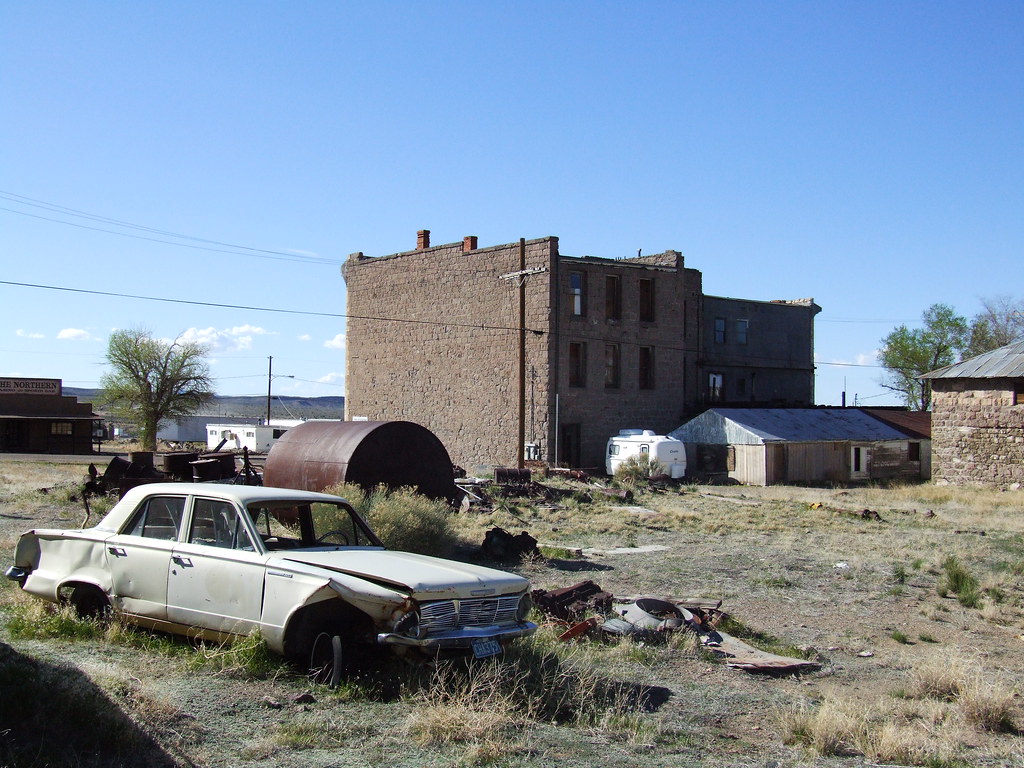
This sonnet was originally published in Rat’s Ass Review (thanks, Roderick Bates) but I’ve modified one line here to match the photo I found for illustration.

Photo: “Vacant Lot” by Curtis Gregory Perry is licensed under CC BY-NC-ND 2.0.
SF Sonnet: RHL, ‘Transhuman Evolution’

The humans crowd the riverbanks in cities
while you, would-be transhuman in your boat,
trust to your dreams and luck as on you float,
ignoring all the land’s static committees,
the buildings taller with their strident voices,
the citied banks ever more crammed and loud,
leaders and statues oversize and proud,
fixed in their views. But you see other choices.

And then there’s no more land. Only the sea.
You deso-, iso-, yet e-lated find
after the Desolation of the Years,
sailing and searching past humanity
in the vast oceans of the future mind,
a life within the music of the spheres.

*****

This sonnet has just been published in Space and Time #146, a magazine where fantasy, science fiction, horror and whatever else are presented in a variety of print, online and audio forms. The sonnet owes something to one of my favourite Matthew Arnold poems, ‘The Future‘, which begins

A wanderer is man from his birth.
He was born in a ship
On the breast of the river of time;
Brimming with wonder and joy
He spreads out his arms to the light,
Rivets his gaze on the banks of the stream.


and ends flowing out into the ocean:

As the pale waste widens around him,
As the banks fade dimmer away,
As the stars come out, and the night-wind
Brings up the stream
Murmurs and scents of the infinite sea.


I assume Matthew Arnold limited this vision to the individual life, but I see it also as an image relevant to the progress of the human species into something vaster and unknowably different – not far removed from Nietzsche’s sense of Man as being a bridge between animal and… superman, or transhuman. Not the nasty small-minded punks of Nazi and neo-Nazi superman stupidity, but something far grander in a far larger development towards what life could become.

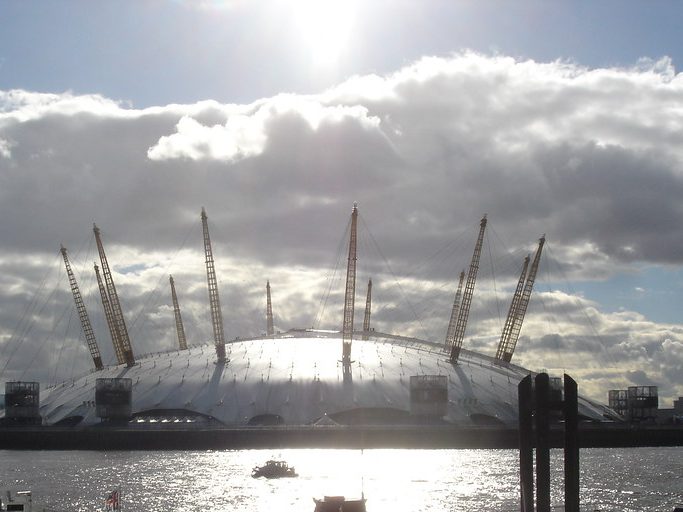
Photo: “Millennium Dome/O2 Arena from Trinity Buoy Wharf, Blackwall” by wirewiper is licensed under CC BY-NC-ND 2.0.

Odd poem: ‘Zarathustra’s Roundelay’ by Friedrich Nietzsche

O man! Attend!
What does deep midnight’s voice contend?
‘I slept my sleep,
‘And now awake at dreaming’s end:
‘The world is deep,
‘And deeper than day can comprehend.
‘Deep is its woe,
‘Joy—deeper than heart’s agony:
‘Woe says: Fade! Go!
‘But all joy wants eternity,
‘Wants deep, deep, deep eternity!’

*****

The above is the R.J. Hollingdale translation of Zarathustra’s Rundgesang from the German original of Nietzsche’s Thus Spake Zarathustra.

O Mensch! Gib acht!
Was spricht die tiefe Mitternacht?
»Ich schlief, ich schlief—,
Aus tiefem Traum bin ich erwacht:—
Die Welt ist tief,
Und tiefer als der Tag gedacht.
Tief ist ihr Weh—,
Lust—tiefer noch als Herzeleid:
Weh spricht: Vergeh!
Doch alle Lust will Ewigkeit—,
—will tiefe, tiefe Ewigkeit!«

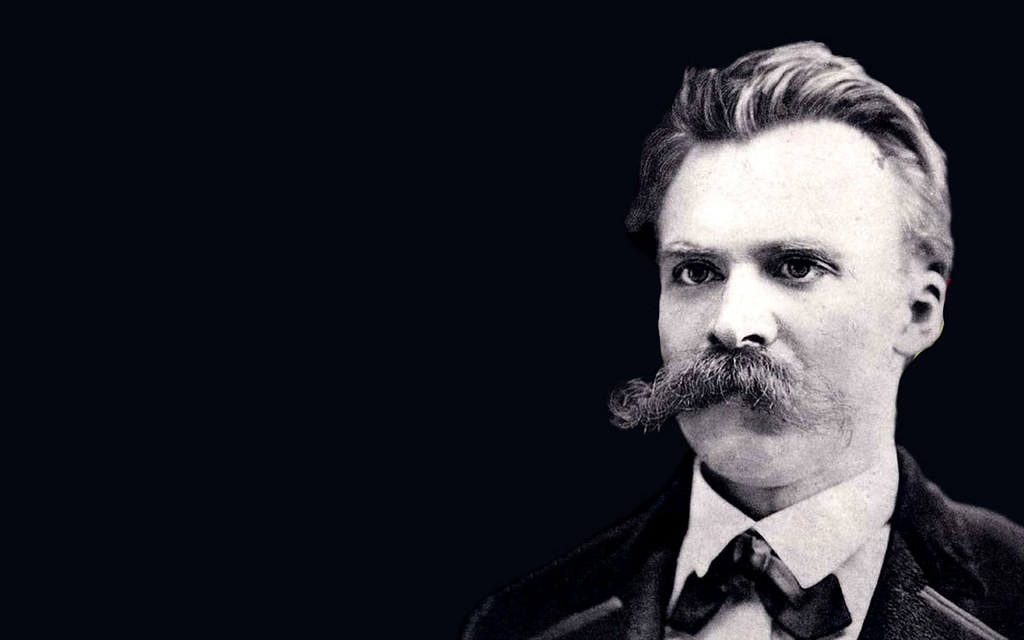
Photo: “Friedrich Nietzsche: ‘Hoy no somos el mismo hombre de ayer y mañana volveremos a ser otro.’” by Antonio Marín Segovia is licensed under CC BY-NC-ND 2.0.

Poem: ‘Nymph’

A mayfly nymph, in water for a year,
transforms into a beauty of the air
for just one day – one day to mate, breed, die.
The essence then’s the nymph, and not the fly
which we see only thronging in death throes,
death throes of riotous sex. Everyone knows,
though, that the fly’s the cycle’s pinnacle
to artists, if not to the clinical.
Though humans for long eons lived on land,
at Science’s Nietzschean precipice we stand,
transform to things that freely live in space,
or formless Cloud-based online lives embrace…
and may survive but briefly in that state,
but, dying, will seed new worlds as we mate.

Nature poem? Piece of science fiction? The observation of how nature works and a hypothetical extrapolation of human nature into the future are not really two different things – it’s all part of life, the universe and everything… though that future will be is anyone’s guess. The only thing for sure is that tomorrow is not going to be like today.

Is a 14-line poem in iambic pentameter a sonnet, if it just rhymes as couplets? I think not. This poem has a volta after the eighth line, but it still doesn’t feel like a sonnet to me. The feel comes from a couplet closing the poem out after a series of three quatrains, or from the shift from ABBAABBA to CDCDCD. That finalising shift, that sense of completion, is integral to the feel of the sonnet. This poem fails to meet that criterion.

‘Nymph’ was first published in the Orchards Poetry Journal, whose latest issue has just come out – free online, or available in print.

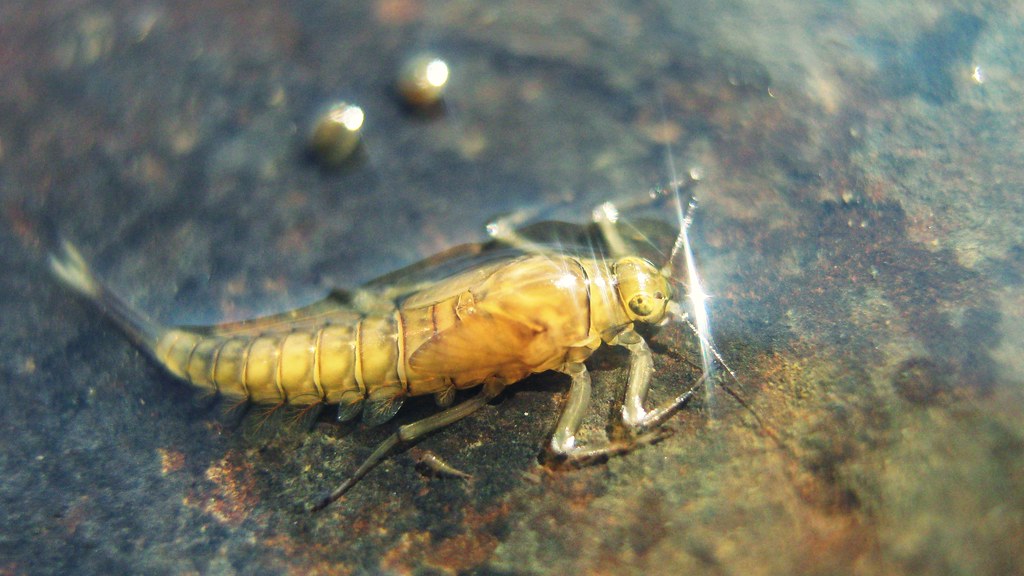
Photo: “mayfly” by ian boyd is licensed under CC BY-NC 2.0