Tag Archives: poems on poetry

R.I.P. Edmund Conti, ‘Button, Button’

Just ask the poet, life’s a dumb thing.
Button, button, eating, swilling.
Life isn’t much but, still, it’s something.

Existence is a rule-of-thumb thing.
Buying now with later billing.
Just ask the poet, life’s a dumb thing.

To dream, to sleep, a ho-and-hum thing.
Boring, boring, mulling, milling.
Life isn’t much but, still, it’s something.

Mum’s the word, the word’s a mum thing.
Button lips and no bean spilling.
Just ask the poet, life’s a dumb thing.

Life, of course–the known-outcome thing.
Death and taxes. God is willing.
Life isn’t much but, still, it’s something.

Life is short, a bit-of-crumb thing.
Dormouse summer, daddies grilling.
Just ask the poet, life’s a dumb thing.
Life isn’t much but, still, it’s something.

*****

In his 2021 collection ‘That Shakespeherian Rag‘, Ed Conti threads poetic references throughout (the title is from Eliot); ‘Button, Button’ appropriately begins with:

When one subtracts from life infancy (which is vegetation),–sleep, eating and swilling, buttoning and unbuttoning–how much remains of downright existence?
– The Summer of a Dormouse, Byron’s Journals.

Much of ‘That Shakespeherian Rag’ (including Button, Button) was first published in Light. The collection is divided into 11 sections, organised from youth through adulthood to the prospect of mortality, and each prefaced with a quote from Shakespeare. The preface for the final Section reads:

Make no noise. Make no noise. Draw the curtains–
– King Lear, Act II Scene 6

There is no poem after it.

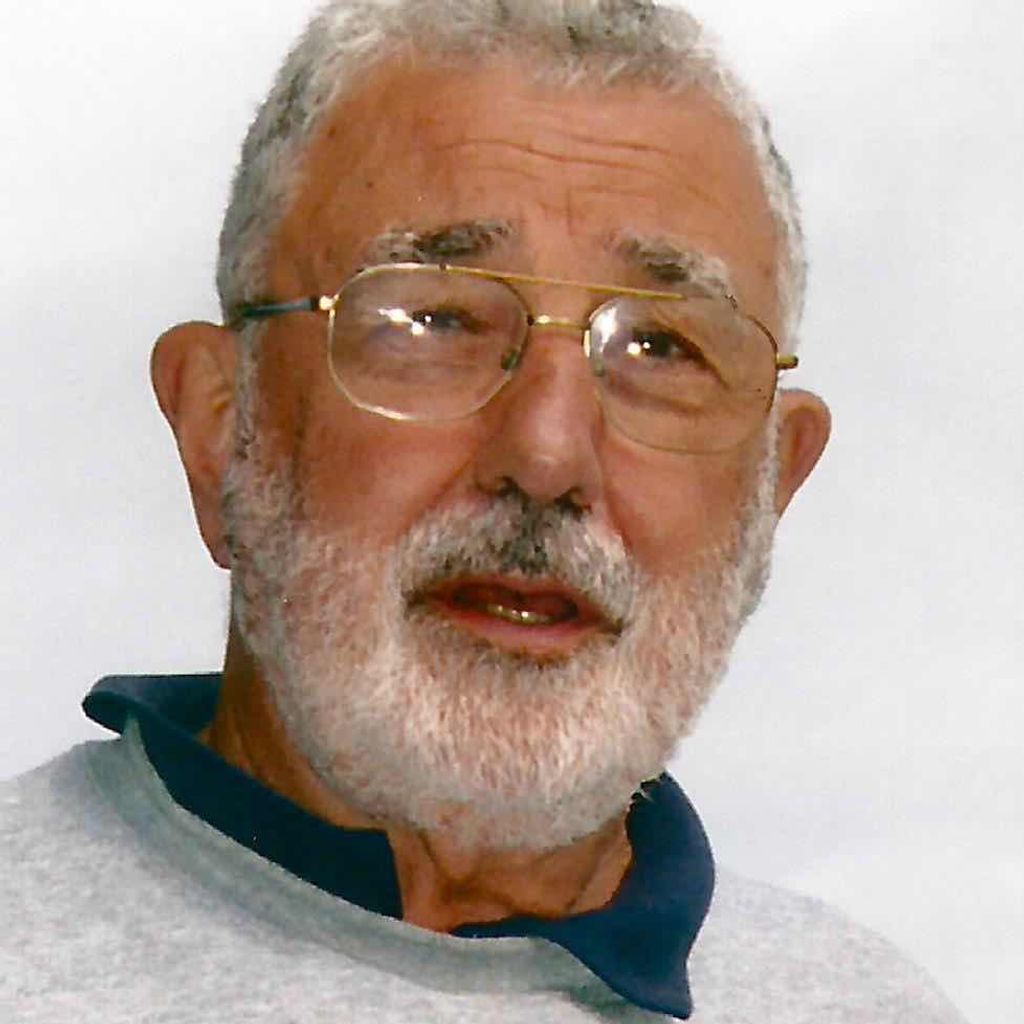
The charming, delightful, witty and tolerant Edmund Conti died on November 12th, aged 96.

Marcus Bales, ‘Rule Number One’

For Linda, who said it first

 If you’re going to have a reading
then no matter where you are
for a minimum of breeding
you have got to have a bar.

You will fill up all the seating,
they will come from near and far,
if the best part of your greeting
is “Why, yes we have a bar!”

But the evening will be fleeting
even if you’ve booked a star
when it’s alcohol they’re needing
and you do not have a bar.

They will freeze in scanty heating
and they’ll swelter till they char
if you advertise by leading
with the fact you have a bar.

Though it’s raining or it’s sleeting
if you offer them a jar
they’ll be aleing, beering, meading,
and absinthing at the bar.

But when poetry starts bleeding
out of every scab and scar
all you’ll see is me retreating
if you haven’t got a bar.

*****

Marcus Bales writes: “For an interesting while I had an art gallery in a downtown mall in Cleveland. The mall rules said it had to be open on Saturdays — when there was no mall traffic and so no real reason to be open. So I held the Every Saturday at Noon in the Galleria Poetry Reading. Dramatically unsuccessful at first it eventually found its audience and we had a good time. But in talking about why, serving only coffee, Linda pointed out that if we could serve alcohol attendance would improve. Since it was an art gallery, and there is a tradition in art galleries of serving wine at openings, I changed the title to the Poetry Reading Art Opening and said wine and coffee would be available in limited quantities. That did the trick. It quickly became the best-attended poetry reading in the city, any day, any time. Then the authorities got wind of it and someone from the city visited and pointed out gently that while it was a tradition to serve wine at art openings in art galleries, it is technically illegal by state law, even if it is free, and they cited the appropriate code. In the end it didn’t matter much, since even the most successful poetry readings count their audiences in the low-to-mid-tens of people, and by then people had got in the habit of Saturday At Noon, and kept coming anyway even after we stopped serving wine. But the idea for the poem had formed.” 

Not much is known about Marcus Bales except that he lives and works in Cleveland, Ohio, and that his work has not been published in Poetry or The New Yorker. However his ‘51 Poems‘ (which includes the above) is available from Amazon. He has been published in several of the Potcake Chapbooks – Form in Formless Times.

Photo: “Open Bar” by Trevor Benedict – MrEcho is licensed under CC BY-NC-ND 2.0.

Weekend read: David Galef, ‘A Question of Emphasis’ or ‘Wanna Make Something of It?’

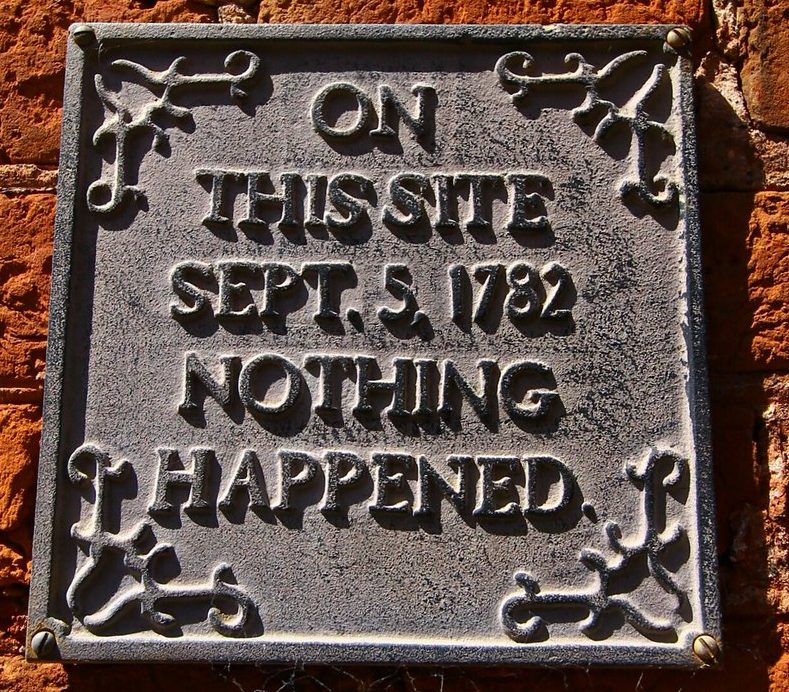
“poetry makes nothing happen . . . .”
—W. H. Auden, “In Memory of W. B. Yeats”

Poetry makes nothing happen.
Song lyrics, on the other hand,
Wedge into people’s hearts
When sung by a heartthrob band.

Poetry makes nothing happen.
It doesn’t enforce a cause.
That’s the way of propaganda,
With all its fixed applause.

Poetry makes nothing happen.
But I’ve seen something sublime
In the eyes of a student reading
Eliot’s Prufrock the first time.

Poetry makes nothing happen.
But must events take place
For poems to be eventful—
To make a normal pulse race?

*****

David Galef writes: “This poem was inspired by the memory of a graduate seminar taught by Edward Mendelson, a professor at Columbia University and the executor of the Auden estate. What Mendelson doesn’t know about Auden probably isn’t worth knowing, and what he brought to the study of Auden’s poetry was a deep knowledge of technique, context, and Auden’s modus cogitandi. Tired of those who quoted Auden’s famous line from “In Memory of W. B. Yeats” to indicate the inutility of poetry, Mendelson pointed out that the significance of “For poetry makes nothing happen” is more a point about art versus propaganda. The emphasis shouldn’t be on “nothing” but on “makes.” The aim of agitprop is to make all minds bend in one direction. True art, on the other hand, doesn’t force one meaning on the audience, though it may be powerfully suggestive. As Auden continues (and people who quote often omit surrounding words),
“it survives
In the valley of its making where executives
Would never want to tamper, flows on south
From ranches of isolation and the busy griefs,
Raw towns that we believe and die in; it survives,
A way of happening, a mouth.

Poetry does indeed enjoy a special, immortal status, but those who want it to be a crowd-controlling megaphone will probably be disappointed.
What I wanted to accomplish in ‘A Question of Emphasis’ is just what stressing the right
word can do, and how poetry can change lives, in its own way.”

David Galef has published over two hundred poems in magazines ranging from Light and Measure to The Yale Review. He’s also published two poetry volumes, Flaws and Kanji Poems, as well as two chapbooks, Lists and Apocalypses. In real life, he directs the creative writing program at Montclair State University.
www.davidgalef.com

Editor: I can’t help adding this 6-minute exposition of emphasis from Hamlet: https://vk.com/video17165_456239062 with its star-studded cast… Enjoy!

Photo: “Nothing happened” by Graham Ó Síodhacháin is licensed under CC BY-SA 2.0.

Melissa Balmain, ‘No Ifs, Ands, Or Bots’

Tradwife? No, thanks. I’m not the type you’ll find
exclaiming “Yippee!” “Yesiree!” or “YOLO!”
at thoughts of chores I might be doing solo –
especially the old-school kitchen kind.
Churn butter? Grow a sill of herbs? You’re kidding.
Give me boxed broth and Hellman’s mayonnaise
and sourdough I didn’t have to raise.
Give me technology that does my bidding.

Yet how I love to cook up verse from scratch:
to handpick thoughts I planted as a kernel
within the fertile pages of a journal,
add rhymes (a meaty or a salty batch),
then whip them into something that – although it
may stink at times – tastes vastly fresher than
the glop inside an algorithmic can
because you know it comes from me, Tradpoet.

*****

This poem was the lead poem in the latest Lighten Up Online (“LUPO”). Melissa Balmain writes: “Ironically, in the weeks since I wrote this poem, a health condition has forced me to do a lot more tradwifely stuff in the kitchen–making low-acid salad dressing, say. But I still refuse to churn butter.”

Melissa Balmain’s third poetry collection, Satan Talks to His Therapist, is available from Paul Dry Books (and from all the usual retail empires). Balmain is the editor-in-chief of Light, America’s longest-running journal of light verse, and has been a member of the University of Rochester’s English Department since 2010. She is a recovering mime.

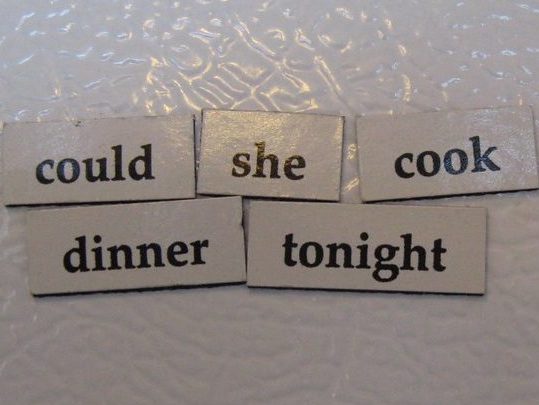
Photo: “could she cook” by aprilskiver is licensed under CC BY 2.0.