Tag Archives: Quincy R. Lehr

The Two-State Dissolution (2): Landsman, Burch, Lehr, Foster, Galef, Soderling, Kenny, Helweg-Larsen, Smith, Bales, Shore

Peggy Landsman, ‘Go Tell It On The Mountain

Hagar and Sarah should have talked,
Laughed together when alone.
Who did Abraham think he was?
Ha-Yehudi ha-rishon?*

Ishmael and Isaac should have been
Boon companions, closer than brothers,
Passing their days doing their chores,
Tending their father’s sheep together…

Staying up late entertaining themselves
Arguing over the numbers of stars
Each was the first to have named.

*”Ha-Yehudi ha-rishon” means “The first Jew” in Hebrew.

Michael R. Burch, ‘Frail Envelope of Flesh’
for the mothers and children of Gaza

Frail envelope of flesh,
lying cold on the surgeon’s table
with anguished eyes
like your mother’s eyes
and a heartbeat weak, unstable…

Frail crucible of dust,
brief flower come to this—
your tiny hand
in your mother’s hand
for a last bewildered kiss…

Brief mayfly of a child,
to live two artless years!
Now your mother’s lips
seal up your lips
from the Deluge of her tears…

Quincy Lehr, ‘Passive Voice’

History is back in passive voice.
All you can do is watch. The teams were picked;
the commentary doesn’t match the plays.
The game is rigged, and everybody sees.

The game is rigged, and everybody sees,
but referees ignore it, and debate
is limited to the cheap seats far away.
The villains are the only proper nouns.

The villains are the only proper nouns,
the only ones worth mentioning besides
the nebulous abstractions for the rest.
None believe what everyone accepts.

History is back in passive voice.
The game is rigged, and everybody sees
the villains are the only proper nouns.
None believe what everyone accepts.

Gail Foster, ‘The Heap’

How many does it take to make a right?
Go fling another on. The heap grows high
Before too long it will obscure the light
And then where will we be. The end is nigh
And still it reaches up towards the sky
How many more, the village women weep
Of all our sons and brothers have to die
While we pile wrong on wrong upon the heap

Remember sky, how blue it was and bright
And wide, when only birds and clouds did fly
And moons and stars were visible at night
When women laughed and children didn’t cry
What use is wrong for wrong and eye for eye
The world grows blind and bitter and we reap
What we have sown and see our rivers dry
While we pile wrong on wrong upon the heap

What use a pile of pacifists? The sight
May cause a running man to stop and sigh
The wise man said, and think about the fight
And for a fleeting moment wonder why
They chose to sacrifice themselves, deny
The life force and there lie in peaceful sleep
They make a monument, he said, nearby
While we pile wrong on wrong upon the heap

Dear God, when will it end? When will you try?
The heap grows higher and the sides too steep
We love our neighbours with the guns we buy
While we pile wrong on wrong upon the heap

Daniel Galef, ‘Desert Kite’

These endless shifting sands—
They’re always changing hands,
But you can’t make bricks without breaking a little hay.
With oil the streets are pavèd;
Since Solomon and David,
They draft a brand-new atlas every day.
The apostles! The epistles!
And the fossil fuels and missiles—
Like manna in the wilderness they fall!
The land of Abrahamics
Now hosts General Dynamics
With their guardian angels gliding over all.

Janice D. Soderling, ‘Out of Paradise’

A closely woven stillness lines the air,
like linen bedding in a lifted coffin.
Though silence is a hallmark of our time, not often
has the hush been so oppressive. Where
the sand fox sprawls, sprawls too the shattered hare.
Cadavers of gazelle and roe deer stiffen;
the wadded pods of thorn trees burst. If when
you ponder on this devastated garden,
its wretched shame, its bottomless despair,
think not animal, but human, shreds in Eden.
And human was the animal lately passing there.

Janet Kenny, ‘After’

We saw them sweep in like a wolf on the fold.
We hypocrites judge as if time was involved.

Lament, all you lovers whose loved ones are gone.
Condemn, all you judges now grief is your song.

After the fury what’s left to repair?
Oh impotent jury, your conscience is there.

No poem will save us no tears will avail.
No weapons will spare us from history’s gale.

No art can encompass the scale of this rage.
“Tomorrow” is yesterday trapped in a cage.

Robin Helweg-Larsen, ‘Books’

When Science and Experiment
were done through myth and dream, it meant
that Bronze Age herders showed their bent
in naïve tribal Books.

The Israelites searched 40 years
for good land, unprotected, bare,
and slaughtered all those living there –
justified by their Book.

The Muslims conquered far and wide
(and called it peace, and millions died)
to spread new tales we now deride,
new versions of that Book.

The Christians sent wave after wave
crusading, claiming that they’d save
the “Holy Land”… made it a grave,
thanks to their stupid Book.

You advertise benevolence
but justify intolerance
by quoting this or that sentence
from one or other Book.

You bomb a house, a baby dies…
lift up your eyes so we can rise
above the vicious tribal lies:
those stupid, stupid Books.

J.D. Smith, ‘Report from the Field’

I rang the doorbell
of the demolished house
and was met by its generations,
fully armed.

Marcus Bales, ‘Heal or Hate’

You lift or do not lift the weight;
You’re either dealt-to or you deal.
Pick the other, pick the one,
The choice you have is heal or hate,
And you can’t ever hate and heal

Call it nature, nurture, fate
Genetics, fantasy, or real —
Blame whatever – when you’re done
You lift or do not lift the weight.
You’re either dealt-to or you deal.

Short-term crooked looks like straight;
Short-term truth sounds like a spiel.
In both the short and longer run
The choice you have is heal or hate —
And you can’t ever hate and heal

I know, the choices don’t seem great.
They lack in zip or sex appeal.
But no one said this would be fun.
You lift or do not lift the weight.
You’re either dealt-to or you deal.

You must massage your mental state
To organize the way you feel
In spite of all the bullshit spun.
The choice you have is heal or hate,
And you can’t ever hate and heal

You often have to simply wait
And sift to see what’s really real
Since growing needs both rain and sun.
You lift or do not lift the weight;
You’re either dealt-to or you deal.

Late or early, it’s too late.
You’re living through the slow reveal.
The game is rigged: it can’t be won
Or even stopped once it’s begun.
You lift or do not lift the weight;
And though you’re dealt-to or you deal
The choice you have is heal or hate.
You cannot ever hate and heal.

Marion Shore, ‘Peace’

I came upon a garden in the sun,
where children ran and played among the trees,
and entering, I asked two little ones:
“Why are you here? And where are your families?”
One answered, “I was with my dad and mom.
We went into a café for a Coke.
And then I heard somebody scream ‘a bomb!’
and all that I could see was fire and smoke.”
The other said, “I went outside to play,
the street was crowded. Tanks were all around.
Soldiers were shooting. I tried to run away.
I heard a shot and fell down on the ground.
No one heard me crying for my mother.”
The first child said. “I wish I could go home.”
“So do I. But at least we have each other.”
The sun was rising higher in the sky:
my dream was fading, and as I waved goodbye,
‘Salaam,’ said one. The other said ‘Shalom.’


Yuval Noah Harari: We suffer not from the narrowness of the land, but from the narrowness of the mind. https://youtu.be/Uncfi9cgZWo

It’s all about stories: https://youtu.be/L82XOw9sVkY


Acknowledgements:
Peggy Landsman: ‘Go Tell It On The Mountain’, first published in The HyperTexts
Michael R. Burch: ‘Frail Envelope of Flesh’, first published in The Lyric
Daniel Galef: ‘Desert Kite’, first published in Light
Janice D. Soderling: ‘Out of Paradise’, first published in The Rotary Dial and included in her collection ‘War: Make that City Desolate’

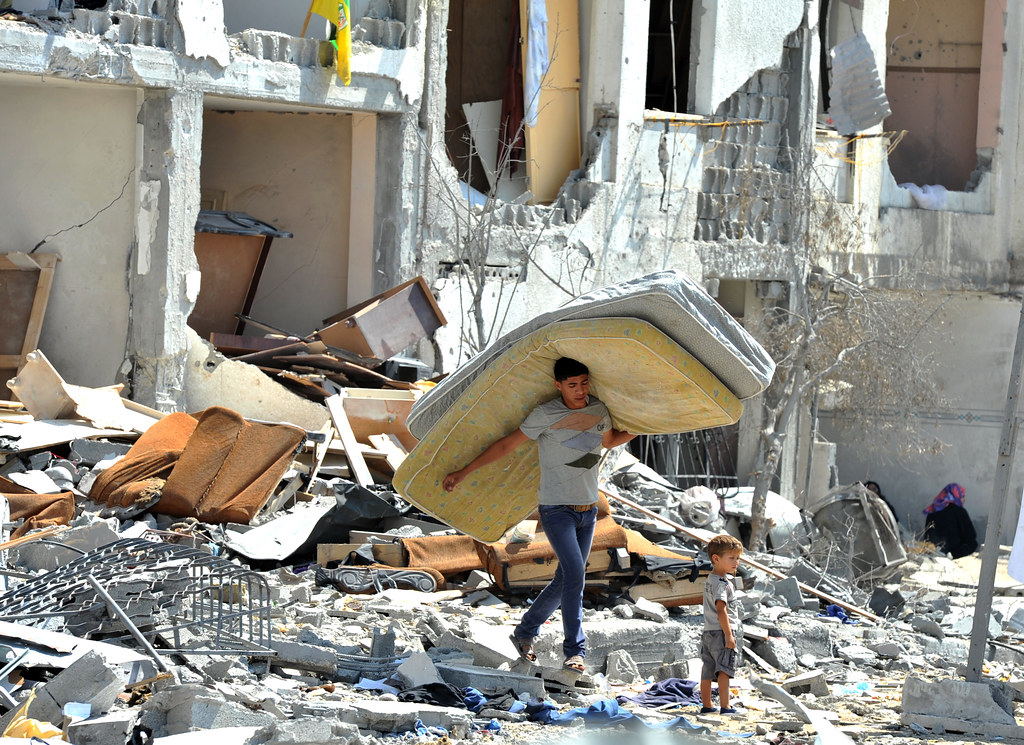
Photo: “Scenes from Gaza Crisis 2014” by United Nations Photo is licensed under CC BY-NC-ND 2.0.
Weekend read: Quincy R. Lehr, ‘Thud!’

There’s thudding from the floor above that never seems to stop.
I’m trying to sleep, or waiting for the other shoe to drop
as midnight clomps toward 2 AM and hours of darkness dwindle
into the gray of going to work. This rent’s a fucking swindle.

Where’s my damn connection gone? The internet’s too slow.
Get me Jobs or get me Gates. Those bastards need to know.

I called her on a Friday, and we swore that we would meet.
I hailed a taxi, ended up along a different street —
similarly named, but swathed in layers of graffiti.
A drip of sweat ran down my neck; the air was cold and sleety.

Where’s that old-time romance gone? Who will sigh and blubber
over at hers at 3 AM with a lavatory rubber?

I saw a TV talking head while ordering a bagel
who talked about the budget mess — but then he quoted Hegel
about the end of history. Some Weltschmerz is okay,
but save it for the pop songs, man, and don’t get in the way.

Where’s my hometown paper gone? The owner’s on the run
from ranters on the blogosphere. Something must be done.

He met my eyes and shook my hand, and though you wouldn’t know it,
that jerk-off in a business suit calls himself a poet/
critic/impresario and manages quite well.
He smiled and quoted Dante, but I only thought of Hell.

Where’ve our tortured artists gone, Catullus or Syd Barrett?
Chasing after the latest grant and following the carrot.

The upstairs stomps are quicker now and spreading to the hall.
My head’s beneath the pillow. Damn it — won’t she ever call?
I half hope that she’s safe in bed and blithely fast asleep,
but fantasize her all alone and looking up mid-weep.

Where’s the just comeuppance gone? What happened to bad karma?
It got renamed and bottled up and bought out by Big Pharma.

There’s violence in the movies, and there’s violence on TV;
there’s violence on the city streets…. Fuck off! Don’t talk to me!
There’s anger in the headlines, and there’s fury in the verse
spat out at downtown open mikes. I don’t know whom to curse.

Where’ve the old-time standards gone? The censors look forlorn
from hip hop, emo, techno, goth. What happened to the porn?

Times Square’s gone all Disneyfied. The red-light district’s blue.
Godspeed to all you chicks with dicks, and hello, Scooby-Doo.
Farewell, Adult Emporium! You’re now a clothing store,
maybe a Planet Hollywood — and God knows which sucks more.

Where’s my filthy city gone? They smothered it in bleach,
hired a doorman, raised the rent, and placed it out of reach.

What’s to blame? Is it our greed or lack of common sense?
Is it violence in our past, or just incompetence?
Perhaps it’s economic or the crush of circumstance.
Or was it just a thwarted wish to get into her pants?

Where’s that upstairs thumping gone? The silence settles deep
into the still and humid air. I still can’t get to sleep.

*****

Quincy R. Lehr writes: “Thud! is a New York City madsong, with gentrification, insomnia, political decay, and urban loneliness mixing together in a sort of minestrone soup of misery that is also, I think, pretty funny.”

Born in Oklahoma, Quincy R. Lehr is the author of several books of poetry, and his poems and criticism appear widely in venues in North America, Europe, and Australia. ‘Thud!‘ was first published in Measure and was reprinted in the Potcake Chapbook ‘City! Oh City!‘ His book-length poem ‘Heimat‘ was published in 2014. His most recent books are ‘The Dark Lord of the Tiki Bar‘ (2015) and ‘Near Hits and Lost Classics‘ (2021), a selection of early poems. He lives in Los Angeles.
https://www.amazon.com/Quincy-R.-Lehr/e/B003VMY9AG

Photo: “sleepless” by ebrkut is licensed under CC BY-ND 2.0.

Quincy R. Lehr, ‘As if by chance’

When I looked at her, and when her lips
Pulled back to show her teeth, and when her voice
Broke into laughter, I could only think
Of moments that I’d pissed away, each choice
I’d left to others, and the careless slips
That landed me beside an empty drink.
That afternoon, I could have sworn I saw
A thinner, hopeful version of my face
Staring from behind her retinas–
Familiar, yes, the eyes, the skin, the jaw,
But in that instant somehow out of place.
It cast a knowing frown. The gravitas
Was overbearing. Nonetheless, we filled
The void with gossip, anecdotes and smut,
Comparing chatty journals–note by note.
Like poets, we dissembled in the rut
That each of us was in, our chances killed
By loss of nerve or failure to emote.
But still, a sneer could not have hurt me more
Than her clear laugh that sang of expectations
So long forgotten from a distant day
When youth still spread before me, and the poor
And pitiful attempts at explanations
Still lay in ambush, only years away.

*****

Quincy R. Lehr writes: “This poem was literally about running into a high school friend of mine by chance on the day I defended my doctoral dissertation (though that’s not in the poem). It’s funny how old I thought I was at twenty-nine.”

Born in Oklahoma, Quincy R. Lehr is the author of several books of poetry, and his poems and criticism appear widely in venues in North America, Europe, and Australia. His book-length poem ‘Heimat‘ was published in 2014. His most recent books are ‘The Dark Lord of the Tiki Bar‘ (2015) and ‘Near Hits and Lost Classics‘ (2021), a selection of early poems. He lives in Los Angeles.
https://www.amazon.com/Quincy-R.-Lehr/e/B003VMY9AG

Photo: “Young woman laughing” by Snapshooter46 is licensed under CC BY-NC-SA 2.0.

Quincy R. Lehr, ‘Lines for my father’

I think I owe some kind of explanation
As I grow tired and listless fingers writhe
Above the unpecked keyboard pad. I’m not
Quite out to blame you or your generation
For where I’m at tonight. You paid the tithe
That life exacts. It’s sanctimonious rot
If we deny the pain of paying it–
And our denials never help one bit.

Unlike you, I found myself involved
In protest politics when I was young.
I spouted crap about the working class
While searching for a problem to be solved.
I mocked you then, since stirring tunes are sung
In brayed crescendos, with a blaze of brass
Booming triumphs won against the odds–
Unjust societies and jealous Gods.

You seemed so cautious–tastefully attired
With modest ties and polished wing-tipped shoes,
A cautious, kindly smile that reached your eyes.
A man to be respected, not admired,
Neither adulated nor abused.
Ambitions of an ordinary size
Were often past your reach. A nagging doubt
Set in, and now I know what that’s about.

Tonight, I type these words as it gets late,
And no one calls to beckon me to bed.
I scoffed at what you’d craved–the tenure track,
The slow-accruing pension from the state,
The wife (who left you). Though you’re good and dead
(And at this hour, my eyes are going slack)
And though you cannot answer, I’ll report
–While having to imagine your retort–

That we’re no happier than you, and can’t
Quite seem to sit for tests that you had failed.
Our phones are packed with numbers we won’t call.
The televisions blast a constant rant
That we ignore like letters still unmailed–
Or unconceived. Clichés about a ball
That’s dropped don’t work–or maybe don’t apply.
We never picked it up. I wonder why.

This recognition’s only dawning now
As streetlights speckle glimmers on your urn
Beside my unmade bed, and as I write
These words to you in lieu of sleep. Somehow,
The brays of drunks outside my window turn
Almost comforting, as if the night
Is full of us–insomniac, astray,
And muttering defiance at the day.

*****

Quincy R. Lehr writes: “As for that poem, my father died in 2003, when I was twenty-seven. The content pretty much speaks for itself, I think. I was young, lonely, and frequently drunk when I wrote it.”

Editor’s comment: I admire the technical skill of the poem: the steady iambic pentameter; the abcabcdd rhyme scheme with the final couplet providing a punch; the integrity of the individual stanzas, each patiently laying out a mood, a thought, a situation. And I relate to the young man’s restless, unquiet, unsettled life, and the comparison to his father’s existence, his dismissal of his father’s achievements, his simultaneous recognition of the inevitable connections. It is a satisfying telling of an individual’s unique early life, in the context of the universal discord between generations.

Born in Oklahoma, Quincy R. Lehr is the author of several books of poetry, and his poems and criticism appear widely in venues in North America, Europe, and Australia. His book-length poem ‘Heimat‘ was published in 2014. His most recent books are ‘The Dark Lord of the Tiki Bar‘ (2015) and ‘Near Hits and Lost Classics‘ (2021), a selection of early poems. He lives in Los Angeles.
https://www.amazon.com/Quincy-R.-Lehr/e/B003VMY9AG

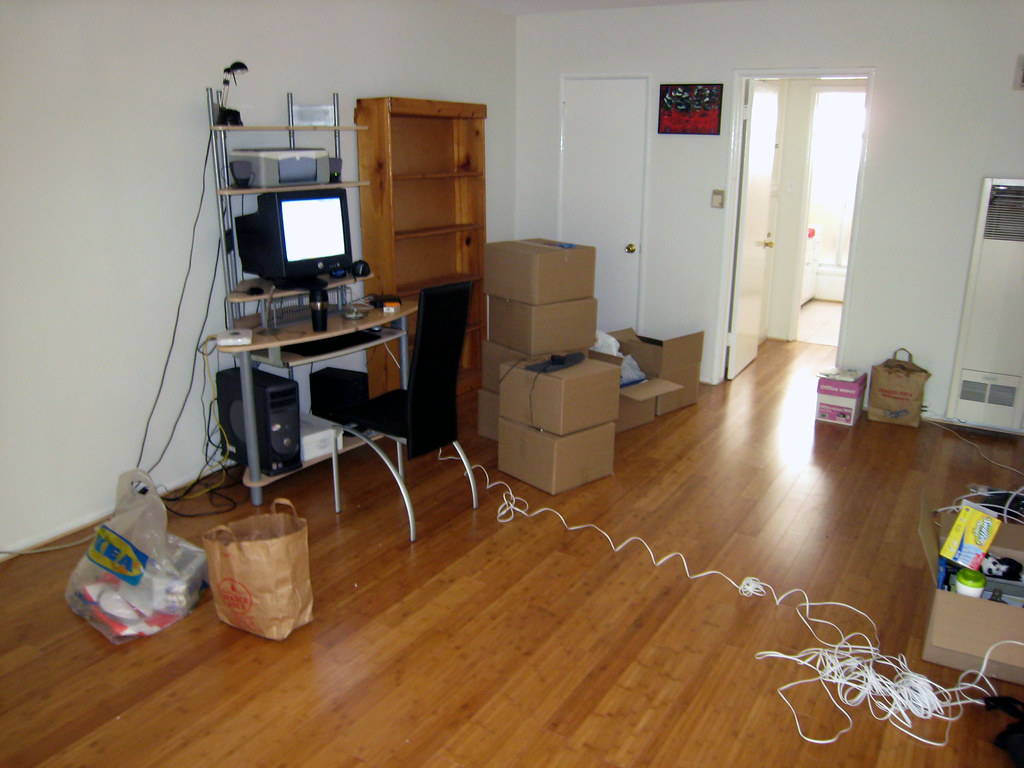
Quincy R. Lehr, ‘Apartments’

No ghosts as yet, but just a hint of fever
(the fan’s still in its box) and foreign noise.
A virgin phone squats on its new receiver.
Undusty window sills are bare but ready
for clocks, for brown, anemic plants, their poise
temporary, fragile and unsteady.

There have been other places, across the river,
or oceans, time zones–other furniture,
with curtains cutting light to just a sliver,
those old apartments populated still
with women whom you recollect as “her.”
They haven’t called; you doubt they ever will.

Each lease becomes an act of… not forgetting,
but somehow letting go. Old places live
with different faces in a familiar setting:
lives you’ll never know, but comprehend,
scenes of errors not yours to forgive,
broken hearts no longer yours to mend.

*****

Quincy R. Lehr writes: “I’m trying to remember exactly which move this poem commemorates. I moved three times in three years–Dublin 2006, Galway 2007, New York 2008. It is, from an autobiographical point of view, about feeling a bit deracinated.
But in a sense, that’s renting–you’re never the first person in a place, and you’re hardly going to be the last. You haul your shit from place to place, carrying your permanence with you, but the stuff in its person-specific configurations, like your presence in an apartment, or a city, or just in the world in general, is ephemeral.
The poem appeared in my second collection, Obscure Classics of English Progressive Rock, which was the bulk of the poems written in Ireland that were any good, as well as the first couple of years back in New York. It was first published in the Recusant in the UK.
I imagine I wrote it in the first couple of months after returning to New York, but that’s an educated guess and at least five computers ago.”

Born in Oklahoma, Quincy R. Lehr is the author of several books of poetry, and his poems and criticism appear widely in venues in North America, Europe, and Australia. His book-length poem ‘Heimat‘ was published in 2014. His most recent books are ‘The Dark Lord of the Tiki Bar‘ (2015) and ‘Near Hits and Lost Classics‘ (2021), a selection of early poems. He lives in Los Angeles.
https://www.amazon.com/Quincy-R.-Lehr/e/B003VMY9AG

New Apartment” by artindeepkoma is licensed under CC BY-NC-SA 2.0.

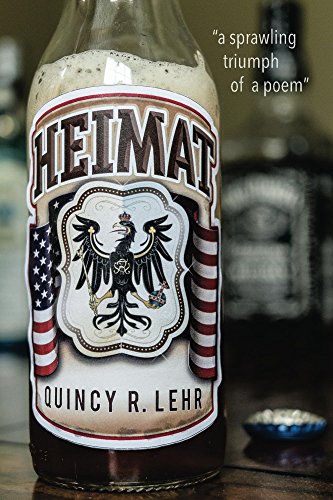
Quincy R. Lehr, ‘Heimat’ (short excerpt, ‘Observation’)

It’s in the observation, not the action–
asymmetries of night, the fractured day,
the bum note sung, the slightly tawdry way
the chiaroscuro plays against a curtain,
a moment of condescending satisfaction.
The problem’s hardly certain

except in observation, not the move
to rectify the flaws, to seek the feeling
but not offend or end up too revealing–
the phrase that’s blurted out, the sense of shame,
the passion, and the point one has to prove.
The love for one’s own name

is lost in observation, disconnected
from anything but this–a set of scenes,
possible debate on what it means,
and details of what may as well be fact
in present time or vaguely recollected.
It never is an act

but only observation that suffuses
this sense of permanence, a thing that’s set
not in the vapors trailing from a jet,
but in an observer’s blank and steady eye
that searches, not for things that have their uses,
but for the subtle lie

that even observation can’t dispel
but only note in hope of preservation
of something that will outlast a vacation
or office trauma. Shadows of a wraith
fall across the prosody and swell
to what resembles faith.

I’m just observing, as I said before.
Talk to the prophets hanging out next door.

*****

Quincy R.Lehr writes: “As for ‘Heimat‘ more generally, it was a reflection on the nation-state, its pull on one’s basic sense of self, even while it obscures other, more materially important things such as class and colonialism. I had been back in the U.S. for about a year after a two-year stint in Ireland when I started writing that poem, and being a foreigner for a time turbocharged my interest in nation and nationalism as political phenomena.

“I wrote ‘Heimat‘ over a roughly three-month period, fueled by chain-smoking and reckless levels of coffee consumption. I doubt I’m unhealthy enough to pull off a project of that scale and ambition these days. 2009 really was the summer of ‘Heimat‘ for me.”

Born in Oklahoma, Quincy R. Lehr is the author of several books of poetry, and his poems and criticism appear widely in venues in North America, Europe, and Australia. His book-length poem ‘Heimat‘ was published in 2014. His most recent books are ‘The Dark Lord of the Tiki Bar‘ (2015) and ‘Near Hits and Lost Classics‘ (2021), a selection of early poems. He lives in Los Angeles.
https://www.amazon.com/Quincy-R.-Lehr/e/B003VMY9AG

Launch: Potcake Chapbook 12, ‘City! Oh City!’

City! Oh City! – poems on the light and dark of urban life. Thirteen of the best contemporary English-language poets present their wildly differing takes on the glamour and squalor, the joy and heartbreak, the varied people and the hidden wildlife of our modern cities.

Five of the poets are new to the Potcake Chapbook series, and I’m delighted to be adding Kate Bingham of England, Francis O’Hare of Northern Ireland, Pino Coluccio of Canada, and Quincy R. Lehr and J.D. Smith of the US. They join eight returning poets. Amit Majmudar and Maryann Corbett deserve special mention for their brilliant use of form to capture contradictory situations: Majmudar’s static street scene which suddenly changes pace to a hectic chase, Corbett’s interwoven Baroque chamber ensemble and homeless encampment with their separate realities in a shared evening in Saint Paul, Minnesota. In addition: Michael R. Burch, Jerome Betts, Terese Coe, Marcus Bales, Martin Elster and myself; everyone contributes to this memorable capture of the complexity of the modern city.

Bios, photos and links to read more of their work can all be found on the Sampson Low site’s Potcake Poets page, while all the chapbooks in the series, showing which poets are in which, are here. Each of the 12 chapbooks is profusely illustrated (of course) by Alban Low, and can be yours (or sent as an intriguing gift) for the price of a coffee.

Value the city – citification is civilisation!