Tag Archives: memories

Jean L. Kreiling, ‘My Sister’s Bathrobe’

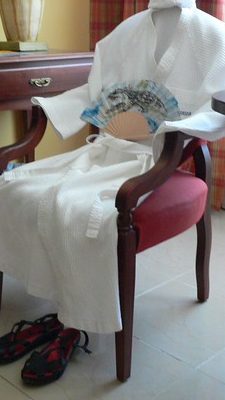
The inside of the collar’s badly frayed;
the pink and sky-blue stripes began to fade
a while ago. I’ve worn it for twelve years,
she wore it for a few, and it appears
it might not last much longer. I’ll be sad
to lose it, and to lose the sense I’ve had,
each time I slip it on, that she would grin
to see it on me. She was short and thin,
I’m not, so when I wear it, I expose
a bit of leg, while it reached to her toes.
And she’d wear slippers with it, taking care
they matched the robe; my bigger feet are bare.
I put this robe on and I put on all
the ways we differed—though I don’t recall
we argued much. She listened to Garth Brooks,
I favor Brahms; she was the best of cooks —
those famous meatballs, cookies of all kinds —
while takeout is my strength. Sometimes what binds
two sisters may be each one’s readiness
to be amused by her antithesis
when it’s wrapped up in measureless affection —
as I still feel wrapped up in our connection,
and not just when I wear her robe. Although
I’ll let it go soon, with regret, I know
I won’t let go of her until the day
the world lets go of me. Some things don’t fray.

*****

Jean L. Kreiling writes: “This poem is entirely autobiographical; my sister Susan’s premature death to brain cancer broke my family’s heart. Wearing her robe has been therapeutic—as was writing this poem—but I’ll miss her every day for the rest of my life.”

‘My Sister’s Bathrobe’ was first published in Pulsebeat Poetry Journal.

Jean L. Kreiling is the author of four collections of poetry, most recently Home and Away (2025). Her work has been awarded the Able Muse Book Award, the Frost Farm Prize, the Rhina Espaillat Poetry Prize, and the Kim Bridgford Memorial Sonnet Prize, among other honors.

Pulsebeat Poetry Journal

Bathrobe person” by artant is licensed under CC BY-NC-ND 2.0.
Sonnet: Richard Fleming, ‘The Attic’

The attic, once unreachable, taboo
in childhood, is a temple laid to waste.
I climb the ladder, face the overdue
clear-out of debris with a mild distaste.
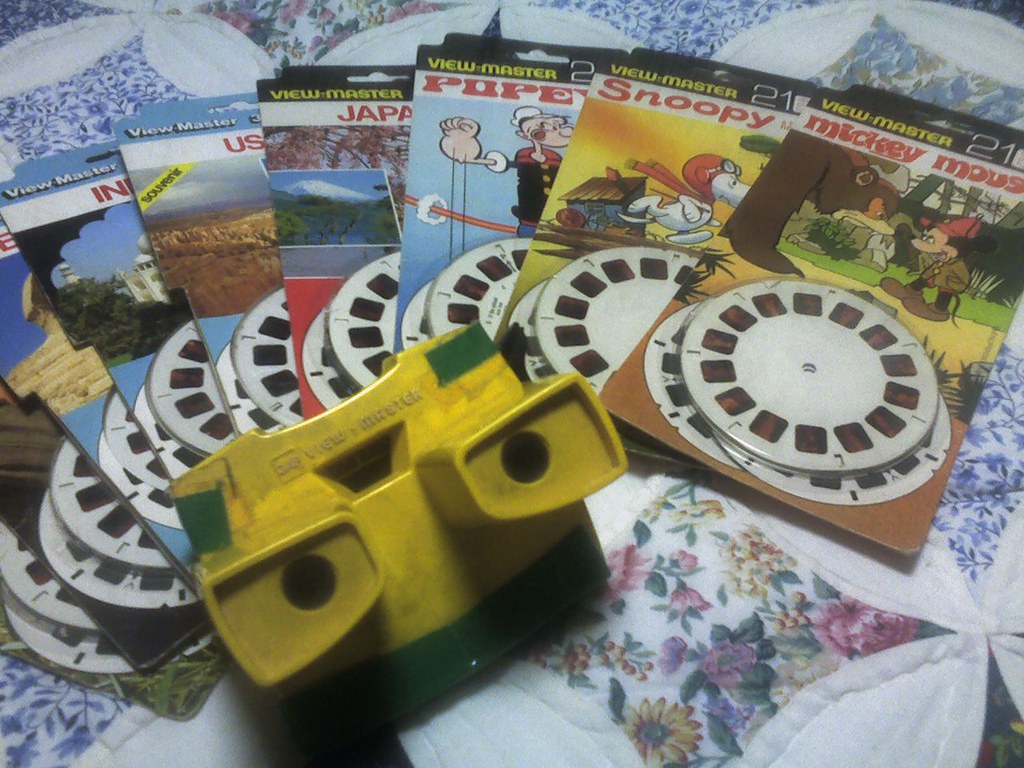
A View-Master, kaleidoscope, a kite,
a rocking-horse in much need of repair,
a reel-to-reel recorder I’d recite
poems into as though speaking them ‘on air’.
I dust them off, then pack them in a case
and glimpse in a chipped mirror on a shelf,
the look of an intruder on his face,
a fellow who can only be myself,
the last one left, unsportingly miscast
as tomb-raider, despoiler of the past.

*****

‘The Attic’ was first published in a set of ten semi-autobiographical poems in The High Window, where Richard Fleming was the Featured Poet.

Richard Fleming is an Irish-born poet and humorist based in Guernsey, a Channel Island between Britain and France. Widely regarded as one of the island’s foremost literary voices, his versatile work blends lyricism, sharp wit, emotional depth, and a strong sense of place. Drawing from his Northern Irish roots and adopted home, his poetry and prose explore love, loss, nostalgia, identity, and modern life. Collections include Strange Journey (2012), held in the National Poetry Library, and Stone Witness (Blue Ormer) featuring the BBC-commissioned title poem. His work can be found on
Facebook https://www.facebook.com richard.fleming.92102564/
or Bard at Bay www.redhandwriter.blogspot.com

VIEW-MASTER” by Kim Hanwool is licensed under CC BY-NC-SA 2.0.

Political poem: Jerome Betts, ‘Call for Obliteration’

Crackpotus thinks that war is fun
(Of course, he never fought in one)
And so he bombed his little heart out…
Oh, chuck the cruel crazed old fart out!

The 25th amendment’s what
Is needed, not a sniper’s shot,
Until, his time come, all can cry
Damnatio memoriae!

*****

Jerome Betts writes: “This squib was prompted by the civilian casualties caused by the War of Donald’s Ego and the increasingly callous madness of his accompanying tweets. The second stanza supports a remedy advocated by a growing number in the USA, unlikely as it is to be put into effect  by the spineless sycophants that make up his Cabinet of Horrors. It would be nice to find words to really hit him where it hurts, but the nearest I could come up with is Damnatio memoriae, a modern Latin term for an Ancient Roman practice. Might it just puncture the hide of a POTUS obsessed with attaching his name to buildings and institutions?”

‘Call for Obliteration’ was first published in The New Verse News.

Jerome Betts edits the verse quarterly Lighten Up Online

Illustration by David Horsey, Seattle Times.

Sonnet: Beth Houston, ‘September’

When spring’s ghost joins me on the deck to watch
Gilt city lights click on across the bay,
Some downtown maid squeaks windows, wipes the splotch
Between us. Here, this quiet view. Soft clay
And pungent eucalyptus, thick with rain,
Exude their essence. Summer’s gloom unwinds,
A pane has shattered, and each rampant cane
Of luscious juicy blackberries reminds
My grief entwining August’s humid air.
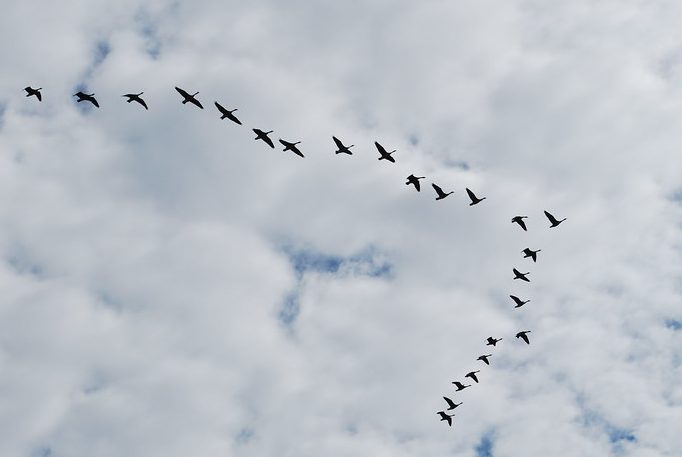
A wedge of geese pries open autumn, herds
Fat purple clouds toward dusk above the glare
Of distant offices. Your murdered words
Of love on voicemail echo you were dead
Before you put that bullet through your head.

*****

Beth Houston writes: “Regarding the sonnet: This is one poem I’d prefer to let the reader chew on without me explaining anything. It does have some tricky time aspects…”

She adds: “I have announced the submission period for the next anthology on the Rhizome Press website. Included are updated guidelines and new emails for submissions and general mail (no longer gmail). Folks will have plenty of time to submit. I just hope I don’t get an avalanche at the last minute. But better loads of poems than not getting them. I’m eager for people to let their poet friends know. I’d love to get LOTS of submissions.

‘September’ was first published in Rat’s Ass Review.

Beth Houston (www.bethhouston.com) has taught writing (mostly creative writing) at ten universities and colleges in California and Florida and has worked as a writer and editor. She has published a couple hundred poems in dozens of literary journals. She writes free verse and formal poetry, mostly sonnets, and has published a novel, two nonfiction books, and six poetry books (out of print). She edits the Extreme formal poetry anthologies via one of her indie presses, Rhizome Press (www.rhizomepress.com).

Photo: “Formation” by Nature_Freak is licensed under CC BY-SA 2.0.

Semi-formal Sonnet: Rachel Hadas, ‘Out of Reach’

Our lost ones drift down a dark stream,
surfacing at the brink of dream.
The crack of dawn: they’re gone again.
What have they left for us to keep?
Night’s dialect, a coded speech
beyond our reach.

Birds on the bank of a calm pond:
each one is still and poised, then dives.
Mornings we wake into our lives,
blind to what lies beyond, below,
the chasms where black rivers flow,
and flickering deeper, darkly clear,
that coded speech beyond our reach,
words we can’t hear.

*****

Rachel Hadas has a group of sonnets appearing, one a week, in The Sonneteer. For the first she wrote: “The sonnets that will be appearing in the coming weeks weren’t conceived as a sequence. Encouraged by Ken Gordon’s enthusiasm to take a look at some of my unpublished shorter poems, I speedily found one fourteen-liner, “Tectonic Plates.” Three other poems were so close to sonnet length that they almost begged to be tweaked or tightened or gently expanded; this group includes “Out of Reach,” “Winter,” and “My Best Friend’s Mother.” In every case, the sonnetification (Ken’s helpful coinage) improved the poem. (…) I now realize that, while not conceived as a sequence, all five of these sonnets (now that they are all sonnets) do share themes. They’re about time and memory, aging and loss, what we lose and what we retain. So are many other sonnets, infinitely greater than mine. It’s a privilege to be able to join in the conversation, to swell the chorus.

Rachel Hadas (born November 8, 1948) is an American poet, teacher, essayist, and translator. Her most recent essay collection is Piece by Piece: Selected Prose (Paul Dry Books, 2021), and her most recent poetry collection is Ghost Guest (Ragged Sky Press, 2023). Her honors include a Guggenheim Fellowship, Ingram Merrill Foundation Grants, the O.B. Hardison Award from the Folger Shakespeare Library, and an Award in Literature from the American Academy and Institute of Arts and Letters.

https://www.rachelhadas.net/

Photo: “Kingfisher fishing” by Bob Hall Photos is licensed under CC BY-NC-ND 2.0.

Sonnet: Barbara Loots, ‘An Old Man Makes Chili for Lunch’

Do you have a poem for an old man making chili for lunch? Like watery eyes from onion crunching–sneezing from pepper thrown… email from Dad 5/5/05

He shoves the onion pieces in a pile
to one side as he chops and chops some more.
This cutting board has lasted quite a while
through salty tears of choppers gone before,
but no use buying new equipment now.
Sometimes there’s comfort in a kitchenette
that holds what downsized spaces will allow
of former habits. He will not forget
those other hands that held this knife and chopped
for slaw and meatloaf, casseroles and stew,
and apple walnut salad. When they stopped,
he stepped up, making chili, making do,
sneezing on pepper, living on his own.
He cooks for one, but never eats alone.

*****

Barbara Loots writes: “Almost any story can be told in the compass of a sonnet. This one became an elegy cooked up in the mundane of a real moment.”

This sonnet was collected in ‘Road Trip’ (Kelsay Books, 2014)

After decades of publishing her poems, Barbara Loots has laurels to rest on, but keeps climbing.  The recent gathering at Poetry by the Sea in Connecticut inspired fresh enthusiasm. Residing in Kansas City, Missouri, Barbara and her husband Bill Dickinson are pleased to welcome into the household a charming tuxedo kitty named Miss Jane Austen, in honor of the 250th birthday year of that immortal. She has new work coming in The Lyric, in the anthology The Shining Years II, and elsewhere. She serves as the Review editor for Light Poetry Magazine (see the Guidelines at  lightpoetrymagazine.com)

Photo: “Chopping Onions” by TheDarkThing is licensed under CC BY 2.0.

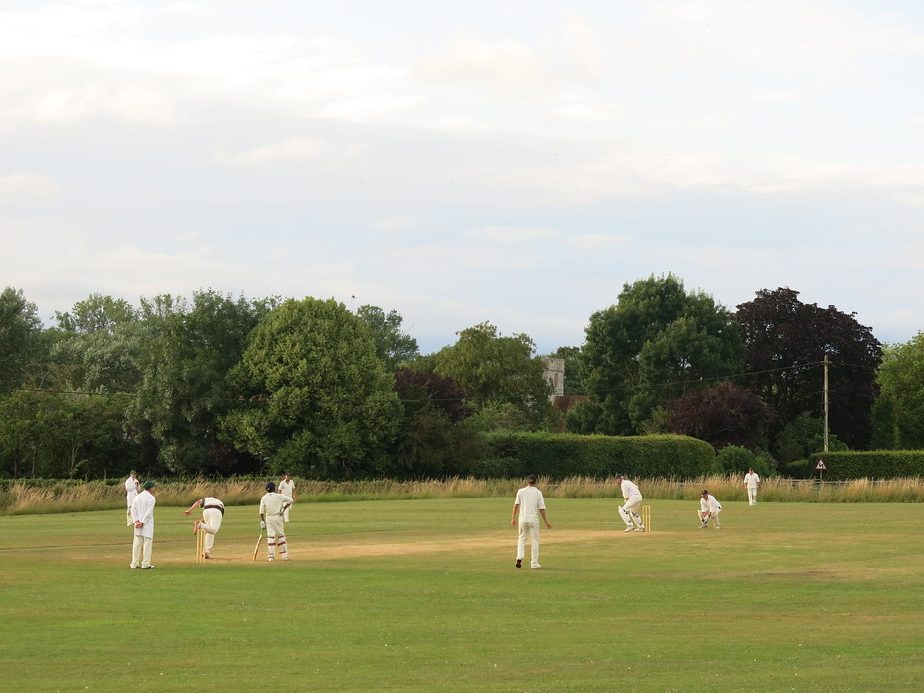
Iambic hexameter: Martin Parker, ‘Man of the Match’

You swore at me and hurled your ring into the pond
then drove off back to London “for some bloody fun”
with friends whose Chelsea coven held you in its bond.
I was next in, scored twelve and hit the winning run.

The beers were long and cool, the Captain shook my hand.
Dusk shaded in, a final liquid blackbird sang.
A coughing tractor crawled a strip of fading land.
An owl flew low across the pitch, a church bell rang.

Two muddy urchins with a shrimp-net dredged the pond
their hopeful piping rippling in the cooling air
while you choked on exhaust at Guildford or beyond
along your golden road to Knightsbridge and Sloane Square.

Another world and just two perfect hours away
your eyes had been bright green. Or brown. Or were they blue?
I still recall the details of that Summer day
so much more clearly than I now remember you.

*****

Martin Parker writes: “The only point I might add is my hope that if the muddy urchins’ dredging efforts were rewarded they were not too disappointed to learn that the ring’s diamond might not have been a real one! The intervening sixty-five-plus years have, mercifully, erased the fact that I may have been nothing but a cheapskate!”

‘Man of the Match’ was first published in Snakeskin.

Martin Parker is a writer of mainly light and humorous verse much of which has appeared in national publications including The Spectator, The Oldie and The Literary Review. In 2008 Martin founded the quarterly light verse webzine, Lighten Up Online at www.lightenup-online.co.uk, now edited by Jerome Betts. His website at www.martinparker-verse.co.uk gives details and excerpts from his two “hopefully humorous and only occasionally wrily depressing books”.

Photo: “Village cricket” by Peter Curbishley is licensed under CC BY 2.0.

Short Poem: Andrew Sclater, ‘Dear Mother’

Dear Mother come softly across your grey veil
and onto the path in the dark where the snail
is crossing obliquely and nightjars sing sweetly
and put down your toilet bag quietly, discreetly
on the rim of the cemetery fountain. Now wash
your hair free of this mud and these worms, and squash
those white maggots that gleam in your ears,
then smile as you used to. We’ll have no more tears.

*****

Andrew Sclater writes: “I think everyone who loses a parent probably wants to resurrect them somehow. But memory is a false friend. We can’t see them clearly enough: we know, with vagueness, what they were like, but not who they were. We’d like to go back but we can’t, though this poems attempts to. Then, the realisation that we stand alone, orphaned, comes slowly, painfully and (awkward as it is) angrily as we grieve. This poem was delivered almost complete to me. It simply flowed out of the first line in a rare and rather magical way. I still like it more than almost everything I’ve written, placing my discomfort so tidily into its formal box.”

‘Dear Mother’ first appeared in Poetry Review.

Andrew Sclater is a Scottish poet currently living in Paris. He has published poems in Ambit, Best Scottish Poems, The Dark Horse, Magma, New Writing Scotland, Poetry Review, Shearsman and elsewhere. He co-founded Butcher’s Dog poetry magazine and the National Botanic Garden of Wales. He has been an editor of Charles Darwin’s correspondence and his Dinner at the Blaws-Baxters’ was published in 2016 by HappenStance Press. His newest pamphlet Quite Joyful is from Mariscat Press.

Photo: “.a…d.i.s.t.a.n.t…memory.” by DeeAshley is licensed under CC BY 2.0.

Short poem: RHL, ‘Ghosts Twitter’

Ghosts twitter in my head like the memory of predawn birds.
Digging below my present house I find
a structural supportive past with rock veins to be mined.
Upstairs the future isn’t fully built or roofed.
Has someone goofed?
The Architect is vague on final thirds.

*****

I am finding many ways to say I don’t understand existence at all; this is one of them.

This short, semi-formal poem was published recently in The Lyric.

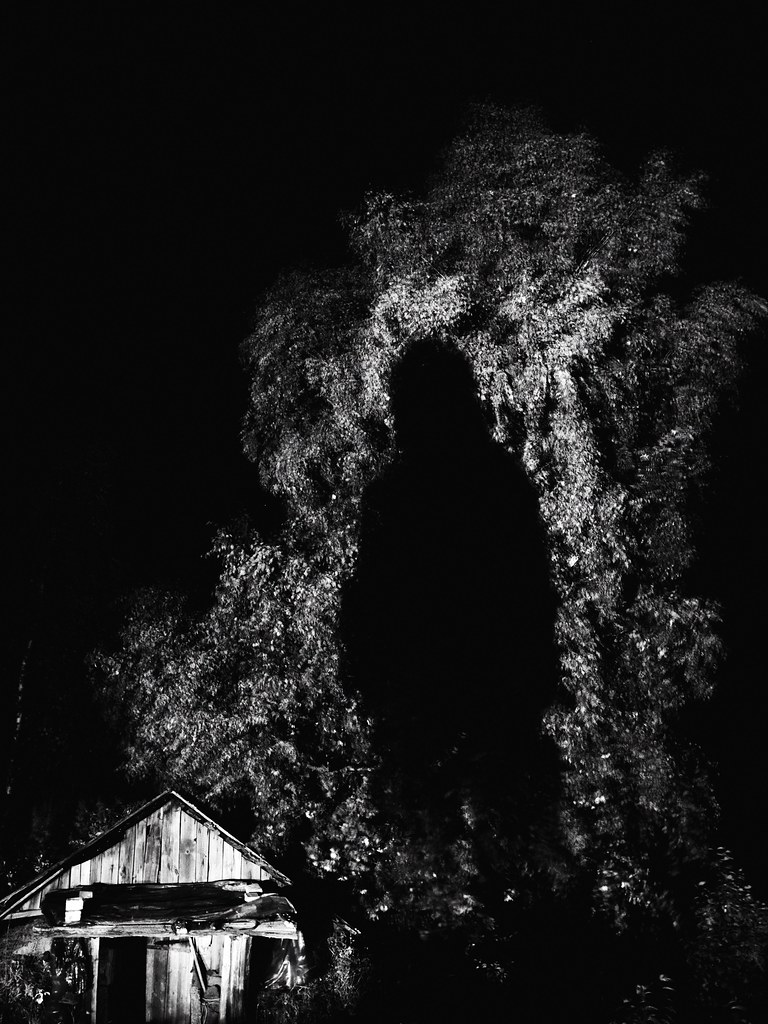
Photo: “unfinished house” by Lodigs is licensed under CC BY-NC-ND 2.0.
Susan McLean, ‘Dead Giveaway’

Who’ll take my dead? I’ve carried them so long
my mind is swaybacked from their aching weight.
I can’t just cast them off. It would be wrong
to leave them in some shed, like unclaimed freight.
How could I walk away as Cathy’s smile
collapsed, as Brian gently said “Take care,”
and Grammy begged “Please take me home now” while
I shut them in the dark and left them there?

I’ve jettisoned so much I took to heart—
the afterlife, belief in justice, prayer.
I’ll have to lay my dead down too, I know.
After a party, when my friends depart,
I wash up, stow away what’s left, yet they’re
still here. The dead are always last to go.

*****

Susan McLean writes: “I love the way a cliché can take on new life if the words are interpreted in a nontraditional way. The title of this poem seemed painfully poignant to me when I imagined it applying to the dead we all carry around with us. It would be nice to be able to walk away from that sadness, but of course who among us could bring ourselves to do it? Though I try to keep the voice of the poem sounding natural, I pay attention to the play of sounds in the words, as in the echoes of consonant and vowel sounds in the first two lines: “take,” “swaybacked,” “aching,” and “weight.” In the sestet of the sonnet, the imagined action of the speaker’s leaving her dead behind in the octave is reversed when she is herself left behind by her departing friends, with only her dead to keep her company.
This poem first appeared in the online journal 14 by 14, and later was published in my
second poetry book, The Whetstone Misses the Knife.”

Susan McLean has two books of poetry, The Best Disguise and The Whetstone Misses the Knife, and one book of translations of Martial, Selected Epigrams. Her poems have appeared in Light, Lighten Up Online, Measure, Able Muse, and elsewhere. She lives in Iowa City, Iowa.
https://www.pw.org/content/susan_mclean

Photo: “Ghosts of the old house” by Tree Leaf Clover is licensed under CC BY 2.0.