Tag Archives: Second World War

Parody of Eliot: Henry Reed, ‘Chard Whitlow – Mr Eliot’s Sunday Evening Postscript’

As we get older we do not get any younger.
Seasons return, and today I am fifty-five,
And this time last year I was fifty-four,
And this time next year I shall be sixty-two.
And I cannot say I should like (to speak for myself)
To see my time over again–if you can call it time:
Fidgeting uneasily under a draughty stair,
Or counting sleepless nights in the crowded tube.

There are certain precautions–though none of them very reliable–
Against the blast from bombs and the flying splinter,
But not against the blast from heaven, vento dei venti,
The wind within a wind unable to speak for wind;
And the frigid burnings of purgatory will not be touched
By any emollient.
I think you will find this put,
Better than I could ever hope to express it,
In the words of Kharma: ‘It is, we believe,
Idle to hope that the simple stirrup-pump
Will extinguish hell.’
Oh, listeners,
And you especially who have turned off the wireless,
And sit in Stoke or Basingstoke listening appreciately to the silence,
(Which is also the silence of hell) pray, not for your skins, but your souls.

And pray for me also under the draughty stair.
As we get older we do not get any younger.
And pray for Kharma under the holy mountain.

*****

T.S. Eliot commented “‘Most parodies of one’s own work strike one as very poor. In fact, one is apt to think one could parody oneself much better. (As a matter of fact, some critics have said that I have done so.) But there is one which deserves the success it has had, Henry Reed’s ‘Chard Whitlow’.”

Henry Reed is best known for his poem ‘Naming of Parts’, on mid-20th century British Army training… but ‘Chard Whitlow’, reflecting Eliot’s wartime experiences in London in Eliot’s ‘Four Quartets’ voice, has an ongoing life among classic parodies.

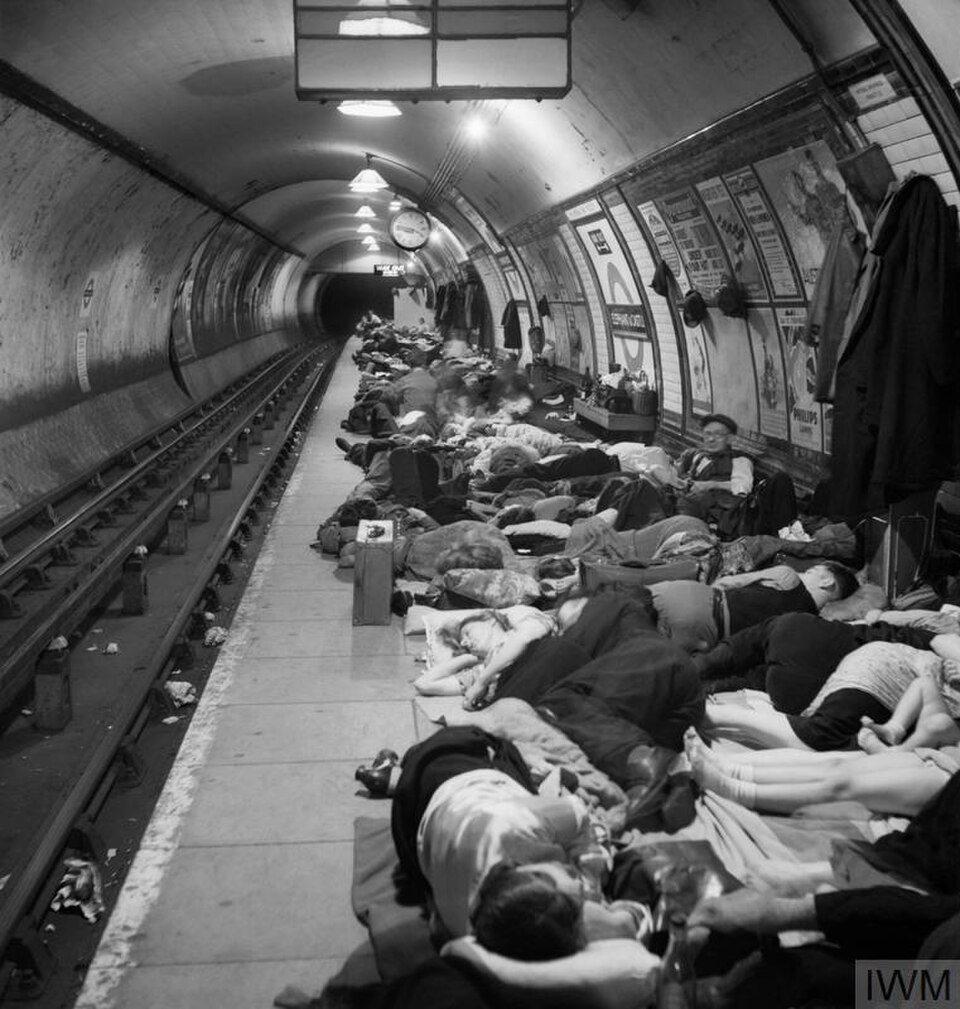
Photo: SHELTER PHOTOGRAPHS TAKEN IN LONDON BY BILL BRANDT, NOVEMBER 1940
Elephant and Castle London Underground Station Shelter: People sleeping on the crowded platform of Elephant and Castle tube station while taking shelter from German air raids during the London Blitz.
Ministry of Information official photographer
Public domain
Potcake Poet’s Choice: Tom Vaughan, ‘Happiness’

It’s easy to forget they’d fought a war:
his father drowned, half-brother bayoneted;
her kilted sibling captured at Dunkirk,
locked up for five long years. But yes they met

in uniform, lost half their friends, before
the normal world re-started when they wed:
mortgage; children; grinding office work –
all I suppose they wanted when they set

out as a couple. We must have been a shock:
busting their rulebook; scornful of sacrifice;
mocking their past and their belief in ‘progress’;

too young, too smashed, too angry to unlock
their silence, or to understand the price
they’d paid for what they’d still call happiness.

Tom Vaughan writes: “I chose Happiness it because I hope it gets right not just my own retrospective feelings about my parents, but also something more general about the generational shift between those who went through WW2 in their youth, and their less-tested offspring.

Secondly, because it’s a sonnet (a favourite form of mine), but in what I call a ‘roller’ rhyming (not always full rhymes) pattern, which tries to pull the reader down to the final line with a lurch which I hope is also of the emotions.

It was published in Dream Catcher in 2016, but has been picked up a couple of times elsewhere since then, including in your Families and Other Fiascoes chapbook.”

Tom Vaughan is not the real name of a poet whose previous publications include a novel and two poetry pamphlets (A Sampler, 2010, and Envoy, 2013, both published by HappenStance). His poems have been published in a range of poetry magazines, including several of the Potcake Chapbooks:
Careers and Other Catastrophes
Familes and Other Fiascoes
Strip Down
Houses and Homes Forever
Travels and Travails.
He currently lives and works in London.
https://tomvaughan.website

Short Poem: ‘Old Soldiers’

Sitting blowing bubbles
Each one a tiny world
Of monumental troubles
And how they all unfurled.

“The desert, Cairo, jaunty,
A blue room and whore –
And so I said to Monty –
And so we won the War!”

Bernard Law Montgomery, afterwards Viscount Montgomery of Alamein, was Britain’s star commander of the Second World War. “Unbeatable and unbearable” from North Africa to northwest Europe where he had control of all Allied land forces under Eisenhower, he was the figure that British veterans tended to suggest that they had had some useful contact with.

Always arrogant, opinionated and outspoken, he later opposed American tactics in the Vietnam War, as in the New York Times in 1968: “The United States has broken the second rule of war. That is: don’t go fighting with your land army on the mainland in Asia. Rule one is, don’t march on Moscow. I developed those two rules myself.” Familiar enough to fans of Risk and Civilization and The Princess Bride…

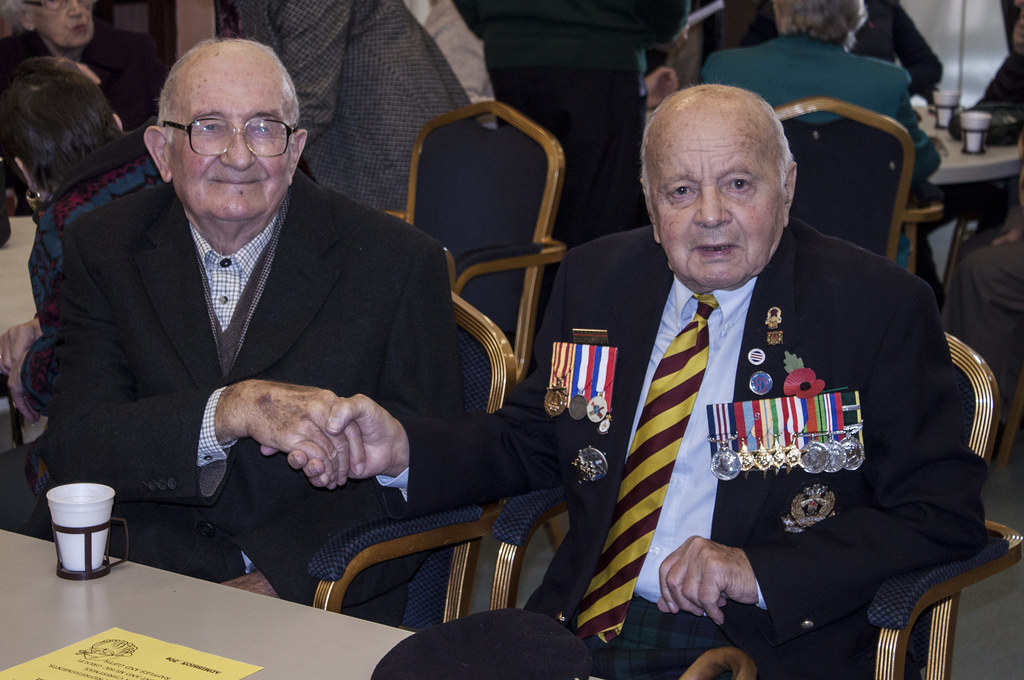
“Two Old Soldiers” by jf01350 is licensed under CC BY-NC-SA 2.0