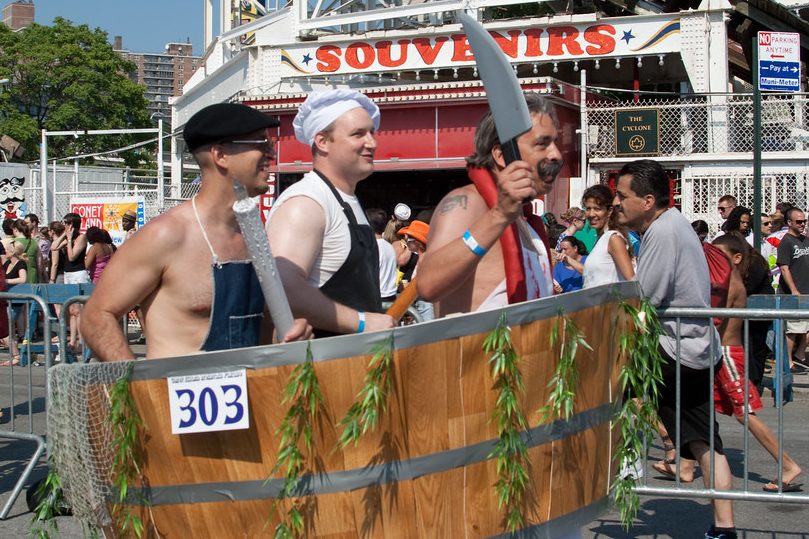
“One thing you must accept,” Said the butcher—”and I don’t intend this meanly: To live is to get divided up And to live well is to divide up cleanly.”
“One thought that made sense of things,” Said the baker—“perhaps even solved life’s riddle: To live is to harden in the heat And to live well is to stay soft in the middle.”
“One principle strikes me as ultimate,” Said the candlestick-maker—“if not downright holy: To live is to burn down And to live well is to burn down slowly.”
*****
Fergus Cullen writes: “These stanzas are about that state in which work comes to occupy one’s mind so utterly that one begins to see the rest of life through it. They do not make any statement on the subject: we just hear from some personalities living in this condition.I wanted contrast. On the one hand, the form is so light as to be barely there (speech rhythms in long lines, stanzas only pulled together by trite rhymes); and the characters originate in the world of nursery rhyme. On the other, these characters take on the biggest subject; and what they say may sound rueful, even bitter. It was certainly written that way; though, returning to it after some time, I see that it need not be read that way. This is one of two versions of the poem and was published in The Borough. I hope the other, rather different, shall appear soonish.”
Fergus Cullen is a postgraduate researcher in history at Queen Mary, University of London, and an occasional writer and translator of prose and verse.
She was the one who went off on her own. She was the one who filed for the divorce. You gave her what she wanted in due course. Still she will never leave your life alone.
Available through email more than phone, You have remained a favorite resource. She contacts you supposedly perforce, Less for herself than for a son long grown.
She seeks a certain something left behind, A sterling ladle or an antique chest, A recipe or record you must find. Your common past has yet to enter rest Since fire so often burns within her mind. For smoke fly’s sake, you try to do your best.
A native Virginian, Jane Blanchard lives and writes in Georgia. Her collections with Kelsay Books include Metes and Bounds (2023) and Furthermore (forthcoming, 2025).
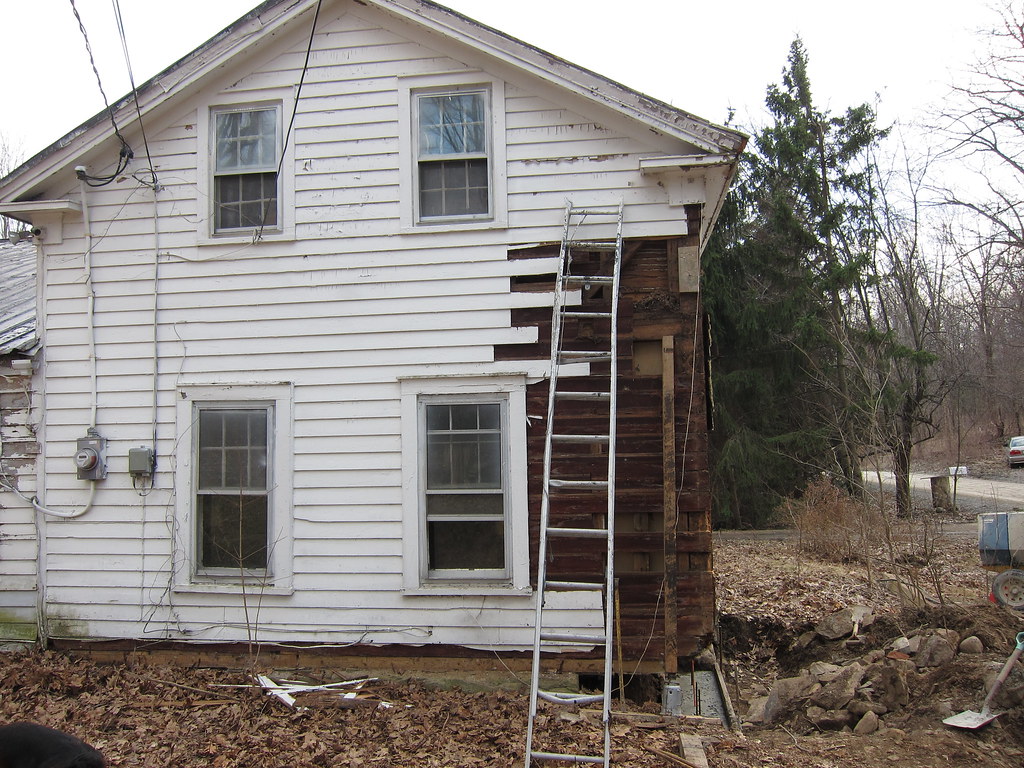
Time was, we spent our muscle and our nous propping an aging house against the pummeling of its hundred years. Clean paint, neat gardens, upkeep rarely in arrears, sober as Donne. Yet now each year afresh burdens us with new failings of the flesh:
Legs that once mounted ladders without qualm tremble. Nor are we calm confronting pipework; torsos will not shrink, backs bend, or shoulders fold to grope below a sink. Hands shake; eyeballs glaze over. What appalls is that our bodies buckle like our walls:
plaque in arteries, soot in chimney stacks, stubborn and troublous cracks in teeth, in plaster. House! Ought we to call ourselves—and you—new poster children for the Fall, for that hard doctrine grumbling down the ages that Sin’s to blame, with Death and Rot its wages?
Entropy as theology—would Donne jape at it? Wink and pun as in his randy youth? Or solemnly robed in his winding sheet, sing Mutability, spinning into the praise of God in Art the fact that all things earthly fall apart?
Or pull from air some bit of modern science, yoking (even by violence) thermodynamics, shortened telomeres, transplants, genetics, sex, the music of the spheres? Strange physics and wild metaphors—all grand, but Rot and Death, plain woes we understand,
are better fought with checkbooks than with verse. We’ll sit, these days. We’ll nurse our beers, while able bodies stir their dust. A distant siren whines—we sigh; it whines for us. Let plumbers, painters, carpenters begin this season’s round of battling Death and Sin.
*****
Maryann Corbett writes: “Last summer, Clarence Caddell was just beginning work on a new magazine, The Borough, and was planning a second issue while the first came together. He had in mind an issue centered on Donne, and he commissioned me to contribute a poem. I’d read the wonderful biography Super-Infinite: The Transformations of John Donne by Katherine Rundell not many months before, so a lot of the life was fresh in my mind–but it was also the season of endless repair that is the eternal truth of owning a house that’s 113 years old. It wasn’t hard to pull together a poem about the woes of home ownership with tidbits that “everyone knows” about Donne–his worldly-to-holy conversion, the familiar line about his yoked-by-violence metaphors–under an allusive title, and in a stanza form a bit like one of his. (Alas, this blog can’t show you the indents that would best imitate Donne’s way of laying out a poem. You’ll have to imagine all the trimeter second lines indented and the hexameter fourth lines hanging out farther left.) In the end, Clarence had to use the poem to fill out his first issue, so it sat alone, unassisted by an issue theme.”
Maryann Corbett earned a doctorate in English from the University of Minnesota in 1981 and expected to be teaching Beowulf and Chaucer and the history of the English language. Instead, she spent almost thirty-five years working for the Office of the Revisor of Statutes of the Minnesota Legislature, helping attorneys to write in plain English and coordinating the creation of finding aids for the law. She returned to writing poetry after thirty years away from the craft in 2005 and is now the author of two chapbooks and six full-length collections, most recently The O in the Air (Franciscan U. Press, 2023). Her work has won the Willis Barnstone Translation Prize and the Richard Wilbur Award, has appeared in many journals on both sides of the Atlantic, and is included in anthologies like Measure for Measure: An Anthology of Poetic Meters and The Best American Poetry.
 Form in Formless Times