Monthly Archives: August 2024

Semi-formal: RHL, ‘Laffable Religion’

No matter how seemingly affable,
a priest always hopes to be greased;
while others, invoking hellfire,
have us wait for our trip in the hearse
and preach in their suits neatly creased,
these fishers of men that are gaffable,
in this world that they’ve made mud and mire.
That the point of a flock’s to be fleeced
can only be said in light verse;
for religion is simply so laughable
it’s amazing it’s not yet deceased.

*****

Isn’t it amazing that the Pope can claim to have voluntarily taken a vow of lifelong poverty, and millions of his supporters who live in involuntary poverty send money to support him living in a palace? Is it different from a billionaire politician soliciting donations from his impoverished supporters? Is the human need to glorify the tribal god and the tribal leader never going to end?

This poem was first published in The HyperTexts, as part of the August 2024 Spotlight.

Shamik Banerjee, ‘Masjid Road’

Fishmongers’ cleaver knives don’t rest at all;
Their heavy thuds outdo the termless spiels
Of colporteurs dispensing large and small
Versions of holy books. On mud-sunk wheels,
Waxed apples, sapodillas, apricots
Effuse their fragrance, trapping passersby
Who check the rates, then stand submerged in thoughts—
Some fill their punnets, some leave with a sigh.
Outside the mosque, blind footpath dwellers wait
To hear the clinking sound—the sound of true
Relief—while dogs, flopped by the butcher’s gate,
Get jumpy when he throws a hunk or two.
Loudspeakers, placed on high, say “call to prayer”
And all work halts; there’s silence in the air.

*****

Shamik Banerjee writes: “Crammed with saree shops, bakeries, small abattoirs, vegetable vendors, holy book distributors, toy stores, and sundry other things, Masjid Road is one of the very few tireless market places in Guwahati, my hometown. As a frequent visitor to this place of never-ending commotion and bustle, I have always been fascinated by these sellers’ devotion to their work. Though rest is a distant guest here, all activities come to a standstill right when the nearby mosque sends out the call-to-prayer through towering loud speakers.”

Shamik Banerjee is a poet from Assam, India, where he resides with his parents. His poems have been published by Sparks of Calliope, The Hypertexts, Snakeskin, Ink Sweat & Tears, Autumn Sky Daily, Ekstasis, among others. (‘Masjid Road’ was first published by Bellwether Review.) He secured second position in the Southern Shakespeare Company Sonnet Contest, 2024.

Photo: “Indian Shops” by Scalino is licensed under CC BY-NC 2.0.

Weekend read: long poem: ‘Catullus LXIII’ translated by George Simmers

Across the sea goes Attis in his ship of sleek rapidity,
To Phrygia, and its forest, which he rushes into eagerly,
The great goddess’s territory, her tree-dark sanctuary.
There he grabs a flint; he jabs and savages his genitals,
Stabs until he’s sure he’s lost the burden of virility;
His blood spills its darkness on the sacred ground surrounding him.
SHE now, never he, SHE reaches for a tambourine,
The tympanum, Cybele, that is used by your initiates,
She beats out her message on the leather of the instrument;
Up she rises, and calls out to all her followers:

        My she-priests hurry, to these woods of our divinity.
        Hurry all you wanderers, all great Cybele’s worshippers,
        You searchers for an otherwise, you riskers and adventurers
        You voyagers who’ve dared the seas that match you in your truculence,
        You like me whose dream has been self-immolated genitals,
        Like me detesting Venus with the utmost of ferocity,
        Set free your minds with the liberty of ecstasy.
        Gladden our goddess, hurry here to worship her,
        Hurry to this Phrygian domain of femininity,
        Hurry to the cymbals, to the gentle flute’s seductiveness,
        Towards the fevered drums and the Maenads’ ululations
        There we must hurry for the celebration ritual.

Attis thus addressed them; she had all the look of womanhood;
Tongues lisped lovingly and cymbals clashed resoundingly.
Attis led on frenziedly, her wild breath labouring
Free as a heifer who’s escaped the yoke of drudgery,
Weary in her lungs, she through the woods leads rhythmically
The Gallae, who are following behind her storming leadership.

They reach the home of Cybele, wearied out and staggering,
Hungry, over-stretched, exhausted by excessiveness.
Sleep commands their eyelids to slide down sluggishly
Excitement leaves their bodies; rage gives way to drowsiness.

Dawn comes. Sunlight. The golden face that radiates
Alike above the firm soil and the great sea’s turbulence,
Which drives away darkness and banishes the weariness
Even from Attis, who is gradually awakening.
(For the goddess Pasithea’s taking Somnus to her bosom now.)
Attis, pseudo-woman, is freed now from delirium
Remembers what she did before, and sees herself now lucidly,
And knows what she has lost, and now her heart weighs heavily.
It labours in her body as she turns and walks back steadfastly,
Steadfastly and sadly, heading back towards her landing-place.
Her tearful eyes look out to sea; she renders this soliloquy
Remembering her birthplace despairingly, lamentingly.

        My motherland, my origin, the one place that created me,
        I must shun you like a thief now, like some dishonest runaway.
        Deserting you for Ida, for a bleak and chilly wilderness,
        Where brute beasts lurk, fired by hunger and rapacity.
        Freed now from my madness by the shock of the reality,
        My eyes weep with a longing for the home that was my nourisher.
        Must life be now this wilderness, with only fading memories
        Of when I was a man – but I have severed that identity –
        A young man, supple, and the flower of the gymnasium,
        A champion of champions among the oily combatants
        Who wrestled for the glory – one who won the admiration
        And the friendship of so many – how my home was garlanded!
        But nevermore now I’ve become Cybele’s mere serving-wench,
        Now that I’m a Maenad, a half-man, whose sterility
        Must sentence me to exile, to a life of pointless wandering,
        Neighbour to the boar and the wild deer in its solitude.
        On these wild slopes of Ida, shadowed by the peaks of Phrygia.
        How I hate my rashness; my regret becomes an agony,

Her words flying upward reached the ears of a deity,
They reached the ears of Cybele, who unleashed from their harnesses
The lions of her anger, with instructions to the left-hand one:
‘Go seek out Attis, be my agent of ferocity,
Pursue him till he’s overtaken by insanity,
Make him regret attempting to escape from my supremacy,
Lash your flanks with your tail, whip up your aggressiveness
Let the place re-echo with untamed outlandish bellowing,
Toss your long red mane in anger,’ so ordered Cybele,
Loosening the brute, who charged away unstoppably,
Raging, careering, crashing through the undergrowth,
Till it reached the white shore, where the sea was opalescent,
And that is where it saw him, Attis, solitary, delicate.
The lion charged and Attis, in a terrified delirium,
Fled towards the forest, to a destiny of hopelessness,
To existence as a slave there, the property of Cybele.

Great Goddess Cybele, Lady of Dindymus,
Vent your anger, I beseech you, far from my place of residence.
May only others feel your goad to madness and to ecstasy.

*****

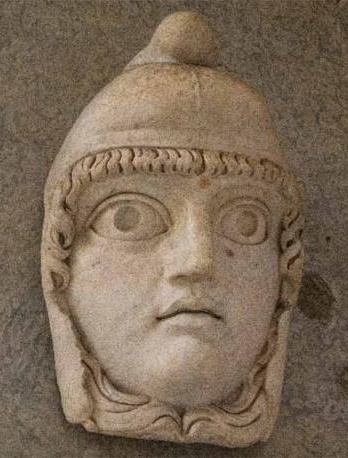
George Simmers writes: “I’m not normally one for explaining poems, but my Englished version of Catullus’s poem LXIII in the current Snakeskin might be fairly mystifying to anyone coming to it unprepared.

“This is a poem that is over two thousand years old, and a remarkable one. The Victorian critic W.Y. Sellar described the ‘Attis’ as the most original of all Catullus’s poems: ‘As a work of pure imagination, it is the most remarkable poetical creation in the Latin language.’

“First – to deal with a possible misconception; the Attis of this poem is not the god of that name, but a young Greek man who sails to Phrygia, the home of the Great Mother, the goddess Cybele (pronounce the C hard, like a K). In homage to her he castrates himself, to become like one of her Galli, or attendant priests. Attis celebrates jubilantly, but next morning wakes up and registers the finality of what he has done, and the irrecoverable loss of his previous identity. The poem ends with Cybele setting her lions onto him, to drive him into the forest of madness.

“Summarising the story bluntly makes it sound like a simple fable of self-harm and regret, but Catullus is not a simple poet. The poem is made more complex by the intensity of his identification both with the exultant castrated Attis, and with his later regret. Another way of looking at the poem is as a tragedy – Attis’s desire to reshape himself is a hubris that leads to his destruction. Yet although Attis is labelled a pseudo-woman (‘notha mulier’) the reality of his desire to become a woman, and the intensity of his joy when he has liberated himself from maleness, are never in doubt. Significantly, when he later expresses regret, it is not for the loss of his sexual identity, but for his social one. It is possible to see the poem as an expression of the conflict within the poet himself, between his wayward hedonistic urges and his strict Roman ethic; he imagines an extreme case of abandoning a Roman (upright male) identity and discovering the consequences.

“The poem’s intensity is in part created by the metre – galliambic. There may be Greek precedents – scholars disagree, I think – but this poem has no known fore-runner in Latin verse. It seems to be based on the rhythms of the Galli’s ceremonial music (at the Roman Megalesian festivals, presumably, where the Great Mother was celebrated, by priests carrying tambourines and castrating-knives). It is an insistent, forward-driving metre, with a unique line ending, a pattering of three short syllables. English versification is different from Roman, and direct imitation of the galliambic metre in English does not work (although Tennyson had a go in his poem Boadicea). I have tried to find an equivalent that produces a similar forward-driving rhythm. It is based on a line of two halves; before the caesura I have allowed myself some freedom, to avoid predictability, but the second half of every line hammers with dactyls, always ending with a three-syllable word or phrase. This is the best solution I’ve found to the poem’s challenge. I’ve looked at various free-verse translations, but they all seem rather slack, lacking the energy of the original. Translations into blank verse or heroic couplets make the poem too staid. The prosody of the original was unique, controlled, purposeful, and a translation needs to be equally unexpected and distinctive.

“I suspect that my version may work better spoken aloud than on the page – but then I’m attracted to T.J. Wiseman’s theory that the original poem was originally written for performance (perhaps as accompaniment to a dance, perhaps at a Megalesian festival). Elena Theodorakopoulos agrees, and in a rather good essay available on the Internet, has written:

I am convinced that the poem must have been written with performance at or around the Megalesia in mind. My suggestion is that it was written for one of the gatherings patrician families held at their homes during the Megalesia [….] It makes sense to imagine the poem performed at such an event: the thrill of the violence and the orgiastic frenzy, the mystery of who exactly Attis was, and the sexual ambivalence of the performance, would all have provided the perfect ambience for such a gathering. And when the final lines are spoken, asking the great goddess to visit others with her fury and to keep away from the speaker’s house (domus), they are spoken by the poet himself, whose identification with Attis’ frenzy during the reading must help to appease the goddess and to keep the noble domus in which the performance has taken place safe from harm.

“Catullus LXIII is a poem full of subtleties and mysteries (I keep on finding new things in it, and new ways to tweak my version,and you can expect the translation in Snakeskin to be updated from time to time). Like most readers I was first attracted to Catullus by his short poems of love and hate. I am gradually discovering that there was so much more to him. I’m now looking at poem 64…”

*****

George Simmers used to be a teacher; now he spends much of his time researching literature written during and after the First World War. He has edited Snakeskin since 1995. It is probably the oldest-established poetry zine on the Internet. His work appears in several Potcake Chapbooks, and his recent diverse collection is ‘Old and Bookish’. ‘Catullus LXIII’ is from Snakeskin 320, and the explanation is from the Snakeskin blog.

Photo: from Snakeskin 320 (August/September 2024)

Using form: Experimenting: Ann Drysdale, ‘When Mister Nifty Plays the Bones’

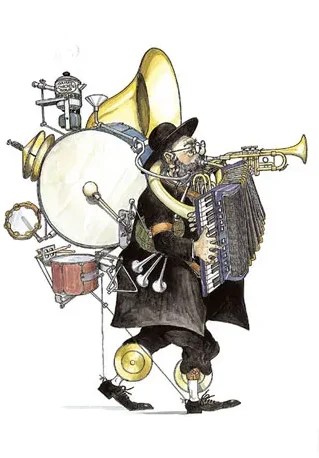
With things like tongs in the palm of his hand
Tongue-depressors or langues-de-chat
He tappets the rhythm of his one-man-band
As he struts in the gutter with a tra-la-la.

He twinkles his fingers and he flicks his wrist
Hey-diddle-diddle and fiddle-de-dee
And his two tame twiddlesticks jump and twist
With a click-click-clackety, one-two-three

For Nifty’s bones are made of wood
And they click like sticks with a restless chatter
His brass as he passes is loud and good
But his rattling bones are a different matter

His drum tum-tums and his trombone groans
And his hi-hat cymbal softly sighs
But all I can hear is the homely bones
That sing out the song in his small sad eyes

He dances a foxtrot, quick-quick-slow
And the hi-hat hisses with a whispered yes
But the bones, bones, bones with their no-no-no
Tick-tock to the tune of uselessness

When Mister Nifty dances by
His fingers flicker and his brass bells shine
But a part of my heart feels cold and dry
As his lonely bones call out to mine.

*****

Ann Drysdale writes “I made this poem because I wanted to see if I could turn words into music, with assonance and dissonance, chiming and clashing like the components of Mr. Nifty’s one man marching band. Laying aside conventional metre and putting boom, boom, boom alongside tum titty tum titty tum. I wanted it to sing and to dance to itself, and for the reader to dance along with it.”

The poem was collected in Miss Jekyll’s Gardening Boots, Shoestring Press, 2015.

Ann Drysdale still lives in South Wales. She has been a hill farmer, water-gypsy, newspaper columnist and single parent – not necessarily in that order. She has written all her life; stories, essays, memoir, and a newspaper column that spanned twenty years of an eventful life. Her eighth volume of poetry – Feeling Unusual – came together during the strange times of Coronavirus and celebrates, among other things, the companionship of a wise cat and an imaginary horse.

Illustration – supplied by Ann Drysdale

Using form: Ruba’i: RHL, ‘Ancient Tales of Love and War’

The pipes and women wail and skirl,
deaths following the flowering girl.
Ancient tales of love and war
show costs of dimple or a curl.

Tamil spear tips illustrate
intent before the towering gate;
bangles slide on her young wrists;
kings make war when made to wait.

Gods and goddesses choose sides:
a Trojan steals a youthful bride.
Who Trojans were we’ll never know –
Greeks burn the city, once inside.

A lovely face, a swelling bust –
and treasure, fame – inspired by lust
kings storm the ramparts, steal the girl,
before, like all, they turn to dust.

*****

This poem was inspired by a blog post in ‘Horace & friends’ on ‘Doing without consolation – Tamil poetry, Yeats and Simone Weil‘. The author, Victoria, touches on a lot more topics than my small piece does; visit her blog to see how Yeats’ “Like a long-legged fly upon the stream / Her mind moves upon silence” connects to ancient Tamil as well as ancient Greek poetry…

My poem here is in iambic tetrameter (with some liberties taken), rhyming AABA in English ruba’i form. It was published in the current (August 2024) Snakeskin, issue 320.

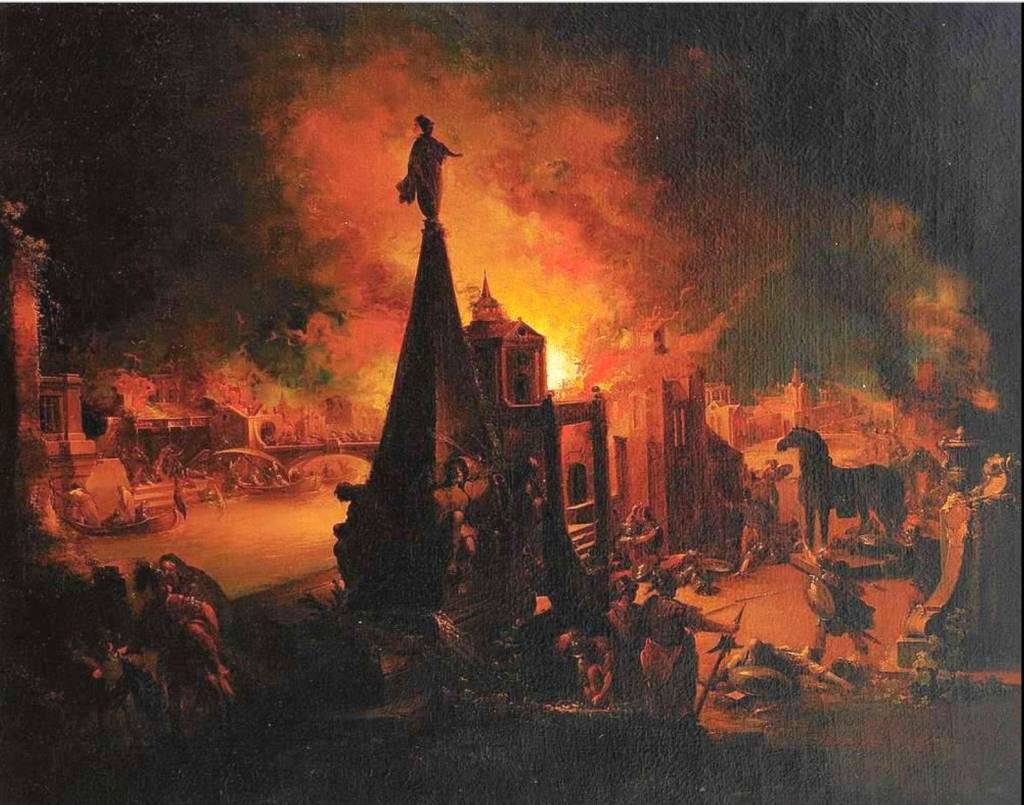
Illustration: The Fall of Troy by Johann Georg Trautmann (1713–1769)

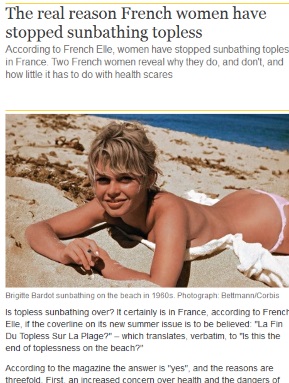
Conor Kelly, ‘On Reading the Guardian News Item: France falls out of love with topless sunbathing’

Now planes are falling from the sky
brought down by bombs or storms of sand
and bodies flying through the air,
incinerated where they land.
Now drones are flying over towns
and villages where families lie
scattered upon the blood-dimmed earth
rent by a missile from on high.
 
    In times like these, it’s good to know
    successors to Brigitte Bardot,
    whose breasts were often on display,
    are covering up in Saint-Tropez.
 
Now children on a blood-strewn yard
lie dying in a UN school
and learn, too late, that modern war
is subject to no human rule.
Now girls asleep in their school dorm
are woken, kidnapped, taken deep
into impenetrable land
while parents, friends and teachers weep.
 
    At times like this it’s good to know
    what may be à la mode, although
    French women think it is passé
    to bare their breasts in Saint-Tropez.
 
Now drive-by shootings in the hood
leave strangers dying, one by one,
and children other children kill
when they discover Daddy’s gun.
Now vigilantes late at night
who stand their ground while they patrol
can shoot the mad, the drunk, the strange,
disdaining talk of gun-control.
 
    At times like this it’s good to know
    bikini tops are now on show
    as toplessness is now risqué
    upon the beach at Saint Tropez.
 
Now new and old diseases take
their toll on those who try to cure
the sad, the suffering, the sick,
when each prognosis is unsure.
Now chemists working in a lab
and patients undergoing trials
are seeking what alleviates
from what are merely fads, lifestyles.
 
    At times like this it’s good to know
    that suntanned breasts no longer glow
    and fashion fans are now au fait
    with what is chic at Saint Tropez.

*****

Conor Kelly writes: “Tragedy and comedy, war and peaceful sunbathing, gunshots and film shoots, dead bodies and bare bodies, vigilantes and voyeurs, the consequential and the chic, the chemical and the comical, the bad and the fad; this poem is based on a fundamental contrast between the fatal depravities of the modern world as outlined in the longer stanzas and changing trends in body images as outlined in the refrain. Despite the serious subject matter, it is not to be taken too seriously. The poem was originally published in the September 2014 issue of Snakeskin (https://www.snakeskinpoetry.co.uk/210topless.html)”

Conor Kelly was born in Dublin and spent his adult life teaching in a school in the city. He now lives in Western Shore, Nova Scotia from where he runs his twitter (X) site, @poemtoday, dedicated to the short poem. He has had poems printed in Irish, British, American, Canadian and Mexican magazines. He was shortlisted for a Hennessy New Irish Writers award. At the ceremony one of the judges, Fay Weldon, asked him, “Where are you in these poems?”  He is still asking himself that same question.

https://www.instagram.com/conorkelly.poems/

Photo: from Snakeskin

Sonnet: Melissa Balmain, ‘Memo to Self, in Bed’

Don’t think, while you are holding him, of deadlines,
of monster Visa bills you haven’t paid,
of NPR reports on gangs and breadlines
and kooks with nukes available for trade.

Don’t think of whom you owe a three-course dinner,
of editors you wish you had impressed,
of whether you should be two sizes thinner
and twice as nice to look at when undressed.

Above all, never think of how time’s racing
toward commonplaces you’re afraid to name–
white halls, bleak calls, the foregone mortal ending;

how you or he (which one?) will soon be facing
long nights where solitaire’s the only game.
Don’t think: just wink at him and keep pretending.

*****

From Walking in on People © Melissa Balmain, 2014. Used by permission of Able Muse Press.

Melissa Balmain writes: “Like many formalist poets, I miss the Nemerov Sonnet Award (for which this poem was a finalist). The Nemerov spurred many of us to write more sonnets, and gave us terrific ones to read when the winners and finalists appeared in The Formalist and, later, Measure. Other contests have emerged to fill the post-Nemerov void, including the wonderful Kim Bridgford Memorial Sonnet Contest, sponsored by Poetry by the Sea. Still, I’d love to see the Nemerov come back somehow–the more good sonnets, the merrier.”

Editor’s comment: In addition to the sonnet’s expected rhymes at the end of each line, Melissa Balmain has thrown in a bonus internal rhyme at the beginning of the last line of each quatrain and tercet. It is quietly done, but adds lightness to a poem that is both light and dark in subject matter.

Melissa Balmain’s third poetry collection, Satan Talks to His Therapist, is available from Paul Dry Books (and from all the usual retail empires). Balmain is the editor-in-chief of Light, America’s longest-running journal of light verse, and has been a member of the University of Rochester’s English Department since 2010.

Photo: “New Bedding!” by Andrew Love is licensed under CC BY-NC-SA 2.0.

Using form: Short poem: Helena Nelson, ‘Duel’

Your false self says to my true self, Hate.
My true self says to your false self, No.

Your false self says to my false self, Shit.
My false self says to your false self, Go.

Your true self says to my false self, Love.
My false self says to your true self, Late.

Late, too late, too late, too late.
My true self sings to your true self, Wait.

*****

Helena Nelson writes: “I can’t explain this easily. It’s both simple and obscure, like a sealed box holding the idea of opposition: a duel between two people, a duet; dual positions. Then there’s the idea of a two-sided self: the true or authentic self versus the manipulative side, the side that does deliberate damage. I don’t even believe in ‘the true self’; but I do in this poem. And I recognise a dispute where one person (especially if for some reason acting from twisted emotion) can push another to come back from that same position, even when they don’t want to. From experience, I’ve known this. The rhyming words trace the development. The slant rhyme between Hate and Shit, for me, has a dark twist. Hate is powerful but Shit is horrible. Late is potentially the last word. The poem could end there, but it doesn’t. Each of these two people summons a ‘true self’. Each dismisses the ‘false’. ‘Late, too late, too late, too late’ is the line that breaks the pattern. No direct speech in that line, perhaps because it’s not a spoken statement but a feeling experienced by both. For me, there’s intense sadness at this point, and the shadow of death too, and because of this—just in time—true speaks to true. Only seventy words in the whole thing but most repeated several times. If you go by unique usage, fifteen words in total. It reminds me of one of R. D. Laings’ Knots. The switch from ‘says’ to ‘sings’ at the end? Yes—significant.”

Helena Nelson runs HappenStance Press (now winding down) and also writes poems, one of which is ‘Duel’. It was originally published in PN Review, collected in Plot and Counter-Plot, Shoestring Press, 2010, and was reprinted in the Potcake Chapbook ‘Lost Love’. Her most recent collection is Pearls (The Complete Mr and Mrs Philpott Poems). She reviews widely and is Consulting Editor for The Friday Poem.

Photo: “Argument” by helena_perez_garcia is licensed under CC BY-NC-ND 2.0.