Category Archives: Chapbooks

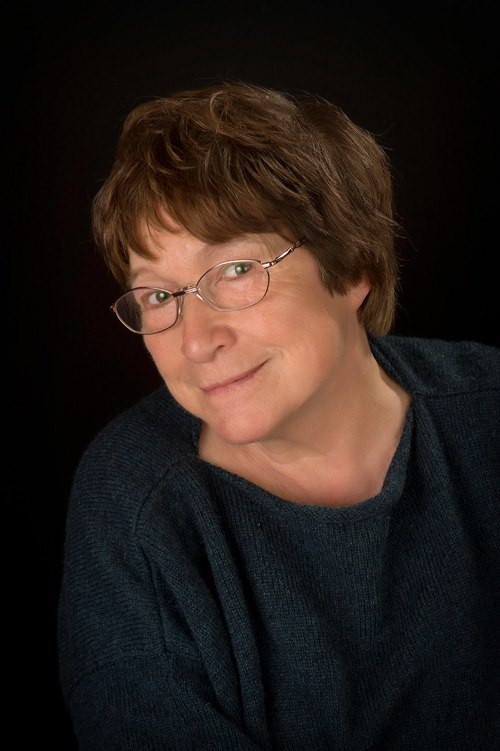
R.I.P. Susan de Sola

Wonderfully warm and witty poet Susan de Sola passed away last week after a short battle with cancer–she was only 59, very active, and had recently published ‘Frozen Charlotte‘ with Able Muse Press. Tributes in Snakeskin’s blog and Light Poetry Magazine have shown some of her charming, amusing work.

Her work appeared in a couple of the Potcake Chapbooks–‘Family and Other Fiascoes’ and ‘Strip Down’–but I think the most fitting poem for showing her spirit is the last poem in ‘Frozen Charlotte’. She likens the lives of humans to the brief lives of fruit flies and ends, acceptingly, with
“The fruit is fine, the day is long.
Let us feed, buzz, rejoice
.”

Indeed. But many of us miss you, all the same.

Potcake Poet’s Choice: Noam D. Plum, ‘Making a Clean Breast of It’

(Three of four men, according to a survey,) would rather take a shower with a beautiful celebrity than with their partner. “I’m not surprised,” said lifestyles counselor Carol Wise. – Reuters

Wise Wise
Replies,
“It’s no surprise.
It’s thighs–
Not ties–
That tantalize.

“True love’s the prize?
It’s otherwise.

“If four comprise
The sampling size,
Three guys
Revise
Their picks. Love dies.

“The fourth one lies.”

—–

Noam D. Plum writes: “The counselor’s name exerted a strong pull toward writing this. I like that the title is as funny as the poem. I was surprised and delighted that Mary Meriam considered this enough of a sonnet to include it in Irresistible Sonnets.”

Another poet’s pseudonym, Noam D. Plum has published in The Spectator, The Country Mouse, Light Poetry Magazine (where this poem was first published) and elsewhere. Having won several prizes, he is a more successful breadwinner than the poet for whom he fronts.

His poems have appeared in the Potcake Chapbooks ‘Wordplayful’ and ‘Murder!’

New magazine’s Call For Submissions – Pulsebeat Poetry Journal

Poet (and engineer) David Stephenson contacted me recently with the message “I am starting a new journal, Pulsebeat Poetry Journal, for poems with a strong musical element, especially poems in meter and rhyme. I don’t think there are enough venues for rhyming poetry.” He is putting out a general Call for Submissions on his web page https://pulsebeatpoetry.com/guidelines/

“Poems full of music, using meter and rhyme or other means, previously unpublished… Theme should be the human condition… Submissions by December 31, 2021, for the first issue to be posted in January, 2022.” More submission details are at that link above.

David Stephenson has published in The Formalist, The Lyric, etc. His ‘Rhythm and Blues‘ won the Richard Wilbur Award in 2007, which puts him in excellent company. On the Masthead page of his web site you can find links to more recent poems of his, published in Autumn Sky Poetry and Avatar Review.

I look forward to reading the Pulsebeat Poetry Journal, and wish David Stephenson good luck with the venture.

Potcake Poet’s Choice: Bruce McGuffin, ‘News Hound’

I sit and I stare at the TV and stew.
The news is so bad I don’t know what to do.
Then a dog nose appears and it rests on my knee
‘Til I look at my dog, who is looking at me.
And she gives a small wag. Her eyes silently say
The same thing they do at this time every day
“Why are you here in this room, on this couch
Watching the news and becoming a grouch?
There are dogs to be petted, with ears you can scratch,
Outside in the park there are squirrels to catch.
Let’s go for a walk, we should give it a try.
Bring a ball too, you’re a ball throwing guy”.
So I pet her and scratch her, it’s good for the blues.
And tonight we’ll go walking right after the news.

Bruce McGuffin writes: “My favorite dog poem is the one called ‘News Hound‘, above. It’s not my best dog poem technically speaking, but it captures the essence of dog. At least the better sort of dog, which I have been lucky enough to have owned a few of over the years.”

This poem first appeared in Lighten Up Online, on Dec. 1 2018.

Bruce McGuffin writes all kinds of poetry, but meter has a way of sneaking in even when it’s not invited, sometimes bringing rhyme along for the ride. His subjects range from the profound to the utterly frivolous with a decided tilt toward frivolous, which he justifies by claiming he writes for his own amusement. He divides his time between Lexington Massachusetts, where he has a day job as an engineer at a radio research lab, and Antrim New Hampshire, where he lives with his wife and pretends to be practical (when he’s not writing poetry). At work the practical engineers think he’s a theorist, and the theorists think he’s a practical engineer. His poetry has appeared in Light, Lighten Up Online, The Asses of Parnassus, Better Than Starbucks, and other journals. His poem ‘The Mad Scientist‘ appeared in the Potcake Chapbook ‘Robots and Rockets‘.

Potcake Poet’s Choice: Ann Drysdale, ‘Sleeping in Tongues’

Three of us breathing; me and dog and cat.
Awoken by a faint and plaintive mew,
I hold my own breath, ascertaining that
the sound comes from one of the other two.
I act upon an educated guess
and lay a hand on cat, who quickly twists
into a different pose of idleness
and settles, silent. But the sound persists.
So dog it is, who wheezes in a dream
that has bestowed on him the gift of tongues
and things both are, and are not, what they seem.
I let the captive air out of my lungs.
Three of us breathing, dog and cat and me;
companionable synchronicity.

Ann Drysdale writes: “This poem emerged from a situation that took a minute to happen and evolved into a sonnet that takes a minute to read. I can almost believe that it sprang fully-formed from my fingertips, now that the pile of sawdust, chippings and paintflakes generated by the making of one into the other has been swept under the carpet and forgotten.”

Ann Drysdale now lives in South Wales and has been a hill farmer, water-gypsy, newspaper columnist and single parent – not necessarily in that order. Her most recent volume of poetry, Vanitas, joined a mixed list of published writing, including memoir, essays and a gonzo guidebook to the City of Newport. Another collection is accreting nicely and is due to be published next year.

Her poems have been published in several of the Potcake Chapbooks:
Tourists and Cannibals
Rogues and Roses
Careers and Other Catastrophes
Families and Other Fiascoes
Houses and Homes Forever
… all available from Sampson Low for the price of a coffee.

Potcake Poet’s Choice: Gail White, ‘Julian of Norwich in Seclusion’

Because an anchoress could have a cat,
We may assume she had one. That it sat
Beside her while the pilgrims came and went,
Giving, like her, a lesson in content.
That it was quiet when her visions came
And when they passed it slumbered just the same,
But any mice who trespassed in the cell
Were given reason to believe in hell.
That with a feline love of body heat
It nestled in her lap or on her feet.
That it died peacefully, grown old and fat.
Love was my meaning, purred St. Julian’s cat.

Gail White writes: “The Ancrene Wisse or Ancrene Riwle (Rule for Anchoresses), written in Middle English in the 13th century, states that an anchoress might have a cat, although other animals were forbidden. I have therefore taken the liberty of sketching the life of a cat belonging to Julian of Norwich. Her book, A Revelation of Divine Love in Sixteen Showings, ends by asking if the reader wishes to know God’s meaning in her visions, and replies ‘Love was His meaning’. I have transferred this sentiment to her cat.”

Gail White is the resident poet and cat lady of Breaux Bridge, Louisiana. Her books ASPERITY STREET and CATECHISM are available on Amazon. She is a contributing editor to Light Poetry Magazine. ‘Tourist in India’ won the Howard Nemerov Sonnet Award for 2013.

Her poems appear in several of the Potcake Chapbooks:
Tourists and Cannibals
Rogues and Roses
Families and Other Fiascoes
“Strip down,” she ordered
… all available at https://sampsonlow.co/potcake-chapbooks/ for the price of a coffee.

Potcake Poet’s Choice: Jean L. Kreiling, ‘The Waves’

Sprawled on a pew of sand, you meditate
on miracles of tide and time. Without
a prayer but apparently devout,
and humbled by the water’s shifting weight,
you watch with wonder, even venerate
this higher power rolling in and out:
omnipotence too obvious to doubt,
authority too awful to debate.
Like salty spray, some blue-green grace may cling
and seep unsanctified into your soul,
without a psalm or sermon—for the sea
makes its own joyful noise: the breakers ring
uncounted changes, and no church bells toll
more faithfully or irresistibly.

Previously published in 14 by 14. 

Jean L. Kreiling writes: “Growing up on the beach, and living on another coast in adulthood, I have never lost the sense of awe and humility that the sea inspires.  And of course I have never succeeded in capturing its magic in words, but I hope I’ve made a start in this poem.  Its form, my favorite, imposes the sonnet’s graceful structure onto what might otherwise have been an amorphous rhapsody; in addition, its meter and rhyme might suggest a bit of the ocean’s own rhythms and harmonies.”

Jean L. Kreiling is the author of two collections of poetry: Arts & Letters & Love (2018) and The Truth in Dissonance (2014). Her work appears widely in print and online journals, and has been awarded the Able Muse Write Prize, three New England Poetry Club prizes, the Plymouth Poetry Contest prize, and several other honors.  She is Professor Emeritus of Music at Bridgewater State University, and an Associate Poetry Editor for Able Muse: A Review of Poetry, Prose & Art.   

Her poem ‘The Salisbury Crags’ which first appeared in the Orchards Poetry Journal, is included in the ‘Travels and Travails’ Potcake Chapbook.

Various updates

I am shifting the focus of this blog to give more coverage to the wide range of formal poets currently writing (especially those who have contributed to the Potcake Chapbooks) and to songwriters who, at their best, are superb poets with tricks up their sleeves not accessible to regular versifiers.

The Potcake Chapbooks continue to be produced on an occasional basis: the tenth in the series, ‘Travels and Travails’, came out recently and the 11th, ‘Lost Love’, has been assembled to be illustrated by Alban Low. Future titles may (or may not) include chapbooks on cities, on teachers, on the seasons, on pets… it all depends on my finding or being sent enough strong and diverse poems on an interesting theme.

I had hoped to have a Christmas-season-themed chapbook out this year, but I am having difficulty finding the diversity I want. Not only diversity of style, but also of content: I would like to acknowledge not just Christmas and Christmas trees and Christmas parties, but also Hanukkah, Kwanzaa, Festivus… everything around the solstice that has given birth to celebrations of the change in the year. (And with some recognition that this looks very different in the southern hemisphere.) Perhaps I will find enough to pull this chapbook together for the end of 2022.

In the meantime I welcome submissions of formal poems on any theme to robinhelweglarsen@gmail.com, but I prefer poems previously published: I don’t have an “accept or reject” procedure, I simply hang onto poems I like until, one of these years, I may have a use for some of them. So, as I don’t want anyone getting antsy about a poem not being available for use elsewhere, the Potcake Chapbooks should not normally be your first place publishing any given poem.

“Temple of British Worthies” by foshie is licensed under CC BY 2.0

Potcake Poet’s Choice: Marcus Bales, ‘Shore’

They grind across the continental shelf,
enormous in their long, well-muscled swells;
I know their sweaty smells of staling spray
and fishy sand; and oh, all by myself
I’ve heard the tide tell what it always tells:
some things wash up and others wash away.

They rise out there a long way from the beach,
and curl and pitch up face down on the sands
from roaming just too far to make it home,
and try to hold with fingers scrabbling, reach
for us, and fail and, failing, trail their hands
under water backwards in the foam.

Finally, though, the greyest weather clears:
small lapping waves replace exploding spume,
and one deep-breathing moment seems sublime;
sweet breezes sway embroidered window sheers
while pleasant sunlight fills the hospice room,
now empty, clean, and ready for the next time.

Marcus Bales writes: ‘The problem with me choosing or talking about one of my poems is that the impetus behind most of them is the same: a phrase or circumstance became a donnee because it resonated in some instant way, and I used it — and sometimes the actual donnee doesn’t survive the process of writing — to write something. It’s the resonance that interests me to turn the phrase over and look at it, clean it up, smear it with something, make it start, make it finish, bury it in the middle, whatever. The question that strikes me about a phrase with resonance is why does it resonate? The poem is the answer. In my view poetry is what a poet does to make a reader feel that resonance by putting it in a context that moves the reader to a feeling. I reject the notion that poetry is the poet expressing their feelings — at least, I don’t say poets cannot express their feelings, but that that expression must be in the service of making the reader feel the reader’s feelings in a directed way. Poetry is a method to make the reader resonate emotionally in response to the words.. If the best you can do is blurt out your pain or joy or whatever, then you’re doing it wrong. Yes, wrong. Write it in your diary, because poetry has never been about the poet. It’s always been about how the poet can make the reader feel in a directed way by using words, not a therapy-substitute for the poet. If you need therapy, get it, but don’t scatter the resulting words across ragged-margined pages and call it poetry.’

Not much is known about Marcus Bales except that he lives and works in Cleveland, Ohio, and that his work has not been published in Poetry or The New Yorker. However his “51 Poems” is available from Amazon.

Marcus Bales has appeared in several of the Potcake Chapbooks:

Tourists and Cannibals
Rogues and Roses
Careers and other Catastrophes
“Strip down,” she ordered
Wordplayful
Murder!
Houses and Homes Forever
Robots and Rockets

all available at https://sampsonlow.co/potcake-chapbooks/ for the price of a coffee.

Potcake Poet’s Choice: Amit Majmudar, ‘Eyespots’

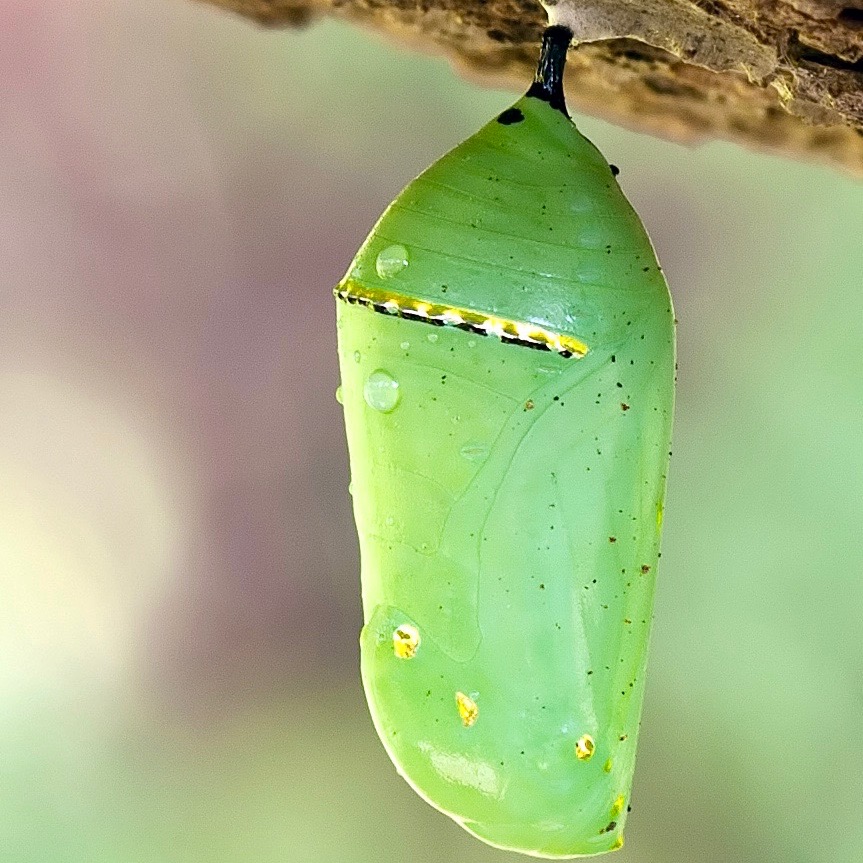
Caterpillars build their bunkers out
of terror. Transformation hunts them, haunts them
as oak leaf peepholes open underfoot
to bare the air, the emptiness that wants them.
I have a measure of infinity
inside me. A is no and mit is measure
in an ancestral tongue that haunts me, hunts me.
I’m half in love with what I have to be.
The other half is looking for a razor
to make of me the Amit who was once me,

my yogi’s beard a clump of Spanish moss
limp at my feet, a piece of furry roadkill.
I’m no ascetic. Half in love with loss,
I’ll seek out beauty, or at least my ode will,
night-blooming jasmines dooming my samadhi,
scenting, resenting my hermetic dark
because they know a yogi, breathing in
his first girlfriend’s perfume, unarchives her body,
and drives her, after dusk, to the vanished park
where memory of sin cocoons the sin.

Caterpillars ravel bunkers into
bodybags—no way for them to know
the moment that they poke themselves a window,
the rebirth they were hiding from will show:
Two stained-glass windows mounted on my back,
two earshaped eyespot petals I can flex
and fold, a flailing that transforms to flight
while all the darkling jasmines that I lack,
past loves that called me onward to the next,
unpetal in the bodybag of night.

In love, or half in love, with mere aesthetics,
I’ve daydreamed Himalayan caves, a hive
that hums with “Aum” from ninety-nine ascetics,
their senses hibernating, half alive.
No one has ever scaled Kailash, the peak
where Shiva sits in bud, in shut-flytrap samadhi
with ashes smeared across his chest and arms.
But that’s just not the changelessness I seek.
I want my language, shapely as a body,
to weave and rive cocoons, enchantments, forms

with giant wings inside their ashgray berries.
I want my transience to live in speech,
if only as a resonance that carries,
like jasmine scent, beyond my voice’s reach.
I tell myself: Old soul, don’t be afraid
of changing. You are old enough to know,
whenever something changes, something dies,
but the dark you flowered in won’t let you fade.
A crack in this cocoon admits a glow.
The blue moon butterfly will wear your eyes.

Amit Majmudar writes: “This poem, ‘Eyespots’, is what I think of as a Keatsian ode, borrowing its stanzaic form and (I hope) something of its musicality. Yet the poem incorporates Hindu religious imagery throughout and sings of self-transformation in a way that isn’t to be found in Keats. This hybridization of Eastern and Western traditions in the poem feels idiosyncratic. There remain elements still opaque to me about it; so I never really delved into the metaphysical significance of the title’s false eyes, these seeming sense organs that are not actually sensing anything, but, given the focus on ascetic imagery, there seems to be something in that. Maybe in another essay? Or another poem….

I feel as though there are poems I have written that someone else could conceivably have written. But not this one; even ignoring that my name hides caterpillar-like inside the cocoon of the poem, I feel that the range of influences and ideas is simply too idiosyncratically “me” for this to have come from any other poet’s hand. Will everyone like it? Probably not, for precisely that reason. But I know that no one else could have produced this sequence of words, so I confess a certain fondness for it. It’s the one of my literary children who most resembles me. And it’s as good a way as any to get to know me as a writer.”

Amit Majmudar is a diagnostic nuclear radiologist who lives in Westerville, Ohio, with his wife and three children. The former first Poet Laureate of Ohio, he is the author of the poetry collections What He Did in Solitary and Dothead among other novels and poetry collections. Awarded the Donald Justice Prize and the Pushcart Prize, Majmudar’s work has appeared in The New York Times, The New Yorker, Best of the Best American Poetry, and the eleventh edition of The Norton Introduction to Literature. Two novels are forthcoming in India in 2022: an historical novel about the 1947 Partition entitled The Map and the Scissors, and a novel for young readers, Heroes the Color of Dust. Visit www.amitmajmudar.com for more details.

‘Eyespots’ was first published in Measure Review.