Category Archives: semi-formal

Semi-formal poem: Susan de Sola, ‘Bounty’

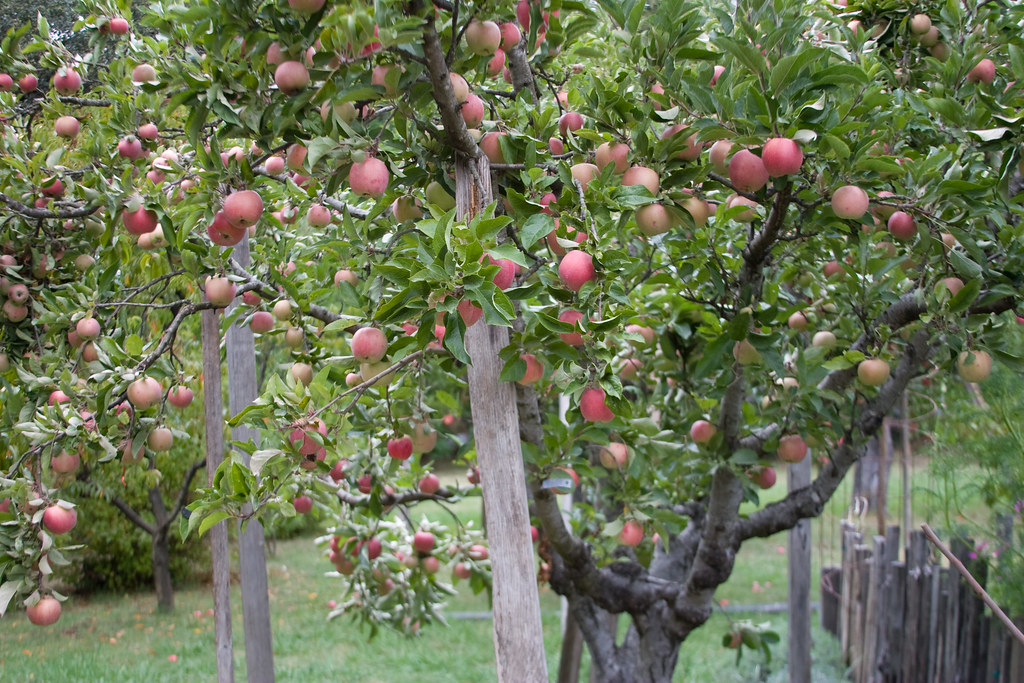
The fruit flies find our fruit, they slip
beneath the lid, a silver dome.
The dark fruit scent has drawn them in,
no other lures them out again.
They settle on apples, puckered figs,
they gorge in perpetuity,
may never fly back to their home,
(if they have ever had a home).
An allegory of choice? Well, yes–
in that we have no choice.
The fruit is fine, the day is long.
Let us feed, buzz, rejoice.

*****

Susan de Sola was a native New Yorker who earned a PhD in English Literature at Johns Hopkins, took a job at Amsterdam University… and stayed, married, raised five children. Published in the Hudson Review, PN Review, and The Dark Horse, she won the David Reid Poetry Translation Prize and the Frost Farm Prize. Her less serious work appeared in Snakeskin, Light, Lighten Up Online, and a couple of her poems were reprinted in Potcake Chapbooks. She was widely loved for her creativity, warmth, and sense of fun. She died from lymphoma in 2021, age 59.

‘Bounty’ is the final poem in her only published collection, Frozen Charlotte, published by Able Muse Press in 2019.

Photo: “Fruit flies from fig” by Alejandro Erickson is licensed under CC BY-NC-SA 2.0.

Short poem: RHL, ‘Flamingo’

As annuals at their lives’ ends flower in beds,
blossom and ripen into yellows and reds
as Earth throws scarlet to the day’s end skies –
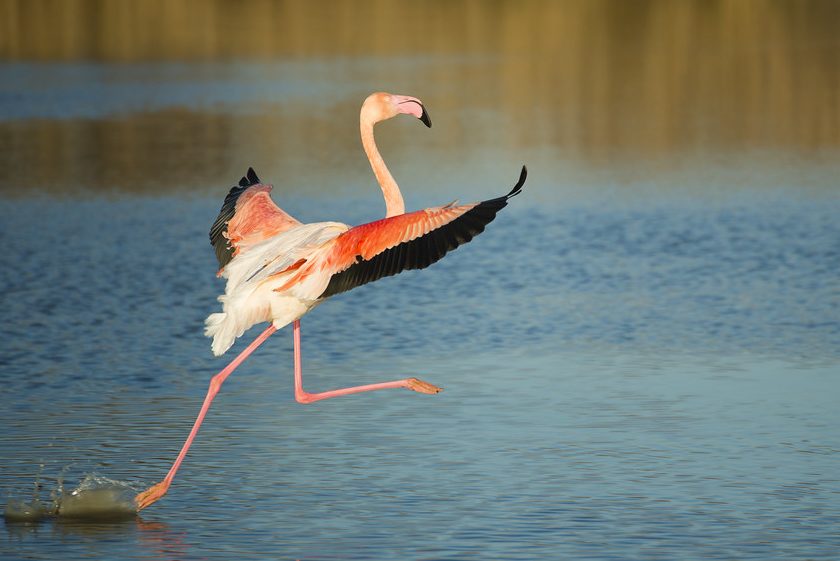
so the flamingo trying to fly, pounding along
the surface of the water, pink wings flapping, pink feet slapping,
ungainly straining desperate, then sudden rise,
its work rewarded: scarlet, pink, black, strong,
suddenly graceful, airborne . . . and then gone.

*****

This short poem was recently published in Lighten Up Online after the editor’s careful query “Could I just check that Ls 5 and 6, which seem to have six beats unlike the others, are intentionally reflecting the awkwardness of the flamingo’s take-off?” Indeed, and I’m glad that it came across that way – thanks, Jerome Betts!

The current Lighten Up Online is a particularly good issue, with many poems far superior to my poor struggling flamingo.

France – Flamingo Landing 04/25/16 Explored” by Benjamin PREYRE Photography is licensed under CC BY-NC-ND 2.0.

RHL, ‘The Queen’

In March the Queen came, flirting on her throne;
April, I loved her gladly,
And in May I’ll love her madly,
And in June I may act badly
For July I’ll love her sadly,
Cause when August comes, I know that she’ll be gone.

*****

This poem was just published in Rat’s Ass Review – thanks, Roderick Bates… who, in accepting it, wrote “By the way, I assume the queen is Cassiopeia, who is always visible at my latitude.” I’m happy with that interpretation; but it’s actually about the lighthearted springtime attractions that, sensibly, go nowhere.

Photo: “flirt” by cloud.shepherd is licensed under CC BY 2.0.

RHL, ‘If Astrology Were Real’

If astrology were real, you’d expect
it would be an unremarkable aspect
of daily life for someone to select–
to fall in love, fully connect–
with two people with the same birthday;
for victims of mass events (tornados, cities wrecked)
to share a sun-sign or unlucky day;
for astrology to be so useful that respect
for horoscopes would drive a business power play,
and with no reason to suspect
insider information when bets proved correct;
and that some other nonsense disarray
would have to be invented to display
for children, lovers, dreamers, to collect–
for old folks suffering neglect–
for young ones on the make, unchecked–
for trash TV and media to infect–
and for the rest of us to naturally reject.

*****

My English mother was a great practitioner of astrology; my Danish father was a thorough sceptic. In the 1950s he was going to take a trip across the Atlantic by sea, and asked her to do a forecast of the voyage. She went off and studied the stars, and came back and said that everything looked fine. (What else could she say?) Unfortunately the ship went on the rocks at Bermuda and everyone was taken off in lifeboats. When my father later questioned her forecast, her explanation (as he reported it) was that “Venus was in the Dragon’s Tail and kiss my arse.”

I studied astrology (along with lots of other religious and spiritual systems) in my 20s, but ended up agreeing with my father; hatha yoga is the only practice I’ve retained from those days.

This poem has just been published in Rat’s Ass Review – a good place for snarky poetry. Thanks, Roderick Bates!

Photo: “Automata on the famous astrological clock” by Curious Expeditions is licensed under CC BY-NC-SA 2.0.

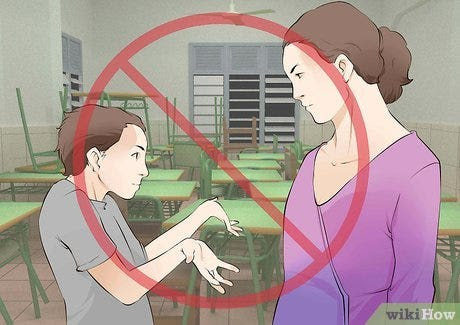
Semi-formal: ‘My Doctir’s Excus’ by Michael R. Burch, age 8

I can eggsplain why Im sick.
Sick as a brick
and my stule is thick.
I came to school
and I caught it from Rick.
Now I’m sick as a brick
and my stule is thick.
I cant do my homework
becus Im sick.
I cant take tests
becus Im a mess.
Blame Rick, the prick!
—signed, my doctir

PS, Thurd grade is hard enuff on kids nervs and bad graids make my simptoms worse! Liten up, doctirs orders!

*****

Michael R. Burch confesses: “I must admit that the whole thing is entirely fictional, and I lied about my age. Poet license! I came up with the poem this morning (December 17, 2024) as soon as I awoke. That happens to me quite bit: having a line in my head as soon as I wake up. I have even composed poems in my sleep a few times. The original poem had normal spelling, but then it occurred to me to turn it into a not-so-artful ‘doctir’s excuse.’
There was no Rick.”

Michael R. Burch’s poems have been published by hundreds of literary journals, taught in high schools and colleges, translated into 22 languages, incorporated into three plays and four operas, and set to music, from swamp blues to classical, 61 times by 32 composers. He is also the founder and editor-in-chief of The HyperTexts.

Illustration: WikiHow: https://www.wikihow.com/Make-Up-a-Good-Excuse-for-Your-Homework-Not-Being-Finished#/Image:Make-Up-a-Good-Excuse-for-Your-Homework-Not-Being-Finished-Step-18.jpg

Semi-formal at best, RHL, ‘Remembering Winter’

I remember winter when it was only
Mostly too cold to swim –
The churning suck and drag of waves under the rock.
Yes, there are flowers – there are always flowers –
But, with the poinciana stripped of leaves,
Its pods like forearms thinned and bent with age,
The rattling of sticks, the hiss of wind,
The broken sea stuck futilely on Wash
With endless turning, churning, foaming pulse –
How long can waves beat on a rock before
The tired rock gives up?

Yes, I remember later northern winters –
The bitter satisfaction of a too-thin sun,
Beauty without the joy, light without heat.
Feet always cold, clothes never quite enough;
Skin drying back from fingernails, lips chapped, throat raw,
The smell of damp coats, never fully dry.

I dream of alternating south and north
And never having to be cold again,
Turning, returning, always in the sun –
Or settling in an equatorial land
And swimming year-round, mellowing on the sand
Flattening my temperature, my will,
Soaking up sun, and dreaming I’m asleep.

Bitter it is, the winter argument,
Betrayed by world that slices off the years,
I have no love of winter, and I feel
Trapped, and betrayer of true kids of mine –
But look – they love it, so I’m further trapped,
Bound to the year that crushes as it turns,
And has become their home – are they then kids of mine?
Ice – snow – the winding down of life and year.

And I’ve known other winters all too well –
Where years of spring gave way to years of warmth,
Blossoms to children sparkling in the light,
The wonders of the world’s sharp sense delight;
Then years of fruit, as independent seeds
Form their own thoughts and follow darkening paths
Falling away, on purpose shrivel up,
And days grow shorter, moods swing soft and harsh
Drizzle sets in for weeks, cold in the bones,
Cold in the head, and colder in the heart –
That’s how the years of endless winter start.

Bleakness to bleakness, blackness into black;
Lives dry and crack,
Sap gone from tree and house and bone.
Who knew that emptiness could weigh so much?
Give me the strength to last to Spring, or start my own.

*****

This poem is from decades ago, in one of those periods where life felt bleak. (But such seasons pass!) For a long time I was unsure of the poem because it always feels like sloppiness and cheating when my rants are low on rhythm and rhyme; but George Simmers liked it enough for inclusion in Snakeskin, and that’s more than good enough for me.

Photo: “Shack-Shacks” by Chris Hunkeler is licensed under CC BY-SA 2.0.

Weekend read: Semi-formal: Darlene Young, ‘Sisters’

for Marilyn

Litter mates. Glitter mates. Mirror
of what you hate, what you adore
about yourself. Sleep together on the floor.
Giggles and snorts, kicks, forts
of chairs and furry blankets. Fury. Tangle.
Tussle and brush. Braid and wrangle, pulling hair;
it’s just not fair. One of you is picked.
Not it! On your mark, get set and go! Kicked
gameboards; slam and pout. Crossing the street
when the mean dog is out. I dare you.
A secret meeting place under the willows
against the fence. Sheets and pillows.
Toothbrushes, blood, things buried in mud.
All-ee, All-ee in free! Quit looking at me.
Canned peaches, cold beaches. You
and not-you;
anyone but you.

So sick of that piano song! Scented
markers. Shotgun! Wishing she was anyone.
Wanting to be anyone. Else. Lure the cat
to your lap from hers, pointing out
how loud he purrs. Making cookies.
Making up. Stealing make-up. Just shut up.
Together, bang the pots on New Year’s.
Pretend that you don’t hear her tears. Her
bad boyfriend that you hate. And yours.
Get home late. Will you, won’t you? Tattle-tell.
Pounding on the bathroom door, shirt that’s wadded
on the floor. You,
not you.

Share a mattress in the tent,
trees and stars and what you meant.
The thrilling doorbell. That weird noise
she makes in her throat. You both finish
the movie quote. Belting songs in underwear,
saying that you love her hair. Midnight soda run,
car windows down—U2 blasting to the edge of town.
Knowing look, shared favorite book,
all the things
you’ll always keep.
Someday, you’ll rock her child to sleep.

*****

‘Sisters’ was published in New Verse Review, and nominated for a Pushcart Prize. Darlene Young writes: “I’ve been blessed with two radiant, hilarious, gifted sisters. The one closest to my age has been battling cancer this year, something that took our mother when we were in our early twenties. I wrote this poem in honor of her, her courage, and all she has meant in my life.”

Darlene Young is the author of three poetry collections (most recently, Count Me In from Signature Press, 2024). She teaches writing at Brigham Young University and has served as poetry editor for Dialogue and Segullah journals. Her work has been noted in Best American Essays and nominated for Pushcart Prizes. She lives in South Jordan, Utah. Find more about her at darlene-young.com and @darlylar.

Photo: Darlene Young and her sister.

Cowboy poetry: Using form: Doc Mehl, ‘Poems Used To Rhyme’

Poems used to rhyme.
In time, the couplets were dispensed.
Incensed, today’s poet rebels from rhyming schemes,
It seems. The writer, newly shedding the shackles of quatrains,
Refrains from even a modicum of lilt.

And built now from unpaired diphthongs,
His songs have lost a measure of glue.
It’s true. No longer does the ear delight
In flight of fancy, in teeter-totter,
Like water on the endless sand, the to-and-fro,
And no, this tide will not abate.

Of late, I find that poems no longer draw me in.
They’re thin.

*****

Doc Mehl writes: “For the last two decades I’ve written rhyming western poetry, and I’ve performed both the poetry and my original western-themed music at cowboy poetry events in the western U.S. and Canada. I’ve recorded two spoken-word CDs of my rhyming poetry, and several CDs of my original music.
I’m not averse to free verse. (OK, I must pause momentarily to savor the rhyme in that sentence.) Still, the author of a free verse poem ought to be able to convincingly answer this question: “Why do you maintain that this work should be categorized as poetry rather than prose?”
In this poem (“Poems Used To Rhyme”), I liked the gamesmanship of sneaking the rhyming word of each “couplet” into the beginning of the second line rather than at the end of the second line. The resulting poem might first appear to be a tongue-in-cheek free verse poem about why rhyme is important. Still, the magic of the closely juxtaposed rhyming words can’t help but rise from the ether.”

‘Poems Used To Rhyme’ was first published in Rattle #85 with a link to audio.

Newly transplanted from Colorado to Black Diamond, Alberta, Al “Doc” Mehl traces his family roots to central Kansas, where his grandfather raised six children on the family homestead. His debut music CD is titled “Asphalt Cowboy,” and his second music CD titled “I’d Rather Be…” was released in 2008. Doc Mehl has also published a CD of original poetry titled “Cowboy Pottery,” and a second spoken-word poetry CD titled “The Great Divide,’ named 2013 “Cowboy Poetry CD of the Year” by both the Western Music Association and the Academy of Western Artists. In 2020, Doc published his first collection of poetry, “Good Medicine: Read Two Poems and Call Me in the Morning.” And in 2022, Doc released two new CDs of music, “West of the 22” and “Tried and True. Doc’s poems and musical lyrics have been featured on the website http://www.CowboyPoetry.com, he has been published in the poetry journal “Rattle,” and he was a first-place silver buckle winner at the National Cowboy Poetry Rodeo in Montrose, Colorado in 2009.

Photo: https://docmehl.com/photo-gallery

Semi-formal: RHL, ‘Terminal’

Christian culture’s crucifixation
nails us to our seats as, station by station,
we travel the trammelled line
until we find
that terminal
more primal.

The humanstrain’s end-of-line stop
is Ragnarok.
Everyone please disembark
into the dark–
no light, no map.
Mind the Ginnungagap.

*****

This is as close as I get to religion: existential uncertainty. I’m a Militant Agnostic: “I don’t know… and neither do you!” Yet this attitude is apparently compatible with religion, being not that different from Eliot’s ‘East Coker‘:
O dark dark dark. They all go into the dark,
The vacant interstellar spaces, the vacant into the vacant,
The captains, merchant bankers, eminent men of letters

(…)
I said to my soul, be still, and let the dark come upon you
Which shall be the darkness of God.

But Christianity? I think not. Altogether too unlikely, with so many impossibilities packed into such a small understanding of the cosmos. We don’t know where we are headed, not just as individuals with finite lives, but as a species that is simultaneously developing space travel and genetic modifications… the possibilities are endless and the future, dark as well as light, is unknowable.

The poem is semi-formal with its loose iambics and paired rhymes or slant rhymes, but no structure beyond its natural flow. It was originally published in the Experimental section of a 2019 issue of Better Than Starbucks, and republished as part of work being spotlighted in The HyperTexts in August 2024.

Photo: “London Holborn tube station in Black and White effect” by Patrick Cannon Tax Barrister is licensed under CC BY 2.0.

Semi-formal: RHL, ‘Laffable Religion’

No matter how seemingly affable,
a priest always hopes to be greased;
while others, invoking hellfire,
have us wait for our trip in the hearse
and preach in their suits neatly creased,
these fishers of men that are gaffable,
in this world that they’ve made mud and mire.
That the point of a flock’s to be fleeced
can only be said in light verse;
for religion is simply so laughable
it’s amazing it’s not yet deceased.

*****

Isn’t it amazing that the Pope can claim to have voluntarily taken a vow of lifelong poverty, and millions of his supporters who live in involuntary poverty send money to support him living in a palace? Is it different from a billionaire politician soliciting donations from his impoverished supporters? Is the human need to glorify the tribal god and the tribal leader never going to end?

This poem was first published in The HyperTexts, as part of the August 2024 Spotlight.