Category Archives: Uncategorized

Tom Vaughan: ‘Is This It?’

Well if it is, and this is it
then what will be will be
and time will toil and time will tell
if there’s a guarantee

that at the least and at the last
the daily here and now
which now and here are thick as thieves
will be transformed, somehow

and either way, here’s my advice –
lie back and think of all
the ups which came between the downs
before your curtain call.

*****

Tom Vaughan writes: “There was no particular trigger for this poem, apart from my fitful attempts to be Stoical about the state – and weirdness – of the world. But just at the moment the anger occasioned by the former keeps breaking through.”

‘Is This It?’ was published in the current Lighten Up Online.

Tom Vaughan is not the real name of a poet whose previous publications include a novel and three poetry pamphlets (A Sampler, 2010, and Envoy, 2013, both published by HappenStance; and Just a Minute, 2024, from Cyberwit). His poems have been published in a range of poetry magazines, including several of the Potcake Chapbooks and frequently in Snakeskin and Lighten Up Online. He currently lives in Brittany.
https://tomvaughan.website

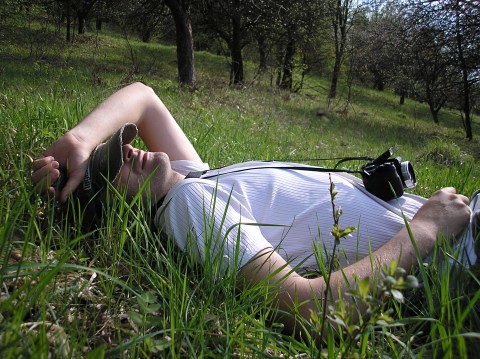
Photo: “man-relaxing-in-the-grass_8954-480×359” by Public Domain Photos is licensed under CC BY 2.0.

Oliver Butterfield, ‘Self-reflection’

Y’know — it ain’t a lot of fun
negotiating one-on-one
with the person in the mirror who
is staring blankly back at you
with hollow, soporific eyes —
but you penetrate his deep disguise,
and then it is you realize
that you’re in for loads of gloom and doom
cooped up within this little room
all by your empty, woeful self,
all, all alone, with no one else —
and the guileful guy you’re talking to
isn’t talking back at you —
’cause he knows there’s nothing left to say.
But the sonvabitch won’t go away.

*****

This poem was originally published in Better Than Starbucks. I have been unable to find Oliver Butterfield, I only know he retired and closed his law practice in Kelowna, British Columbia. I’d be interested in seeing more of his poetry.

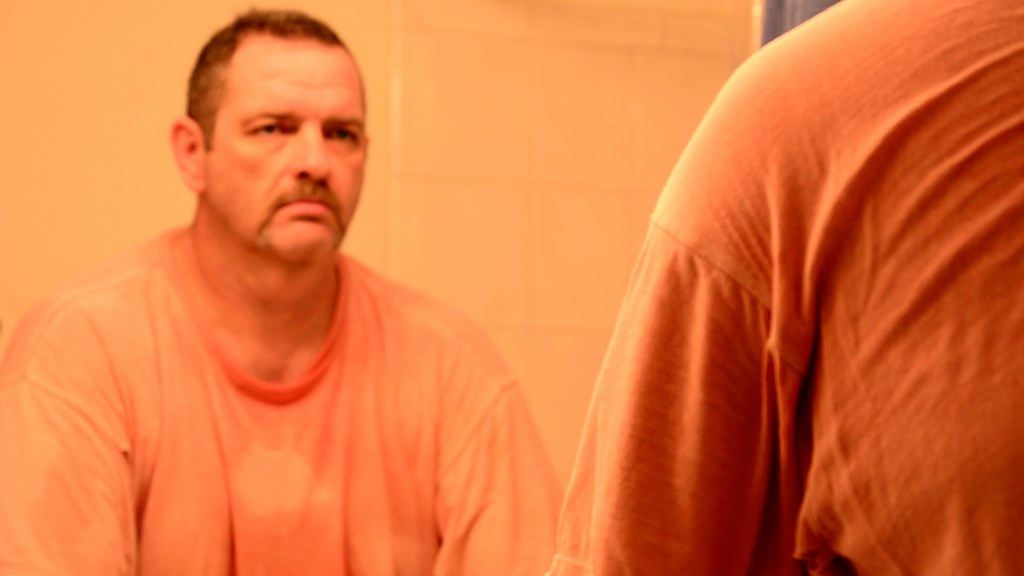
Photo: “Man in the Mirror” by airguy1988 is licensed under CC BY-ND 2.0.

Bruce McGuffin, ‘Tunnels’

A snowy field — sun sparkles on the ice —
Devoid of life to those who do not know
That underneath a furtive swarm of mice
Live out their lives in tunnels through the snow.
My dog, who finds them out by smell or sound,
Runs snorting through the snow in wriggling glee.
Then back and forth ecstatically he’ll bound
Until some mouse has nowhere left to flee.
For so it goes with mice as well as men,
Those tunnels where we run turn into traps
When forces that are far beyond our ken
Play out their game until our ways collapse.
Do waiting mice envision what impends?
That somewhere up above a canine snout —
Deus ex machina to mice — descends
To pierce the snow and pull those trapped mice out?
Few things in life will make that dog as glad.
The mouse may not rejoice — its life is through.
But whether killing mice is good or bad
Depends completely on your point of view.

*****

Bruce McGuffin writes: “When I was a boy winters were longer, colder, and snowier than they are today, and I had a suitably adapted dog: An 80 pound husky of indeterminate parentage. By which I mean a local ski instructor took his Siberian husky to Alaska one winter and she came home pregnant. We named him Frosty. In my defense I was 7 years old. His favorite pastimes were eating, sleeping outdoors in the snow, and hunting. Dogs roamed free in those days, and he brought home squirrels, mice, and more than one skunk. Frosty also bit the older boy next door after he punched me, which made Frosty The Best Dog Ever.
This poem started out as a paean to The Best Dog Ever, but slipped the leash and went off in a different direction, as poems sometimes do. It turns out that some of my favorite poems are the ones that get away.”

‘Tunnels’ was first published in Better Than Starbucks.

Bruce McGuffin grew up in rural Central NY, where children and dogs ran free through the frozen woodlands in winter, and waded in the creek all summer. It was ok if you like that sort of thing. His graduating class voted him Class Intellect, which was not exactly a compliment. Spurred on by lack of economic opportunity in that region, and the desire to know more people who didn’t think reading books was “weird”, he spent too many years in college then moved to the Boston area and worked for 37 years as an engineer in the field of radio communications. It was fun. Now semi-retired, he lives in Antrim NH with his wife Ann and occasional visits from two children who come for the skiing if not the company. His poetry has appeared in Light, Lighten Up Online, The Asses of Parnassus, Better Than Starbucks, and other journals.

Photo: “Sniffing the Prey” by Emyan is licensed under CC BY-NC-ND 2.0.

Richard Fleming, ‘In Grace’

The present is arcane and strange
and any recollection left
of what has happened in the past
is vague and liable to change.
Of future plans, he is bereft,
for nothing now is hard and fast.

They give him multicoloured pens
and paper, as one might a child.
Familiar voices interweave.
He sees, through a distorting lens,
people who wept, people who smiled,
that, one by one, stood up to leave.

He is content. He lives in grace.
What matter if the moments blur,
if his nocturnal thoughts are grim?
He has escaped himself: his face,
a kind of absence in the mirror,
comforts and somehow pleases him.

*****

Richard Fleming writes: “Getting old is like exploring new territory without a map: nothing prepares you for the subtle changes in body and mind. Is a moment of forgetfulness just that, or an early indication of approching dementia? We cannot know what strange highways a decaying brain takes us down but I like to think that they might lead to a place of contentment, where the burdens of age are laid down and replaced by some measure of contentment. That’s what I’ve tried to capture in this poem.”

Richard Fleming is an Irish-born poet (and humorist) currently living in Guernsey, a small island midway between Britain and France. His work has appeared in various magazines, most recently Snakeskin, Bewildering Stories, Lighten Up Online, the Taj Mahal Review and the Potcake Chapbook ‘Lost Love’, and has been broadcast on BBC radio. He has performed at several literary festivals and his latest collection of verse, Stone Witness, features the titular poem commissioned by the BBC for National Poetry Day. He writes in various genres and can be found at www.redhandwriter.blogspot.com or Facebook https://www.facebook.com/richard.fleming.92102564/

Photo: Richard Fleming post

Claudia Gary, ‘Mountain Fire’

“Sunday, November the 5th, 1961, was hot and windy in Los Angeles…. As dawn approached on Monday the 6th… Fire Station 92 [received] a teletype from headquarters, noting the day would be considered a ‘high hazard’ day in the Santa Monica mountains….” –Los Angeles Fire Department Historical Society

Who is this with a garden hose
on a gravel roof, watering wind,
ignoring pleas from firemen?
Oh yes, he knows,

but can’t stop. Neighbors’ houses broil
to concrete slabs with chimneys,
melted-down pipes, dead brush and trees,
eroded soil.

Wild Santa Ana wind has tossed
burning wood shingles, leveling
castles, condos. Leave everything
or you’ll be lost.

Later in the newsreel,
a mother steers her family’s car
down Roscomare, and there we are,
too scared to feel.

An offer on the radio
says “Stay for free at Disneyland!”
Mother and daughter drive and plan,
deciding No.

Allowed back, they are lucky: See?
Fire has spared their modest home.
The child’s toy bin contains a poem.
Unscathed — or isn’t she?

*****

(First published in Mezzo Cammin)

Claudia Gary writes: “Thinking of today’s residents of Los Angeles, with firsthand knowledge that even if a home is not lost, fire (and evacuation) can be traumatic.”

Claudia lives near Washington DC and teaches workshops on Villanelle, Sonnet, Meter, Poetry vs. Trauma, etc., at The Writer’s Center (writer.org) and privately, currently via Zoom. Author of Humor Me (2006) and chapbooks including Genetic Revisionism (2019), she is also a health/science writer, visual artist, composer of tonal songs and chamber music, and an advisory editor of New Verse Review. Her 2022 article on setting poems to music is online at https://straightlabyrinth.info/conference.html. For more information, see pw.org/content/claudia_gary
@claudiagary

Photo: During the 1961 BelAir-Brentwood fire in Los Angeles, Richard Nixon was among those who tried to save their homes (in Nixon’s case, a rental house) with garden hoses. Finding this photo for this blog post was coincidental; Claudia Gary did not have Nixon in mind when she wrote the poem. – RHL

Weekend read: Odd poem: Winston Churchill, ‘Our Modern Watchwords’

I
The shadow falls along the shore
The search lights twinkle on the sea
The silence of a mighty fleet
Portends the tumult yet to be.
The tables of the evening meal
Are spread amid the great machines
And thus with pride the question runs
Among the sailors and marines
Breathes there the man who fears to die
For England, Home, & Wai-hai-wai.

II
The Admiral slowly paced the bridge
His mind intent on famous deed
Yet ere the battle joined he thought
Of words that help mankind in need
Words that might make sailors think
Of Hopes beyond all earthly laws
And add to hard and heavy toil
The glamour of a victorious cause.

*****

Around 115 years after it was written, the only known poem written by Winston Churchill as an adult was discovered by Roy Davids, a retired manuscript dealer from Great Haseley in Oxfordshire: ‘Our Modern Watchwords’, which was apparently inspired by Tennyson and Kipling.
Written between 1898 and 1900 when Churchill was a cornet (equivalent to today’s second lieutenant) in the 4th Hussars, the 10-verse poem is a tribute to the Empire. The author peppers the poem with the names of remote outposts defending Britain’s interests around the world, many of which he would have visited as a young officer and even fought at, including Weihaiwei in China, Karochaw in Japan and Sokoto in north-west Nigeria. Written in regular iambic tetrameter but with irregular rhymes, the poem exists in a tradition that stretches back to Homer’s Iliad: the soldier waiting impatiently for the battle to begin. As Churchill writes: ‘The silence of a mighty fleet / Portends the tumult yet to be.’
Davids, who says the poem “is by far the most exciting Churchill discovery I have seen”, admits it is merely “passable”.
Andrew Motion, the former Poet Laureate, goes further, calling it “heavy-footed”. “I didn’t know he wrote poems, though somehow I’m not surprised: oils, walls, why not poems as well?” said Motion. “This is pretty much what one would expect: reliable, heavy-footed rhythm; stirring, old-fashioned sentiments. Except for the lines ‘The tables of the evening meal/Are spread amid the great machines’, where the shadow of Auden passes over the page, and makes everything briefly more surprising.”
Despite its lack of literary virtues, however, the poem written in blue crayon on two sheets of 4th Hussars-headed notepaper was expected to raise between £12,000 to £15,000 when it went on sale in 2013. Its price reflected its rarity: the only other poem known to be penned by Churchill is the 12-verse ‘The Influenza’, which won a House Prize in a competition at Harrow school in 1890 when he was 15. However ‘Our Modern Watchwords’ failed to sell at the auction as bidding never reached the reserve price.
Churchill was well-known for his love of poetry. He won the Headmaster’s Prize at Harrow for reciting from memory Macaulay’s 589-line poem ‘Horatius at the Bridge‘.
Allan Packwood, director of the Churchill Archive Centre at Churchill College, Cambridge, said the wartime prime minister’s interest in poetry spanned the sophisticated to the more earthy: “In his speech accepting freedom of the city of Edinburgh in 1942, he quoted Robert Burns and ended by quoting the music hall entertainer Sir Harry Lauder, who was in the audience. This was no cheap politician’s trick, Churchill was an admirer of Lauder’s.”
By the way, Churchill was well-known for his oratory and repartee, but he wasn’t always the victor. My favourite story involves Richard Haldane in the 1920s. Churchill prodded Haldane’s ample belly and asked “What’s in there?” Haldane answered: “If it is a boy, I shall call him John. If it is a girl, I shall call her Mary. But if it is only wind, I shall call it Winston.”

Photos: https://winstonchurchill.org/publications/churchill-bulletin/bulletin-056-feb-2013/appreciation-the-young-churchill-poem-hints-at-the-rhetorical-greatness-to-come/

Armen Davoudian, ‘Coming Out of the Shower’

I shut my eyes under the scalding stream,
scrubbing off last night’s dream,
when suddenly I hear your voice again
as though it caught in the clogged drain

and was sent bubbling back up from the other
world where you’re not my mother.
This time, it’s really you. I’m really here.
I blink. We do not disappear.

Dad left, you say, to shower at the shop
so I don’t need to stop
just yet—and yet I do, unable to
resume old customs, unlike you.

In a one-bath four-person household, we
learn what we mustn’t see,
growing, in time, so coolly intimate
with one another’s silhouette

behind the opaque frosted shower screen
that once more stands between
us two. While at the mirror you apply
foundation and concealer, I

wash out my hair with rosewater shampoo,
which means I’ll smell like you
all day. Mama, I shout, I’m coming out,
and as you look away I knot

around me tight your lavender robe de chambre,
cinching my waist, and clamber
out of the tub, taking care not to step
outside the cotton mat and drip

on the cracked floor you’ve polished with such zeal
we’re mirrored in each tile.
Yet, you’d forgive spillage, or forget.
What else will you love me despite?

*****

‘Coming Out of the Shower’ by Armen Davoudian is reprinted with permission from Tin House Books from the book The Palace of Forty Pillars (2024). The poem was originally published in Literary Matters.

Armen Davoudian is the author of the poetry collection The Palace of Forty Pillars (Tin House, US; Corsair, UK) and the translator, from Persian, of Hopscotch by Fatemeh Shams (Ugly Duckling Presse, US; Falscrhum, Germany). He grew up in Isfahan, Iran, and is a PhD candidate in English at Stanford University.

Shower Silhouette” by tausend und eins, fotografie is licensed under CC BY 2.0.

Tom Vaughan, ‘Safe’

We hurried back, struggling to comprehend
the scale of devastation and what journey’s end
would mean – wondering indeed whether
we still had a home to go to. Aghast, we scanned
fields the dead had sown and reaped forever

transformed to lakes, then villages where cars
had been tossed aside like toys, and scooped-out bars,
churches, schools, where dark lines marked
the height reached by the water, left as scars.
There’d been no warning signs, no Noah’s ark

though those of us who’d been on higher ground
could now inherit the world the tempest drowned
though too few to repopulate
that morning’s massive, muddy funeral mound,
reminding us what might have been our fate.

The radio was silent, even if the word
on the street was help would come – soon enough we heard
helicopters. But the broken men
who landed only muttered something blurred
about how this was it till God knows when.

A black market opened – which only the rich could afford.
The rest of us survived on what we’d stored
in better days, skimping until
re-learning the ancient ways, we could once more
live off the land with long-forgotten skills.

Sometimes I look back, yet I know the past
has gone for good, that no one can forecast
when the day will come we’ll dare to hope
the storm which killed so many was the last,
and trust again illusion’s horoscope.

*****

Tom Vaughan writes: ” ‘Safe‘s working title was Sanctuary, and the poem was inspired – if that’s the word – by the sense that there is none. The form reflects the fact that it was written during one of my regular bouts of reading Larkin. I was lucky enough to visit his office in the library at Hull University in July, with a copy of The Whitsun Weddings in my backpack for the train trip back to London . . . “

Tom Vaughan is not the real name of a poet whose previous publications include a novel and three poetry pamphlets (A Sampler, 2010, and Envoy, 2013, both published by HappenStance; and Just a Minute, 2024, from Cyberwit). His poems have been published in a range of poetry magazines, including several of the Potcake Chapbooks and frequently (as with ‘Safe‘) in Snakeskin.
He currently lives in Brittany.
https://tomvaughan.website

Photo: “Search-and-Rescue Workers Arrive in Ofunato [Image 1 of 23]” by DVIDSHUB is licensed under CC BY 2.0.

Early poem: Michael R. Burch, ‘Will There Be Starlight’

Will there be starlight
tonight
while she gathers
damask
and lilac
and sweet-scented heathers?

And will she find flowers,
or will she find thorns
guarding the petals
of roses unborn?

Will there be starlight
tonight
while she gathers
seashells
and mussels
and albatross feathers?

And will she find treasure
or will she find pain
at the end of this rainbow
of moonlight on rain?

*****

Michael R. Burch writes: “The real test of a poem, for me, is whether I can remember it or not. If I can’t remember a poem, if it doesn’t leave a lasting impression, it simply vanishes like a windblown tumbleweed and cannot be a “keeper.” I decided to apply an “instant recall” test to my own poems and translations, to see which ones leapt to mind first. Ironically, or perhaps not, several of these poems turned out to be about memories and/or how the human memory works, or sometimes doesn’t. ‘Will There Be Starlight’ is one.

“I wrote it around age 18 as a high school student and it has been published by TALESetc, Starlight Archives, The Word (UK), Poezii (in a Romanian translation by Petru Dimofte), The Chained Muse, Famous Poets & Poems, Grassroots Poetry, Inspirational Stories, Jenion, Regalia, Chalk Studio, Poetry Webring and Writ in Water. ‘Will There Be Starlight’ has also been set to music by the award-winning New Zealand composer David Hamilton and read on YouTube by Ben E. Smith. To have a poem written as a teenager translated into Romanian, set to music by a talented composer, performed by one of the better poetry readers, and published in multiple literary journals was not a bad start to my career as a poet!”

Michael R. Burch is an American poet who lives in Nashville, Tennessee with his wife Beth, their son Jeremy, two outrageously spoiled puppies, and a talkative parakeet. Burch’s poems, translations, essays, articles, reviews, short stories, epigrams, quotes, puns, jokes and letters have appeared in hundreds of literary journals, newspapers and magazines. He is also the founder and editor-in-chief of The HyperTexts, a former columnist for the Nashville City Paper, and, according to Google’s rankings, a relevant online publisher of poems about the Holocaust, Hiroshima, the Trail of Tears and the Palestinian Nakba. Burch’s poetry has been taught in high schools and universities, translated into 19 languages, incorporated into three plays and two operas, set to music 61 times by 32 composers, from swamp blues to classical, and recited or otherwise employed in more than a hundred YouTube videos. To read the best poems of Mike Burch in his own opinion, with his comments, please click here: Michael R. Burch Best Poems.   

Photo: “Star Girl” by Tobias Mayr is licensed under CC BY-NC-SA 2.0.

Kelly Scott Franklin, ‘Fez’

Haberdashers, it is true,
are hardly known for derring-do,
or swashbuckling, or hurling stones,
or smashing heads and dragon bones.

But let that man exalted be,
that Hercules of hattery,
whose name no history ever says:
all hail the man who made the fez.

*****

Kelly Scott Franklin writes: “This comes from my collection-in-progress, A Curious Alphabet of Hats, a whimsical alphabet book of poems about, well, hats. The Fez is not a silly hat from its origins. But it is comical to see American members of the Shriners club wearing it while they drive their go-carts in parades. I’m especially proud of the alliterative-allusive-hyperbole “that Hercules of hattery.” This poem and more entries from A Curious Alphabet of Hats have appeared here (Light Poetry Magazineand another here (Lighten Up Online). I have also begun A Curious Alphabet of Birds, but haven’t gotten any farther than Dodo.”

Kelly Scott Franklin lives in Michigan with his wife and daughters. He teaches American Literature and the Great Books at Hillsdale College. His poems and translations have appeared in AbleMuse ReviewLiterary MattersDriftwood Literary Magazine, Iowa City Poetry in Public, National Review, Thimble Literary MagazineEkstasis, and elsewhere. His essays and reviews can be found in Commonweal, The Wall Street JournalThe New CriterionLocal Culture, and elsewhere. 
https://www.hillsdale.edu/faculty/kelly-scott-franklin/

Photo: “Kirk Talks to Spock about his ‘Fez Addiction'” by The Rocketeer is licensed under CC BY-NC-ND 2.0.