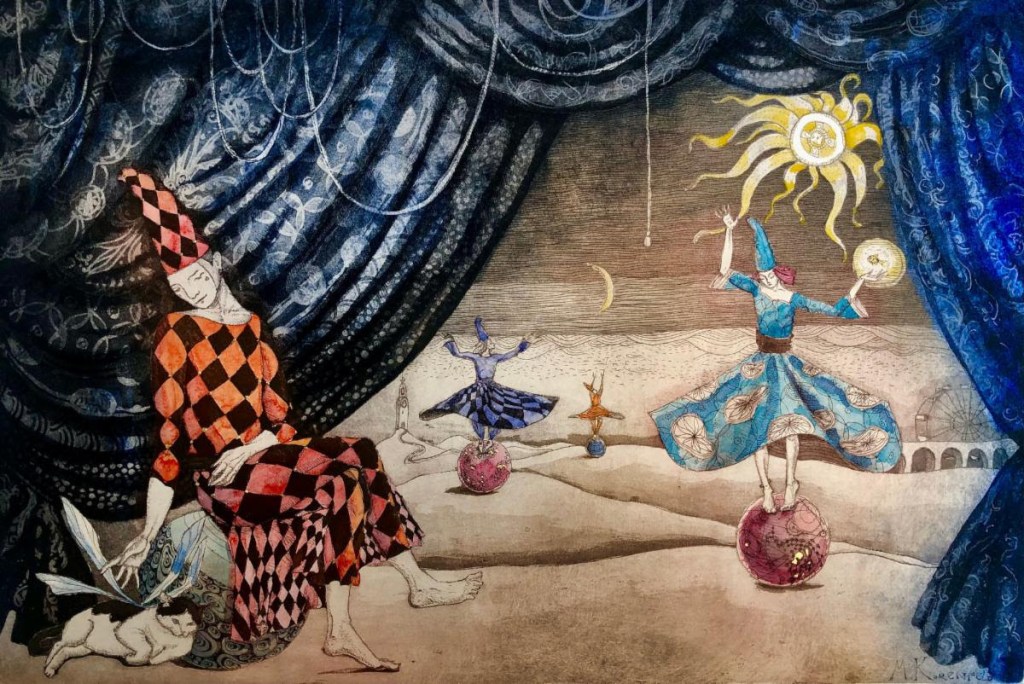
Each morning when you wake to put your armor on, remember this: all the world’s a spinning stage,
all the world’s a carnival— and though it doesn’t have your back or love the cover of your book
all the world’s a turning page. Just when you thought the minstrels, fools and dragon cats had lost their way
inside the inflammation age, they shed the husks of self defense and enter stage, not from the right
or from the left, but from behind. They sneak right up and inch ahead into the distance of your mind.
The sun will melt. The moon will find your part has not yet been assigned. You blink, and take your armor off.
The lights will blaze before they dim. It’s not a sham. It’s not a con. The curtain falls. Show must go on.
*****
The illustration is ‘Not Dancing’ by Marina Korenfeld, and was the subject of Rattle’s Ekphrastic Challenge, February 2026. Wendy Videlock’s response, ‘Before You Put Your Armor On’, was selected as the Rattle Editor’s Choice.
Wendy Videlock lives on the Western Slope of the Colorado Rockies. Her work appears widely and her books are available wherever books are sold. Her upcoming book, Desert Kin, will appear in August, 2026.
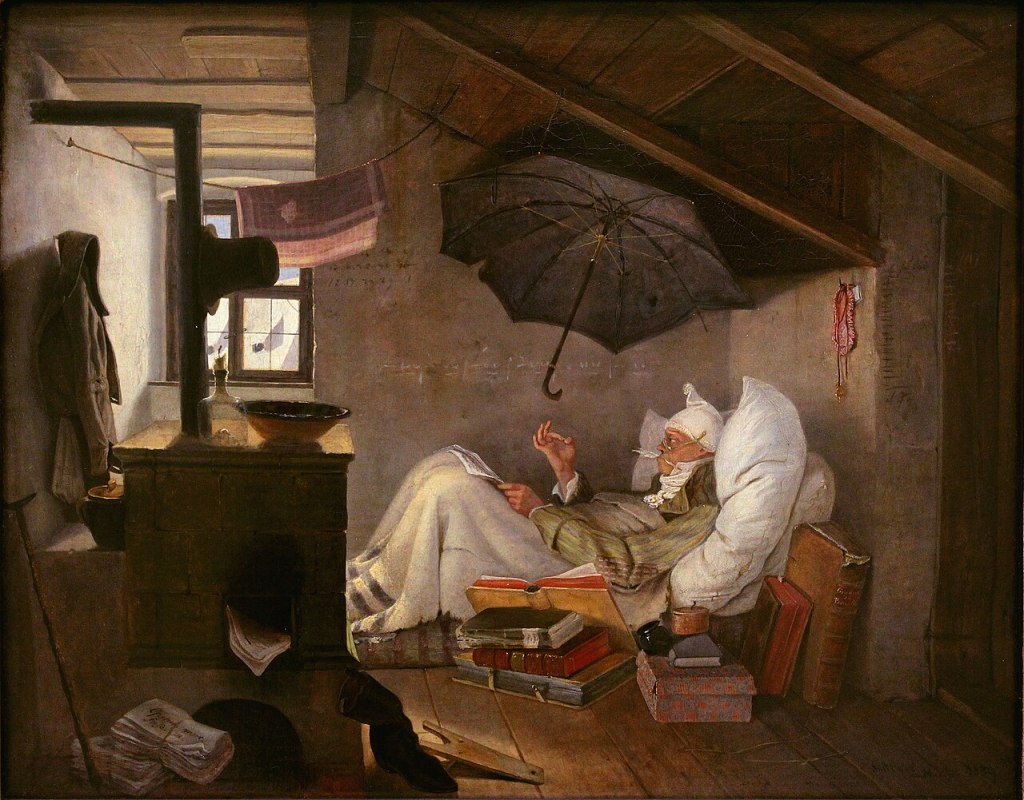
Der Arme Poet (best-known painting by Carl Spitzweg, 1839)
If only I can hatch a heartfelt rhyme, (with thought and frowns, it can’t be very hard), I’ll take my rightful place with the sublime.
O, gradus ad parnassum. One quick climb. I’ll be crème de la crème and avant-garde, if only I can hatch a heartfelt rhyme.
Top hat, cravat and walking stick meantime are ready—attributes to reap regard. I’ll take my rightful place with the sublime.
No more damp attic life; no fleas or grime. My poem will be perfection—a petard! If only I can hatch a heartfelt rhyme.
My peers will shout, “Alors, a paradigm! Such lofty wit, a wise camelopard.“ I’ll take my rightful place with the sublime.
I bite my quill: crime, slime, Mülheim, enzyme. The world will bow, salute and call me bard. If only I can hatch a heartfelt rhyme, I’ll take my rightful place with the sublime.
*****
Janice D.Soderling writes: “This poem is ekphrastic, generated from a preceding work of art. “About the mysterious motor that generates, I can say little. But no composer, artist, poet, sculptor works ex nihilo. Earliest man, woman, looked at their handprint, their footprint, and a thought rose, an urge to express what they felt – a primitive fear of death perhaps – and off they went to the caves to imprint their hand, or to carve a footprint on the rockface by the sea. A shout-out that Kilroy was here. “We hear music in the babbling brook, in the sighing wind, in the raindrop falling from leaf to leaf and plopping into the puddle below. There is poetry in the emotive sounds we make and hear: tinkling laughter, cooing seduction, growling rage, keening sorrow, barking grief. Of such, language is made; of language Shakespeare made Sonnet 73. “All art is imitation, from birdsong to a symphony orchestra, from the walking stride to the metrical verse. All art is a denial of death. Even the comic art.“
Janice D. Soderling is an American–Swedish writer who lives in a small Swedish village. Over the years, she has published hundreds of poems, flash and fiction, most recently at Mezzo Cammin, Eclectica, Lothlorien Poetry Journal and Tipton Poetry Journal. Collections issued in 2025 are The Women Come and Go, Talking (poems) and Our Lives Were Supposed to Be Different (short stories).
‘The Poor Poet’ was originally published in American Arts Quarterly, and republished in the current Well Met, where links at the bottom will take you to other poets in the issue.
Pic credit: Carl Spitzweg, The Poor Poet (via Wikipedia)
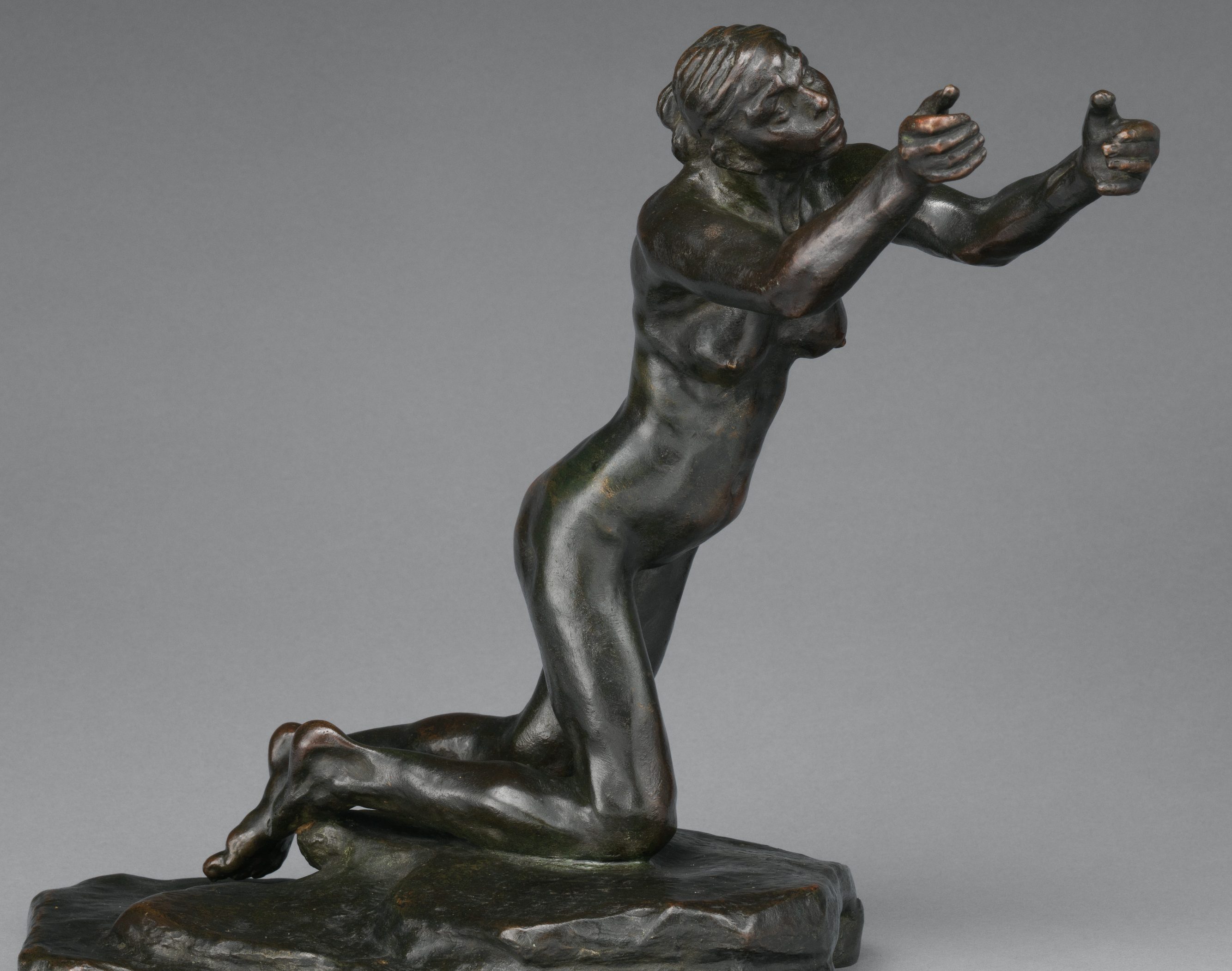
Jenna Le writes: “I often draw inspiration from wandering around in art museums. The Implorer is a statuette I first saw at the Met. I find I’m especially attracted to artworks by women artists that portray female experience, and this bronze in particular called out to me because it radiated such a powerful sense of interiority, depicting a woman as not a muse or a reflective surface but as a source of painfully strong thought and emotion.”
Jenna Le (jennalewriting.com) is the author of three full-length poetry collections, Six Rivers (NYQ Books, 2011), A History of the Cetacean American Diaspora (Indolent Books, 2017), and Manatee Lagoon (Acre Books, 2022). She won Poetry By The Sea’s inaugural sonnet competition. Her poems appear in AGNI, Pleiades, Verse Daily, West Branch, and elsewhere. She works as a physician in New York City.
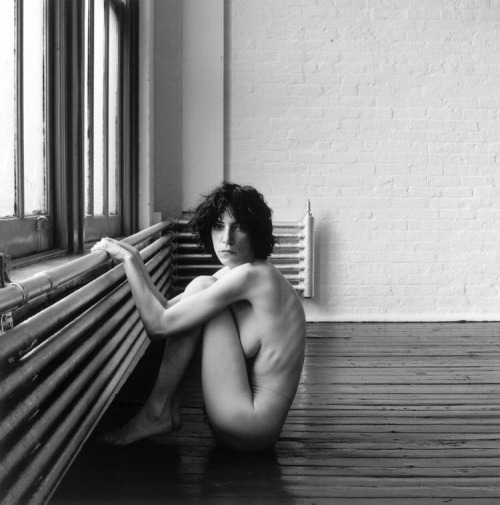
This photo, black-and-white, where Mapplethorpe portrays his dark-mopped ex in profile, seated nude on wooden floorboards, knees drawn up against her breasts to hide her nipples, heated by the sideways radiator pipes on which she rests her palms, her bulging ribs a set of parallel oblique gray stripes rippling her bare white skin, unsmiling lips a short flat line– these were my first parameters, my inspirations, when I learned to write. On Patti’s ribs, the wooden flooring’s planks, the stacked pale pipes, I modeled my pentameters. The aim: amid such sharp lines, to be frank and raw, yet still control what sees the light.
*****
Jenna Le writes: “I first became intrigued by the friendship and creative partnership of Patti Smith and Robert Mapplethorpe some years ago. I confess the personas of these two artists and the touted relationship between them interests me even more than either artists’ actual creative output. Based on what I have read in biographies and so forth, their friendship seems to me to represent an ideal: a dyadic connection characterized by remarkable intensity, an intimacy transcending sex and conventional relationship definitions, facilitating both parties’ creative flourishing. As one gets older and it becomes ever harder to form new meaningful adult friendships, such bonds seem to me ever more mythic and miraculous. I think this awe, this wistfulness, is the principal emotion that makes me keep returning to the photograph this ekphrastic poem is about.”
Jenna Le (jennalewriting.com) is the author of three full-length poetry collections, Six Rivers (NYQ Books, 2011), A History of the Cetacean American Diaspora (Indolent Books, 2017), and Manatee Lagoon (Acre Books, 2022). She won Poetry By The Sea’s inaugural sonnet competition. Her poems appear in AGNI, Pleiades, Verse Daily, West Branch, and elsewhere. She works as a physician in New York City.