Tag Archives: iambic tetrameter

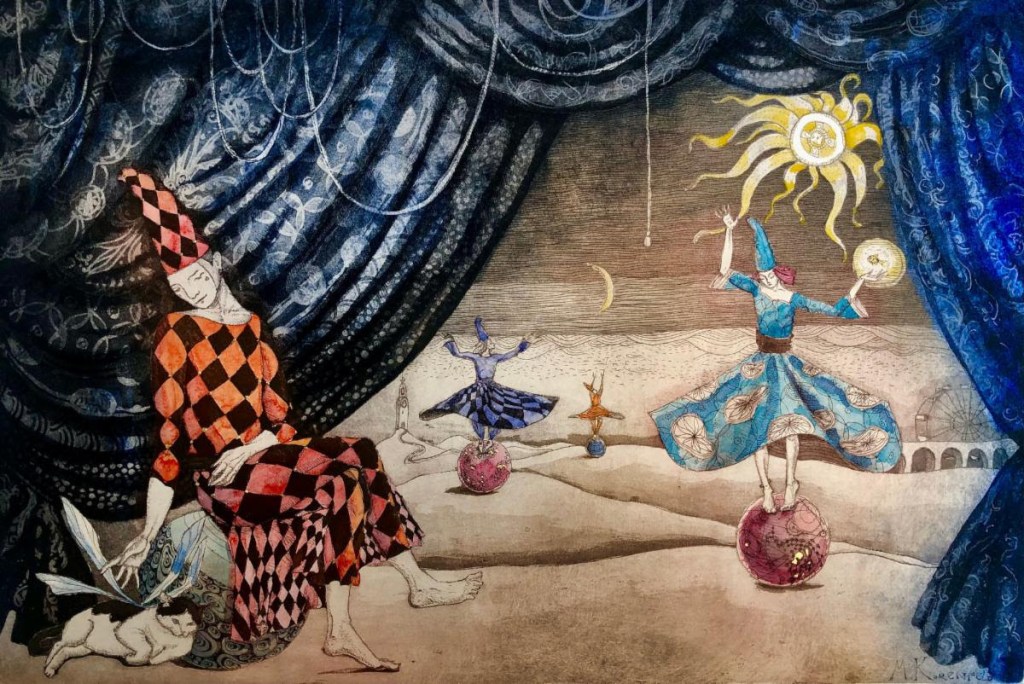
Ekphrastic verse: Wendy Videlock, ‘Before You Put Your Armor On’

Each morning when you wake to put
your armor on, remember this:
all the world’s a spinning stage,

all the world’s a carnival—
and though it doesn’t have your back
or love the cover of your book

all the world’s a turning page.
Just when you thought the minstrels, fools
and dragon cats had lost their way

inside the inflammation age,
they shed the husks of self defense
and enter stage, not from the right

or from the left, but from behind.
They sneak right up and inch ahead
into the distance of your mind.

The sun will melt. The moon will find
your part has not yet been assigned.
You blink, and take your armor off.

The lights will blaze before they dim.
It’s not a sham. It’s not a con.
The curtain falls. Show must go on.

*****

The illustration is ‘Not Dancing’ by Marina Korenfeld, and was the subject of Rattle’s Ekphrastic Challenge, February 2026. Wendy Videlock’s response, ‘Before You Put Your Armor On’, was selected as the Rattle Editor’s Choice.

Wendy Videlock lives on the Western Slope of the Colorado Rockies. Her work appears widely and her books are available wherever books are sold. Her upcoming book, Desert Kin, will appear in August, 2026.

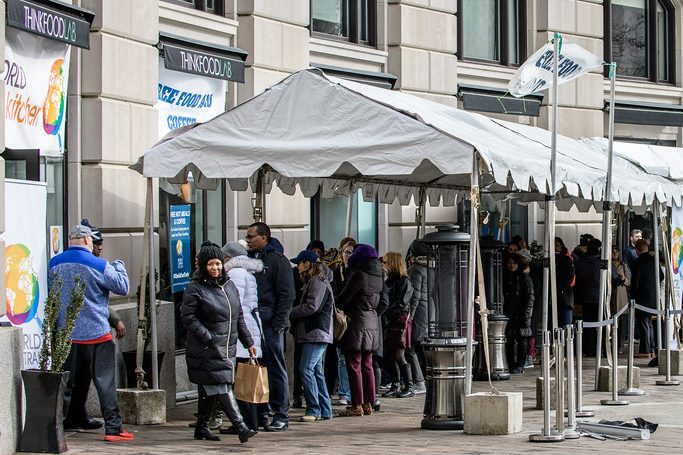
Jeff Sypeck, ‘January Report from the Food Pantry Coordinator’

The sign. The side door. Come inside.
We’re here by nine or ten. She sobbed.
Pack extra peas. The dealer robbed
His boss. No soups. They need a ride

To get their tags. Some coffee too.
He’s had a stroke. It’s just a sprain.
She can’t mow lawns for all the rain.
She’s starved, but not for food. She’s blue

But cackles. Eggs. A constant cough.
No chicken. You apologize:
We don’t have diapers in that size.
We’ll pay before they cut you off

And let you freeze. Her son’s on pills
And so’s the wife. For seven weeks
They’ll keep the kids. His engine leaks.
She’s out of propane. Bring the bills

But come by five. Her swollen knees
Are healing slow. His wife dropped dead
On Christmas. Have some frozen bread,
A bladder wash, a bag of cheese,

A pack of chocolate shakes, a pound
Of venison, a protein bar,
A couple sleeping in their car,
A case of noodles, barren ground

On farmhands’ faces, cracked and worn.
When silence falls, go find a shelf,
Collect your neighbors as yourself
And stack them up, like cans of corn.

***** 

Jeff Sypeck writes: “Usually I write about history, and my poetry tends to focus on the past, but sometimes the here and now come calling, with tough and immediate needs.”

This poem was originally published in Rattle.

Jeff Sypeck is the author of the pop-history book Becoming Charlemagne and co-author of I Have Started for Canaan, the first full-length history of a Reconstruction-era African American community in Maryland. His latest book is an annotated, peer-reviewed translation of a Carolingian calendar poem. He lives in an agricultural reserve an hour outside Washington, D.C.
www.jeffsypeck.com
www.quidplura.com

Shutdown Food Line” by Geoff Livingston is licensed under CC BY-NC-ND 2.0.

Elizabeth Hurst, ‘April’

I have to admire their heartless lust
Performing with no emotional fuss,
And when it’s done, no flower cares
That its lover still sprawls bare
To bees and wind, to hummingbirds.
Petals don’t worry if they’re the third
Or fourth—it just doesn’t matter
After they’ve spread pollen’s splatter.
They live to turn their airy tricks.
No rumpled sheets, no mess to fix,
No wet spots stuck to sated thighs
And stamens aren’t concerned with size
Or any of our skillful lies
Or hearts destroyed as sorrows rise.
No flower mourns when another dies.

*****

‘April’ was first published in Snakeskin… in March.

Elizabeth Hurst is originally from Los Angeles and moved up to San Francisco many years ago. She lives out by the beach with her husband, Gerald Stack.

April Flowers” by Jocey K is licensed under CC BY-SA 2.0.

Weekend read: Odd poem: Winston Churchill, ‘Our Modern Watchwords’

I
The shadow falls along the shore
The search lights twinkle on the sea
The silence of a mighty fleet
Portends the tumult yet to be.
The tables of the evening meal
Are spread amid the great machines
And thus with pride the question runs
Among the sailors and marines
Breathes there the man who fears to die
For England, Home, & Wai-hai-wai.

II
The Admiral slowly paced the bridge
His mind intent on famous deed
Yet ere the battle joined he thought
Of words that help mankind in need
Words that might make sailors think
Of Hopes beyond all earthly laws
And add to hard and heavy toil
The glamour of a victorious cause.

*****

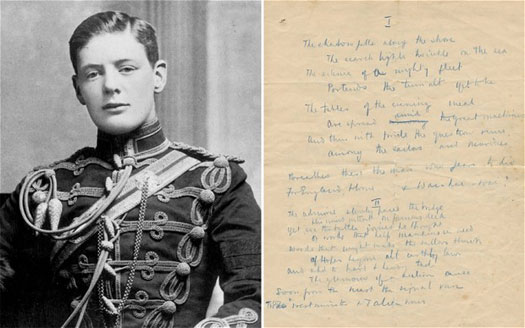
Around 115 years after it was written, the only known poem written by Winston Churchill as an adult was discovered by Roy Davids, a retired manuscript dealer from Great Haseley in Oxfordshire: ‘Our Modern Watchwords’, which was apparently inspired by Tennyson and Kipling.
Written between 1898 and 1900 when Churchill was a cornet (equivalent to today’s second lieutenant) in the 4th Hussars, the 10-verse poem is a tribute to the Empire. The author peppers the poem with the names of remote outposts defending Britain’s interests around the world, many of which he would have visited as a young officer and even fought at, including Weihaiwei in China, Karochaw in Japan and Sokoto in north-west Nigeria. Written in regular iambic tetrameter but with irregular rhymes, the poem exists in a tradition that stretches back to Homer’s Iliad: the soldier waiting impatiently for the battle to begin. As Churchill writes: ‘The silence of a mighty fleet / Portends the tumult yet to be.’
Davids, who says the poem “is by far the most exciting Churchill discovery I have seen”, admits it is merely “passable”.
Andrew Motion, the former Poet Laureate, goes further, calling it “heavy-footed”. “I didn’t know he wrote poems, though somehow I’m not surprised: oils, walls, why not poems as well?” said Motion. “This is pretty much what one would expect: reliable, heavy-footed rhythm; stirring, old-fashioned sentiments. Except for the lines ‘The tables of the evening meal/Are spread amid the great machines’, where the shadow of Auden passes over the page, and makes everything briefly more surprising.”
Despite its lack of literary virtues, however, the poem written in blue crayon on two sheets of 4th Hussars-headed notepaper was expected to raise between £12,000 to £15,000 when it went on sale in 2013. Its price reflected its rarity: the only other poem known to be penned by Churchill is the 12-verse ‘The Influenza’, which won a House Prize in a competition at Harrow school in 1890 when he was 15. However ‘Our Modern Watchwords’ failed to sell at the auction as bidding never reached the reserve price.
Churchill was well-known for his love of poetry. He won the Headmaster’s Prize at Harrow for reciting from memory Macaulay’s 589-line poem ‘Horatius at the Bridge‘.
Allan Packwood, director of the Churchill Archive Centre at Churchill College, Cambridge, said the wartime prime minister’s interest in poetry spanned the sophisticated to the more earthy: “In his speech accepting freedom of the city of Edinburgh in 1942, he quoted Robert Burns and ended by quoting the music hall entertainer Sir Harry Lauder, who was in the audience. This was no cheap politician’s trick, Churchill was an admirer of Lauder’s.”
By the way, Churchill was well-known for his oratory and repartee, but he wasn’t always the victor. My favourite story involves Richard Haldane in the 1920s. Churchill prodded Haldane’s ample belly and asked “What’s in there?” Haldane answered: “If it is a boy, I shall call him John. If it is a girl, I shall call her Mary. But if it is only wind, I shall call it Winston.”

Photos: https://winstonchurchill.org/publications/churchill-bulletin/bulletin-056-feb-2013/appreciation-the-young-churchill-poem-hints-at-the-rhetorical-greatness-to-come/

Using form: Iambic tetrameter: Brooke Clark, ‘Celebrities’

They’re insecure black holes of need
and here they come to clog your feed
with photos and confessionals
shaped by PR professionals—
a pool glows blue in the backyard
next to a pull quote: “It was hard
to fight those demons of self-doubt”—
How brave you are for speaking out!
(“Dinner? Umm…the rainbow trout?”)
Some glossy shots show off the house
where, on a massive sun-splashed couch
the boyfriend lounges with a grin—
familiar…what’s that show he’s in?
“Yes, I’ve found love—I’m over the moon!
My memoir’s coming out in June.”
 
But now hushed tones, dropped eyes reveal
we’re ready for the big reveal—
speaking to us as to a friend
she grabs onto the latest trend
and tries to humanize herself
with references to mental health:
“Depression and anxiety—
none of the meds would work for me
but a friend introduced me to
this yogi, or—more like—guru?
He teaches tantric meditation
to reach this cosmic—like—vibration?—
where all your energies align—
Oh yeah, hey, my new makeup line
is rolling out in every state—
I promise the concealer’s great!”
How nice for you. The problem is
for those without advantages
like wealth and fame, the proper cure
for suffering is not so sure,
and wasn’t there some news report
about—“That settled out of court,
so let’s move on,” smoothly insists
the always-hovering publicist.
 
The only cure for their disease?
Awards, red carpets, galaxies
of flashbulbs dazzling their eyes,
the swarms of fans, their ardent cries—
the roar of being glorified
drowns out the whispering voice inside
that tells them that their fame won’t last
but crumble into dust and ash
leaving them lost and destitute—
quick—schedule a new photo shoot!

*****

Brooke Clarke writes: “Celebrities was triggered by scrolling through the news app on my phone and being bombarded with coverage of famous people, which ranged from the adoring to the outright hagiographic. I resisted writing the poem at first, since celebrities seemed like a bit of an obvious target, but in the end I decided to give in & go with it.
In terms of the form, I went back and forth a bit between tetrameter and pentameter couplets, but in the end I settled on the tetrameter. They always strike me as suited to a “lighter” satirical approach, and a slightly more throwaway, less sculpted feel — more Swift than Pope, if that makes sense — and I thought that worked for the subject matter in this one. 
One other point that might be of interest: the poem as I submitted it ended with one final couplet:
Reality gets hard to take
when everything about you’s fake.

I thought it worked as a way to pull back from the specific content and give a final summary to tie things together. The editor who published it in Rat’s Ass Review felt it was heavy-handed and obvious, and belaboured the same points that had already been made, so we agreed to cut it. It might be interesting to know what readers think.”

Brooke Clark is the author of the poetry collection Urbanities and the editor of the online epigrams journal The Asses of Parnassus. He’s still (occasionally, hesitantly) on Twitter at @thatbrookeclark.

Other writing:
A recent poem about the jazz guitarist Johnny Smith, in the journal Syncopation
Another poem in couplets, freely adapted from Catullus 63: https://the-agonist.github.io/poetry/2019/07/01/poetry-clark.html
A recent epigram, from Light 
An article about narcissism in contemporary poetry: https://thewalrus.ca/the-narcissism-of-contemporary-poetry/
A review of Frederick Seidel and Rachel Hadas in Able Muse
An article about Donna Tartt’s novel The Secret History:  https://lareviewofbooks.org/short-takes/donna-tartts-the-secret-history-as-revenge-fantasy/

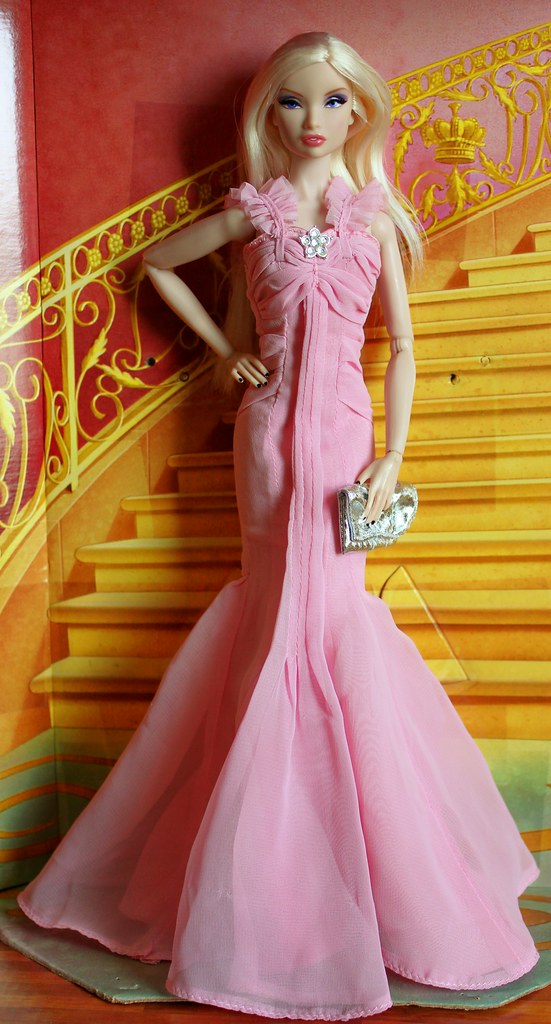
Photo: “Tag Game: Red Carpet Ready for the OSCARS” by napudollworld is licensed under CC BY-NC-ND 2.0.

Evocative fragment: W.H. Auden, ‘On the Circuit’

Another morning comes: I see,
Dwindling below me on the plane,
The roofs of one more audience
I will not see again.

God bless the lot of them, although
I don’t remember which was which:
God bless the U.S.A., so large,
So friendly, and so rich.

*****

Auden emigrated from the UK to the US in 1939, and lived as an Anglo-American academic who lectured all over the country. A left-wing poet, his ‘On the Circuit’ shows his amusement at living well in the United States. His wry reflections are built on a simple ABCB rhyme scheme in iambic tetrameter, with the last line of each stanza shortened to a trimeter for the stanza’s punchline. I’ve quoted the last two of 16 stanzas.

Speaking as a foreigner who lived in the US for 25 years, teaching business seminars across the continent to corporate audiences, I confirm the resonance of Auden’s general attitude. Parenthetically I note that despite his approval of the US as a place to live and work, it’s not where he chose to vacation each year, or where he bought a house, or where he ended his days.

Photo: “From yesterday: @southwestair #flight 2500 #DAL-#SAT with #downtown #dallas behind the #winglet. I’m doing the opposite route later today heading back to #KC for the night before another trip. #latergram #swapic #city #texas #plane #airplane #instaplane #” by JL Johnson // User47.com is licensed under CC BY-SA 2.0.

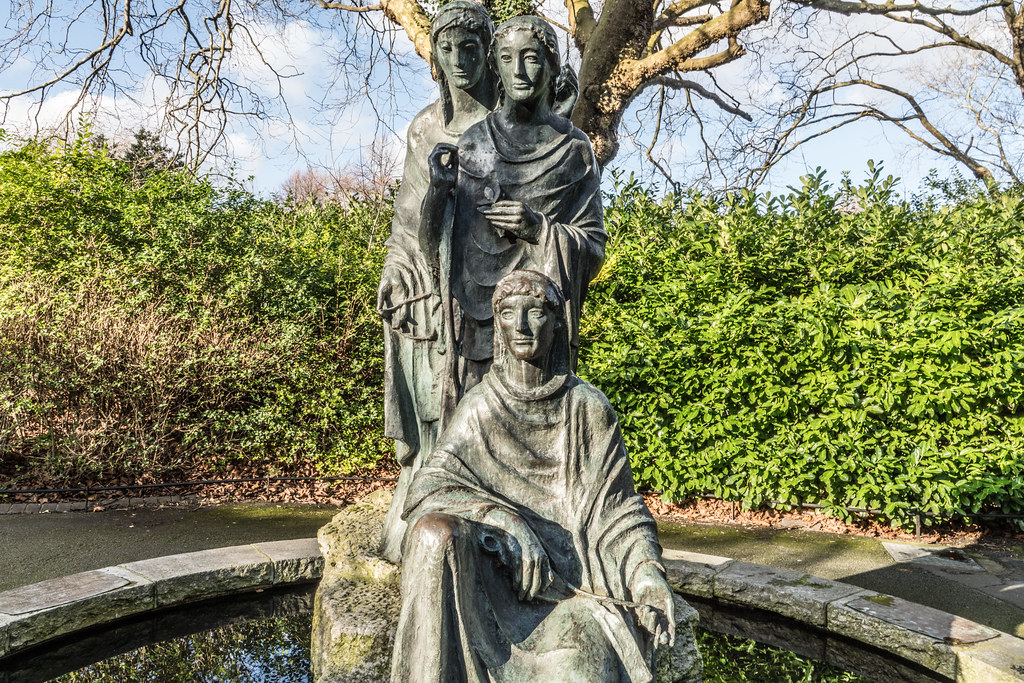
Potcake Poet’s Choice: Mindy Watson, ‘The Three’

Young Clotho spins new Thread of Life,
She holds Fate’s spindle taut. Precise
Lachesis measures life’s strand’s length,
Thus governs lifetime’s span and lot.
And Atropos, death’s agent, cuts
The mortal thread that Clotho wrought.

When I first burst from mother’s womb,
Three Fates were watching o’er my room.
Lachesis doled me ample thread,
And so, in time, I grew to be
The mother of my own young Three.

Upon my bosom all three drank;
They slept and flourished there. Across
Ten years, four jobs, three homes – I nursed
Away their sorrows, hurts, and scares.

And now I know our nursing age
(Which one year past, met poignant end)
Was in itself a life, a thread,
Spun, drawn, and sheared by three small Fates.

My eldest son precisely spun
That nursing thread with infant’s cord.
His warm-breathed suckling sutured closed
The wound my late son’s loss exposed.

My younger boy, for four years straight,
Was nursing life’s allotting Fate.
He lengthened thread, bridged start and end –
Became his sister’s nursing mate.

My Three’s sole girl, at three years old,
Adroitly sheared our tender twine
When, blonde crown bowed, she deftly swore,
“I don’t need boo-boo anymore.”

And from these Fates I deem my Three,
I’ve learned the joys of genesis –
I’ve learned there’s silent eloquence
In birth, in growth – in severance.
From newborn’s threaded cry all Three
Ascend—beginning, middle, end.

Mindy Watson writes: “The Three is an internally/intermittently rhymed poem in (mostly) iambic tetrameter, equating my three children to three Greek Fates who taught me, via our respective breastfeeding “threads,” to cherish all beginnings, middles, and ends.  I’m enduringly sentimental about this one, which represents not only my first published poem (originally appearing in the Quarterday Review’s October 2016 Samhaim issue) and my first creative post-grad school venture (although I’d majored in nonfiction/science writing rather than poetry)—but also my first attempt at articulating (and externalizing) my children’s and my seemingly endless nursing journey… a year after its bittersweet conclusion.”

Mindy Watson is a formal verse poet and federal writer who holds an MA in Nonfiction Writing from Johns Hopkins University. Her poetry has appeared in venues including Snakeskin, Think Journal, the Poetry Porch, Orchards Poetry Journal, Better Than Starbucks, Eastern Structures, the Quarterday Review, and Star*Line. She’s also appeared in Sampson Low’s Potcake Poets: Form in Formless Times chapbook series and the Science Fiction and Fantasy Association’s 2019 Dwarf Stars Anthology. You may read her work at: 
https://mindywatson.wixsite.com/poetryprosesite.

“THE THREE FATES MEMORIAL FOUNTAIN [A GIFT FROM THE GERMAN FEDRAL REPUBLIC]-136831” by infomatique is licensed under Openverse from WordPress.org