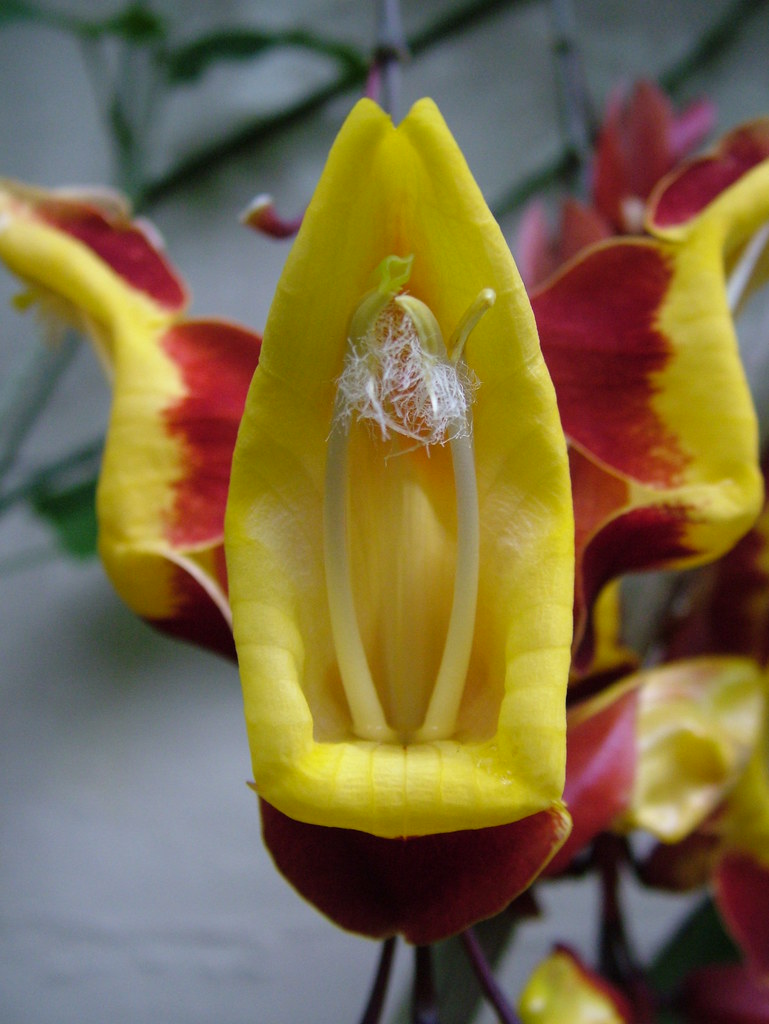
Genitals? They look like mouths Splayed wide open to the south; The backyard’s cool and scented tongues Sing the lyrics of mud and dung. They slobber pollen on the wind, Obscenely, but without meat’s sin. No lubricated pump and writhe But floating leakage to contrive Survival of their rooted kind, Just letting loose to maybe find Receptive innards gaping wide, Exposing their perfumed insides To dust from reproduction’s floor. So why so sexy? Not called for When all they need is neutral breeze To engage in flowery sleaze As one sweet self blows to another. Most chaste of all the planet’s lovers And we give them for Valentines Along with silly little rhymes To sanitize our sweaty humps, And thickened fluids in a clump. But all this grossness turns to joy: The heart’s true love or blissful toy, As sticky human lust conspires To imitate the spring’s desires.
*****
Elizabeth Hurst writes: “This poem was inspired by the short California spring.”
‘Hearts and Flowers’ was originally published in Snakeskin.
Elizabeth Hurst is originally from Los Angeles and moved up to San Francisco many years ago. She lives out by the beach with her husband, Gerald Stack.
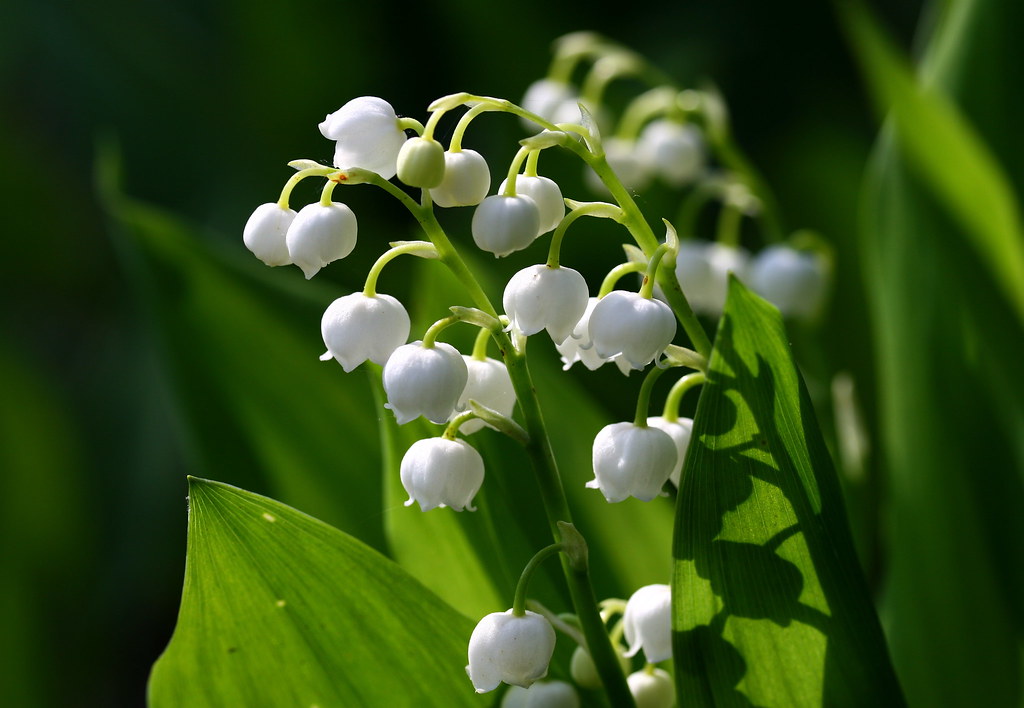
When at the end of spring I pick for the last time My favourite flowers— a yearning fills my breast, And to the future I urgently appeal: Let me but once again look upon the lilies of the valley.
Now they have faded. Like an arrow the summer has flown by, The days have grown shorter. The feathered choir is still, The sun more charily grants us its warmth and light, And already the wood has laid its leafy carpet.
Then when harsh winter comes And the forests don their snowy cover, Despondently I roam and wait with new yearning For the skies to shine with the sun of spring.
I find no pleasure in books, or conversation, Or swift-rushing sledges, or the ball’s noisy glitter, Or Patti, or the theatre, or delicate cuisine, Or the quiet crackling of smouldering logs on the fire
I wait for spring. And now the enchantress appears, The wood has cast off its shroud and prepares for us shade, And the rivers start to flow, and the grove is filled with sound, And at last the long-looked-for day is here!
Quick to the woods!—I race along the familiar path. Can my dreams have come true, my longings be fulfilled?— There he is! Bending to the earth, with trembling hand I pluck the wondrous gift of the enchantress Spring.
O lily of the valley, why do you so please the eye? Other flowers there are more sumptuous and grand, With brighter colours and livelier patterns, Yet they have not your mysterious fascination.
Where lies the secret of your charms? What do you prophesy to the soul? With what do you attract me, with what gladden my heart? Is it that you revive the ghost of former pleasures, Or is it future bliss that you promise us?
I know not. But your balmy fragrance, Like flowing wine, warms and intoxicates me, Like music, it takes my breath away, And like a flame of love, it suffuses my burning cheeks.
And I am happy while you bloom, modest lily of the valley, The tedium of winter days has passed without a trace, And oppressive thoughts are gone, and in my heart in languid comfort Welcomes, with you, forgetfulness of trouble and woe.
Yet now you fade. Again in monotonous succession The days will begin to flow slowly, and stronger than before Will I be tormented by importunate yearning, By the agonizing dream of the happiness of days in May.
And then someday spring again will call And raise the living world out of its fetters. But the hour will strike. I shall be no more among the living, I shall meet, like everyone, my fated turn.
And then what?—Where, at the winged hour of death, Will my soul, heeding its command, soundlessly soar? No answer! Be silent, my restless mind, You cannot guess what eternity holds for us.
But like all of nature, drawn by our thirst to live, We call to you and wait, beautiful Spring! The joys of earth are so near to us, so familiar— The yawning maw of the grave so dark!
*****
Lilies of the Valley (Ландыши) is a poem written by Pyotr Ilyich Tchaikovsky in December 1878 while he was in Florence.
“I am terribly proud of this poem”, he wrote when enclosing a copy to his brother Modest. “For the first time in my life I have managed to write a fairly good poem, which moreover is deeply heartfelt. I assure you that although it was very difficult, still I worked on it with the same pleasure as I do on music.”
Когда в конце весны последний раз срываю Любимые цветы, – тоска мне давит грудь, И к будущему я молитвенно взываю: Хоть раз еще хочу на ландыши взглянуть.
Вот отцвели они. Стрелой промчалось лето, Короче стали дни, умолк пернатый хор, Скупее солнце нам дает тепла и света, И разостлал уж лес свой лиственный ковер.
Потом, когда придет пора зимы суровой И снежной пеленой оденутся леса, Уныло я брожу и жду с тоскою новой, Чтоб солнышком весны блеснули небеса.
Не радуют меня ни книга, нибеседа, Ни быстрый бег саней, ни бала шумный блеск, Ни Патти, ни театр, ни тонкости обеда, Ни тлеющих полен в камине тихий треск.
Я жду весны. И вот волшебница явилась, Свой саван сбросил лес и нам готовит тень, И реки потекли, и роща огласилась, И наконец настал давно желанный день!
Скорее в лес!.. Бегу знакомою тропою: Ужель сбылись мечты, осуществились сны?.. Вот он! Склонясь к земле, я трепетной рукою Срываю чудный дар волшебницы-весны.
О ландыш, отчего так радуешь ты взоры? Другие есть цветы роскошней и пышней, И ярче краски в них, и веселей узоры, — Но прелести в них нет таинственной твоей.
В чём тайна чар твоих? Что ты душе вещаешь? Чем манишь так к себе и сердце веселишь? Иль радостей былых ты призрак воскрешаешь! Или блаженство нам грядущее сулишь?
Не знаю. Но меня твоё благоуханье, Как винная струя, и греет и пьянит, Как музыка, оно стесняет мне дыханье И, как огонь любви, питает жар ланит.
И счастлив я, пока цветешь ты, ландыш скромный, От скуки зимних дней давно прошел и след, И нет гнетущих дум, и сердце в неге томной Приветствует с тобой забвенье зол и бед.
Но ты отцвел. Опять чредой однообразной Дни тихо потекут, и прежнего сильней Томиться буду я тоскою неотвязной, Мучительной тоской о счастье майских дней. — И вот когда-нибудь весна опять разбудит И от оков воздвигнет мир живой. Но час пробьет. Меня – среди живых не будет, Я встречу, как и все, черед свой роковой.
Что будет там?.. Куда, в час смерти окрыленный, Мой дух, веленью вняв, беззвучно воспарит? Ответа нет! Молчи, мой ум неугомонный, Тебе не разгадать, чем вечность нас дарит.
Но, как природа вся, мы, жаждой жить влекомы, Зовем тебя и ждем, красавица весна! Нам радости земли так близки, так знакомы,- Зияющая пасть могилы так темна!
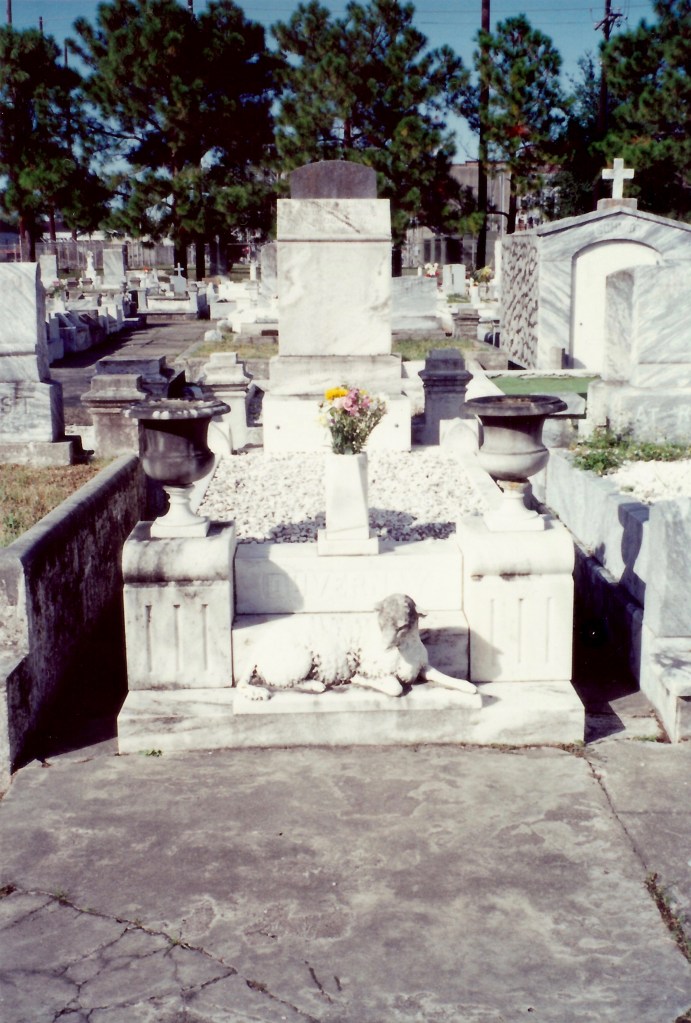
Hello. I’ve brought your favorite flowers again. How is going under there, my dead? On this side, we’re no better off than when you walked beside us. (Yes, I know I said the same last year.) The human race is not improvable. Ask any saint you meet. We’ve gone to war again without a thought. Our leaders shuffle bribes, our heroes cheat. Your children haven’t turned out awfully well, but who expected it? You’re not to blame. They’ll manage, and nobody burns in hell. Goodbye for now. I’m always glad I came. I make no promises about next year, but one way or another, I’ll be here.
*****
Gail White writes: “I wrote this while living in New Orleans, where the dead are buried above ground (mostly) because the city is below sea level. All Saints Day is still a big deal, when the family tomb gets a new coat of whitewash and flowers are placed on every grave. It’s time to reflect on family and faith and our all ending up in the same place, as I’ve tried to do here.”
Gail White is the resident poet and cat lady of Breaux Bridge, Louisiana. Her books ASPERITY STREET and CATECHISM are available on Amazon. She is a contributing editor to Light Poetry Magazine. “Tourist in India” won the Howard Nemerov Sonnet Award for 2013. Her poems have appeared in the Potcake Chapbooks ‘Tourists and Cannibals’, ‘Rogues and Roses’, ‘Families and Other Fiascoes’, ‘Strip Down’ and ‘Lost Love’. ‘A Visit on All Saints Day’ was originally published in Mezzo Cammin, and collected in her chapbook, ‘Sonnets in a Hostile World‘, also available on Amazon.
In memory of Alexei Navalny, killed at the IK-3 penal colony, 16 February, 2024.
1. Rough and chivvying cold winds blow The helpless dead leaves to and fro. Leaves have no say in where they go But we’re alive so can say no – Let us praise those men who show Resistance to the easy flow.
2. Navalny, prisoner in the snow, In numbing twenty-eight below, Has paid the price for saying no; He’s gone the way we feared he’d go.
That’s Putin, making sure all know That retribution comes in tow For those who won’t go with the flow. ‘All dissidents will finish so,’ The message is: ‘Go with the flow, Or you too could end on Death Row.’
I imagine his warders: Did they know A twinge of guilt at this, or show Regret or shame? I doubt it. No – Why should men let a conscience grow When they can just go with the flow? When life is so much easier so, When every television show, The papers and the radio All radiate a conformist glow Incessantly, so all men know Life’s comfier with the status quo. It’s only awkward sods say no, Go their own way, not with the flow. Those have a dangerous row to hoe, And who can blame the average Joe For on the whole deciding: ‘No, That’s not for me. I’d rather toe The line, collect my wages, know I’m safe and needn’t undergo What brave men have to suffer. No, Go with the flow, go with the flow.’
3. In Moscow brave girls risk a blow By laying flowers in the snow To honour him for saying ‘No’. Brave girls. I admire them so.
*****
George Simmers writes: “This poem began because our local Arts Festival announced its theme as ‘Flow’. Which made me grumble a bit: was I supposed to write stuff about how nice it was that rivers flowed? Not my style. But then I thought about people who go against the flow by saying ‘No!’ and that suggested a subject and a rhyme scheme. It was only after I’d scribbled a few possible lines that I came across a photo of young women in Moscow placing flowers in the snow as tributes to the murdered Russian dissident, Alexei Navalny. In some towns, such protestors had been arrested or beaten up by the police.
“It’s thirty-odd years since I visited Russia. That was at the time of perestroika and hopefulness. We had a contact in Moscow who took us to see the sights, including the Arbat, a popular meeting- place. He said: ‘Can we stop and talk here for a few minutes? I ask because a few years ago If I had been seen here in conversation with a foreigner, I should have been arrested.’ Freedom was precious then, but repression returned.
“Navalny was a lawyer who campaigned against the corruption endemic in Russian political life. In 2020 he was poisoned with Novichok (probably by the Federal Security Service) ; after hospital treatment in Berlin that saved his life, he returned to Russia, even though he knew of the dangers. He was immediately arrested, and ended up in an Arctic Circle corrective colony. The exact circumstances of his death still remain unclear, but while in prison he had suffered from malnourishment and mistreatment.
“Writing this poem I remember Auden’s words: ‘Poetry makes nothing happen.’ Auden pointed out that political poems make the writer feel better, but have no positive effect in the real world. He was right, as usual, which is why I mostly avoid writing poems about politics. But I don’t really see this as a poem about Navalny. I could have chosen to write about Alan Bates and his twenty-five year battle for justice for postmasters, or about Kathleen Stock and others, who opposed the dangerous ideology of the Tavistock clinic. Going against the flow matters everywhere, not just Russia. The form is monorhyme, mostly because that’s how the poem started, and it wasn’t too difficult to keep going. Monorhyme is easier than it looks, so long as you choose the right rhyme word to start with. Don’t try it with ‘month’ or ‘silver’.
“Nalvalny’s death made a news splash in February, but since then more recent horrors have displaced it on the news pages. So maybe this poem will do a little good as a reminder of a brave man. Thank you for re-blogging it.”
The poem will be part of the film ‘Wordflow’ (a film by John Coombes with a soundtrack of stories and poems by Holmfirth Writers’ Group in a continuous showing from 10am-4pm), presented at the Holmfirth Arts Festival in Yorkshire on Sunday,June 16th, upstairs at the ‘Nowhere’ bistro, Norridge Bottom, Holmfirth, HD9 7BB.
George Simmers used to be a teacher; now he spends much of his time researching literature written during and after the First World War. He has edited Snakeskin since 1995. It is probably the oldest-established poetry zine on the Internet. His work appears in several Potcake Chapbooks, and his recent diverse collection is ‘Old and Bookish’.


 Form in Formless Times