Tag Archives: Janet Kenny

Using form: iambic trimeter: Janet Kenny, ‘Stars’

Look at the stars, she said.
Just look how cold and bright!
And most of them are dead
though brightening the night.
Time lives and dies like stars.
The past is death of now.
Impermanence that scars
our fleeting human hour.
The world inside a mind
that dies when we die too
leaves others left behind
resigned without a clue.
Forget me nots deceive
and daisy chains depend
on children who believe
our world will never end.

*****

Janet Kenny writes: “The poet is very old and has been confronted inescapably with the mortality of all things.”

Janet Kenny left New Zealand to pursue a career as an operatic and concert singer in London, then settled in Sydney, Australia, where she worked in the anti-nuclear movement and jointly compiled, wrote and edited a book about the nuclear industry, Beyond Chernobyl, published by Envirobook in 1993. Janet lived for many years in Sydney with her husband and visiting currawongs. She now lives in Hervey Bay, Queensland, with visiting butcher birds, spangled drongos, ospreys, pelicans, assorted honeyeaters and flying foxes.

Her poems have been published in printed and online journals, including AvatarThe ChimaeraFolly14 by 14Iambs & TrocheesThe Literary ReviewMi PoesiasThe GuardianThe SpectatorThe New FormalistThe Barefoot MuseThe Raintown ReviewThe Shit Creek ReviewSnakeskinLavender ReviewSoundz ineVictorian Violet PressThe Susquehanna Quarterly and Umbrella. Her work is in the collections The Book of Hope and Filled With Breath: 30 sonnets by 30 poets and in the Outer Space anthology, Cambridge University Press. She shared an anthology of bird poems, Passing Through, with Jerry H. Jenkins. She has received three Pushcart nominations.

A selection of her poems, and links to her poetry collections Whistling in the Dark (2016, Kelsay Books) and This Way to the Exit (White Violet Press), are on her website https://janetkenny.netpublish.net/index.htm

Photo: “Sizzling Remains of a Dead Star” by Euclid vanderKroew is licensed under CC BY-NC-SA 2.0.


Political poem: Janet Kenny, ‘Broken’

The pig smashed the music
and turned off the sun.
As the pig couldn’t use it
nor should anyone.

O remember the time when the violins played
and the meadows were blooming and we, unafraid
dared to splash in the river and lie in the grass.
But they’re mowing the field now and scattering glass.

The mother in China,
the daughter in Spain,
must learn to design a
new habit again.

The athletes are anxious, the singers are dumb,
the children are fractious and calling for Mum.
Now Dad is in futures and selling his shares
and his foreign computers are yesterday’s wares.

Who let the pig loose
in the garden? and why
have we cooked our own goose?
I await a reply.

*****

This poem was originally published on Facebook. Concerning the trigger for creating it, Janet Kenny writes: “The only event was the world economy being interfered with by the folly of one awful man. One ignorant bully can dismantle the world.”

Janet Kenny left New Zealand to pursue a career as an operatic and concert singer in London, then settled in Sydney, Australia, where she worked in the anti-nuclear movement and jointly compiled, wrote and edited a book about the nuclear industry, Beyond Chernobyl, published by Envirobook in 1993.

Her poems have been published in printed and online journals, including AvatarThe ChimaeraFolly14 by 14Iambs & TrocheesThe Literary ReviewMi PoesiasThe GuardianThe SpectatorThe New FormalistThe Barefoot MuseThe Raintown ReviewThe Shit Creek ReviewSnakeskinLavender ReviewSoundz ineVictorian Violet PressThe Susquehanna Quarterly and Umbrella. Her work is in the collections The Book of Hope and Filled With Breath: 30 sonnets by 30 poets and in the Outer Space anthology, Cambridge University Press. She shared an anthology of bird poems, Passing Through, with Jerry H. Jenkins. She has received three Pushcart nominations.

Her latest book, Whistling in the Dark (2016, Kelsay Books) can be ordered from https://www.amazon.com/Whistling-Dark-Janet-Kenny/dp/1945752092. Her previous book, This Way to the Exit (White Violet Press), can be ordered from http://www.amazon.com/This-Way-Exit-Janet-Kenny/dp/0615615937. You can read several poems from her books at https://janetkenny.netpublish.net/

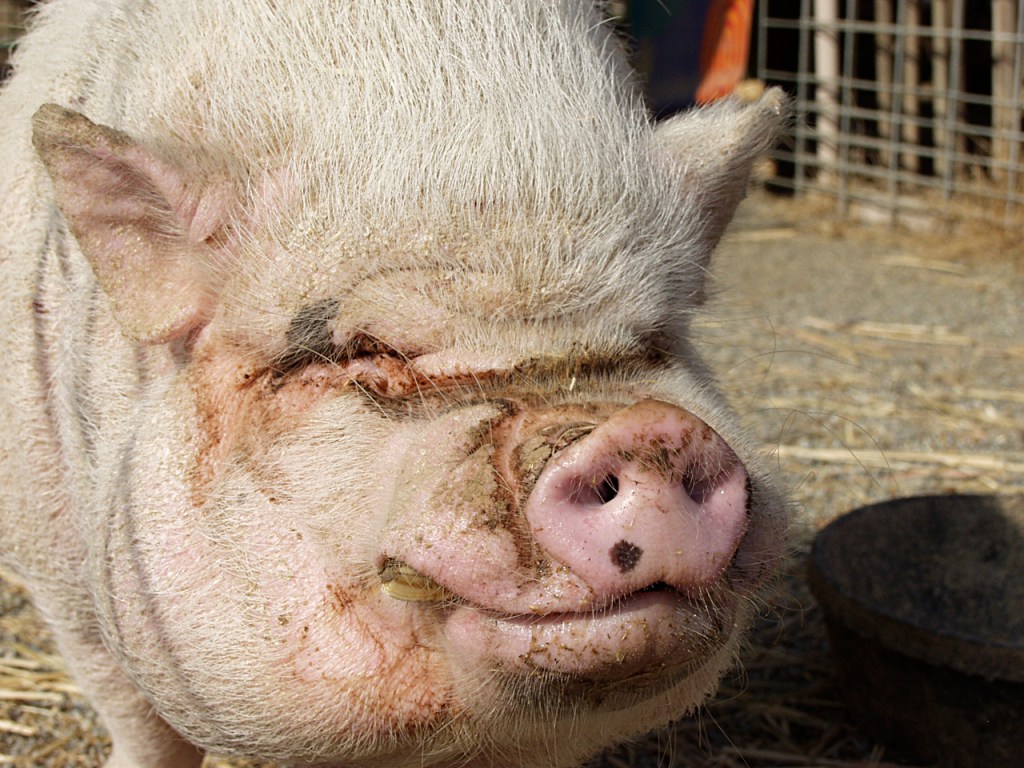
Photo: “Pig-hog” by Kusukhtak is licensed under CC BY 3.0.

The Two-State Dissolution (2): Landsman, Burch, Lehr, Foster, Galef, Soderling, Kenny, Helweg-Larsen, Smith, Bales, Shore

Peggy Landsman, ‘Go Tell It On The Mountain

Hagar and Sarah should have talked,
Laughed together when alone.
Who did Abraham think he was?
Ha-Yehudi ha-rishon?*

Ishmael and Isaac should have been
Boon companions, closer than brothers,
Passing their days doing their chores,
Tending their father’s sheep together…

Staying up late entertaining themselves
Arguing over the numbers of stars
Each was the first to have named.

*”Ha-Yehudi ha-rishon” means “The first Jew” in Hebrew.

Michael R. Burch, ‘Frail Envelope of Flesh’
for the mothers and children of Gaza

Frail envelope of flesh,
lying cold on the surgeon’s table
with anguished eyes
like your mother’s eyes
and a heartbeat weak, unstable…

Frail crucible of dust,
brief flower come to this—
your tiny hand
in your mother’s hand
for a last bewildered kiss…

Brief mayfly of a child,
to live two artless years!
Now your mother’s lips
seal up your lips
from the Deluge of her tears…

Quincy Lehr, ‘Passive Voice’

History is back in passive voice.
All you can do is watch. The teams were picked;
the commentary doesn’t match the plays.
The game is rigged, and everybody sees.

The game is rigged, and everybody sees,
but referees ignore it, and debate
is limited to the cheap seats far away.
The villains are the only proper nouns.

The villains are the only proper nouns,
the only ones worth mentioning besides
the nebulous abstractions for the rest.
None believe what everyone accepts.

History is back in passive voice.
The game is rigged, and everybody sees
the villains are the only proper nouns.
None believe what everyone accepts.

Gail Foster, ‘The Heap’

How many does it take to make a right?
Go fling another on. The heap grows high
Before too long it will obscure the light
And then where will we be. The end is nigh
And still it reaches up towards the sky
How many more, the village women weep
Of all our sons and brothers have to die
While we pile wrong on wrong upon the heap

Remember sky, how blue it was and bright
And wide, when only birds and clouds did fly
And moons and stars were visible at night
When women laughed and children didn’t cry
What use is wrong for wrong and eye for eye
The world grows blind and bitter and we reap
What we have sown and see our rivers dry
While we pile wrong on wrong upon the heap

What use a pile of pacifists? The sight
May cause a running man to stop and sigh
The wise man said, and think about the fight
And for a fleeting moment wonder why
They chose to sacrifice themselves, deny
The life force and there lie in peaceful sleep
They make a monument, he said, nearby
While we pile wrong on wrong upon the heap

Dear God, when will it end? When will you try?
The heap grows higher and the sides too steep
We love our neighbours with the guns we buy
While we pile wrong on wrong upon the heap

Daniel Galef, ‘Desert Kite’

These endless shifting sands—
They’re always changing hands,
But you can’t make bricks without breaking a little hay.
With oil the streets are pavèd;
Since Solomon and David,
They draft a brand-new atlas every day.
The apostles! The epistles!
And the fossil fuels and missiles—
Like manna in the wilderness they fall!
The land of Abrahamics
Now hosts General Dynamics
With their guardian angels gliding over all.

Janice D. Soderling, ‘Out of Paradise’

A closely woven stillness lines the air,
like linen bedding in a lifted coffin.
Though silence is a hallmark of our time, not often
has the hush been so oppressive. Where
the sand fox sprawls, sprawls too the shattered hare.
Cadavers of gazelle and roe deer stiffen;
the wadded pods of thorn trees burst. If when
you ponder on this devastated garden,
its wretched shame, its bottomless despair,
think not animal, but human, shreds in Eden.
And human was the animal lately passing there.

Janet Kenny, ‘After’

We saw them sweep in like a wolf on the fold.
We hypocrites judge as if time was involved.

Lament, all you lovers whose loved ones are gone.
Condemn, all you judges now grief is your song.

After the fury what’s left to repair?
Oh impotent jury, your conscience is there.

No poem will save us no tears will avail.
No weapons will spare us from history’s gale.

No art can encompass the scale of this rage.
“Tomorrow” is yesterday trapped in a cage.

Robin Helweg-Larsen, ‘Books’

When Science and Experiment
were done through myth and dream, it meant
that Bronze Age herders showed their bent
in naïve tribal Books.

The Israelites searched 40 years
for good land, unprotected, bare,
and slaughtered all those living there –
justified by their Book.

The Muslims conquered far and wide
(and called it peace, and millions died)
to spread new tales we now deride,
new versions of that Book.

The Christians sent wave after wave
crusading, claiming that they’d save
the “Holy Land”… made it a grave,
thanks to their stupid Book.

You advertise benevolence
but justify intolerance
by quoting this or that sentence
from one or other Book.

You bomb a house, a baby dies…
lift up your eyes so we can rise
above the vicious tribal lies:
those stupid, stupid Books.

J.D. Smith, ‘Report from the Field’

I rang the doorbell
of the demolished house
and was met by its generations,
fully armed.

Marcus Bales, ‘Heal or Hate’

You lift or do not lift the weight;
You’re either dealt-to or you deal.
Pick the other, pick the one,
The choice you have is heal or hate,
And you can’t ever hate and heal

Call it nature, nurture, fate
Genetics, fantasy, or real —
Blame whatever – when you’re done
You lift or do not lift the weight.
You’re either dealt-to or you deal.

Short-term crooked looks like straight;
Short-term truth sounds like a spiel.
In both the short and longer run
The choice you have is heal or hate —
And you can’t ever hate and heal

I know, the choices don’t seem great.
They lack in zip or sex appeal.
But no one said this would be fun.
You lift or do not lift the weight.
You’re either dealt-to or you deal.

You must massage your mental state
To organize the way you feel
In spite of all the bullshit spun.
The choice you have is heal or hate,
And you can’t ever hate and heal

You often have to simply wait
And sift to see what’s really real
Since growing needs both rain and sun.
You lift or do not lift the weight;
You’re either dealt-to or you deal.

Late or early, it’s too late.
You’re living through the slow reveal.
The game is rigged: it can’t be won
Or even stopped once it’s begun.
You lift or do not lift the weight;
And though you’re dealt-to or you deal
The choice you have is heal or hate.
You cannot ever hate and heal.

Marion Shore, ‘Peace’

I came upon a garden in the sun,
where children ran and played among the trees,
and entering, I asked two little ones:
“Why are you here? And where are your families?”
One answered, “I was with my dad and mom.
We went into a café for a Coke.
And then I heard somebody scream ‘a bomb!’
and all that I could see was fire and smoke.”
The other said, “I went outside to play,
the street was crowded. Tanks were all around.
Soldiers were shooting. I tried to run away.
I heard a shot and fell down on the ground.
No one heard me crying for my mother.”
The first child said. “I wish I could go home.”
“So do I. But at least we have each other.”
The sun was rising higher in the sky:
my dream was fading, and as I waved goodbye,
‘Salaam,’ said one. The other said ‘Shalom.’


Yuval Noah Harari: We suffer not from the narrowness of the land, but from the narrowness of the mind. https://youtu.be/Uncfi9cgZWo

It’s all about stories: https://youtu.be/L82XOw9sVkY


Acknowledgements:
Peggy Landsman: ‘Go Tell It On The Mountain’, first published in The HyperTexts
Michael R. Burch: ‘Frail Envelope of Flesh’, first published in The Lyric
Daniel Galef: ‘Desert Kite’, first published in Light
Janice D. Soderling: ‘Out of Paradise’, first published in The Rotary Dial and included in her collection ‘War: Make that City Desolate’

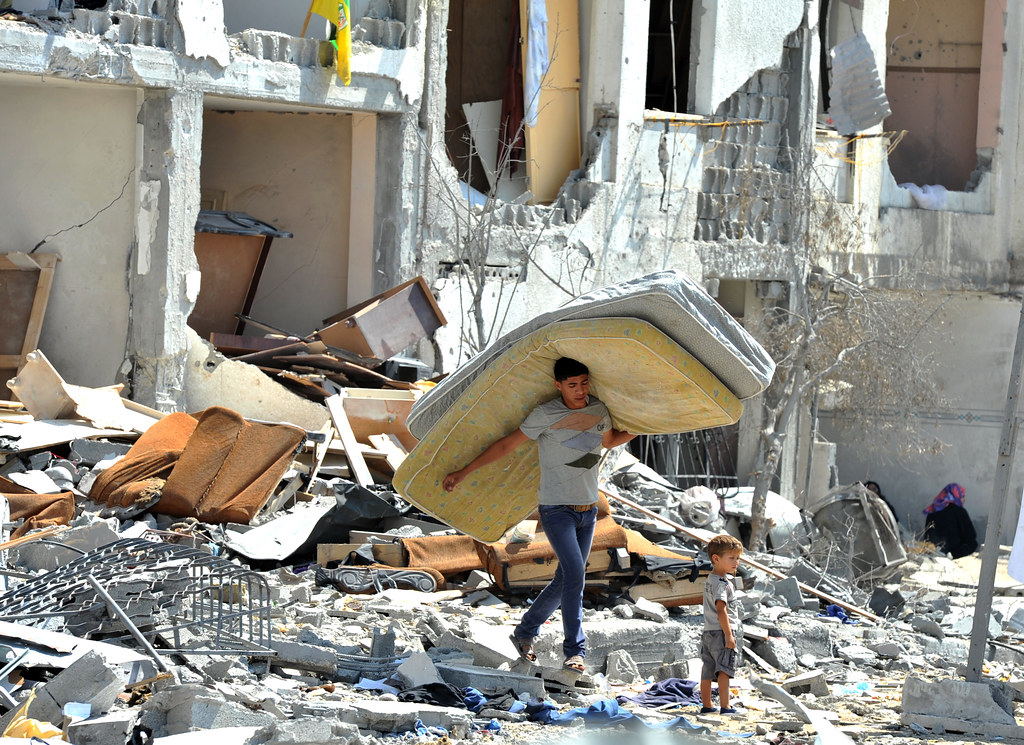
Photo: “Scenes from Gaza Crisis 2014” by United Nations Photo is licensed under CC BY-NC-ND 2.0.

The Two-State Dissolution: Yankevich, Kenny, Helweg-Larsen, Foster, Vaughan, Jackson, Bales, Burch

Leo Yankevich: ‘The Terrorist’

Only six, she stands before a tank,
looking at its armour, while inside
soldiers heed orders from a higher rank.
There isn’t any place for her to hide,
no door to head for, no abandoned car
to slide beneath. Pure terror rules her land.
When finally crushed, she rises past the star
of David, with a stone clutched in her hand.

Janet Kenny: ‘Didn’t They Know?’
(In memory of a lost poem by Robert Mezey)

Didn’t they know that when they swarmed
and slashed and slaughtered what they saw
as an oppressor’s nest, the rage
that they aroused would turn and pour
with molten heat back on their house?

Their captive children now must pay,
small targets in a concrete cage.
No treaty, pact, no peace no truce.
Didn’t they know? Didn’t they know?

No map to show another way.
Olive farmers pay for crimes
of other nations, other times.
No mercy here, no one is just.
Two agonies, two brains concussed.

Nothing to see here. False alarm.
Police not needed to disarm
two weeping peoples each aware
that no solution slumbers there.
Hearth and cradle now makes clear
an ancient poem brought them here.

Where is the psalm that both can share?

Robin Helweg-Larsen: ‘Both Sides Justify Their Terrorism’

When pleas for justice are of no avail,
when governments praise death and theft,
and courts say you’re in error;
when the UN is blocked to fail,
the only recourse left
is terror.

When no one cares that Yahweh willed
that Jews alone should have this land
(and God’s never in error)
and prior residents must be killed,
yet they won’t leave, they force your hand:
to terror.

Gail Foster: ‘On The Occasion of Benjamin Netanyahu Quoting Dylan Thomas’

Don’t tell me that you fight a righteous fight
How many children have you killed today
I’ll give you rage. I’ll give you rage alright

Your anger and your ego burning bright
Are razing all that’s standing in your way
Don’t tell me that you fight a righteous fight

How many have you sent into the light
Before they even had the time to pray
I’ll give you rage. I’ll give you rage alright

How many have you saved or sent in spite
Up to the sky in ashen clouds of grey
Don’t tell me that you fight a righteous fight

In clouds as those who in the fog and night
Were put in trains and disappeared away
I’ll give you rage. I’ll give you rage alright

You speak as if your soul was white as white
Yet deep inside you darkness holds its sway
Don’t tell me that you fight a righteous fight
I’ll give you rage. I’ll give you rage alright

Tom Vaughan: ‘The Land’

Let’s pretend that the war
could be over, and peace
reigned even if only
this evening. O please

pick up your anger
and soak it with mine
in six large barrels
of miracle wine

and then let us dance
like lovers, as though
this land’s many meanings
didn’t all signal no

and we could make ploughshares
out of our swords
and translate the past
into one shared world

and even if dawn
will scatter the night
and send us both stumbling
into the light

where smooth olives glisten
in the warm sun
like belts of bright bullets
ripe for a gun.

Jean MacKay Jackson: ‘War’

Some say that war is bright flares and drama,
A glory of fireworks illumining skies.
This is all lies.
War is a child calling out for his mama
And getting no answer.
War is a merchant of hatred and grief:
War is a thief,
War is a cancer.
Some say that war is hell. Perhaps that is so.
Yet hell has a lack
Of innocent bystanders, hell has no
Collateral damage, no accidental black
Body-bags for old women and babies.
Hell has no maybes;
Everything makes sense.
In hell there is no defense:
You belong there. You chose your path.
Hell has a cold, hard justice drained of wrath.
War is the horrified look in the eye
Of a young person dying without knowing why.

Tom Vaughan: ‘Aleppo’

Never again we say, each time
never, never again,
and every time we mean it so
when it happens again

we watch it on our screens, and say
never, never again

we meet and vote and all agree
never, never again.

Marcus Bales: ‘Genocide is Genocide’

Genocide is genocide. There’s no
Legitimacy on the table. None.
Your killing and your maiming only show
What horrors piled on horrors you have done.

The US taught the method to the Germans
The Trail of Tears leads to the Holocaust.
And now Israeli policy determines
They’ll do the same in Gaza. That boundary’s crossed.

Why not, instead, a reconciliation,
Where all the old and evil wounds can be
Accepted by each side without probation?
With zealotry forgiven, all are free.

Until that happens, hate corrupts you all,
With “Ams Yisrael Chai” the new decree —
Unless it turns out that the final call
That wins is “From the river to the sea.”

And that’s the choice: that each side does the worst
That it can do to keep the hatreds growing,
Shouting slogans of revenge, and cursed
To trade atrocities that keep the business going.

The other choice is reconciliation.
Yes, all the old and evil wounds will be
Accepted by each side without probation,
And zealotry forgiven, to be free.

If “Look at what they did to us!” is your
Refrain, then all you’ve done is to condemn
Your children to a world where they’ll endure
Their children’s gloat: “Look what we did to them!”

There’s always someone left to live resenting
The evils your revenges made you do —
And they will spend their hearts and souls inventing
A suitable revenge to take on you.

Be strong enough for reconciliation
Where all the old and evil wounds must be
Accepted by each side without probation.
With zealotry forgiven, all are free.

Michael R. Burch: ‘Epitaph for a Palestinian Child’

I lived as best I could, and then I died.
Be careful where you step: the grave is wide.

*****

Acknowledgements:

Leo Yankevich: ‘The Terrorist’, collected in ‘Tikkun Olam & other poems’, Counter Currents, 2012
Tom Vaughan: ‘The Land’, published on Hull University Middle East Study Centre website, 2022, and in Professor Raphael Cohen-Almagor’s December 2022 Politics Newsletter
Tom Vaughan: ‘Aleppo’, published in Snakeskin 233, October 2016
Michael R. Burch: ‘Epitaph for a Palestinian Child’, first published in Romantics Quarterly, and many places since. Michael R. Burch is the founder and editor-in-chief of The HyperTexts, and its extensive collections of poetry include ones on both the Holocaust and the Nakba.

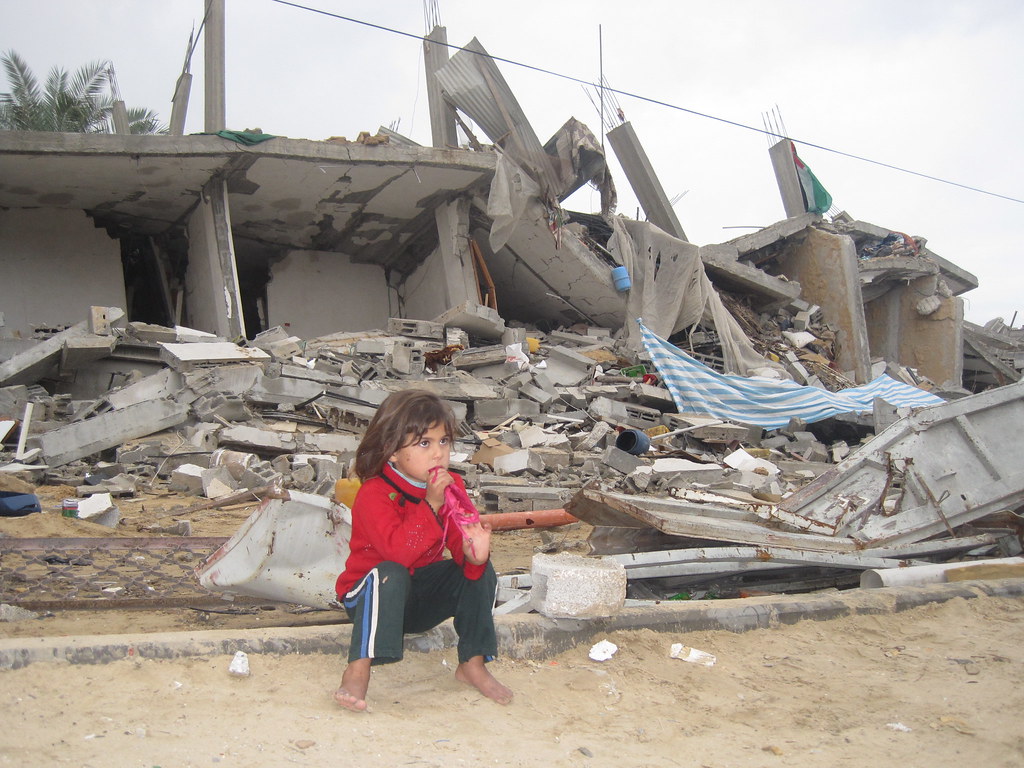
Photo: “Gaza war Nov2012” by EU Civil Protection and Humanitarian Aid is licensed under CC BY-NC-ND 2.0.
Weekend read: Duncan Gillies MacLaurin, ‘The Real Pity’

No, Wilfred, I never
believed your endeavour
was more than a clever display.
Did you think you could rescue
the boys in the mess queue,
or – no less grotesque – you’d betray
your comrades by opting to stay
in shock in Craiglockhart’s sick bay?
Naive pretence
is no defence
for senseless sacrifice.
Admit it, you
were stupid to
ignore Sassoon’s advice
and blithely return to the fray,
quite deaf to the price you would pay.

You based your decision
on lack of a vision
and fear of derision combined.
You went back to that battle
where kids died “as cattle”
to leave tittle-tattle behind,
regardless of what you might find.
No doubt you were out of your mind!
Or, more exact,
you lacked all tact.
Death was not your “chum”.
One week passed,
and then, at last,
the Armistice had come.
You thought you were helping mankind.
Your nerves were so numb you were blind.

The telegram telling
the news reached your dwelling
as people were yelling “Hooray!”
You were inconsequential
despite your potential.
What did you essentially say?
“Was it for this the clay…?”
Whose drum did you dumbly obey?
You grew obsessed
with your new quest;
it made you big and bold.
Was it fulfilled
when you were killed,
just twenty-five years old?
I have to report with dismay
there’s no lack of soldiers today.

*****

The following is an explanatory essay by Duncan Gillies MacLaurin, entitled ‘Owen, Sassoon, Barker and Me’:

If anything might rouse him now
The kind old sun will know.

– from Wilfred Owen’s sonnet, “Futility

It would have been late 1976 or early 1977 when my English teacher, Peter MacDonald, introduced me, a 14-year-old Scottish public schoolboy, to Wilfred Owen. Pixie, as he was called by the boys, had hardly given us the gist of Owen’s life, death, and poetry, when I found myself pole-axed. I hadn’t got my head around the fact that Owen chose to return to fight in the war that he was denouncing in his poetry even though serious shellshock exempted him from service, when I was told that he was killed just one week before the Armistice. It was too much for me.

Reciting Wilfred Owen’s sonnet “Futility” in chapel a few weeks later, I sensed in poetry an alternative to the spiritual life I had known hitherto. Not that I reacted immediately. I didn’t begin writing poetry until I was 20. And it was not until late 1989 that I returned to the poet whose fate had hit me so hard.

It started the way it sometimes does, with a couple of lines scribbled down just before bedtime. The lines were: “If your heart is your legend,/ if your pen is your weapon…” The next day I sat down with my guitar and put the lines to a tune. Although I hadn’t had Wilfred Owen in my thoughts, I found that the piece was to be about him. A year later, “Letter to a Dead Poet” was published in The Dolphin Newsletter, an internal journal of the English Department at Aarhus University, Denmark.

Letter to a Dead Poet

Hey Wilfred Owen,
where were you going
when you got blown away?
Had your heart been your legend,
had your pen been your weapon,
had your conscience elected to stay
watching the sparrows play,
you might have been here today.
I don’t believe your sacrifice
was generous or free;
the fact you paid the highest price
betrayed “Futility”:
“Was it for this the clay…?”
What were you trying to say?

What use are the laurels?
What use are the morals
in all of your quarrels combined?
You went back to that battle
where kids died “as cattle”
to leave tittle-tattle behind
and claimed you were just being kind.
You must have been out of your mind!
And when at last your blood was spilled
Death was not your friend;
one week after you were killed,
the War was at an end.
How could you be so blind?
What were you hoping to find?

My English literature professor, Donald Hannah, who specialised in WWI poetry, was full of praise.

In 2008 (by chance the year Donald Hannah died) I started revising the piece, enlisting the help of other poets on a couple of online workshops. In the process I became even more critical of Wilfred Owen, and people were saying things like: “If he wasn’t already dead there’s a fair chance this would finish him off.” Even my wife, a novelist and investigative journalist, disliked my revisions. One poet, Janet Kenny, was sympathetic though. She commented:

You must have known that this would upset everybody. Owen is so beautiful and
touches us in the deepest way. But I admire the courage this must have taken. It reminds me of Edward Bond’s “First World War Poets”:

You went to the front like sheep
And bleated at the pity of it
In academies that smell of abattoirs
Your poems are still being studied
You turned the earth to mud
Yet complain you drowned in it
Your generals were dug in at the rear
Degenerates drunk on brandy and prayer
You saw the front—and only bleated
The pity!
You survived
Did you burn your general’s houses?
Loot the new millionaires?
No, you found new excuses
You’d lost an arm or your legs
You sat by the empty fire
And hummed music hall songs
Why did your generals send you away to die?
They saw a Great War coming
Between masters and workers
In their own land
So they herded you over the cliffs to be rid of you
How they hated you while you lived!
How they wept over you once you were dead!
What did you fight for?
A new world?
No — an old world already in ruins!
Your children?
Millions of children died
Because you fought for your enemies
And not against them!
We will not forget!
We will not forgive!


I just wanted to show that there was at least one other naughty boy. I love the poems of Wilfred Owen. I seriously like your poem. It would be impossible to imitate his voice (and
unacceptable) but the irreverence IMO hits the correct note. Your poem is deliberately
“vulgar” and unpretentious and is all the more telling for that reason.


(From the online workshop, Eratosphere, 2008, quoted with Janet Kenny’s permission)

Thus encouraged, I persevered, and in 2012 my new version was published in the newly-founded poetry e-zine, Angle. One of the editors was Janet Kenny.

The Real Pity

No, Wilfred, I never
believed your endeavour
was more than a clever display.
Did you think you could rescue
the boys in the mess queue,
or – no less grotesque – you’d betray
your comrades by opting to stay
in shock in Craiglockhart’s sick bay?
Naive pretence
is no defence
for senseless sacrifice.
Admit it, you
were stupid to
ignore Sassoon’s advice
and blithely return to the fray,
quite deaf to the price you would pay.

You based your decision
on lack of a vision
and fear of derision combined.
You went back to that battle
where kids died “as cattle”
to leave tittle-tattle behind,
regardless of what you might find.
No doubt you were out of your mind!
Or, more exact,
you lacked all tact.
Death was not your “chum”.
One week passed,
and then, at last,
the Armistice had come.
You thought you were helping mankind.
Your nerves were so numb you were blind.

The telegram telling
the news reached your dwelling
as people were yelling “Hooray!”
You were inconsequential
despite your potential.
What did you essentially say?
“Was it for this the clay…?”
Whose drum did you dumbly obey?
You grew obsessed
with your new quest;
it made you big and bold.
Was it fulfilled
when you were killed,
just twenty-five years old?
I have to report with dismay
there’s no lack of soldiers today.

The two lines that inspired the piece are gone, yet the sentiment they express is still its backbone. My new title is a reference to something Owen wrote in a preface to a posthumous collection of his poetry: “My subject is War and the pity of War. The Poetry is in the pity.”

A significant new element in the latest version is the fact that Owen’s mother received the dreaded telegram just as the church bells in Shrewsbury were ringing out in celebration of the Armistice.

The alleged advice from Siegfried Sassoon in the first stanza is undocumented. It was an idea that came from reading about their relationship in Pat Barker’s historical novel, Regeneration (Viking Press, 1991), which is centred around the humane treatment that Owen, Sassoon and others received from the man in charge at Craiglockhart, Dr Rivers. Sassoon was at Craiglockhart (in Edinburgh) because his declaration proclaiming the futility of the war had been read aloud in Parliament. Sassoon wasn’t ill, but the government didn’t know what else to do with this war hero turned pacifist. Owen and Sassoon became good friends, and they had a lot in common. They were both homosexual and both strongly ambivalent about the war. Sassoon, the seasoned poet, recognised Owen’s budding poetical talent and helped him with it. There is no doubt that it was a case of hero worship on Owen’s part. Even though they would not allow themselves to refuse to go back to the front, because they saw it as their duty, on a personal level they would not have wanted each other to have to return. While Sassoon’s return to the front was merely the result of a mature adult’s battle with his own conscience, Owen was a damaged young man who should never have been allowed to return. I have imagined that Sassoon told Owen that he (Owen) didn’t need to return to the front, but that Owen chose to follow his hero’s example rather than his advice. Sassoon grieved bitterly over Owen’s death and claimed he would never be “able to accept that disappearance philosophically”. (Siegfried’s Journey, Faber and
Faber, 1945, p. 72)

In an interview with critic Rob Nixon in 1992 Barker talks about issues that were central for the two poets:
Barker: Yes, it is about various forms of courage. What’s impressive about Sassoon’s courage actually is not just the obvious thing that it takes a lot of courage to get decorated, and that it takes a lot of courage to protest against the war, so he’s being brave in two distinct ways. In fact, it’s a much deeper form of courage than that because—partly because of his sexual makeup—he had a very deep need, I think, to be visibly tough and heroic and hypermasculine and prove he could do it. The bravest thing he does, it seems to me, is to deny that psychological need in order to protest against the war.
Nixon: I think one of the great strengths of the novel is the way it deals with the complexity of the condition of the pacifist-warrior rather than simply taking head-on the question “Is war good or bad?” It’s not an ethical book in that narrow, straightforward sense, but ethical by staging the dilemmas of that condition.
Barker: It’s not an antiwar book in the very simple sense that I was afraid it might seem at the beginning. Not that it isn’t an antiwar book: it is. But you can’t set up things like the Somme or Passchendaele and use them as an Aunt Sally, because nobody thinks the Somme and Passchendaele were a good idea. So in a sense what we appear to be arguing about is never ever going to be what they [the characters] are actually arguing about, which is a much deeper question of honor, I think. “Honor” is another old-fashioned word like “heroism”, but it’s very much a key word in the book.
p.7 of “An Interview with Pat Barker” in Contemporary Literature 45.1 (2004)

The ethos of the committed pacifist scorns mere personal safety. Both Owen and Sassoon returned to the War despite their opposition to it. Yet Barker also points to the ambivalence of the positions the two poets held:
Barker: …part of the paradox of Sassoon’s position and, indeed, of Wilfred Owen’s, is that they are simultaneously condemning the war wholeheartedly and claiming for the combatant a very special, superior, and unique form of knowledge, which they are quite implicitly saying is valuable. That you cannot know what we know, and what unites us is something you cannot enter.
(Ibid., p.8)

Barker later states the ambivalence the two men felt even more baldly. She is also astute in her assessment of the class privileges they enjoyed despite their pacifism:
Barker: On the one hand, you’ve got the war poets telling everybody the horrors as vividly as they can. But at the same time, in both Owen’s and Sassoon’s cases, refusing to say the other truth, which is that a lot of it those two particular men enjoyed. So you get an alternative area of silence developing, and that interests me.
The other thing that interests me is how in the second year of the war you had the increased persecution of the pacifists and the increased persecution of homosexuals. There were two very, very nasty campaigns going on. A lot of state spying of a very nasty kind. There was one poor woman, Alice Wheeldon, who was sent to prison with ten years’ hard labor because a police spy alleged that she had plotted to kill Lloyd George by sticking a curare-tipped blowdart up through his shoe. This was a woman who kept a second-hand clothes shop in Leicester. And she got ten years’ hard labor. Unlike Sassoon, you see, who didn’t get sent to prison. You need to be working class and a woman to actually get yourself sent there.
(Ibid., p.19)

What spurred me to write this piece? As is often the case, it was the combination of two factors. On the one hand, my own public-school background meant that I was able to identify with and feel sympathy for Wilfred Owen. On the other hand, I wanted to condemn the elitist culture and stiff-upper-lip ethos that sent an excellent poet to an early grave.

Duncan Gillies MacLaurin, 4th November 2018

*****

Duncan Gillies MacLaurin is a Scottish poet who was born in Glasgow in 1962. He studied Classics at Oxford, left without a degree, and spent two years busking in the streets of Europe. He met a Danish writer, Ann Bilde, in Italy in 1986 and went to live in Denmark, where he teaches English and Latin. His collection of 51 sonnets, I Sing the Sonnet (2017), is online at Snakeskin. He blogs here.

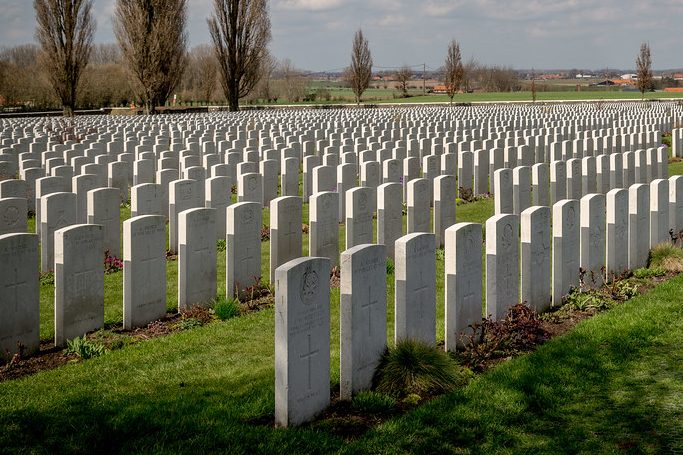
Photo: “Tyne Cot WW1 Cemetery” by PapaPiper is licensed under CC BY-ND 2.0.