Tag Archives: John Beaton

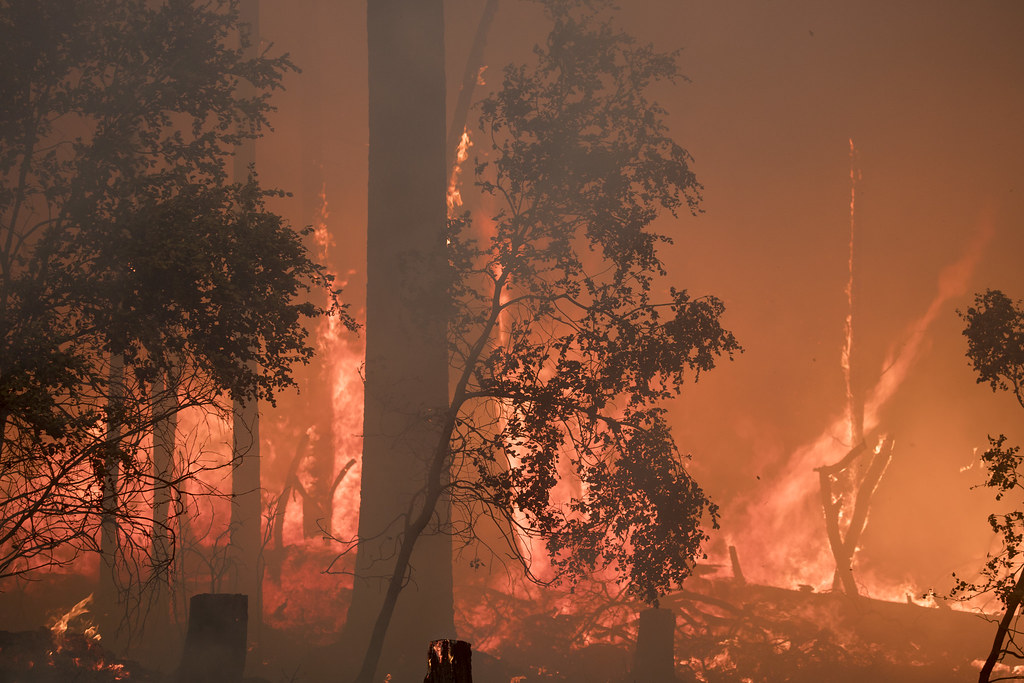
Sonnets: John Beaton, ‘Wildfire’

It starts with lightning, tinder, and a gust.
Smoke-jumper teams, at this stage, may contain it—
clad in Nomex, ‘chuting down to dust
they rip along the fireline like a bayonet,
swinging pulaskis, cleaving to clearings and creeks,
drip-torching back-fires, containing each hot spot
with counter-tides of flame. They know physiques
honed to sprint with gear may still be caught
by racing fronts and panic, so they pack 
a thin aluminum drape, a fire-shelter.
A flare-up—now they cannot reach the black
by racing through the flame-wall, helter-skelter,
so they deploy before the terra torch
and bake like foiled potatoes in its scorch. 

The fire expands. Its roaring conflagration
finds ladder fuels and candles standing trees.
The incident commander starts to station
resources round the burn’s peripheries—
machinery and hotshot crews assemble
in camps and helibases. Like mirages,
infernos rise to ridgelines, flare, and tremble.
As faller teams and swampers check barrages
of lowland flame, a bucket-swinging Bell
lathers long control-lines with retardant.
The Super Huey heli-crews rappel;
Sikorsky sky-cranes suck and buzz like ardent
mosquitoes, but combustion’s alchemies
still plate the skies with gold. A rising breeze… 

The crowning flames become a firestorm
as fires’ heads combine. Convection columns
shoot limbs and embers upwards where they form
flak for tanker-crews. Smoke overwhelms
visibility. They drop a Mars
and lift great lumps of lake, on every mission
seven thousand gallons salving scars
from summer’s branding-iron. Sudden fission
caused by sap expanding inside trunks
sends frissons of crackling sparks across the blaze 
as fire-cracker trees explode. The thunks
of falling tops spook ground-crews. Flames find ways 
to lope the overstorey under cover
of smoke while dozers doze and choppers hover. 

Although we fight it, such spontaneous heat
kindles inner duff.  Like Icarus
we’re drawn to flame as if it could complete
combustion of some smoldering in us,
a splendor in the trees. With rolls and dips,
like waxwings, flying wax wings to the sun,
we soar. .. And then, as if a flash eclipse
confronts us with the dark side of the moon,
the aftermath appears: black devastation,
burnt poles which yesterday were foliaged.
Cracked pods already seed reforestation
and years will heal what fire so quickly aged
but now, devoid of even twigs and slash,
this moonscape marks where sunlight fell as ash. 

*****

John Beaton writes: “I wrote this one around 2009 not long after Joyce and I had run the gauntlet on a west-east highway through the coast mountains of Northern California. A major fire complex was burning and the road was opened for only a few hours, but we got through. Burning embers lined the roadside and there was smoke and flame on both sides. Each stanza is in Shakespearean sonnet form.”

John Beaton’s metrical poetry has been widely published and has won numerous awards. He recites from memory as a spoken word performer and is author of Leaving Camustianavaig published by Word Galaxy Press. Raised in the Scottish Highlands, John lives in Qualicum Beach on Vancouver Island.
https://www.john-beaton.com/

Photo: “20180722_fs_sierra_kg_1081” by Forest Service Photography is marked with Public Domain Mark 1.0.
Using form: Amphibrachic tetrameter: John Beaton, ‘Regeneration’

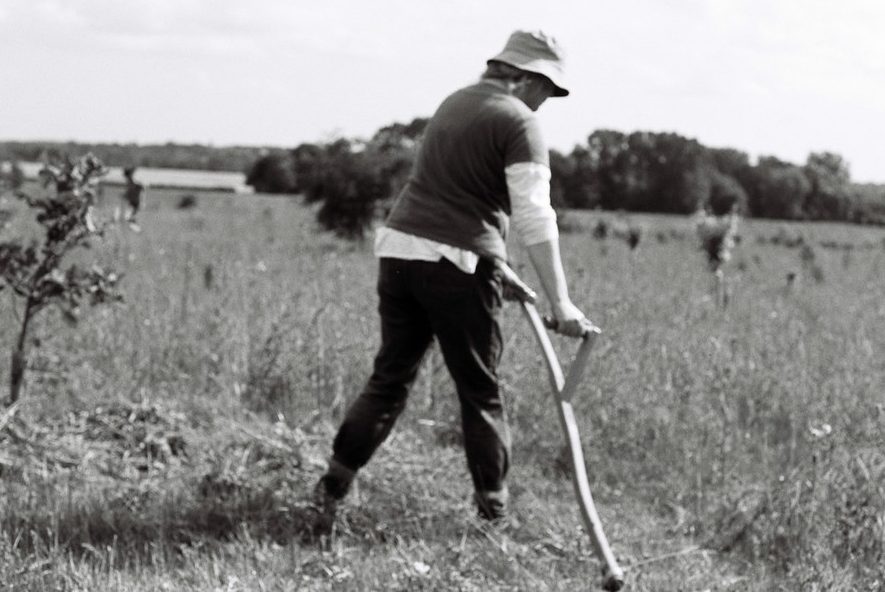
Hay ripens. I sharpen my tapering scythe blade
and chamfer its wafer of paper-thin steel
with stone swoops; it’s hooked like a peregrine’s talon.
The snaking shaft sweeps and the first swathe is side-laid
beside me, clean slain. As I swing I can feel
the gravid field yielding. Sheaves kneel and then fall in
the breeze in formation. Their early seeds dance there
like next April’s rain-showers shining in air.
The cocksfoot and rye-grass and fescue are falling,
the rogue oats, the sedges—I harvest the field where
they shaded the clover; and none do I spare.
The sun sets on stubble where hay-stalks lie sprawling;
my father stood here in the old days like one
of the stalks that made hay as they fell in the sun.

*****

John Beaton writes: “My father grew up in a croft on Skye and he’d scythe hay crops. As a boy, I saw him do it and, as a young man, I did it myself. I never forgot the rhythmic ease of his cutting. He’d been born to it. Anyone can scythe but there’s a skill in being able to do it effortlessly for whole days. It’s all in the rhythm and the precision of the swing.
One day, when I was scything dry hay and watching seeds scatter then fall, reseeding the ground, I thought of how I was succeeding my father. And I wrote this poem.
To capture the rhythm of the scythe, I used amphibrachic tetrameter lines with a mixture of masculine and feminine endings. For instance, the first two lines go:
da DA da da DA da da DA da da DA da
da DA da da DA da da DA da da DA
The other lines follow these patterns in varying order. The rhymes are abcabcdd effegg and the overall pattern is a modified sonnet. Strong internal rhyme and alliteration keep the lines swinging. I hope the reader sweeps and sways through it.”

John Beaton’s metrical poetry has been widely published and has won numerous awards. He recites from memory as a spoken word performer and is author of Leaving Camustianavaig published by Word Galaxy Press. Raised in the Scottish Highlands, John lives in Qualicum Beach on Vancouver Island.
https://www.john-beaton.com/

Scything” by London Permaculture is licensed under CC BY-NC-SA 2.0.

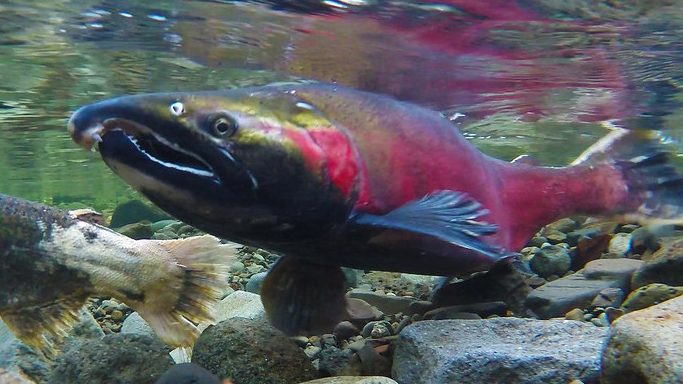
Using form: John Beaton, ‘Killing a Coho’

I grip its tail, hammock its back,
and swing its head down with a crack
on rock, then feel its spasms judder
through my hands as, with a shudder,
it stills,
a grand finale that fulfills
some ancient impulse in my mind.

Poking my finger through a gill,
I cause the raker fronds to spill
blood that drip drips as I carry
the silver deadweight of my quarry,
my kill,
toward a tidal pool
the sunset has incarnadined.

My knife begins behind its throat
and blood-clouds billow out and bloat
then seep into an outflow, seaward,
where baitfish burrow in the seaboard
in schools,
their heads in sand, small fools
kidding themselves they’re hard to find.

I slit its stomach. From that sac
their half-digested eyes peer back,
sandlance dumbstruck at being hunted
in shallow flats this prowler haunted,
this fish
whose every feeding flash
signalled flesh to seals behind.

Somewhere nearby a black bear roars;
wolves salivate; an antler gores
a starving cougar; orcas cripple
humpbacks, bite their fins, then grapple
great bulks
till bleeding, savaged hulks
sink; and then there’s humankind.

No kindness here. This salmon swam
full speed to seize my lure then, wham,
became a madcap, hell-for-leather,
death-row inmate on a tether
and fed
the caveman in my head.
This coast is one big hunting blind.

*****

John Beaton writes: “I’m a lifelong fly-fisher but I’ve always had twinges of conscience about hurting and killing fish. Catch-and-release makes me question whether I’m being cruel. But there’s also a part of me that still connects with the beautiful brutality of the eat-or-be-eaten ecosystems in which we live. This poem tries to express that perspective in the context of an actual experience—the catching and killing of a coho salmon off a rocky shoreline near Tofino.

I chose a form to tell the story with some element of shock and violence. Each stanza has seven lines: one and two are tetrameter with masculine rhymes; three and four are also tetrameter but with feminine rhymes to cushion what comes next; five and six are monometer and trimeter respectively with masculine rhymes and these cropped lines set up a sense of surprise and violence; and line seven is tetrameter with a masculine ending that ties the poem together by rhyming with all the other seventh lines.

There’s some justification for killing the coho—the victim is itself a killer. And the turn at the end of the penultimate stanza connects humans with the savagery of the wildlife.

Sometimes you find a ‘eureka’ word—one that fits rhyme, meter, and sense so well you think ‘wow.’ This poem has one I think of that way: incarnadined.”

John Beaton’s metrical poetry has been widely published and has won numerous awards. He recites from memory as a spoken word performer and is author of Leaving Camustianavaig published by Word Galaxy Press, which includes this poem. Raised in the Scottish Highlands, John lives in Qualicum Beach on Vancouver Island.
https://www.john-beaton.com/

Photo: “Coho Spawning on the Salmon River” by BLM Oregon & Washington is licensed under CC BY 2.0.

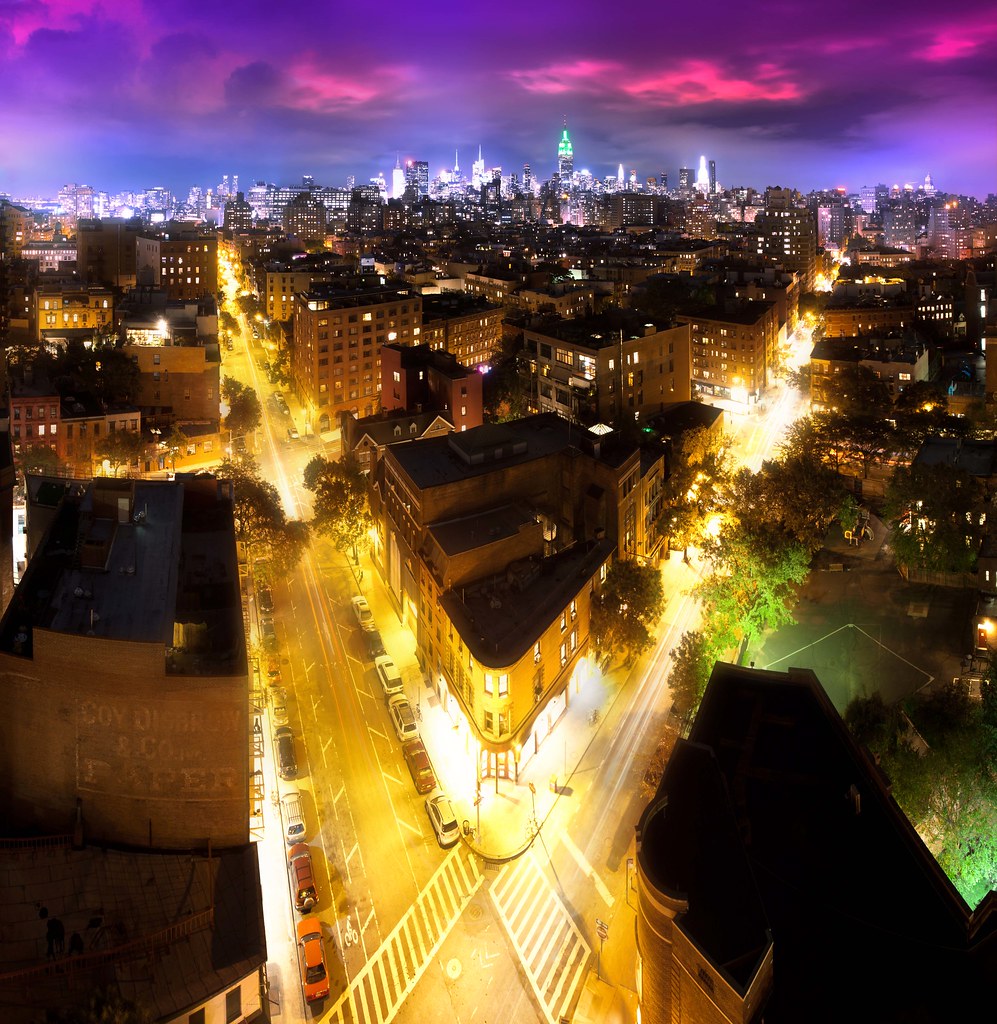
Using form: John Beaton, ‘Legacy’ (excerpt)

Inside his penthouse office
he views his Inuit artwork,
carvings from a culture
reduced to buy-and-hold,
then scans the evening city,
his bar chart on the skyline
where real estate has grown his stake
but cost him bonds he’s had to break –
he hadn’t meant to so forsake
his parents. They looked old

that day outside the croft house
when cowed farewells were murmured
as cattle lowed in wind blasts
keening from the sea.
His mother and his father
stood waving from the porch step;
next year she’d crack her pelvic bone,
when winter iced that slab of stone,
and never walk again. I’ll phone,
and he was history.

(…)

He downs his drink and glances
again at his computer –
an email from a neighbour:
Your father died last night.
He’d lately gotten thinner
and seldom had a fire on –
what little peat he had was soft.
Some things of yours are in the loft
so mind them when you sell the croft.

The city lights are bright;

he turns again and faces
his metamorphic sculptures
of walruses in soapstone
that never will break free
from rock that locks the sea waves –
past fused against the future.
Another gin? That’s six. Or eight?
So be it. Clarity’s too late.
His real estate’s no real estate –
he’s left his legacy.

*****

John Beaton writes: “This is a composite. Elements of it are taken from my life but I’ve borrowed significantly from the trajectories of others, especially some of my father’s contemporaries who left Camustianavaig physically but never in their hearts. There are also aspects of the lives of some people I’ve known in business. 

I worked out the form so that each stanza would start out steadily and rhythmically for six trimeter lines then build pace for three rhymed tetrameter lines and rein to a halt with a single trimeter line that has a masculine rhyme with line four. Even though they limit word-choices, I thought feminine endings for the first three lines and lines five and six were worth it for the rhythm. And I like how they form a sort of rhyme and closure gradient with lines four and seven to ten.”

John Beaton’s metrical poetry has been widely published and has won numerous awards. He recites from memory as a spoken word performer and is author of Leaving Camustianavaig published by Word Galaxy Press, which includes this poem. Raised in the Scottish Highlands, John lives in Qualicum Beach on Vancouver Island.
https://www.john-beaton.com/

Photo: “‘V for Vendetta’, United States, New York, New York City, West Village, Skyline View” by WanderingtheWorld (www.ChrisFord.com) is licensed under CC BY-NC 2.0.

Using form: John Beaton, ‘Stillbirth’

I.

The day I left for Canada my mother
and father quelled their tears. We held and hugged.
He said, “We three may never see each other
alive again.” That leaving
hooked my gut and tugged.

We never did. He died and left her widowed
so next time we three met was at his tomb.
Our parting afterwards had been foreshadowed–
the breakage of the cord
that fed me from her womb.

We rode on gondolas to summits she
had never dreamed of. Mountains could not buy
her heart from where they’d raised the family–
we shared reunions linked
by contrails in the sky.

II.

Hi, Mum. It’s me, from Canada, your John.
Och, John! You’ve caught me in an awful state!
I know. I’m sad to hear that Henry’s gone.
The one that was my brother?
My memory’s not great.


He’s back now, from the War. Oh dear, they’re here.
Who? They’re all against me. Who? The clique.
They’ve done such nasty things. They think I’m queer.
I think I’ll kill myself.

So how’s the house this week?

Och this one’s grand. I moved two days ago.
And Johnny helped. I think he’s at the door.
I’ll have to run now, Henry. Cheerio.

Don’t go. The phone is dead.
The cord exists no more.

III.

A winter storm comes sweeping down the hills
and, gusting, blasts umbrellas inside-out.
They ring the grave like blighted daffodils
and rain-black mourners hold,
like buffeted peat-burn trout.

I take the tasselled pall rope, let it slide,
and with my brothers ease the coffin down;
it slips across the lip of a great divide
and sinks what was my mother–
a shuck, a wrinkled gown.

Gales carry off the prayer as it is spoken.
I cast the rope adrift. The rains of Skye
slap my back. Again, a cord has broken–
this time my lungs won’t fill.
I try but cannot cry.

*****

John Beaton writes: ” This one is autobiographical. Using the metaphor of an umbilical cord, it tells how emigration stretches and breaks family connections. The title refers to the old practice alluded to in the last stanza of holding the newborn upside down and slapping it on the back till a cry indicates its lungs have started to work and it is breathing on its own. At the end of the poem, grief prevents such a cry. 
The dementia dialog is taken pretty much verbatim from an international phone call to my mother. That’s the part that crystallized the abacb rhyme scheme and 55533 meter. The dialog fell into place with that pattern and I felt it worked for the rest of the poem too. I think the last two lines of each stanza, with the first being unrhymed and the second linking through masculine rhyme with line two, act like an alexandrine and combine to give a closure effect.
The three-part structure represents three stages of escalating disconnection.”

John Beaton’s metrical poetry has been widely published and has won numerous awards. He recites from memory as a spoken word performer and is author of Leaving Camustianavaig published by Word Galaxy Press, which includes this poem. Raised in the Scottish Highlands, John lives in Qualicum Beach on Vancouver Island.
https://www.john-beaton.com/

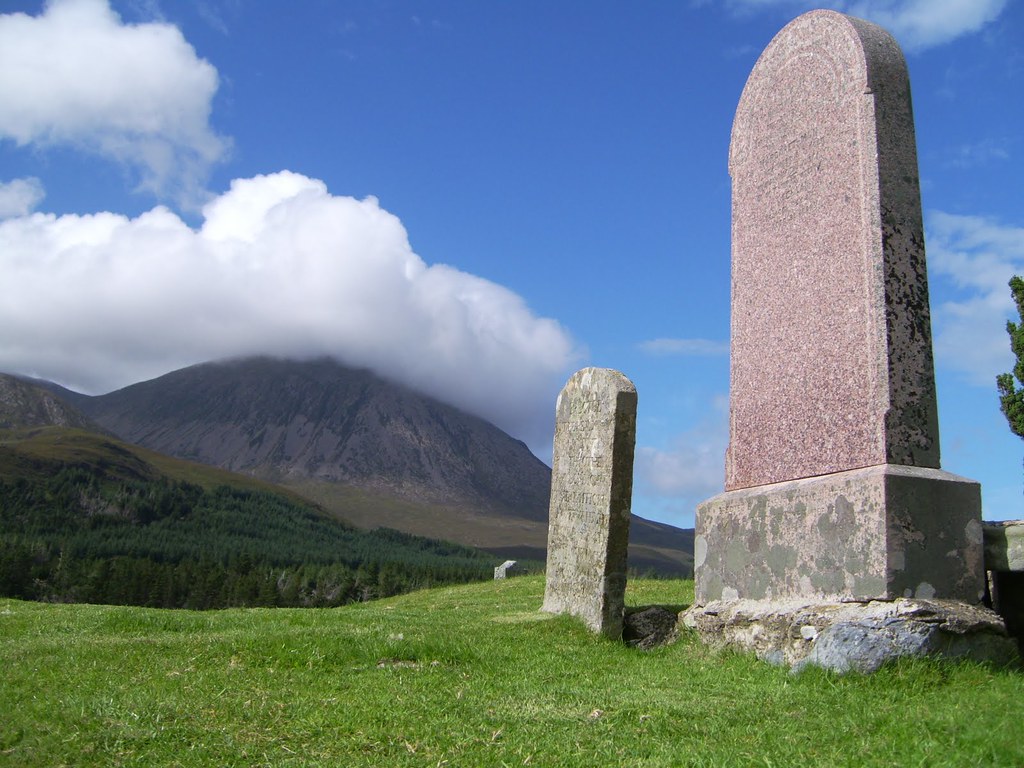
Cill Chriosd Graveyard Isle of Skye Scotland” by Tour Scotland Photographs is licensed under CC BY-NC-ND 2.0.

John Beaton, ‘A Many-Splendoured Thing?’

Is love a beaming, eye to eye? An oath—you-only-till-I-die?
A U that comes before an I? A hullabaloo-cum-lullaby?
A flirt? A tilting of the neck? An art? A Machu Picchu trek
back in time to that valiant peck on virgin cheek, that what-the-heck?

A brace of lovebirds who embrace instead of pecking cheeks, a plaice
whose eyes achieve a state of grace—as one on one side of its face?
A willing ear we learn to ration between soliloquies? A fashion?
The winning chips we hope to cash in from laying on the wheel of passion?

A bridle? Or a bridal dress? An if-you-love-me-you’ll… duress?
A scandal in the gutter press? A touch-me-there-uh-huh caress?
A smile without the crow’s-feet creases? A summer fling that never ceases?
A joining of two jigsaw pieces? A joke? A yoke with quick-releases?

Love grins with its beret askew, climbs up the sky and paints it blue
then turns the sun to shine on you and says, “You’re puzzled? Hey, me too!”

*****

John Beaton writes: “This started with recollection of a joke by British comedian, Benny Hill: there’s quite a difference between ‘What is this thing called love?’ and ‘What is this thing called, love?’ I decided to come up with humorous answers and they started occurring to me in pairs of rhymed pairs.
I want this to be light and playful. I cobbled the answers together in octameter lines, each with two rhymed tetrameter halves, and configured the lines in three quatrains (aabb) and a rhymed couplet. The result has elements of the sonnet form—fourteen lines and a turn at the end of line twelve. I’ve also played with alliteration and internal rhyme.”

John Beaton’s metrical poetry has been widely published and has won numerous awards. He recites from memory as a spoken word performer and is author of Leaving Camustianavaig published by Word Galaxy Press, which includes this poem. (It is also in the Potcake Chapbook Rogues and Roses.) Raised in the Scottish Highlands, John lives in Qualicum Beach on Vancouver Island.
https://www.john-beaton.com/

What do you see through love?” by TW Chang is licensed under CC BY 2.0.

John Beaton, ‘Year-Leap’

This field in winter forms a wetland, quiet
except for hushing rainfall, rushing hail,
a breeze that, fussed with snowflakes, seems to sigh at
the calls of robin, chickadee, and quail,
and swishing noises as a buck picks through
a copse of wild roses, red with thorns,
briar stems, and rose hips, which he’ll chew
as velvet slowly silences his horns.

And then the frogs! These mudlark choristers,
raucous for amplexus, now rejoice–
last night we heard no chirrups, chirps, or chirrs;
tonight they’d overwhelm a stentor’s voice–
and, swamping winter with their song, they bring
good news: the year is sound, and crouched to spring.

*****

John Beaton writes: “On our Vancouver Island acreage, frogs herald the spring,  In this poem I tried to convey the sense of joyous surprise I feel when hearing them for the first time each year.
It’s a fairly straightforward sonnet—pentameter rhymed ababcdcd efefgg. I started out softly with feminine a-rhymes then moved to masculine. Line eight introduces the turn with a line of which I’m fond, one of those that, when they fall into your lap, make writing poetry great fun. I delighted myself with quite a bit of alliteration, internal rhyme, and selective vocabulary.”

John Beaton’s metrical poetry has been widely published and has won numerous awards. He recites from memory as a spoken word performer and is author of Leaving Camustianavaig published by Word Galaxy Press. Raised in the Scottish Highlands, John lives in Qualicum Beach on Vancouver Island.
https://www.john-beaton.com/

Painted Glass Frog & Swamp Window– Completed Strawbale House Build in Redmond Western Australia” by Red Moon Sanctuary is licensed under CC BY 2.0.

Using form: choice of metre: John Beaton, ‘Request for a Dance’

Step with me, float with me, over the floor;
weave with me, waltz with me, out through the door;
slide to the deck where the crowdedness clears;
glide through the garden and tear off your fears.

Step with me, sneak with me, down to the lake,
onto its waters; the mirror won’t break;
lilt in a ball gown of luminous mist;
twirl till you’re breathless and need to be kissed.

Step with me, skim with me, let yourself go,
dazzling and dizzy, then flowingly slow;
whirl till our swirls make a maelstrom of night;
pass through the portal from here to delight.

Step with me, sway with me, feel yourself swing,
hammocked on rhythms of hearts on the wing;
move to the measures of seasons and years;
sweep to that island where time disappears.

Step with me, slip with me, up to its crypt,
quaff a last laugh from the pleasures we’ve sipped;
curtsey and smile at a parting of hands
joined in this dancing by two wedding bands.

*****

John Beaton writes: “Inspired by Richard Wilbur’s beautiful ‘For C,’ and by my own marriage, I wanted to write a poem about lifelong love. For the beginning, a wedding dance came to mind and that expanded into an extended metaphor. The theme needed a form that danced the reader along.
I adopted a four-line stanza rhymed aabb with the meter of each line being a form of dactylic tetrameter: DA-da-da, DA-da.da, DA-da-da, DA. To kick off each stanza dancingly, I used near-repetition in the first two dactyls. Then a lot of alliteration and internal rhyme help it swirl along.
The poem develops the dance into a shared lifelong experience, one that must end but does so with a sense of fulfilment and beauty. I’ve recited it at weddings.”

John Beaton’s metrical poetry has been widely published and has won numerous awards. He recites from memory as a spoken word performer and is author of Leaving Camustianavaig published by Word Galaxy Press. Raised in the Scottish Highlands, John lives in Qualicum Beach on Vancouver Island.
https://www.john-beaton.com/

Photo: “Wedding Dance” by DonnaBoley is licensed under CC BY 2.0.

Using form: nonce form; John Beaton, ‘Wolves’

I’m wakened, drawn towards the ice-thin window,
to witness scenes as faint and still as death.
How bleak the moon; how bare the trees and meadows;
sky’s pale maw overhangs
Earth bleached beneath star fangs.
Night’s curled lip sneers on shadows
of mountains set like teeth.

Two bow waves shear the median of the valley,
iced hayfield yields as feral muscles glide–
hoarfrost disturbed by wakes of live torpedoes.
Grey shoulders breach and lope,
implode and telescope,
impelled by ruthless credos
of chilled and vicious pride.

The wolves tear savage furrows down the nightscape;
their eyes are shined with blood, their mission clear.
Grass springs back shocked to green behind their passage–
twin tracks traverse the vales,
cold comets trailing tails
leave scarred in frost their message:
the wolves, the wolves passed here.

*****

John Beaton writes: “This describes a real incident on our acreage when I woke in the middle of a frosty night for no apparent reason and looked out the window. I was struck by the grace, power, and sense of danger the wolves evoked.
“The first three lines are pentameter and the endings alternate—feminine, masculine, feminine. The next four lines contract to trimeter to give a sense of speed and acceleration. Lines two and seven have a masculine rhyme that closes the stanza and ties its parts together. The overall rhyme-scheme is xabccba. My intent was to convey the power and motion of the wolves running and I built in alliteration and internal rhyme to help with this.”

John Beaton’s metrical poetry has been widely published and has won numerous awards. He recites from memory as a spoken word performer and is author of Leaving Camustianavaig published by Word Galaxy Press. Raised in the Scottish Highlands, John lives in Qualicum Beach on Vancouver Island.
https://www.john-beaton.com/

Photo: “Wolves With Northern Lights (Color Corrected)” by edenpictures is licensed under CC BY 2.0.

John Beaton, ‘A Sweetness Absent From the Ocean Air’

Full many a flower is born to blush unseen,
And waste its sweetness on the desert air.
Thomas Gray, Elegy Written in a Country Churchyard

The Weeping Window bleeds ceramic poppies
that blush St. Magnus’s cathedral wall
and each seems miniscule among them all—
the throng comprises nigh a million copies:
one bloom per British serviceman who died
in World War One, a massive flower bed
entitled Blood Swept Lands and Seas of Red
displayed in London where it dignified
that War’s centenary. Now part has traveled
to Orkney, here to mark one century
since dreadnought fleets waged battle on the sea
near Jutland. Lifelines tangled and unraveled—
in two short days eight thousand men and more
succumbed as riven battleships went down.
With Princess Anne, the envoy of the Crown,
their relatives are welcomed at the door
of this, the Viking edifice erected
in memory of Magnus, who eschewed
bad blood in favour of the holy rood,
a man of peace, nine hundred years respected.

Some families take pause and stare, as if
they hope the flower avatar of their
lost sailor lad will wave. As they repair
into the church, the poppies stand up, stiff
like soldiers at attention on parade;
their stems are wire, their heads are crimson clay
and, grouped, they seem ethereal, a fey
honour guard shipshapedly displayed.
The British and the German brass bands march
along the harbour front then through the streets;
this day there are no triumphs or defeats—
they gain the church grounds through a common arch—
and then the pipe band, clad in kilts, assemble.
No instrument of war can so foment
bravado then bestow such dark lament:
Great Highland Bagpipes set the air atremble,
the Weeping Window work of art revives,
more vehemently, the ones who drowned and bled,
and now we see, in child-tall blooms of red,
a sad cascade of young, foreshortened lives.

*****

John Beaton writes: In the late spring of 2016, my wife and I, on an annual trip to Orkney, attended a commemoration ceremony. The venue was St. Magnus cathedral, a magnificent edifice of Viking origin in Kirkwall, the main town on that little group of windswept islands off the north tip of Scotland.  To commemorate the centenary of the 1914 outbreak of World War I, artists had created a display outside the Tower of London: 888,246 ceramic poppies, one for each British soldier killed in that war. To commemorate the centenary of its largest naval engagement, the Battle of Jutland, organizers had taken a subset to Kirkwall and set it up as ‘The Weeping Window’, a dramatic crimson cascade from a lancet window high on the cathedral’s central tower. This poem describes the ceremony.
It won Goodreads Poem of the Month for December 2017 and has been previously published on the Thomasgray2016.org website and in my recent book, Leaving Camustianavaig (Word Galaxy Press).

Photo: Tom O’Brien, The Arcadian/ Orkney Media Group