Tag Archives: funeral

Maryann Corbett, ‘Buying a Plot in Plague Time’

Shouldn’t the moment be more–well, dramatic?
Shouldn’t it toll like Donne’s dead-bell? But no.
Mere paper-rustling. It’s a burst of static
That stutters off to silence, while late snow
Alights outside and melts forgettably,
A numb reminder. Nothing I can see
In the small print addresses dread, or God,
Or love. Somber reflection? Not a bit.
Forms in quadruplicate:
White over yellow, pink, and goldenrod,

For a dead end. No hymns, no holiness–
No funeral; every gathering spreads the plague.
Perfunctory forms depress me, and they press
Me now, because I’ve left so much so vague.
When until now has dying loomed so real
I shrank from my dead flesh? Or when did I feel
This keen to leave less horror for my son
And daughter? Save them shock-and-awe about
Choices, when mine run out?
I mutter grimly, I will get this done.

And still I sit here, playing my numbers game,
Tossing my rhyme-pairs into the winds of fear.
Back to the labor. Back to the minor shame
Of shuffling off my life (check there, sign here).
Earth gets my ashes–grudgingly, on terms
That reek of real estate and legal firms.
Transfer-on-death arrangements and new will
Spew gray phrases: drone and drone and drone.
Like worrying a bone,
This work to stifle terrors I can’t kill.

So work–bending the spirit to the letter,
Bowing the head at how the flesh unweaves–
Goes down like a stiff drink; the ache’s no better
Yet, for the iron aftertaste it leaves.
Here, plague: take this dull prose; spare those I love.
I sign at all the Xs (and to prove
My resoluteness, press hard on the pen),
Scribble the check and seal the envelope.
Clinging weakly to hope,
I thumb the stamp on. No one says Amen.

*****

Maryann Corbett writes: “It’s clear, I think, that this poem (first published in Modern Age) dates from the worst days of the Covid pandemic, in 2020 when there was no vaccine, when isolation was the only control, and when the thought of death was pervasive. As my own age cohort was dying in droves, I did think it prudent to make plans in case the worst happened. My ruminations on the process arranged themselves in a shape like that of Larkin’s Aubade.”

‘Buying a Plot in Plague Time’, first published in Modern Age, is collected in The O in the Air.

Maryann Corbett earned a doctorate in English from the University of Minnesota in 1981 and expected to be teaching Beowulf and Chaucer and the history of the English language. Instead, she spent almost thirty-five years working for the Office of the Revisor of Statutes of the Minnesota Legislature, helping attorneys to write in plain English and coordinating the creation of finding aids for the law. She returned to writing poetry after thirty years away from the craft in 2005 and is now the author of two chapbooks and six full-length collections, most recently The O in the Air (Franciscan U. Press, 2023). Her work has won the Willis Barnstone Translation Prize and the Richard Wilbur Award, has appeared in many journals on both sides of the Atlantic, and is included in anthologies like Measure for Measure: An Anthology of Poetic Meters and The Best American Poetry. A seventh book, Notifications from the Unseen, is forthcoming from Slant Books.”

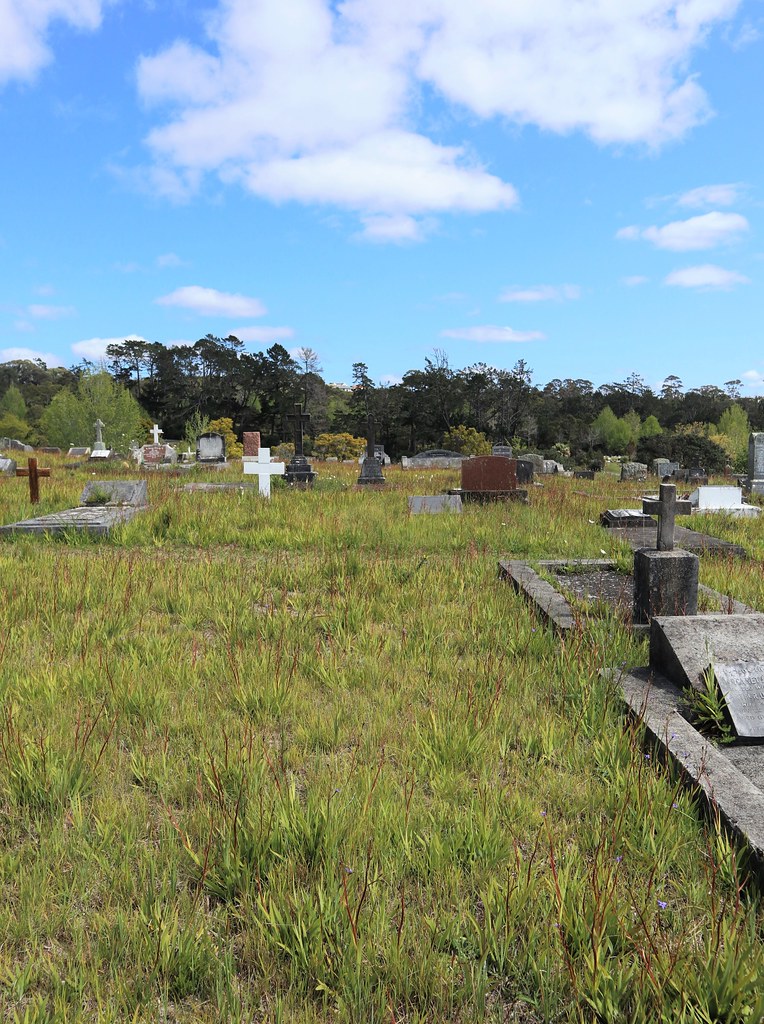
Photo: “Roman Catholic Division C, Row 16, Plot 43” by Discover Waikumete Cemetery is licensed under CC BY-NC 2.0.
Using form: John Beaton, ‘Stillbirth’

I.

The day I left for Canada my mother
and father quelled their tears. We held and hugged.
He said, “We three may never see each other
alive again.” That leaving
hooked my gut and tugged.

We never did. He died and left her widowed
so next time we three met was at his tomb.
Our parting afterwards had been foreshadowed–
the breakage of the cord
that fed me from her womb.

We rode on gondolas to summits she
had never dreamed of. Mountains could not buy
her heart from where they’d raised the family–
we shared reunions linked
by contrails in the sky.

II.

Hi, Mum. It’s me, from Canada, your John.
Och, John! You’ve caught me in an awful state!
I know. I’m sad to hear that Henry’s gone.
The one that was my brother?
My memory’s not great.


He’s back now, from the War. Oh dear, they’re here.
Who? They’re all against me. Who? The clique.
They’ve done such nasty things. They think I’m queer.
I think I’ll kill myself.

So how’s the house this week?

Och this one’s grand. I moved two days ago.
And Johnny helped. I think he’s at the door.
I’ll have to run now, Henry. Cheerio.

Don’t go. The phone is dead.
The cord exists no more.

III.

A winter storm comes sweeping down the hills
and, gusting, blasts umbrellas inside-out.
They ring the grave like blighted daffodils
and rain-black mourners hold,
like buffeted peat-burn trout.

I take the tasselled pall rope, let it slide,
and with my brothers ease the coffin down;
it slips across the lip of a great divide
and sinks what was my mother–
a shuck, a wrinkled gown.

Gales carry off the prayer as it is spoken.
I cast the rope adrift. The rains of Skye
slap my back. Again, a cord has broken–
this time my lungs won’t fill.
I try but cannot cry.

*****

John Beaton writes: ” This one is autobiographical. Using the metaphor of an umbilical cord, it tells how emigration stretches and breaks family connections. The title refers to the old practice alluded to in the last stanza of holding the newborn upside down and slapping it on the back till a cry indicates its lungs have started to work and it is breathing on its own. At the end of the poem, grief prevents such a cry. 
The dementia dialog is taken pretty much verbatim from an international phone call to my mother. That’s the part that crystallized the abacb rhyme scheme and 55533 meter. The dialog fell into place with that pattern and I felt it worked for the rest of the poem too. I think the last two lines of each stanza, with the first being unrhymed and the second linking through masculine rhyme with line two, act like an alexandrine and combine to give a closure effect.
The three-part structure represents three stages of escalating disconnection.”

John Beaton’s metrical poetry has been widely published and has won numerous awards. He recites from memory as a spoken word performer and is author of Leaving Camustianavaig published by Word Galaxy Press, which includes this poem. Raised in the Scottish Highlands, John lives in Qualicum Beach on Vancouver Island.
https://www.john-beaton.com/

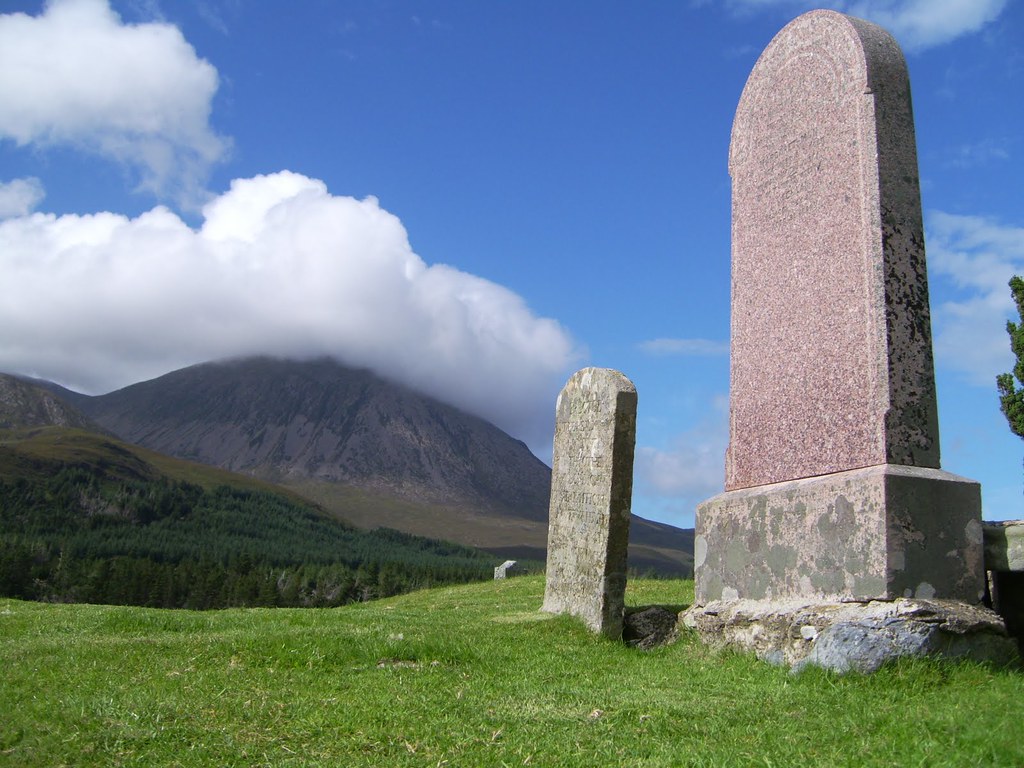
Cill Chriosd Graveyard Isle of Skye Scotland” by Tour Scotland Photographs is licensed under CC BY-NC-ND 2.0.

Potcake Poet’s Choice: Brooke Clark, ‘At a Child’s Funeral’

Today we give to the earth the body of our little girl,
our little darling; we’ll never watch her twirl
around the house again in her impenetrable games
or listen as she wheedles and whines our names
in that annoying tone we tried to break her of before;
now we’d give anything to hear it once more.
She’ll find whatever waits for all of us when this life ends–
eternal silence or the souls of friends–
while, left behind, we bow our heads to see what prayers can do.
Lie lightly, earth–she stepped so lightly on you.

*****

Brooke Clark writes: “‘At A Child’s Funeral‘ is loosely adapted from one of Martial’s epigrams. This poem interested me because it’s quite a departure from Martial’s usual satirical style. In it, he attempts to convey a genuinely tender emotion, which is well outside his usual register of scorn verging on disgust. That made it a departure for me too, and I struggled to get the tone right — emotional without being mawkish. I hope I succeeded! In terms of form, it’s in rhyme, and uses alternating 7-stress and 5-stress lines in imitation of Martial’s elegiac couplets.”

Brooke Clark is the author of the poetry collection Urbanities, the editor of the epigrams website The Asses of Parnassus and the book reviews editor at Able Muse. Twitter: @thatbrookeclark

Photo: “Filipino child funeral” by Ted Abbott is licensed under CC BY-NC-ND 2.0.