Tag Archives: magic

Sonnet: Juleigh Howard-Hobson, ‘What a Shame Spell’

To ruin anyone’s potential, you
Will need things like this: shell from a chicken’s
Egg that broke when it fell from its nest to
The ground, unhatched. Unfastened safety pins
That were found, not bought. Seeds, germinated,
Then boiled before the first leaves unfurled and
Turned green. Dead caterpillars. Negated
Contracts. Unopened catalogues. A hand
From a working clock. Beads from a wedding
Dress that was returned. At least one item
Must have been stolen from your target. Bring
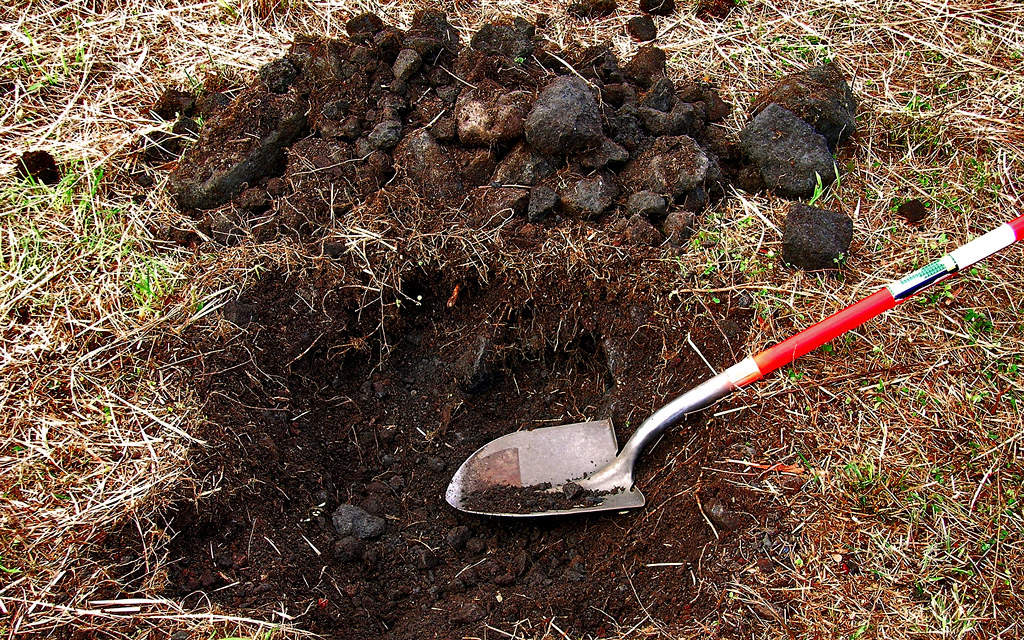
These together, dig a 6 foot hole, then
Bury them. As you bury, state the name
Of who you want ruined, adding: ‘What a shame’.

*****

Juleigh Howard-Hobson writes: “This wicked sonnet was inspired by jealous fairytale stepmothers, and characters like Daphne Du Maurier’s Mrs. Danvers. Oh, and coming upon a bunch of dead green caterpillars lying under a tree…  Besides first appearing in Coffin Bell, it is included in my book, Curses, Black Spells and Hexes: a Grimoire Sonnetica (Alien Buddha). Of all the spell sonnets I’ve written, this is one of the wryest. I wouldn’t wish it on my worst friend.”

Juleigh Howard-Hobson’s work can be found in Think Journal, Able Muse, New Verse Review, Coffin Bell Magazine (including this poem), The Deadlands, Autumn Sky Poetry and other venues. She has been nominated for “The Best of the Net”, Pushcart, Elgin & Rhysling Awards. A member of the HWA and the SFPA, she lives on the coast of the Pacific Northwest. In a poetically haunted house. 
X: poetforest

Try Digging A Whole On the Big Island” by Tommys Surfshack is licensed under CC BY 2.0.

Nina Parmenter, ‘A Spell for Motherhood’

Take a mountain. Scale the pink-arsed flanks of it,
limb over limb. Find Poseidon. Extract from him a wave
and a horse’s hoof. Pluck a tree; kill the grip of it
by showing it your thoughts. Make your peace with the grave.
Eat apples, all of them. Taste in them the sin
of being a woman. Let that smack you in the gut,
you deserve it. Straddle the equator. Suck up its spin,
take it with you; feel your body snapping shut.
Learn to count each breath as an act of sedition.
Pull the lungs from a sleeping leopard. Be a speck.
Be a planet. Be a long-dead apparition.
Stuff a storm into your patch pocket, huge and wet,
but tell no one. Invent two new ways of shucking
a heart from a blown glass moon. Find a man. Fuck him.

*****

Nina Parmenter writes: “This poem (first published by Atrium Poetry) was written in an online workshop in response to the prompt “a spell”. I wanted my spell to be impossible, to reflect the ineffability of motherhood, but I also wanted to talk about how the act of giving birth puts us right on the threshold of life and death. I felt that some kind of form was right for a spell, but needed the poem to feel raw rather than singy-songy, so I chose this unmetered sonnet form.
The last line was really a happy accident; I wrote the penultimate line (which originally ended with sucking, not shucking!) and then thought, “What rhymes with sucking?… OH.”  

Nina Parmenter‘s first collection “Split, Twist Apocalypse” is published by Indigo Dreams. Her work has appeared in Snakeskin, Light, Allegro, Raceme, Honest Ulsterman, The Lyric and Potcake Chapbooks ‘Houses and Homes Forever’. Her home, work and family are in Wiltshire.
https://ninaparmenter.com/

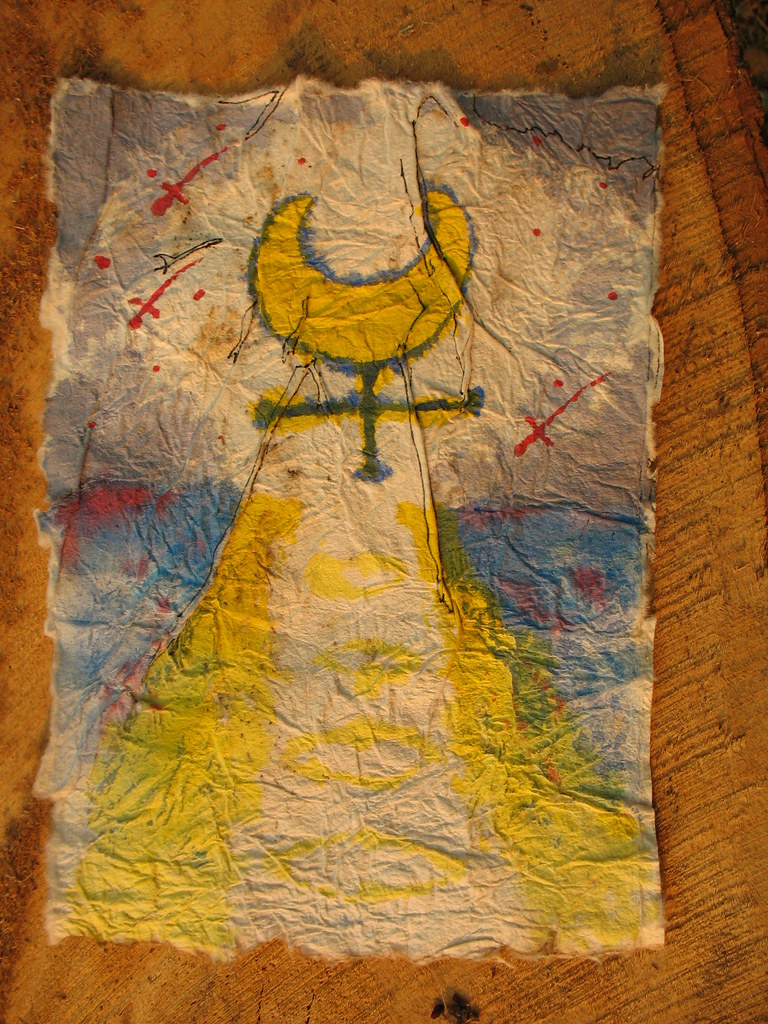
Photo: “Magic Spell: Forward!” by RoguePriest is licensed under CC BY-NC 2.0.

Poem: “Eight Legs”

Eight Legs

Odin had a spider
In a web above his throne.
“Out!” he said; it came to him.
“And up!” he said; it grew.
“Legs go this way, legs go that!”
The wind began to moan.
Odin touched a spur to Sleipnir,
Through the storm they flew.

This little poem was published in Anima, a magazine of “Poems of Soul and Spirit” which is now, as they say, quiescent (though it continues to publish books). Odin is very much a god of magic, transformation, journeys, knowledge and poetry – as well as of war and death.

To get hold of the Mead of Poetry, which was in three vats guarded in a mountain cave by a giant’s daughter, Odin changed into a snake to get inside the cave; changed into a handsome young man to persuade the giantess to give him three sips in exchange for sleeping with her for three nights; drank each vat in a single sip; and changed into an eagle to fly back to Asgard where the other gods had prepared a big cauldron for the mead. Chased by the angry giant (also in the form of an eagle) and slowed down by all the mead inside him, Odin was so scared that he shitted some of it out as he flew – but he made it to Asgard, and disgorged the bulk of the mead into the cauldron. This is the gift that the gods give when they want to make someone a good poet. And  bad poetry? That’s when you’ve been consuming the stuff Odin shitted out.

Technically, you could discuss whether “Eight Legs” is in flawed trochaics, and whether the line break between the first two lines is in the right place, and so on… But if you read it aloud, I think you’ll find it has strong stresses, weak stresses, and unstressed syllables – or else consider it as quadrisyllabics (one stressed and three unstressed syllables). I would read it as:

Odin had a spider in a web above his throne. (pause)
“Out!” he said; it came to him. “And up!” he said; it grew. (pause)
Legs go this way, legs go that!” The wind began to moan. (pause)
Odin touched a spur to Sleipnir, through the storm they flew.

Not too different from

I had a duck-billed platypus when I was up at Trinity
With whom I soon discovered a remarkable affinity
– Patrick Barrington, The Diplomatic Platypus

or

I am the very model of a modern major-general
– W.S. Gilbert, The Pirates of Penzance

or

Not always was the kangaroo as now we do behold him
– Rudyard Kipling, The Sing-Song of Old Man Kangaroo, in The Just So Stories

Poetry is very close to song; or, song is the bridge between poetry and music. Reading poetry aloud is very important for its appreciation, to bring out its rhythm (and sometimes even musical notes that flow into it naturally). That’s why poetry can be set to music, and why songs are invariably printed out in poem format.

In that context, even the line of spondees in Samuel Coleridge’s “Metrical Feet” has, like all the other lines, four stresses:

Trochee trips from long to short.
From long to long in solemn sort
Slow spondee stalks; strong foot yet ill able
Ever to run with the dactyl trisyllable.
Iambics march from short to long.
With a leap and a bound the swift anapests throng.

… because poetry in its origins (in the preliterate times of both the tribal fire and modern nursery) is designed to be memorised, so it can be chanted or sung or otherwise recited.
Using form to convince: Poem: “Conviction”

Verse has magical powers to engage the minds of its audience and, through that engagement, sway opinions and change attitudes. This is more than the tricks that make it easy to learn verse. It is more than Coleridge’s “Prose: words in their best order; poetry: the best words in the best order.” It is that poets and singers chant, and enchant. The musician chants, the magician chants, if it is well done it creates enchantment. It changes moods, it changes minds. It is used by all religions, all football teams, all angry mobs, and all gentle singers of lullabyes. The fact of the idea being expressed in verse is used as unspoken proof of the idea’s appropriateness.

Chanting

Poetry in motion

In my last post I said that “rhyme can be used to create a sense of inevitability”. Let me explain:

CONVICTION

True verse has a rhythmic twitch
that needs ongoing action.
Rhyme’s an open pattern which
asks for satisfaction.
Give the right words, strong and bright,
and the listener knows “That’s right!”

Conviction carries over, bought
with the words expressed.
The listener believes the thought
because it came well dressed.
Give the right words, strong and bright,
and the listener knows “That’s right!”

In other words, because the words sound right (in meter and in rhyme), our minds are prepared to accept that their meaning is right, their argument is valid. As O’Shaughnessy wrote,

“With wonderful deathless ditties
We build up the world’s great cities
(…)
And three with a new song’s measure
Can trample a kingdom down.”

And that is why Shelley was able to claim that “poets are the unacknowledged legislators of the world”. Poets everywhere agree!