Tag Archives: opera

Ballade: Gail White, ‘After the Opera’

Although we came in hopes to find
the most amazing staging yet,
the final act still filled the mind
with all the trappings of regret.
Although the happy lovers met
with joyous singing – hers and his –
we’ve seen from Carmen to Cosette
how sad the ending always is.

Why do we cry for womankind,
for Tosca on the parapet,
for Butterfly, her love declined,
for Manon and for Juliet?
Haven’t we seen the sweetest pet
fall victim to the wily Wiz?
Haven’t we seen – from death to debt –
how sad the ending always is?

The villain always lurks behind
the arras, holding out the net
that will entrap the golden hind,
the mark of arrows ready set.
At first we didn’t feel the threat;
we never thought our hopes a chiz,
But now we’ve learned our alphabet:
How sad the ending always is!

But pour champagne, my friends, and let
the golden bubbles rise and fizz!
For just a moment we’ll forget
how sad the ending always is.

*****

Gail White writes: “It was Barbara Loots who called my attention to the fact that the plots of many operas could end with the words “and then she dies.”  Being an opera heroine is almost always fatal.  My first poem on this theme was a short one,  “Opera Rondeau”.  Then it occurred to me that the same idea would support a ballade.  Writing this was fun, as finding enough rhymes for “is” pushed me into the realm of slang.  And, of course, life is indeed a process of finding happy distractions from an inevitable tragic ending.”

‘After the Opera’ was first published in Pulsebeat Poetry Journal.

Gail White is a widely published Formalist poet and a contributing editor to Light. Her new chapbook, Paper Cuts, is out on Amazon or from Kelsay Books. She lives in Breaux Bridge, Louisiana, with her husband and cats.

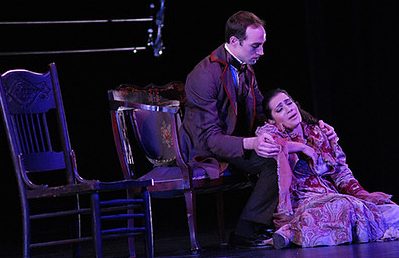
This picture makes me happy” by James Jordan is licensed under CC BY-ND 2.0.
Using form: Ballade variant: Barbara K. Loots, ‘Opera: a Ballade’

Sometimes the heroine is just a girl,
an innocent set up to be betrayed.
Whether she loves a hero or a churl,
she’ll face a three- or four-hour escapade
in which her feelings and her fate are swayed
by charm, by force, deception, or disguise
she’s helpless to resist or to evade.
And then she dies.

Sometimes around the heroine unfurl
fate’s sinister entrapments. Undismayed,
she feels the storm of accusation swirl
and knows the price of honor must be paid.
Beset by Powers That Must Be Obeyed,
she suffers while the chorus vilifies.
Her hopes of justice and redemption fade.
And then she dies.

Sometimes the heroine, a perfect pearl,
whether a princess or a village maid,
regardless of her protest or demurral,
becomes the object of an evil trade,
a bloody game, a sinister charade,
with hidden motives and transparent lies,
with clash of insult and with flashing blade.
And then she dies.

Through every lamentation and tirade,
each heroine embraces her demise
despite how fervently she might have prayed.
And then…

*****

First published in Light with the note “After watching 33 free streamed operas from the MET during quarantine.” Barbara Loots writes: “Watching those gorgeous productions from the MET day after day during COVID confinement was a saving grace. I have a journal with a complete list, where I starred the ones I liked best for future reference. Kansas City’s excellent Lyric Opera recording of the brand new opera “The Shining” (yes, based on the horror story by Stephen King) recently won a Grammy.”

Barbara Loots resides with her husband, Bill Dickinson, and their boss Bob the Cat in the historic Hyde Park neighborhood of Kansas City, Missouri. Her poems have appeared in literary magazines, anthologies, and textbooks since the 1970s. She is a frequent contributor to Light. Her three collections are Road Trip (2014), Windshift (2018), and The Beekeeper and other love poems (2020), at Kelsay Books or Amazon. More bio and blog at barbaraloots.com

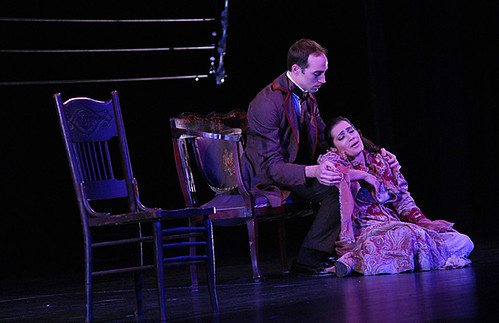
Photo: “This picture makes me happy” by James Jordan is licensed under CC BY-ND 2.0.
Using form: Rondeau: Gail White, ‘Opera Rondeau’

And then she dies—since men are no damn good—
Mimi, consumptive and misunderstood,
or Desdemona, most defamed of brides—
the woman is abandoned on all sides—
she so believes in love (as women should)
and in the end she burns like firewood.

Here Tosca on the tower a moment stands,
first throwing back her hood and then her hands
and then one step—invisibly she flies—
and then she dies.

Poor Butterfly, who meant to be so good.
Tough Carmen, using all the wiles she could
to get her man. So many suicides,
so many murders. Violetta hides
but can’t escape—she’s found, she’s understood—
and then she dies.

*****

Gail White writes: “One of my favorites in my new book Paper Cuts is ‘Opera Rondeau’.  It was written after a friend pointed out to me that most summaries of opera plots could end with the words “then she dies.” Although the poem doesn’t conform perfectly to the rondeau rhyme scheme, it does provide the perfect refrain. And gives me a chance to mention a few of the many opera heroines who win, lose, or miss love altogether – and die.”

Gail White is the resident poet and cat lady of Breaux Bridge, Louisiana. Her books ASPERITY STREET and CATECHISM are available on Amazon. She is a contributing editor to Light Poetry Magazine. “Tourist in India” won the Howard Nemerov Sonnet Award for 2013. Her poems have appeared in the Potcake Chapbooks ‘Tourists and Cannibals’, ‘Rogues and Roses’, ‘Families and Other Fiascoes’, ‘Strip Down’ and ‘Lost Love’. ‘Opera Rondeau’ was first published in Mezzo Cammin and is collected in her new light verse chapbook, ‘Paper Cuts‘, also available on Amazon.

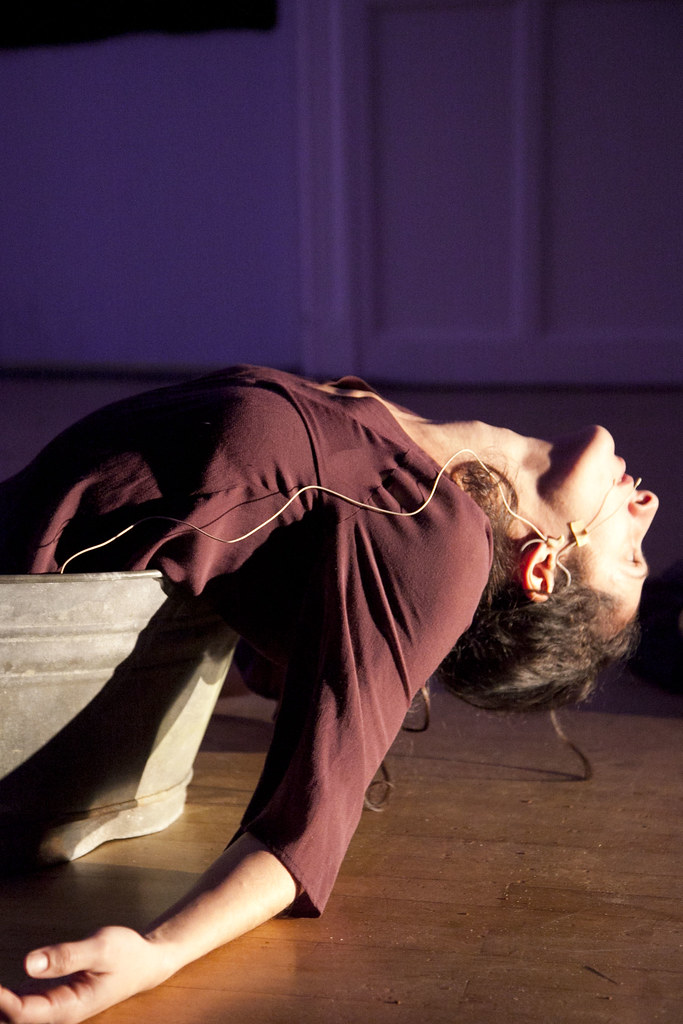
Photo: “Heroine – a female lament” by Yo! Opera is licensed under CC BY-NC-SA 2.0.