
Tag Archives: possessions

Martin Parker, ‘Fifty Ways to Leave a Lover. No. 51’

No bitterness and no recriminations,
no flesh hacked off in gladiatorial sport,
no claims for unpaid debts, no scornful laughter
to mock experience so dearly bought.

But differences all gently papered over,
cracks filled and memory’s cobwebbed cupboards cleared.
Receipts for all the good times carbon copied
our life divides more simply than we’d feared,

with dogs and books and vinyl all apportioned,
all ledgers balanced with forgiveness sought
and paid for with a parting smile.
For this had once been love – or so we’d thought.

*****

Martin Parker writes: “Sadly I can offer no significant thoughts about its background.  I simply wrote it then left it in a drawer for about ten years as it did not seem to fit with anything I was writing at the time.  But I do remember hoping that I had written something gentler and more civilised and sympathetic than much of what was appearing on the net at the time. And my ancient hope seems to have been justified in the light of recent reactions to the poem.

“My website at www.martinparker-verse.co.uk gives details and excerpts from my two hopefully humorous and only occasionally wrily depressing books in which parody, pastiche, satire, farce and poetic irreverence should appeal to all but the most po-faced of poetry fans.”

‘Fifty Ways to Leave a Lover. No. 51’ was originally published in Snakeskin.

Martin Parker is a writer of mainly light and humorous verse much of which has appeared in national publications including The Spectator, The Oldie and The Literary Review. In 2008 Martin founded the quarterly light verse webzine, Lighten Up Online at www.lightenup-online.co.uk, now edited by Jerome Betts.

Illustration: “|||||||| DIVIDER |||||||| — *** CAUGHT UP! ***” by Claire CJS is licensed under CC BY-NC-SA 2.0.
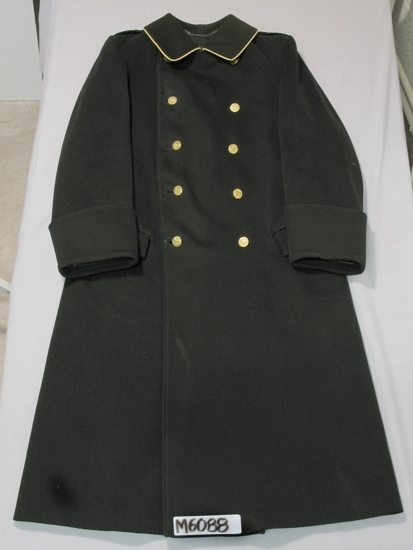
D.A. Prince, ‘The Coat’

It should have gone to Oxfam years ago
yet it clings on—through house moves, clearings-out,
declutterings—while fashion’s dictats show
just how unwearable it is. No doubt
of that. It’s heavy: woollen cloth
you’d never find these days, its tailoring
too buttoned-up, too stiff. Even the moth
finds food in something with more flavouring.

I haven’t worn it since the funeral,
that time when death demanded decency
of sober colours, darkness integral
to paying one’s respects. The legacy
hangs here, as though in waiting for some end
I can’t foresee. Then someone else will face
the final clearing, wondering where to send
this coat, and why it takes up so much space.

*****

D.A. Prince writes: “This was my coat and very much as described in the poem. It had followed me around from house to house for over fifty years. It was bought for my father’s funeral, had been worn for a couple of winters afterwards and then consigned to the wardrobe. I imagine most people have some sort of item — not necessarily clothing, just something freighted with the past — that they hesitate to part with.” The poem was published in the February 2024 Snakeskin (issue 314).

D.A. Prince lives in Leicestershire and London. Her first appearances in print were in the weekly competitions in The Spectator and New Statesman (which ceased its competitions in 2016) along with other outlets that hosted light verse. Something closer to ‘proper’ poetry followed (but running in parallel), with three pamphlets, followed by a full-length collection, Nearly the Happy Hour, from HappenStance Press in 2008. A second collection, Common Ground, (from the same publisher) followed in 2014 and this won the East Midlands Book Award in 2015. HappenStance subsequently published her pamphlet Bookmarks in 2018, with a further full-length collection, The Bigger Picture, published in 2022.

Photo: “Rock” is licensed under CC BY 4.0.

Short poem: ‘Possessions’

What do you want possessions for?
You’ll die, then you’ll have nothing more.
You lost your house in a fire? The fact is
That was just for practice.

*****

We live (as always) in a time of existential threat to us as individuals and as a species. This short poem was recently published in The Asses of Parnassus – thanks, Brooke Clark! “Light verse”? I like to think so…

Photo, popularly known as ‘Disaster Girl‘. The young Zoë Roth had been taken by her parents to watch the controlled burning of a structure for training purposes when her father took this prize-winning picture of her. To her ongoing delight, the photo became a viral internet meme, and its NFT sold two years ago for close to $500,000.