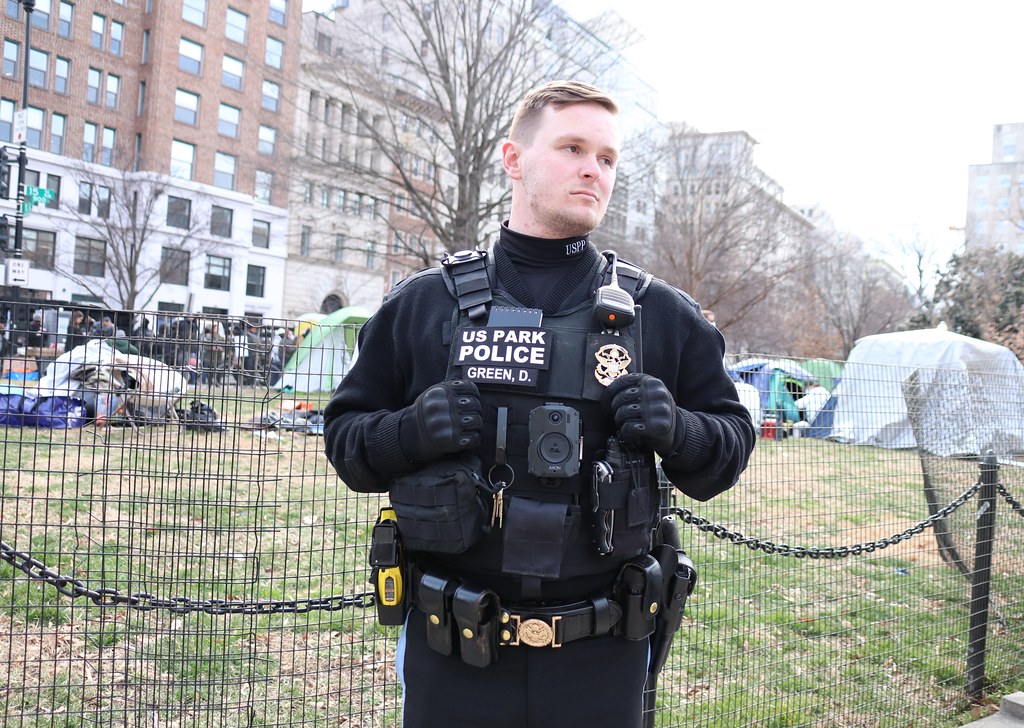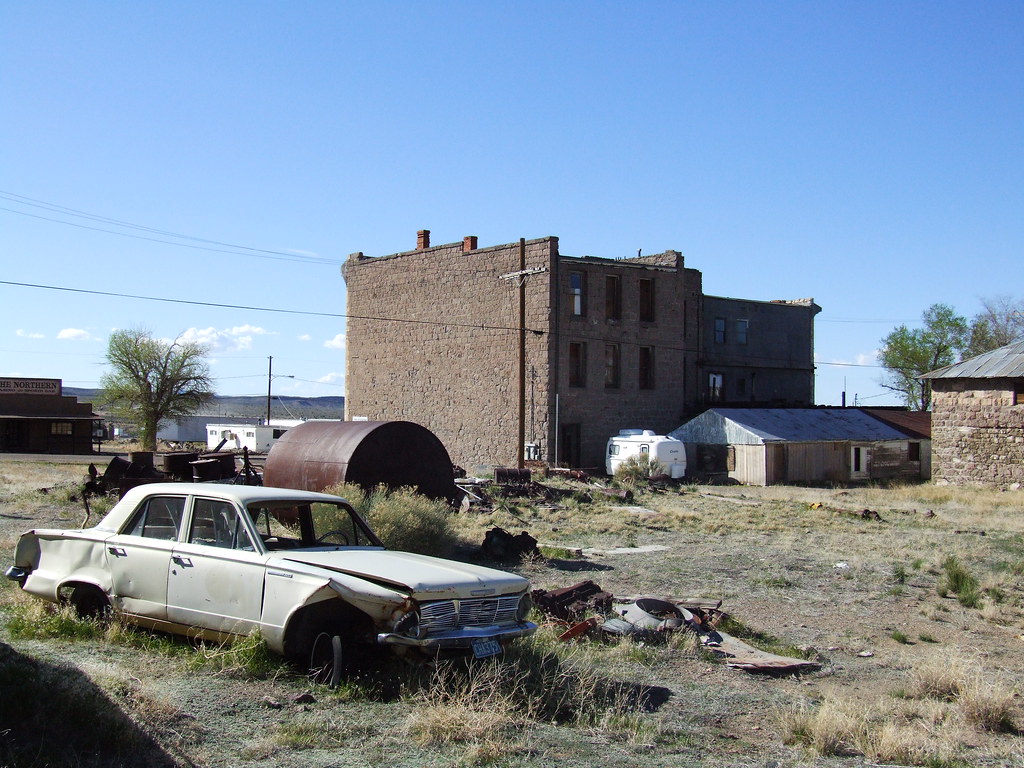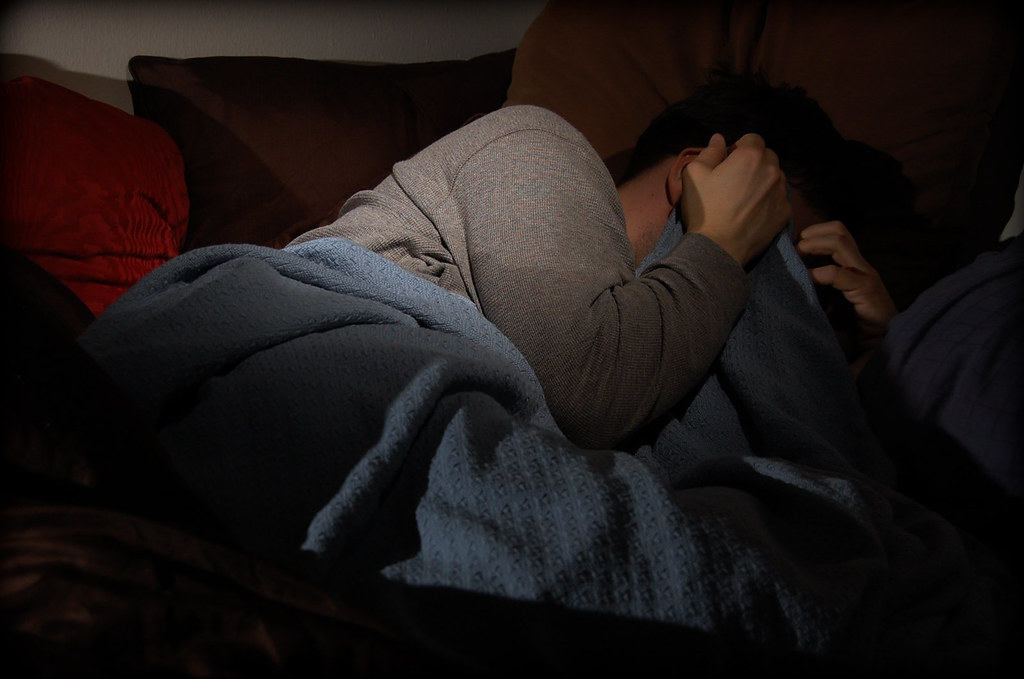
Ain’t no one gon’ choose to live in no tent Inna park with the trash and the dirt and the cold, But you fresh outta jail ain’t got one damn cent And every single place you go you told,
“This ain’t no place for you we got children here, Folks with jobs, responsibility and you—and you— Some broke, broke-down ex-con. You wanna be near These straight folk with your criminal life? Who
Would ever stand for such a thing?” So I got Myself a tent, don’t ask how or where, Claimed me a patch of grass with this whole lot. Now I gotta leave cause the straight folk get scared.
Spent all day looking for a place, started at dawn, The city came by and took my shit while I was gone.
*****
D.A. Hosek writes: “The Chicago Sonnets sequence is a planned sequence of fifty sonnets, one for each Aldermanic Ward of the city. This is a rare bit of reported poetry in that I went out and talked briefly to one of the people in a homeless encampment (not the one that’s in the poem though) wondering how he ended up living in a tent on the streets. Then, after discovering that I’d already written a sonnet for the ward that his encampment was in, I had to find a different encampment in a different ward and learned about the city destroying a camp in Humboldt Park and that provided the last pieces of the poem.”
D. A. Hosek’s poetry has appeared or is forthcoming in Hanging Loose, Big Score Lit, Dodging the Rain, After Hours, Rat’s Ass Review (including this sonnet) and elsewhere. He earned his MFA from the University of Tampa. He lives and writes in Oak Park, IL and spends his days as an insignificant cog in the machinery of corporate America. https://dahosek.com @dahosek.bsky.social
The more that you dislike the way I am, the less I worry what it is you like. I let go the way that you don’t like the rattled heart of me, the way I am.
Perhaps we’re going through a sticky patch. The patch that stuck us down long years ago is not as sticky now. But even so, its tar has held us close enough to catch.
It covers up the cracks and hides the shabby seams we couldn’t mend. We still pretend to rub along regardless. In the end, perhaps we are just averagely unhappy.
The way we blister love and twist its scar. We sort of stick it out. And peel apart.
*****
Joe Crocker writes: “I wrote this poem a year or two ago as an expression of frustration and sadness about the slow decline of a long marriage. The title is an allusion to the UK card game Pontoon (Blackjack in the States?) where you can either hold your cards (stick) or ask the dealer for another (twist). It’s written from the perspective of one person in two voices. The italic lines are pained and self-pitying and the middle stanzas are him trying to figure out what has happened.”
‘Stick and Twist’ was originally published in the current Rat’s Ass Review.
Joe Crocker has a 25 yds breast-stroke certificate, several Scouting badges and “O” level Epistemology. He has won prizes – bubble bath mostly, a bottle of Baileys once. His poems squat in obscure corners of the internet. He doesn’t have a pamphlet or a website but if you Google his name and add “poetry” you’ll find most of his published work (as well as links to a deceased Sheffield rock singer.) He gets by with little help from friends.
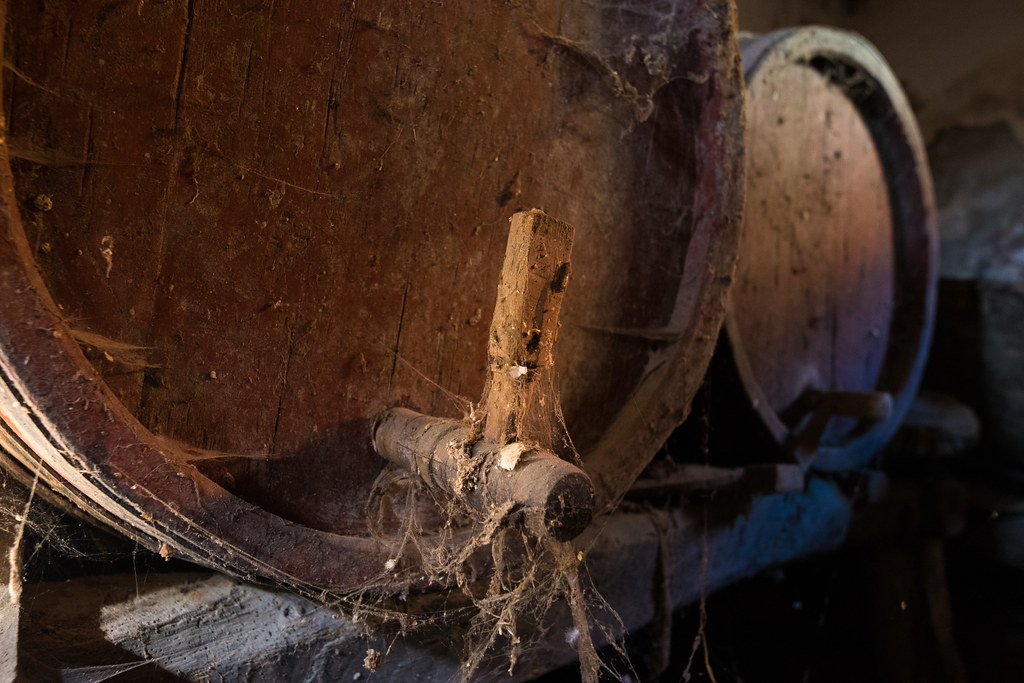
Down in the cobwebbed cellars of the mind fabulous wines you don’t dare drink are stored, each carrying a price you can’t afford; so you pass by, deliberately blind. Upstairs a loved one, dreamier than a vision, displays each quality your soul desires – or is a mere projection from the fires the building’s furnace stokes with soft derision. Your passions aren’t alive, alight, upstairs: your love a mere projection of the schemes the animated house evolves. Your dreams live in your basement, though you’re unawares. Though Bacchus urge you to uncork that wine, the world would find it filthy, not divine.
*****
What I like about Rat’s Ass Review is that the editor will acknowledge and deal with the darker sides of being human… Not horror stories which are mostly pretty simplistic; but poems about the darkness built into all social animals. RAR is a rare journal: full spectrum, light and dark. This sonnet is in the current issue; thanks, Roderick Bates!
Just past the new development’s array, beyond the parking lot, the flowers, the fence, the land becomes uneven, falls away into an area of no pretence, abandoned cars, some rocks, some weeds, a bog. Here are drawn children and eccentrics both, searching for wild flowers, or a snake, a frog, to nature lurking in the undergrowth, beyond the ordered asphalt, lineal law; drawn by our lower brain of hunter, ape, where food is found or killed and eaten raw, life is survival, and sex may mean rape. Bricks, debris, rubble, condoms, empty beer… yet, strangely, life-long loves have started here.
*****
I subscribe to the Nietzschean view of humans as a rope stretched over an abyss, animal on the one side, posthuman on the other. I think the ape is very alive within us, as is the drive to reach beyond ourselves to something vastly greater.
This sonnet was originally published in Rat’s Ass Review (thanks, Roderick Bates) but I’ve modified one line here to match the photo I found for illustration.
If astrology were real, you’d expect it would be an unremarkable aspect of daily life for someone to select– to fall in love, fully connect– with two people with the same birthday; for victims of mass events (tornados, cities wrecked) to share a sun-sign or unlucky day; for astrology to be so useful that respect for horoscopes would drive a business power play, and with no reason to suspect insider information when bets proved correct; and that some other nonsense disarray would have to be invented to display for children, lovers, dreamers, to collect– for old folks suffering neglect– for young ones on the make, unchecked– for trash TV and media to infect– and for the rest of us to naturally reject.
*****
My English mother was a great practitioner of astrology; my Danish father was a thorough sceptic. In the 1950s he was going to take a trip across the Atlantic by sea, and asked her to do a forecast of the voyage. She went off and studied the stars, and came back and said that everything looked fine. (What else could she say?) Unfortunately the ship went on the rocks at Bermuda and everyone was taken off in lifeboats. When my father later questioned her forecast, her explanation (as he reported it) was that “Venus was in the Dragon’s Tail and kiss my arse.”
I studied astrology (along with lots of other religious and spiritual systems) in my 20s, but ended up agreeing with my father; hatha yoga is the only practice I’ve retained from those days.
This poem has just been published in Rat’s Ass Review – a good place for snarky poetry. Thanks, Roderick Bates!
All Clark Gable had to do was sit where Hattie sat the night she won her Oscar®. He might not’ve thought of that: but how the angels would have chimed and cheered the noble cause of basic decency, and broken out in wild applause.
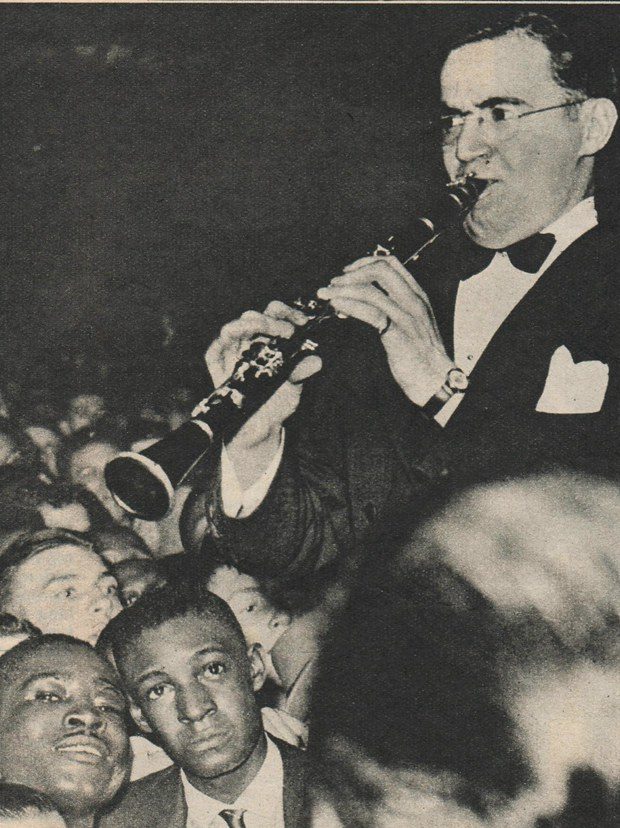
Benny Goodman would not sleep where his Brothers could not stay. He paved the American way before it was the American Way. For the color of music’s the color of God: the color of his quartet! So I hold no truck with movie stars, but I play the clarinet.
*****
James B. Nicola writes: “Hattie McDaniel was the first American woman of African ancestry to win an acting Oscar. It was for Gone with the Wind, Best Picture of 1939, which starred Clark Gable, the #1 movie star at the time, known as the ‘King of Hollywood’. McDaniel was not allowed to sit with her fellow nominees. Her acceptance speech, nonetheless, overflowed with grace and gratitude.
“Benny Goodman, clarinet player and band leader, was so popular he was known as the ‘King of Swing’. His quartet included two players of African ancestry. When on tour, Goodman, true to his name, only booked overnight accommodations that accommodated all four of his players. The film The Green Book gave us a good look at these hotel policies in America. It won the Oscar for Best Picture of 2018.”
James B. Nicola’s poetry has appeared internationally in Acumen, erbacce, Cannon’s Mouth, Recusant, Snakeskin, The South,Orbis, and Poetry Wales (UK); Innisfree and Interpreter’s House (Ireland); Poetry Salzburg (Austria), mgversion2>datura (France); Gradiva (Italy); EgoPHobia (Romania); the Istanbul Review (Turkey); Sand and The Transnational (Germany), in the latter of which his work appears in German translation; Harvests of the New Millennium (India); Kathmandu Tribune (Nepal); and Samjoko (Korea). His eight full-length collections (2014-2023) include most recently Fires of Heaven: Poems of Faith and Sense,Turns & Twists, and Natural Tendencies. His nonfiction book Playing the Audience won a Choice magazine award.
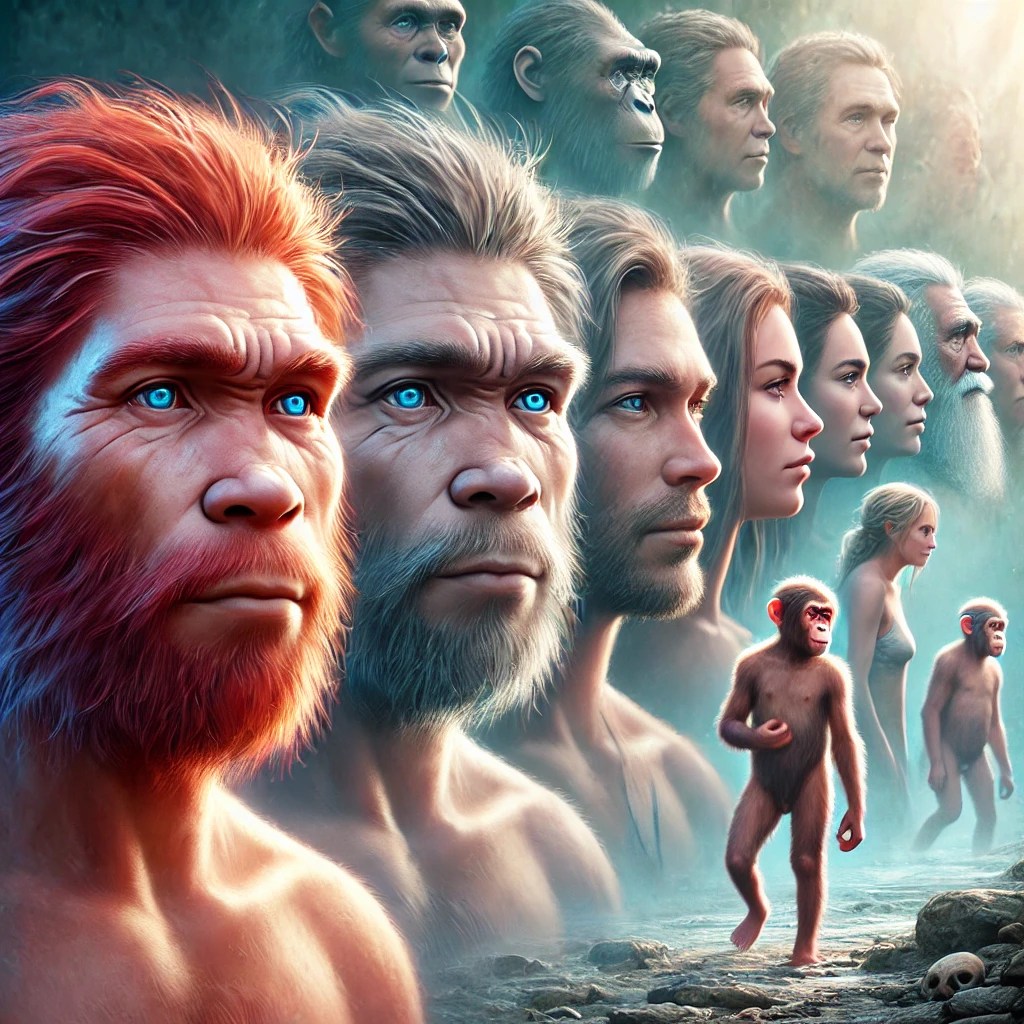
Watch how the status of the poor Neanderthals will rise when we admit we thank them for red hair, white skin, blue eyes.
*****
“All non-Africans today may have a roughly equal proportion of Neanderthal DNA, but some of the most visible physical traits appear to have been inherited especially by modern Europeans, and northern Europeans in particular. Here is a list of traits that distinguished Neanderthals from Homo sapiens, but that you could also have inherited if you are of European or Western Eurasian descent.
Rufosity : i.e. having red hair, or brown hair with red pigments, or natural freckles.
Fair skin, hair and eyes : Neanderthals are believed to have had blue or green eyes, as well as fair skin and light hair. Having spent 300,000 years in northern latitudes, five times longer than Homo sapiens, it is only natural that Neanderthals should have developed these adaptive traits first.”
I’m just amused, of course, by the chance to label famously red-white-and-blue flag-waving countries as Neanderthals: the US, UK, France, Netherlands, and Russia… (as well as many other less historically aggressive countries around the world).
This poem was first published in Rat’s Ass Review (as are many politically incorrect poems), Fall/Winter 2024 – thanks, Roderick Bates!
His words are witty, with a twist. He says they’re “pithy”; note the lisp.
*****
This is one of my three short poems published in the current Rat’s Ass Review – thanks, Roderick Bates – where the good and the rude, the mocking and shocking, all coexist harmoniously.
They’re insecure black holes of need and here they come to clog your feed with photos and confessionals shaped by PR professionals— a pool glows blue in the backyard next to a pull quote: “It was hard to fight those demons of self-doubt”— How brave you are for speaking out! (“Dinner? Umm…the rainbow trout?”) Some glossy shots show off the house where, on a massive sun-splashed couch the boyfriend lounges with a grin— familiar…what’s that show he’s in? “Yes, I’ve found love—I’m over the moon! My memoir’s coming out in June.”
But now hushed tones, dropped eyes reveal we’re ready for the big reveal— speaking to us as to a friend she grabs onto the latest trend and tries to humanize herself with references to mental health: “Depression and anxiety— none of the meds would work for me but a friend introduced me to this yogi, or—more like—guru? He teaches tantric meditation to reach this cosmic—like—vibration?— where all your energies align— Oh yeah, hey, my new makeup line is rolling out in every state— I promise the concealer’s great!” How nice for you. The problem is for those without advantages like wealth and fame, the proper cure for suffering is not so sure, and wasn’t there some news report about—“That settled out of court, so let’s move on,” smoothly insists the always-hovering publicist.
The only cure for their disease? Awards, red carpets, galaxies of flashbulbs dazzling their eyes, the swarms of fans, their ardent cries— the roar of being glorified drowns out the whispering voice inside that tells them that their fame won’t last but crumble into dust and ash leaving them lost and destitute— quick—schedule a new photo shoot!
*****
Brooke Clarke writes: “Celebrities was triggered by scrolling through the news app on my phone and being bombarded with coverage of famous people, which ranged from the adoring to the outright hagiographic. I resisted writing the poem at first, since celebrities seemed like a bit of an obvious target, but in the end I decided to give in & go with it. In terms of the form, I went back and forth a bit between tetrameter and pentameter couplets, but in the end I settled on the tetrameter. They always strike me as suited to a “lighter” satirical approach, and a slightly more throwaway, less sculpted feel — more Swift than Pope, if that makes sense — and I thought that worked for the subject matter in this one. One other point that might be of interest: the poem as I submitted it ended with one final couplet: Reality gets hard to take when everything about you’s fake. I thought it worked as a way to pull back from the specific content and give a final summary to tie things together. The editor who published it in Rat’s Ass Review felt it was heavy-handed and obvious, and belaboured the same points that had already been made, so we agreed to cut it. It might be interesting to know what readers think.”
Brooke Clark is the author of the poetry collection Urbanitiesand the editor of the online epigrams journal The Asses of Parnassus. He’s still (occasionally, hesitantly) on Twitter at@thatbrookeclark.