You can almost see Vincent Price, black-robed, hunched above the console of a jumbo organ in the bowels of his creaky haunted manse; or maybe a stadium of damned souls, strobed in lurid red and howling nettle-robed as they plummet into Pandemonium, pore and pith aflame. It’s no troubadour, undoubtedly, this vast atonal gob.
As with the Roach Motel, we’d check in, but never out—us or anything, since it can swallow errant planets whole, and still, however much the mass, can’t eat its fill. Though it’s larger far than Jupiter or Mars, we can barely see it, thank our lucky stars.
*****
William Trowbridge writes in Rattle, where this poem was published: “I’ve spent most of my years as a poet writing free verse, though lately I find myself turning toward form. Unlike those who see formalist verse as dry and effete, I find it can generate power by means of barriers to play against—‘the net’ as Frost put it, by which he also meant boundary lines. If you pour gunpowder in a pile and light it, a mere flash occurs. But pack it tightly into a container, and you can get something more powerful. And, as opposed to the notion that form is restrictive, I agree with Richard Wilbur that it often liberates one from choosing the easy word in order to discover the better, surprising one. I haven’t moved into this part of town yet, but I stop there more and more.”
William Trowbridge’s tenth poetry collection, Father and Son, was published by Wayne State College Press Press in April. His poems have appeared in more than 45 anthologies and textbooks, as well as on The Writer’s Almanac, AnAmerican Life in Poetry, and in such periodicals as Poetry, The Gettysburg Review, The Georgia Review, The Southern Review, Plume, Rattle, The Iowa Review, Prairie Schooner, Epoch, and New Letters. He is a mentor in the University of Nebraska-Omaha Low-residency MFA in Writing Program and was Poet Laureate of Missouri from 2012 to 2016. For more information, see his website, williamtrowbridge.net.
Poems used to rhyme. In time, the couplets were dispensed. Incensed, today’s poet rebels from rhyming schemes, It seems. The writer, newly shedding the shackles of quatrains, Refrains from even a modicum of lilt.
And built now from unpaired diphthongs, His songs have lost a measure of glue. It’s true. No longer does the ear delight In flight of fancy, in teeter-totter, Like water on the endless sand, the to-and-fro, And no, this tide will not abate.
Of late, I find that poems no longer draw me in. They’re thin.
*****
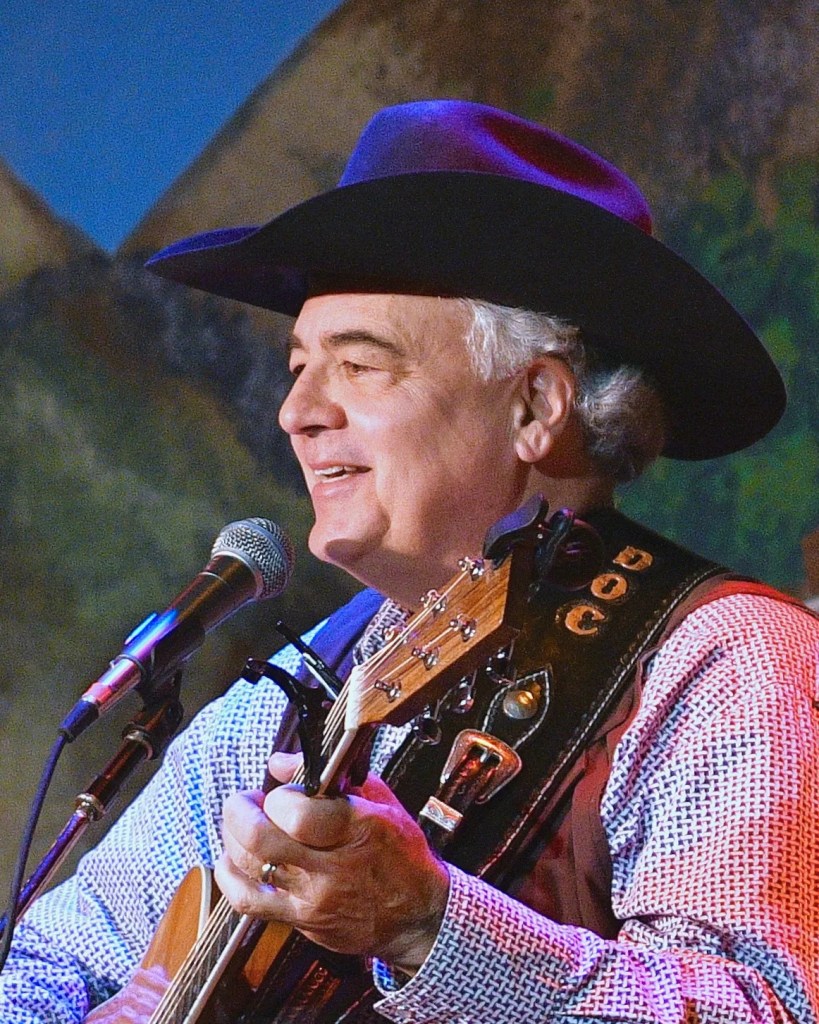
Doc Mehl writes: “For the last two decades I’ve written rhyming western poetry, and I’ve performed both the poetry and my original western-themed music at cowboy poetry events in the western U.S. and Canada. I’ve recorded two spoken-word CDs of my rhyming poetry, and several CDs of my original music. I’m not averse to free verse. (OK, I must pause momentarily to savor the rhyme in that sentence.) Still, the author of a free verse poem ought to be able to convincingly answer this question: “Why do you maintain that this work should be categorized as poetry rather than prose?” In this poem (“Poems Used To Rhyme”), I liked the gamesmanship of sneaking the rhyming word of each “couplet” into the beginning of the second line rather than at the end of the second line. The resulting poem might first appear to be a tongue-in-cheek free verse poem about why rhyme is important. Still, the magic of the closely juxtaposed rhyming words can’t help but rise from the ether.”
Newly transplanted from Colorado to Black Diamond, Alberta, Al “Doc” Mehl traces his family roots to central Kansas, where his grandfather raised six children on the family homestead. His debut music CD is titled “Asphalt Cowboy,” and his second music CD titled “I’d Rather Be…” was released in 2008. Doc Mehl has also published a CD of original poetry titled “Cowboy Pottery,” and a second spoken-word poetry CD titled “The Great Divide,’ named 2013 “Cowboy Poetry CD of the Year” by both the Western Music Association and the Academy of Western Artists. In 2020, Doc published his first collection of poetry, “Good Medicine: Read Two Poems and Call Me in the Morning.” And in 2022, Doc released two new CDs of music, “West of the 22” and “Tried and True. Doc’s poems and musical lyrics have been featured on the website http://www.CowboyPoetry.com, he has been published in the poetry journal “Rattle,” and he was a first-place silver buckle winner at the National Cowboy Poetry Rodeo in Montrose, Colorado in 2009.
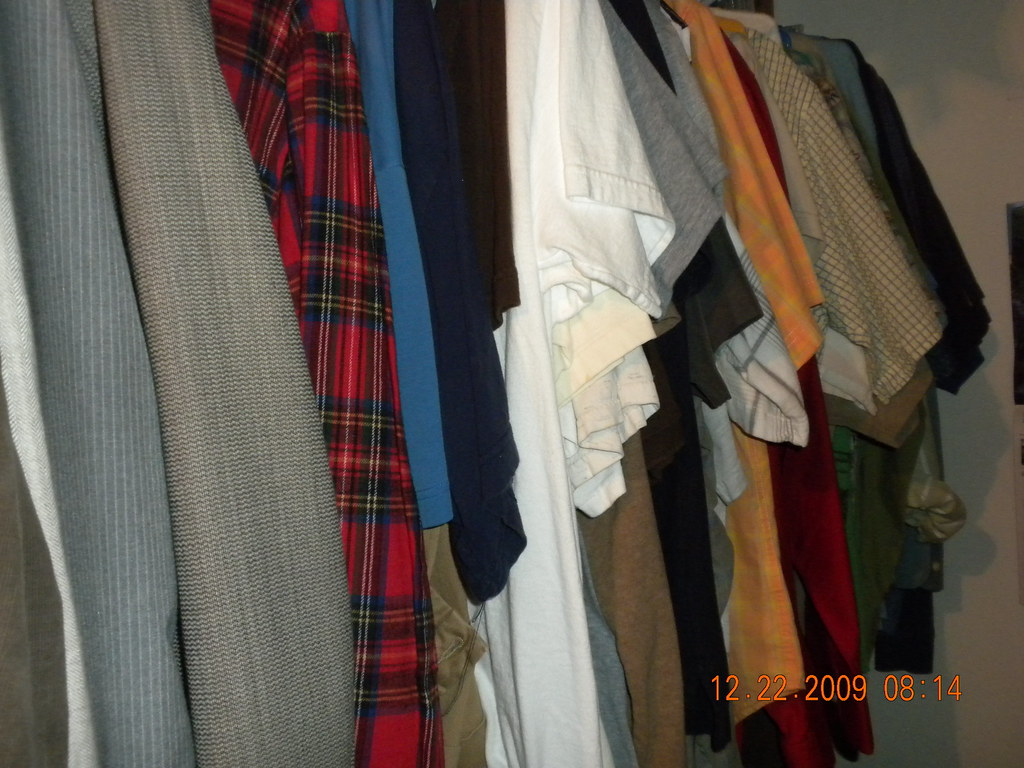
I remember you some mornings in the midst of getting dressed Surprised that I recall exactly when I wore you last
The paisley patterns spilling over sleeves The Nehru collars nobody believes … were popular The turtlenecks no turtle ever wore Those V-neck disco shirts that dance no more … Spectacular!
Are you lurking in the closet among other clothes I own? I gently touch your shoulder—a brief flash, then you’re gone
The concert souvenir shirts we outgrew The obligation gifts we always knew … were wrapped in haste Thick cotton plaids lost lumberjacks would covet That college T tossed out, but how we loved it … still, such a waste
You promised transformation, but what else did you require The full ensemble led us toward transcendence or desire (Attire of another age, accessories all the rage)
Bell-bottom flares that took flight as we walked Embroidered jeans so tight that people talked … of nothing else Those bomber jackets earthbound boomers froze in Those leather wristlets grunge guitar gods posed in … with death’s head belts
You folded in your fabric everyone I used to be Now that you’re gone, I realize I’m left with only me But if I run across you in some thrift shop bargain rack Or rummaging recycling bins, what else would you bring back? Who else will you bring back?
Some nights I see you in my dreams of places far away I’m wearing you as if I haven’t aged a single day Shirts of the distant past, shirts of the distant past
*****
Ned Balbo writes in Rattle #85, Fall 2024 (where you can hear the song performed): “I’ve played guitar since I was 5, keyboards since I was 13, and ukulele since I was 42, but my time as a ‘professional’ musician—someone paid to play—is scattershot and humble. Ice rinks, a Knights of Columbus Hall, a campers’ convention in Yaphank, a crowd of disco-loving retirees at Montauk’s Atlantic Terrace Motel, company picnics, school dances, private parties, and more—these were where I played guitar, sang, and devised versions of the Beatles, Bowie, et al. in two Long Island cover bands. The Crows’ Nest or Tiffany’s Wine-and-Cheese Café hosted noise-filled solo acoustic gigs, with more receptive listeners for original songs and covers of Elvis Costello or Eno at my undergrad college’s coffeehouse. More recently, I’ve written lyrics to Mark Osteen’s preexisting jazz scores (look for the Cold Spring Jazz Quartet on Spotify, Amazon, CDBaby, and elsewhere) and returned to solo songwriting and recording with ‘ned’s demos’ at Bandcamp. As a relic from the age when lyrics were sometimes scrutinized with poetry’s intensity, I listen closely to the sonics of language, whether sung or spoken, and look up to lyricists whose words come alive both aloud and on the page.”
Balbo: Robin, thanks for posting ‘Shirts from the Distant Past’, my little song-poem hybrid. I’ll be happy to answer any questions you have.
Editor: For myself, I see a continuum from womb heartbeat to dance to music to song to formal verse. I would love to have any additional comments on the subject in general, or on the creation of this poem in particular, related to these elements.
Balbo: I love what you’re saying about womb, heartbeat, and dance. A formative text for me is Donald Hall’s essay on poetic form’s psychic origins, ‘Goatfoot, Milktongue, Twinbird‘. You probably know it. Hall proposes three metaphors for poetry’s deepest sources: Goatfoot, the impulse toward dance, rhythm, movement; Milktongue, the pure pleasure of language, the texture of words when spoken; and Twinbird, our desire for form, symmetry, wholeness, which is complicated and energized by the contradictions it contains and reconciles. To me, Hall’s terms just sound like different ways of envisioning exactly what you’re talking about. They apply as much to song as they do to verse. The meter varies by stanza or section: iambic heptameter (seven iambs) in the couplet verses—not so different, after all, from the tetrameter to trimeter shifts we find in many ballads. The “shirts” title refrain, which doesn’t appear in print till the last line, are two trimeter phrases. It was fun to find surprising rhymes to hold the whole song together.
Editor: Regarding ‘Shirts’, quite apart from the charming idea, I like the work that has gone into the metre, rhyme, idiosyncratic structure.
Balbo: Thank you. I wrote and sung ‘Shirts’ as a poetic song lyric—one that could be read and enjoyed but, ideally, would be heard. I view its structure as that of a call-and-response song in traditional format. (In rock, for example, I think of George Harrison’s ‘Taxman’ with John and Paul harmonizing “Taxman, Mr. Wilson, Taxman, Mr. Heath” in answer George’s lead vocal.) In ‘Shirts’, the call-and-response comes from using the title as a refrain: it explains who the “you” is in each verse (when you hear it, anyway—I cut it from the visual text for fear it would seem repetitious without the music). Sometimes the title refrain answers a statement in the verse: “I gently touch your shoulder—a brief flash, then you’re gone” sounds like I might be talking (or singing) about a person, but it turns out to be those long-lost shirts—a playful fake-out.
Then there are the brief call-and-responses of the bridge sections which comment on the previous line or complete an unfinished thought: “Those V-neck disco shirts that dance no more…spectacular!” or “Embroidered jeans so tight that people talked…of nothing else.” They’re in iambic pentameter, with the second and fourth changing to heptameter if we count the two extra beats (set off on their own line) answering them.
The so-called “middle 8” (usually eight bars used to break up the verse-chorus/verse-chorus model) is delayed till just before the end: “You folded in your fabric everyone I used to be, etc.” That’s meant to set up the payoff: it’s not the shirts but our lost selves— along with loved ones, lost ones, everyone—we’re missing or mourning. But writing or singing about shirts—clothing that shapes and defines us—makes the lyric less depressing, leavens it with wit (I hope) so that what’s more poignant comes at the very end where more dramatic music can counterbalance the mood—the contradictions reconciled, as Donald Hall might have put it.
Of course, the very end is quieter – wistful again.
As I mentioned in Rattle (thanks again to Tim Green for giving both words and music a home), I grew up in the era when lyrics were often analyzed as seriously as poetry (and not just by undergraduates in long-ago dorm rooms under black light posters). Whether I’m writing poetry or songs, I listen closely to the different ways words sound—what works when sung doesn’t always work as well when spoken or encountered on the page—so when I do write lyrics, I try to make them both readable and singable.
Poems and song lyrics operate differently, but there’s lots of overlap between them. I wanted ‘Shirts’ to operate on both levels, even if it tilts more toward song lyric than poem.
*****
Ned Balbo’s six books include The Cylburn Touch-Me-Nots (New Criterion Prize), 3 Nights of the Perseids (Richard Wilbur Award), Lives of the Sleepers (Ernest Sandeen Prize), and The Trials of Edgar Poe and Other Poems (Donald Justice Prize and the Poets’ Prize). He’s received grants or fellowships from the National Endowment for the Arts (translation), the Maryland Arts Council, and the Mid Atlantic Arts Foundation. Balbo has taught at Iowa State University’s MFA program in creative writing and environment and, recently, the Frost Farm and West Chester University poetry conferences. His work appears in Contemporary Catholic Poetry (Paraclete Press), with new poems out or forthcoming in Able Muse, The Common, Interim, Notre Dame Review, and elsewhere. He is married to poet and essayist Jane Satterfield.
Ignore your hand and focus on the pen, which writes without your knowledge of the whole. Do not insert the personal. Avoid translation. The changes made are small and gradual.
Commas herd their letters toward a distant goal of rhymes and metaphors but do not specify a conscious “I” or soul, a bold new vision or a school of thought.
Write like a dancer making small mistakes. What is wrong to you fulfills your friend’s desire. Cuttings and shit are what it takes to grow a garden from a funeral pyre.
A poet will die unless she learns to laugh. Do not hit DELETE. Save everything as DRAFT.
*****
Sue Parman writes: “When I was four years old, my father asked me, ‘When is a door not a door?’ His answer, ‘when it’s ajar,’ infuriated and then intrigued me. I began to keep a journal in which I wrote down sentences such as, ‘If the Devil is evil, God is odd.’ Puns were my intro-duction to poetry, a form of verbal play that taught me that words, rather than being a lifeline to truth, could be slippery and contain many truths at the same time. One of my favorite poets is Kay Ryan, the queen of poetic puns (see her ‘Bestiary’). As an anthropologist, I consider them a vital contributor to mental health, since they satisfy the needs of large-brained mammals to avoid epilepsy by indulging in surprise.”
Sue Parman is an anthropologist and award-winning essayist, short story writer, poet, and playwright. She is the author of two poetry books, “The Thin Monster House” and “Carnivorous Gaze,” and her poems have been published in a variety of journals and anthologies, including the above poem in Rattle. She writes in a number of other genres as well, including anthropological travel memoirs and mysteries. Her most recent publications include a short story, “Gannets and Ghouls,” which appeared in the September/October 2024 issues of Ellery Queen Mystery Magazine; and a nonfiction essay, “You Can’t Get There from Here,” that was awarded the Travelers’ Tales Grand Prize for Best Travel Story of 2024. After teaching anthropology in California for thirty-five years, she moved to Oregon in search of water, and travels frequently in hopes of getting lost. https://www.sueparman.com
Those daffodils that I recall While lying on a bed settee Are faded now, their petals fall In nature and in memory.
It’s time to rise, to go outside And head off for a subway ride. I’m in New York’s YMCA Undressing for a midday swim;
A poet could not but be gay With bodies toned up in the gym. But I am getting no cheap thrills From dongs like dangling daffodils.
I twinkled at the twinkies there Tossing their heads in sprightly dance Or heading for the sauna where I might get lucky if, by chance,
One of the bronzed and buffed young men Is eager for my fountain pen. But, sadly, no one needs to hear This exiled poet strut his stuff.
I am an old Romantic queer, Ignored, unloved. I’ve had enough. I join the hustling New York crowd And wander lonely as a cloud.
*****
Conor Kelly writes: “Daffodils was submitted as a prompt poem to Rattle (https://www.rattle.com) and was printed in the Summer 2024 issue of the magazine. The prompt was to continue where another poem left off. So I disturbed Wordsworth on the couch where he lay remembering daffodils and sent him on his gay way to modern New York where he had some dubious adventures. I kept the stanzaic form, the metre, the rhyme scheme and even some of the original lines. I left him where he began, wandering lonely as that singular cloud.”
Conor Kelly was born in Dublin and spent his adult life teaching in a school in the city. He now lives in Western Shore, Nova Scotia from where he runs his twitter (X) site, @poemtoday, dedicated to the short poem. He has had poems printed in Irish, British, American, Canadian and Mexican magazines. He was shortlisted for a Hennessy New Irish Writers award. At the ceremony one of the judges, Fay Weldon, asked him, “Where are you in these poems?” He is still asking himself that same question.
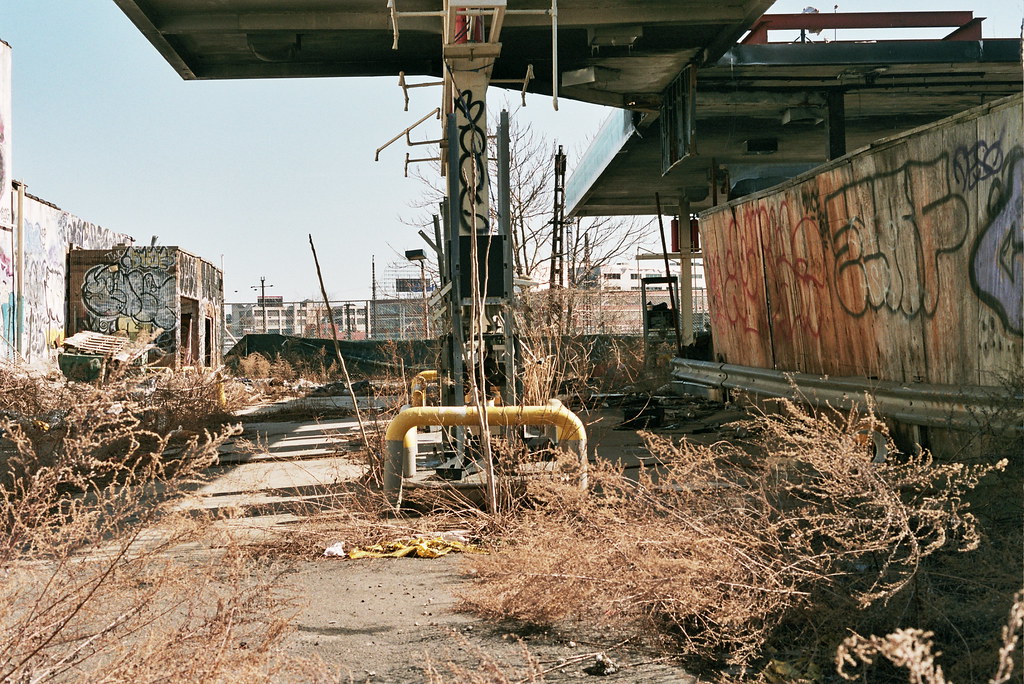
It was the ravage of the scene that shocked: the concrete torn by trees and ragged grass, red guts of fuel pumps over splintered glass, the wreckage clawed by climbing vines and mocked by moth and rust. There in concentric rings obscene graffiti spelled out every sin. (The smell of something even worse within.) It’s like we saw into the death of things. But what about the ruins I can claim? What of the loves that I have let decay, the hand withheld, the times I didn’t say I’m sorry, didn’t pray for you by name? We leave shell stations, call them what you will. Neglect is the unkindest way to kill.
*****
Kelly Scott Franklin writes: “Originally sparked by an ekphrastic prompt over at Rattle Magazine(declined; first published in Ekstasis Magazine), this poem was ALSO inspired by a real abandoned gas station somewhere along the highway through the mountains on the way to Knoxville, TN. But I think it had been cooking in me for a while. I took a trip across the American heartland, from Southern Michigan to Central Kansas, and was absolutely depressed by the neglect and decrepitude. I stopped at a rest stop to use the restroom somewhere along the way. The restroom had a sign that said, “We take pride in the quality of our service. If anything in this restroom is not up to your satisfaction, please contact the management.” I looked around the restroom and there was garbage everywhere. Everywhere. It’s like people have stopped living the basic human things. The poem was also inspired by my troubled relationship with my late mother.”
Kelly Scott Franklin lives in Michigan with his wife and daughters. He teaches American Literature and the Great Books at Hillsdale College. His poems and translations have appeared in AbleMuse Review, Literary Matters, Driftwood Literary Magazine, Iowa City Poetry in Public, National Review, Thimble Literary Magazine, Ekstasis, and elsewhere. His essays and reviews can be found in Commonweal, The Wall Street Journal, The New Criterion, Local Culture, and elsewhere. https://www.hillsdale.edu/faculty/kelly-scott-franklin/
Those were the days we had amazing hair. And bodies. And ambitions. Chutzpah, too. “Look on our manes, ye mighty, and despair!”
we cry, smirking disdain like Baudelaire from yearbook-picture ranks and files. We grew it lush, that long-ago amazing hair,
while choruses wailed Gimme down to there hair! Though in our hippie hearts we knew we’d have to tame it someday soon, despair
spared us. In shoulder pads, Dynasty flair, the Farrah Fawcett shag, the Rachel do, we offered up our still-abundant hair
to workdays. To quotidian wear and tear, crimpers and curling irons, styling goo. And then one day the mirror sighed: Despair.
Are these our offspring, whose inventions blare from TikTok posts in floof and curlicue, strange new explosions of amazing hair
half-shaved, half rainbow striped? (Try not to stare, though they return your gawk, peering straight through your brow lines, fashion failures, gray despair …)
Who were we? Do we remember? Do we care, you with your naked pate, I with my two- toned thatch? Is time the low road to despair? Look at us, though: we had amazing hair.
*****
Maryann Corbett writes: “Every week, the magazine Rattle publishes a ‘Poets Respond’ feature, a poem that reacts to one of the previous week’s news items. For several days at the start of February, I’d been seeing posts by Facebook friends of photos of themselves at the age of 21; it was clearly “something happening” even though it didn’t seem to be a news item. I decided I’d try a poem rather than a picture and I’d aim it at Poets Respond. Over and over, I’d see replies to the posts that exclaimed about the hair, its style or its sheer abundance, so a refrain suggested itself. I went for a villanelle (on the model of Bishop’s ‘One Art’) but found I needed extra space to fit in all the allusions I wanted to the pop culture of the past several decades. We can call it a stretch villanelle, a term Susan McLean gave me. I found out after the fact that there had been a news story about the meme, but the poem prevailed at Poets Respond even without one.”
Maryann Corbett earned a doctorate in English from the University of Minnesota in 1981 and expected to be teaching Beowulf and Chaucer and the history of the English language. Instead, she spent almost thirty-five years working for the Office of the Revisor of Statutes of the Minnesota Legislature, helping attorneys to write in plain English and coordinating the creation of finding aids for the law. She returned to writing poetry after thirty years away from the craft in 2005 and is now the author of two chapbooks and six full-length collections, most recently The O in the Air (Franciscan U. Press, 2023). Her work has won the Willis Barnstone Translation Prize and the Richard Wilbur Award, has appeared in many journals on both sides of the Atlantic, and is included in anthologies like Measure for Measure: An Anthology of Poetic Meters and The Best American Poetry.
Mom banged her hairbrush down in a reprimand of love. “What an awful question! You don’t understand love.
“Of course Dad loves you. How can you question that? He doesn’t have to blare it out, like a brass band of love.
“You aren’t a princess to be coddled on a lap or praised without good reason. That’s a never-never land of love.
“Your father works hard, with a great deal on his mind. Now don’t go causing trouble, making a demand of love.
“Yes, I know he yells and sends you to your room a lot. But be glad he never hits you with the backhand of love.
“Once, banished to your room, you drew a picture poem for him. I watched him beam at you with unplanned love.
“He said he’s proud of you. I’ve heard him tell you twice.” She brushed my hair, hard. “Barbara, that’s a brand of love.”
Barbara Lydecker Crane writes: “Based on a real interaction with my mother when I was about five, I think this poem reflects a different style of parenting back then (this was in the 50’s), perhaps a British approach: “don’t spoil your children with a lot of praise or affection.” I like modern ways better! As for the form, I love ghazals because you always know where you are headed–the fun is choosing your route to get there.”
Barbara Lydecker Crane was a finalist for two recent RattlePoetry Prizes, including with this poem. She has received two Pushcart nominations and various awards from the Maria W. Faust and the Helen Schaible Sonnet Contests. Her poems have appeared in Atlanta Review, Ekphrastic Review, First Things, Light, THINK, Valparaiso Literary Review, Writer’s Almanac, many others, and in several anthologies. Her fourth collection, You Will Remember Me (ekphrastic, persona sonnets) was recently published by Able Muse Press, and is available from Amazon: https://www.amazon.com/You-Will-Remember-Me-Ekphrastic/dp/1773491261. Barb lives with her husband near Boston.



 Form in Formless Times